mirror of
https://github.com/boostorg/redis.git
synced 2026-01-19 04:42:09 +00:00

994 lines
38 KiB
Markdown
994 lines
38 KiB
Markdown
# Boost.Redis
|
|
|
|
Boost.Redis is a high-level [Redis](https://redis.io/) client library built on top of
|
|
[Boost.Asio](https://www.boost.org/doc/libs/release/doc/html/boost_asio.html)
|
|
that implements the Redis protocol
|
|
[RESP3](https://github.com/redis/redis-specifications/blob/master/protocol/RESP3.md).
|
|
The requirements for using Boost.Redis are:
|
|
|
|
* Boost. The library is included in Boost distributions starting with 1.84.
|
|
* C++17 or higher.
|
|
* Redis 6 or higher (must support RESP3).
|
|
* Gcc (10, 11, 12), Clang (11, 13, 14) and Visual Studio (16 2019, 17 2022).
|
|
* Have basic-level knowledge about [Redis](https://redis.io/docs/)
|
|
and [Boost.Asio](https://www.boost.org/doc/libs/1_82_0/doc/html/boost_asio/overview.html).
|
|
|
|
The latest release can be downloaded on
|
|
https://github.com/boostorg/redis/releases. The library headers can be
|
|
found in the `include` subdirectory and a compilation of the source
|
|
|
|
```cpp
|
|
#include <boost/redis/src.hpp>
|
|
```
|
|
|
|
is required. The simplest way to do it is to included this header in
|
|
no more than one source file in your applications. To build the
|
|
examples and tests cmake is supported, for example
|
|
|
|
```cpp
|
|
# Linux
|
|
$ BOOST_ROOT=/opt/boost_1_81_0 cmake --preset g++-11
|
|
|
|
# Windows
|
|
$ cmake -G "Visual Studio 17 2022" -A x64 -B bin64 -DCMAKE_TOOLCHAIN_FILE=C:/vcpkg/scripts/buildsystems/vcpkg.cmake
|
|
```
|
|
|
|
<a name="connection"></a>
|
|
## Connection
|
|
|
|
Let us start with a simple application that uses a short-lived
|
|
connection to send a [ping](https://redis.io/commands/ping/) command
|
|
to Redis
|
|
|
|
```cpp
|
|
auto co_main(config const& cfg) -> net::awaitable<void>
|
|
{
|
|
auto conn = std::make_shared<connection>(co_await net::this_coro::executor);
|
|
conn->async_run(cfg, {}, net::consign(net::detached, conn));
|
|
|
|
// A request containing only a ping command.
|
|
request req;
|
|
req.push("PING", "Hello world");
|
|
|
|
// Response where the PONG response will be stored.
|
|
response<std::string> resp;
|
|
|
|
// Executes the request.
|
|
co_await conn->async_exec(req, resp, net::deferred);
|
|
conn->cancel();
|
|
|
|
std::cout << "PING: " << std::get<0>(resp).value() << std::endl;
|
|
}
|
|
```
|
|
|
|
The roles played by the `async_run` and `async_exec` functions are
|
|
|
|
* `async_exec`: Execute the commands contained in the
|
|
request and store the individual responses in the `resp` object. Can
|
|
be called from multiple places in your code concurrently.
|
|
* `async_run`: Resolve, connect, ssl-handshake,
|
|
resp3-handshake, health-checks, reconnection and coordinate low-level
|
|
read and write operations (among other things).
|
|
|
|
### Server pushes
|
|
|
|
Redis servers can also send a variety of pushes to the client, some of
|
|
them are
|
|
|
|
* [Pubsub](https://redis.io/docs/manual/pubsub/)
|
|
* [Keyspace notification](https://redis.io/docs/manual/keyspace-notifications/)
|
|
* [Client-side caching](https://redis.io/docs/manual/client-side-caching/)
|
|
|
|
The connection class supports server pushes by means of the
|
|
`boost::redis::connection::async_receive` function, which can be
|
|
called in the same connection that is being used to execute commands.
|
|
The coroutine below shows how to used it
|
|
|
|
```cpp
|
|
auto
|
|
receiver(std::shared_ptr<connection> conn) -> net::awaitable<void>
|
|
{
|
|
request req;
|
|
req.push("SUBSCRIBE", "channel");
|
|
|
|
generic_response resp;
|
|
conn->set_receive_response(resp);
|
|
|
|
// Loop while reconnection is enabled
|
|
while (conn->will_reconnect()) {
|
|
|
|
// Reconnect to channels.
|
|
co_await conn->async_exec(req, ignore, net::deferred);
|
|
|
|
// Loop reading Redis pushes.
|
|
for (;;) {
|
|
error_code ec;
|
|
co_await conn->async_receive(resp, net::redirect_error(net::use_awaitable, ec));
|
|
if (ec)
|
|
break; // Connection lost, break so we can reconnect to channels.
|
|
|
|
// Use the response resp in some way and then clear it.
|
|
...
|
|
|
|
consume_one(resp);
|
|
}
|
|
}
|
|
}
|
|
|
|
```
|
|
|
|
<a name="requests"></a>
|
|
## Requests
|
|
|
|
Redis requests are composed of one or more commands (in the
|
|
Redis documentation they are called
|
|
[pipelines](https://redis.io/topics/pipelining)). For example
|
|
|
|
```cpp
|
|
// Some example containers.
|
|
std::list<std::string> list {...};
|
|
std::map<std::string, mystruct> map { ...};
|
|
|
|
// The request can contain multiple commands.
|
|
request req;
|
|
|
|
// Command with variable length of arguments.
|
|
req.push("SET", "key", "some value", "EX", "2");
|
|
|
|
// Pushes a list.
|
|
req.push_range("SUBSCRIBE", list);
|
|
|
|
// Same as above but as an iterator range.
|
|
req.push_range("SUBSCRIBE", std::cbegin(list), std::cend(list));
|
|
|
|
// Pushes a map.
|
|
req.push_range("HSET", "key", map);
|
|
```
|
|
|
|
Sending a request to Redis is performed with `boost::redis::connection::async_exec` as already stated.
|
|
|
|
### Config flags
|
|
|
|
The `boost::redis::request::config` object inside the request dictates how the
|
|
`boost::redis::connection` should handle the request in some important situations. The
|
|
reader is advised to read it carefully.
|
|
|
|
<a name="responses"></a>
|
|
## Responses
|
|
|
|
Boost.Redis uses the following strategy to support Redis responses
|
|
|
|
* `boost::redis::request` is used for requests whose number of commands are not dynamic.
|
|
* **Dynamic**: Otherwise use `boost::redis::generic_response`.
|
|
|
|
For example, the request below has three commands
|
|
|
|
```cpp
|
|
request req;
|
|
req.push("PING");
|
|
req.push("INCR", "key");
|
|
req.push("QUIT");
|
|
```
|
|
|
|
and its response also has three comamnds and can be read in the
|
|
following response object
|
|
|
|
```cpp
|
|
response<std::string, int, std::string>
|
|
```
|
|
|
|
The response behaves as a tuple and must
|
|
have as many elements as the request has commands (exceptions below).
|
|
It is also necessary that each tuple element is capable of storing the
|
|
response to the command it refers to, otherwise an error will occur.
|
|
To ignore responses to individual commands in the request use the tag
|
|
`boost::redis::ignore_t`, for example
|
|
|
|
```cpp
|
|
// Ignore the second and last responses.
|
|
response<std::string, boost::redis::ignore_t, std::string, boost::redis::ignore_t>
|
|
```
|
|
|
|
The following table provides the resp3-types returned by some Redis
|
|
commands
|
|
|
|
Command | RESP3 type | Documentation
|
|
---------|-------------------------------------|--------------
|
|
lpush | Number | https://redis.io/commands/lpush
|
|
lrange | Array | https://redis.io/commands/lrange
|
|
set | Simple-string, null or blob-string | https://redis.io/commands/set
|
|
get | Blob-string | https://redis.io/commands/get
|
|
smembers | Set | https://redis.io/commands/smembers
|
|
hgetall | Map | https://redis.io/commands/hgetall
|
|
|
|
To map these RESP3 types into a C++ data structure use the table below
|
|
|
|
RESP3 type | Possible C++ type | Type
|
|
---------------|--------------------------------------------------------------|------------------
|
|
Simple-string | `std::string` | Simple
|
|
Simple-error | `std::string` | Simple
|
|
Blob-string | `std::string`, `std::vector` | Simple
|
|
Blob-error | `std::string`, `std::vector` | Simple
|
|
Number | `long long`, `int`, `std::size_t`, `std::string` | Simple
|
|
Double | `double`, `std::string` | Simple
|
|
Null | `std::optional<T>` | Simple
|
|
Array | `std::vector`, `std::list`, `std::array`, `std::deque` | Aggregate
|
|
Map | `std::vector`, `std::map`, `std::unordered_map` | Aggregate
|
|
Set | `std::vector`, `std::set`, `std::unordered_set` | Aggregate
|
|
Push | `std::vector`, `std::map`, `std::unordered_map` | Aggregate
|
|
|
|
For example, the response to the request
|
|
|
|
```cpp
|
|
request req;
|
|
req.push("HELLO", 3);
|
|
req.push_range("RPUSH", "key1", vec);
|
|
req.push_range("HSET", "key2", map);
|
|
req.push("LRANGE", "key3", 0, -1);
|
|
req.push("HGETALL", "key4");
|
|
req.push("QUIT");
|
|
|
|
```
|
|
|
|
can be read in the tuple below
|
|
|
|
```cpp
|
|
response<
|
|
redis::ignore_t, // hello
|
|
int, // rpush
|
|
int, // hset
|
|
std::vector<T>, // lrange
|
|
std::map<U, V>, // hgetall
|
|
std::string // quit
|
|
> resp;
|
|
```
|
|
|
|
Where both are passed to `async_exec` as showed elsewhere
|
|
|
|
```cpp
|
|
co_await conn->async_exec(req, resp, net::deferred);
|
|
```
|
|
|
|
If the intention is to ignore responses altogether use `ignore`
|
|
|
|
```cpp
|
|
// Ignores the response
|
|
co_await conn->async_exec(req, ignore, net::deferred);
|
|
```
|
|
|
|
Responses that contain nested aggregates or heterogeneous data
|
|
types will be given special treatment later in [The general case](#the-general-case). As
|
|
of this writing, not all RESP3 types are used by the Redis server,
|
|
which means in practice users will be concerned with a reduced
|
|
subset of the RESP3 specification.
|
|
|
|
### Pushes
|
|
|
|
Commands that have no response like
|
|
|
|
* `"SUBSCRIBE"`
|
|
* `"PSUBSCRIBE"`
|
|
* `"UNSUBSCRIBE"`
|
|
|
|
must **NOT** be included in the response tuple. For example, the request below
|
|
|
|
```cpp
|
|
request req;
|
|
req.push("PING");
|
|
req.push("SUBSCRIBE", "channel");
|
|
req.push("QUIT");
|
|
```
|
|
|
|
must be read in this tuple `response<std::string, std::string>`,
|
|
that has static size two.
|
|
|
|
### Null
|
|
|
|
It is not uncommon for apps to access keys that do not exist or
|
|
that have already expired in the Redis server, to deal with these
|
|
cases Boost.Redis provides support for `std::optional`. To use it,
|
|
wrap your type around `std::optional` like this
|
|
|
|
```cpp
|
|
response<
|
|
std::optional<A>,
|
|
std::optional<B>,
|
|
...
|
|
> resp;
|
|
|
|
co_await conn->async_exec(req, resp, net::deferred);
|
|
```
|
|
|
|
Everything else stays pretty much the same.
|
|
|
|
### Transactions
|
|
|
|
To read responses to transactions we must first observe that Redis
|
|
will queue the transaction commands and send their individual
|
|
responses as elements of an array, the array is itself the response to
|
|
the `EXEC` command. For example, to read the response to this request
|
|
|
|
```cpp
|
|
req.push("MULTI");
|
|
req.push("GET", "key1");
|
|
req.push("LRANGE", "key2", 0, -1);
|
|
req.push("HGETALL", "key3");
|
|
req.push("EXEC");
|
|
```
|
|
|
|
use the following response type
|
|
|
|
```cpp
|
|
using boost::redis::ignore;
|
|
|
|
using exec_resp_type =
|
|
response<
|
|
std::optional<std::string>, // get
|
|
std::optional<std::vector<std::string>>, // lrange
|
|
std::optional<std::map<std::string, std::string>> // hgetall
|
|
>;
|
|
|
|
response<
|
|
boost::redis::ignore_t, // multi
|
|
boost::redis::ignore_t, // get
|
|
boost::redis::ignore_t, // lrange
|
|
boost::redis::ignore_t, // hgetall
|
|
exec_resp_type, // exec
|
|
> resp;
|
|
|
|
co_await conn->async_exec(req, resp, net::deferred);
|
|
```
|
|
|
|
For a complete example see cpp20_containers.cpp.
|
|
|
|
<a name="the-general-case"></a>
|
|
|
|
### The general case
|
|
|
|
There are cases where responses to Redis
|
|
commands won't fit in the model presented above, some examples are
|
|
|
|
* Commands (like `set`) whose responses don't have a fixed
|
|
RESP3 type. Expecting an `int` and receiving a blob-string
|
|
will result in error.
|
|
* RESP3 aggregates that contain nested aggregates can't be read in STL containers.
|
|
* Transactions with a dynamic number of commands can't be read in a `response`.
|
|
|
|
To deal with these cases Boost.Redis provides the `boost::redis::resp3::node` type
|
|
abstraction, that is the most general form of an element in a
|
|
response, be it a simple RESP3 type or the element of an aggregate. It
|
|
is defined like this
|
|
|
|
```cpp
|
|
template <class String>
|
|
struct basic_node {
|
|
// The RESP3 type of the data in this node.
|
|
type data_type;
|
|
|
|
// The number of elements of an aggregate (or 1 for simple data).
|
|
std::size_t aggregate_size;
|
|
|
|
// The depth of this node in the response tree.
|
|
std::size_t depth;
|
|
|
|
// The actual data. For aggregate types this is always empty.
|
|
String value;
|
|
};
|
|
```
|
|
|
|
Any response to a Redis command can be received in a
|
|
`boost::redis::generic_response`. The vector can be seen as a
|
|
pre-order view of the response tree. Using it is not different than
|
|
using other types
|
|
|
|
```cpp
|
|
// Receives any RESP3 simple or aggregate data type.
|
|
boost::redis::generic_response resp;
|
|
co_await conn->async_exec(req, resp, net::deferred);
|
|
```
|
|
|
|
For example, suppose we want to retrieve a hash data structure
|
|
from Redis with `HGETALL`, some of the options are
|
|
|
|
* `boost::redis::generic_response`: Works always.
|
|
* `std::vector<std::string>`: Efficient and flat, all elements as string.
|
|
* `std::map<std::string, std::string>`: Efficient if you need the data as a `std::map`.
|
|
* `std::map<U, V>`: Efficient if you are storing serialized data. Avoids temporaries and requires `boost_redis_from_bulk` for `U` and `V`.
|
|
|
|
In addition to the above users can also use unordered versions of the
|
|
containers. The same reasoning applies to sets e.g. `SMEMBERS`
|
|
and other data structures in general.
|
|
|
|
<a name="serialization"></a>
|
|
## Serialization
|
|
|
|
Boost.Redis supports serialization of user defined types by means of
|
|
the following customization points
|
|
|
|
```cpp
|
|
|
|
// Serialize.
|
|
void boost_redis_to_bulk(std::string& to, mystruct const& obj);
|
|
|
|
// Deserialize
|
|
void boost_redis_from_bulk(mystruct& obj, char const* p, std::size_t size, boost::system::error_code& ec)
|
|
```
|
|
|
|
These functions are accessed over ADL and therefore they must be
|
|
imported in the global namespace by the user. In the
|
|
[Examples](#examples) section the reader can find examples showing how
|
|
to serialize using json and [protobuf](https://protobuf.dev/).
|
|
|
|
<a name="examples"></a>
|
|
## Examples
|
|
|
|
The examples below show how to use the features discussed so far
|
|
|
|
* cpp20_intro.cpp: Does not use awaitable operators.
|
|
* cpp20_intro_tls.cpp: Communicates over TLS.
|
|
* cpp20_containers.cpp: Shows how to send and receive STL containers and how to use transactions.
|
|
* cpp20_json.cpp: Shows how to serialize types using Boost.Json.
|
|
* cpp20_protobuf.cpp: Shows how to serialize types using protobuf.
|
|
* cpp20_resolve_with_sentinel.cpp: Shows how to resolve a master address using sentinels.
|
|
* cpp20_subscriber.cpp: Shows how to implement pubsub with reconnection re-subscription.
|
|
* cpp20_echo_server.cpp: A simple TCP echo server.
|
|
* cpp20_chat_room.cpp: A command line chat built on Redis pubsub.
|
|
* cpp17_intro.cpp: Uses callbacks and requires C++17.
|
|
* cpp17_intro_sync.cpp: Runs `async_run` in a separate thread and performs synchronous calls to `async_exec`.
|
|
|
|
The main function used in some async examples has been factored out in
|
|
the main.cpp file.
|
|
|
|
## Echo server benchmark
|
|
|
|
This document benchmarks the performance of TCP echo servers I
|
|
implemented in different languages using different Redis clients. The
|
|
main motivations for choosing an echo server are
|
|
|
|
* Simple to implement and does not require expertise level in most languages.
|
|
* I/O bound: Echo servers have very low CPU consumption in general
|
|
and therefore are excelent to measure how a program handles concurrent requests.
|
|
* It simulates very well a typical backend in regard to concurrency.
|
|
|
|
I also imposed some constraints on the implementations
|
|
|
|
* It should be simple enough and not require writing too much code.
|
|
* Favor the use standard idioms and avoid optimizations that require expert level.
|
|
* Avoid the use of complex things like connection and thread pool.
|
|
|
|
To reproduce these results run one of the echo-server programs in one
|
|
terminal and the
|
|
[echo-server-client](https://github.com/boostorg/redis/blob/42880e788bec6020dd018194075a211ad9f339e8/benchmarks/cpp/asio/echo_server_client.cpp)
|
|
in another.
|
|
|
|
### Without Redis
|
|
|
|
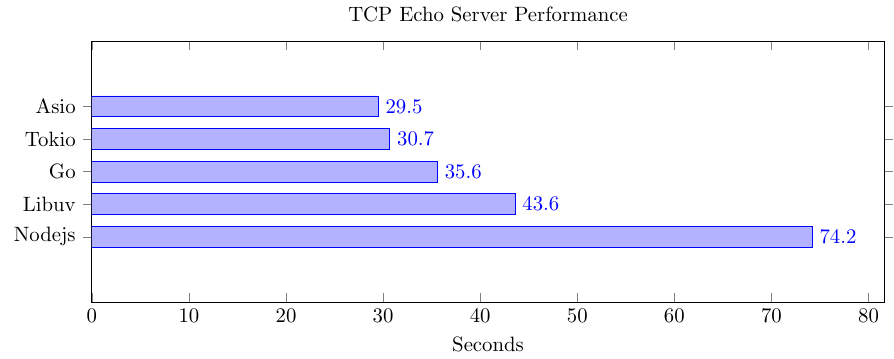
First I tested a pure TCP echo server, i.e. one that sends the messages
|
|
directly to the client without interacting with Redis. The result can
|
|
be seen below
|
|
|
|
|
|
|
|
The tests were performed with a 1000 concurrent TCP connections on the
|
|
localhost where latency is 0.07ms on average on my machine. On higher
|
|
latency networks the difference among libraries is expected to
|
|
decrease.
|
|
|
|
* I expected Libuv to have similar performance to Asio and Tokio.
|
|
* I did expect nodejs to come a little behind given it is is
|
|
javascript code. Otherwise I did expect it to have similar
|
|
performance to libuv since it is the framework behind it.
|
|
* Go did surprise me: faster than nodejs and libuv!
|
|
|
|
The code used in the benchmarks can be found at
|
|
|
|
* [Asio](https://github.com/boostorg/redis/blob/3fb018ccc6138d310ac8b73540391cdd8f2fdad6/benchmarks/cpp/asio/echo_server_direct.cpp): A variation of [this](https://github.com/chriskohlhoff/asio/blob/4915cfd8a1653c157a1480162ae5601318553eb8/asio/src/examples/cpp20/coroutines/echo_server.cpp) Asio example.
|
|
* [Libuv](https://github.com/boostorg/redis/tree/835a1decf477b09317f391eddd0727213cdbe12b/benchmarks/c/libuv): Taken from [here](https://github.com/libuv/libuv/blob/06948c6ee502862524f233af4e2c3e4ca876f5f6/docs/code/tcp-echo-server/main.c) Libuv example .
|
|
* [Tokio](https://github.com/boostorg/redis/tree/3fb018ccc6138d310ac8b73540391cdd8f2fdad6/benchmarks/rust/echo_server_direct): Taken from [here](https://docs.rs/tokio/latest/tokio/).
|
|
* [Nodejs](https://github.com/boostorg/redis/tree/3fb018ccc6138d310ac8b73540391cdd8f2fdad6/benchmarks/nodejs/echo_server_direct)
|
|
* [Go](https://github.com/boostorg/redis/blob/3fb018ccc6138d310ac8b73540391cdd8f2fdad6/benchmarks/go/echo_server_direct.go)
|
|
|
|
### With Redis
|
|
|
|
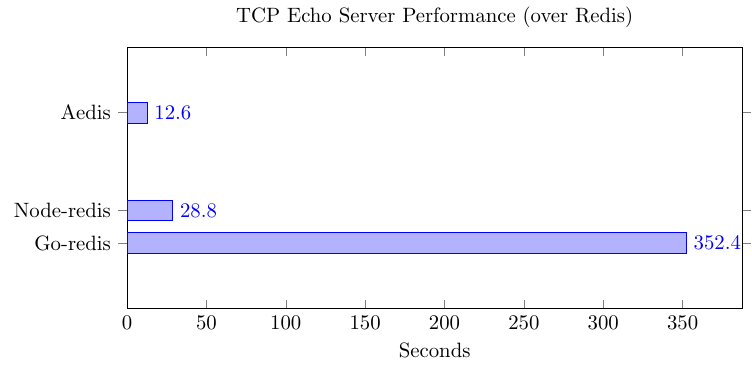
This is similar to the echo server described above but messages are
|
|
echoed by Redis and not by the echo-server itself, which acts
|
|
as a proxy between the client and the Redis server. The results
|
|
can be seen below
|
|
|
|
|
|
|
|
The tests were performed on a network where latency is 35ms on
|
|
average, otherwise it uses the same number of TCP connections
|
|
as the previous example.
|
|
|
|
As the reader can see, the Libuv and the Rust test are not depicted
|
|
in the graph, the reasons are
|
|
|
|
* [redis-rs](https://github.com/redis-rs/redis-rs): This client
|
|
comes so far behind that it can't even be represented together
|
|
with the other benchmarks without making them look insignificant.
|
|
I don't know for sure why it is so slow, I suppose it has
|
|
something to do with its lack of automatic
|
|
[pipelining](https://redis.io/docs/manual/pipelining/) support.
|
|
In fact, the more TCP connections I lauch the worse its
|
|
performance gets.
|
|
|
|
* Libuv: I left it out because it would require me writing to much
|
|
c code. More specifically, I would have to use hiredis and
|
|
implement support for pipelines manually.
|
|
|
|
The code used in the benchmarks can be found at
|
|
|
|
* [Boost.Redis](https://github.com/boostorg/redis): [code](https://github.com/boostorg/redis/blob/3fb018ccc6138d310ac8b73540391cdd8f2fdad6/examples/echo_server.cpp)
|
|
* [node-redis](https://github.com/redis/node-redis): [code](https://github.com/boostorg/redis/tree/3fb018ccc6138d310ac8b73540391cdd8f2fdad6/benchmarks/nodejs/echo_server_over_redis)
|
|
* [go-redis](https://github.com/go-redis/redis): [code](https://github.com/boostorg/redis/blob/3fb018ccc6138d310ac8b73540391cdd8f2fdad6/benchmarks/go/echo_server_over_redis.go)
|
|
|
|
### Conclusion
|
|
|
|
Redis clients have to support automatic pipelining to have competitive performance. For updates to this document follow https://github.com/boostorg/redis.
|
|
|
|
## Comparison
|
|
|
|
The main reason for why I started writing Boost.Redis was to have a client
|
|
compatible with the Asio asynchronous model. As I made progresses I could
|
|
also address what I considered weaknesses in other libraries. Due to
|
|
time constraints I won't be able to give a detailed comparison with
|
|
each client listed in the
|
|
[official](https://redis.io/docs/clients/#cpp) list,
|
|
instead I will focus on the most popular C++ client on github in number of
|
|
stars, namely
|
|
|
|
* https://github.com/sewenew/redis-plus-plus
|
|
|
|
### Boost.Redis vs Redis-plus-plus
|
|
|
|
Before we start it is important to mention some of the things
|
|
redis-plus-plus does not support
|
|
|
|
* The latest version of the communication protocol RESP3. Without that it is impossible to support some important Redis features like client side caching, among other things.
|
|
* Coroutines.
|
|
* Reading responses directly in user data structures to avoid creating temporaries.
|
|
* Error handling with support for error-code.
|
|
* Cancellation.
|
|
|
|
The remaining points will be addressed individually. Let us first
|
|
have a look at what sending a command a pipeline and a transaction
|
|
look like
|
|
|
|
```cpp
|
|
auto redis = Redis("tcp://127.0.0.1:6379");
|
|
|
|
// Send commands
|
|
redis.set("key", "val");
|
|
auto val = redis.get("key"); // val is of type OptionalString.
|
|
if (val)
|
|
std::cout << *val << std::endl;
|
|
|
|
// Sending pipelines
|
|
auto pipe = redis.pipeline();
|
|
auto pipe_replies = pipe.set("key", "value")
|
|
.get("key")
|
|
.rename("key", "new-key")
|
|
.rpush("list", {"a", "b", "c"})
|
|
.lrange("list", 0, -1)
|
|
.exec();
|
|
|
|
// Parse reply with reply type and index.
|
|
auto set_cmd_result = pipe_replies.get<bool>(0);
|
|
// ...
|
|
|
|
// Sending a transaction
|
|
auto tx = redis.transaction();
|
|
auto tx_replies = tx.incr("num0")
|
|
.incr("num1")
|
|
.mget({"num0", "num1"})
|
|
.exec();
|
|
|
|
auto incr_result0 = tx_replies.get<long long>(0);
|
|
// ...
|
|
```
|
|
|
|
Some of the problems with this API are
|
|
|
|
* Heterogeneous treatment of commands, pipelines and transaction. This makes auto-pipelining impossible.
|
|
* Any Api that sends individual commands has a very restricted scope of usability and should be avoided for performance reasons.
|
|
* The API imposes exceptions on users, no error-code overload is provided.
|
|
* No way to reuse the buffer for new calls to e.g. redis.get in order to avoid further dynamic memory allocations.
|
|
* Error handling of resolve and connection not clear.
|
|
|
|
According to the documentation, pipelines in redis-plus-plus have
|
|
the following characteristics
|
|
|
|
> NOTE: By default, creating a Pipeline object is NOT cheap, since
|
|
> it creates a new connection.
|
|
|
|
This is clearly a downside in the API as pipelines should be the
|
|
default way of communicating and not an exception, paying such a
|
|
high price for each pipeline imposes a severe cost in performance.
|
|
Transactions also suffer from the very same problem.
|
|
|
|
> NOTE: Creating a Transaction object is NOT cheap, since it
|
|
> creates a new connection.
|
|
|
|
In Boost.Redis there is no difference between sending one command, a
|
|
pipeline or a transaction because requests are decoupled
|
|
from the IO objects.
|
|
|
|
> redis-plus-plus also supports async interface, however, async
|
|
> support for Transaction and Subscriber is still on the way.
|
|
>
|
|
> The async interface depends on third-party event library, and so
|
|
> far, only libuv is supported.
|
|
|
|
Async code in redis-plus-plus looks like the following
|
|
|
|
```cpp
|
|
auto async_redis = AsyncRedis(opts, pool_opts);
|
|
|
|
Future<string> ping_res = async_redis.ping();
|
|
|
|
cout << ping_res.get() << endl;
|
|
```
|
|
As the reader can see, the async interface is based on futures
|
|
which is also known to have a bad performance. The biggest
|
|
problem however with this async design is that it makes it
|
|
impossible to write asynchronous programs correctly since it
|
|
starts an async operation on every command sent instead of
|
|
enqueueing a message and triggering a write when it can be sent.
|
|
It is also not clear how are pipelines realised with this design
|
|
(if at all).
|
|
|
|
<a name="api-reference"></a>
|
|
## Reference
|
|
|
|
The [High-Level](#high-level-api) page documents all public types.
|
|
|
|
## Acknowledgement
|
|
|
|
Acknowledgement to people that helped shape Boost.Redis
|
|
|
|
* Richard Hodges ([madmongo1](https://github.com/madmongo1)): For very helpful support with Asio, the design of asynchronous programs, etc.
|
|
* Vinícius dos Santos Oliveira ([vinipsmaker](https://github.com/vinipsmaker)): For useful discussion about how Boost.Redis consumes buffers in the read operation.
|
|
* Petr Dannhofer ([Eddie-cz](https://github.com/Eddie-cz)): For helping me understand how the `AUTH` and `HELLO` command can influence each other.
|
|
* Mohammad Nejati ([ashtum](https://github.com/ashtum)): For pointing out scenarios where calls to `async_exec` should fail when the connection is lost.
|
|
* Klemens Morgenstern ([klemens-morgenstern](https://github.com/klemens-morgenstern)): For useful discussion about timeouts, cancellation, synchronous interfaces and general help with Asio.
|
|
* Vinnie Falco ([vinniefalco](https://github.com/vinniefalco)): For general suggestions about how to improve the code and the documentation.
|
|
* Bram Veldhoen ([bveldhoen](https://github.com/bveldhoen)): For contributing a Redis-streams example.
|
|
|
|
Also many thanks to all individuals that participated in the Boost
|
|
review
|
|
|
|
* Zach Laine: https://lists.boost.org/Archives/boost/2023/01/253883.php
|
|
* Vinnie Falco: https://lists.boost.org/Archives/boost/2023/01/253886.php
|
|
* Christian Mazakas: https://lists.boost.org/Archives/boost/2023/01/253900.php
|
|
* Ruben Perez: https://lists.boost.org/Archives/boost/2023/01/253915.php
|
|
* Dmitry Arkhipov: https://lists.boost.org/Archives/boost/2023/01/253925.php
|
|
* Alan de Freitas: https://lists.boost.org/Archives/boost/2023/01/253927.php
|
|
* Mohammad Nejati: https://lists.boost.org/Archives/boost/2023/01/253929.php
|
|
* Sam Hartsfield: https://lists.boost.org/Archives/boost/2023/01/253931.php
|
|
* Miguel Portilla: https://lists.boost.org/Archives/boost/2023/01/253935.php
|
|
* Robert A.H. Leahy: https://lists.boost.org/Archives/boost/2023/01/253928.php
|
|
|
|
The Reviews can be found at:
|
|
https://lists.boost.org/Archives/boost/2023/01/date.php. The thread
|
|
with the ACCEPT from the review manager can be found here:
|
|
https://lists.boost.org/Archives/boost/2023/01/253944.php.
|
|
|
|
## Changelog
|
|
|
|
### develop
|
|
|
|
* Deprecates the `async_receive` overload that takes a response. Users
|
|
should now first call `set_receive_response` to avoid constantly and
|
|
unnecessarily setting the same response.
|
|
|
|
* Uses `std::function` to type erase the response adapter. This change
|
|
should not influence users in any way but allowed important
|
|
simplification in the connections internals. This resulted in
|
|
massive performance improvement.
|
|
|
|
* The connection has a new member `get_usage()` that returns the
|
|
connection usage information, such as number of bytes written,
|
|
received etc.
|
|
|
|
* There are massive performance improvements in the consuming of
|
|
server pushes which are now communicated with an `asio::channel` and
|
|
therefore can be buffered which avoids blocking the socket read-loop.
|
|
Batch reads are also supported by means of `channel.try_send` and
|
|
buffered messages can be consumed synchronously with
|
|
`connection::receive`. The function `boost::redis::cancel_one` has
|
|
been added to simplify processing multiple server pushes contained
|
|
in the same `generic_response`. *IMPORTANT*: These changes may
|
|
result in more than one push in the response when
|
|
`connection::async_receive` resumes. The user must therefore be
|
|
careful when calling `resp.clear()`: either ensure that all message
|
|
have been processed or just use `consume_one`.
|
|
|
|
### v1.4.2 (incorporates changes to conform the boost review and more)
|
|
|
|
* Adds `boost::redis::config::database_index` to make it possible to
|
|
choose a database before starting running commands e.g. after an
|
|
automatic reconnection.
|
|
|
|
* Massive performance improvement. One of my tests went from
|
|
140k req/s to 390k/s. This was possible after a parser
|
|
simplification that reduced the number of reschedules and buffer
|
|
rotations.
|
|
|
|
* Adds Redis stream example.
|
|
|
|
* Renames the project to Boost.Redis and moves the code into namespace
|
|
`boost::redis`.
|
|
|
|
* As pointed out in the reviews the `to_bulk` and `from_bulk` names were too
|
|
generic for ADL customization points. They gained the prefix `boost_redis_`.
|
|
|
|
* Moves `boost::redis::resp3::request` to `boost::redis::request`.
|
|
|
|
* Adds new typedef `boost::redis::response` that should be used instead of
|
|
`std::tuple`.
|
|
|
|
* Adds new typedef `boost::redis::generic_response` that should be used instead
|
|
of `std::vector<resp3::node<std::string>>`.
|
|
|
|
* Renames `redis::ignore` to `redis::ignore_t`.
|
|
|
|
* Changes `async_exec` to receive a `redis::response` instead of an adapter,
|
|
namely, instead of passing `adapt(resp)` users should pass `resp` directly.
|
|
|
|
* Introduces `boost::redis::adapter::result` to store responses to commands
|
|
including possible resp3 errors without losing the error diagnostic part. To
|
|
access values now use `std::get<N>(resp).value()` instead of
|
|
`std::get<N>(resp)`.
|
|
|
|
* Implements full-duplex communication. Before these changes the connection
|
|
would wait for a response to arrive before sending the next one. Now requests
|
|
are continuously coalesced and written to the socket. `request::coalesce`
|
|
became unnecessary and was removed. I could measure significative performance
|
|
gains with theses changes.
|
|
|
|
* Improves serialization examples using Boost.Describe to serialize to JSON and protobuf. See
|
|
cpp20_json.cpp and cpp20_protobuf.cpp for more details.
|
|
|
|
* Upgrades to Boost 1.81.0.
|
|
|
|
* Fixes build with libc++.
|
|
|
|
* Adds high-level functionality to the connection classes. For
|
|
example, `boost::redis::connection::async_run` will automatically
|
|
resolve, connect, reconnect and perform health checks.
|
|
|
|
### v1.4.0-1
|
|
|
|
* Renames `retry_on_connection_lost` to `cancel_if_unresponded`. (v1.4.1)
|
|
* Removes dependency on Boost.Hana, `boost::string_view`, Boost.Variant2 and Boost.Spirit.
|
|
* Fixes build and setup CI on windows.
|
|
|
|
### v1.3.0-1
|
|
|
|
* Upgrades to Boost 1.80.0
|
|
|
|
* Removes automatic sending of the `HELLO` command. This can't be
|
|
implemented properly without bloating the connection class. It is
|
|
now a user responsibility to send HELLO. Requests that contain it have
|
|
priority over other requests and will be moved to the front of the
|
|
queue, see `aedis::request::config`
|
|
|
|
* Automatic name resolving and connecting have been removed from
|
|
`aedis::connection::async_run`. Users have to do this step manually
|
|
now. The reason for this change is that having them built-in doesn't
|
|
offer enough flexibility that is need for boost users.
|
|
|
|
* Removes healthy checks and idle timeout. This functionality must now
|
|
be implemented by users, see the examples. This is
|
|
part of making Aedis useful to a larger audience and suitable for
|
|
the Boost review process.
|
|
|
|
* The `aedis::connection` is now using a typeddef to a
|
|
`net::ip::tcp::socket` and `aedis::ssl::connection` to
|
|
`net::ssl::stream<net::ip::tcp::socket>`. Users that need to use
|
|
other stream type must now specialize `aedis::basic_connection`.
|
|
|
|
* Adds a low level example of async code.
|
|
|
|
### v1.2.0
|
|
|
|
* `aedis::adapt` supports now tuples created with `std::tie`.
|
|
`aedis::ignore` is now an alias to the type of `std::ignore`.
|
|
|
|
* Provides allocator support for the internal queue used in the
|
|
`aedis::connection` class.
|
|
|
|
* Changes the behaviour of `async_run` to complete with success if
|
|
asio::error::eof is received. This makes it easier to write
|
|
composed operations with awaitable operators.
|
|
|
|
* Adds allocator support in the `aedis::request` (a
|
|
contribution from Klemens Morgenstern).
|
|
|
|
* Renames `aedis::request::push_range2` to `push_range`. The
|
|
suffix 2 was used for disambiguation. Klemens fixed it with SFINAE.
|
|
|
|
* Renames `fail_on_connection_lost` to
|
|
`aedis::request::config::cancel_on_connection_lost`. Now, it will
|
|
only cause connections to be canceled when `async_run` completes.
|
|
|
|
* Introduces `aedis::request::config::cancel_if_not_connected` which will
|
|
cause a request to be canceled if `async_exec` is called before a
|
|
connection has been established.
|
|
|
|
* Introduces new request flag `aedis::request::config::retry` that if
|
|
set to true will cause the request to not be canceled when it was
|
|
sent to Redis but remained unresponded after `async_run` completed.
|
|
It provides a way to avoid executing commands twice.
|
|
|
|
* Removes the `aedis::connection::async_run` overload that takes
|
|
request and adapter as parameters.
|
|
|
|
* Changes the way `aedis::adapt()` behaves with
|
|
`std::vector<aedis::resp3::node<T>>`. Receiving RESP3 simple errors,
|
|
blob errors or null won't causes an error but will be treated as
|
|
normal response. It is the user responsibility to check the content
|
|
in the vector.
|
|
|
|
* Fixes a bug in `connection::cancel(operation::exec)`. Now this
|
|
call will only cancel non-written requests.
|
|
|
|
* Implements per-operation implicit cancellation support for
|
|
`aedis::connection::async_exec`. The following call will `co_await (conn.async_exec(...) || timer.async_wait(...))`
|
|
will cancel the request as long as it has not been written.
|
|
|
|
* Changes `aedis::connection::async_run` completion signature to
|
|
`f(error_code)`. This is how is was in the past, the second
|
|
parameter was not helpful.
|
|
|
|
* Renames `operation::receive_push` to `aedis::operation::receive`.
|
|
|
|
### v1.1.0-1
|
|
|
|
* Removes `coalesce_requests` from the `aedis::connection::config`, it
|
|
became a request property now, see `aedis::request::config::coalesce`.
|
|
|
|
* Removes `max_read_size` from the `aedis::connection::config`. The maximum
|
|
read size can be specified now as a parameter of the
|
|
`aedis::adapt()` function.
|
|
|
|
* Removes `aedis::sync` class, see intro_sync.cpp for how to perform
|
|
synchronous and thread safe calls. This is possible in Boost. 1.80
|
|
only as it requires `boost::asio::deferred`.
|
|
|
|
* Moves from `boost::optional` to `std::optional`. This is part of
|
|
moving to C++17.
|
|
|
|
* Changes the behaviour of the second `aedis::connection::async_run` overload
|
|
so that it always returns an error when the connection is lost.
|
|
|
|
* Adds TLS support, see intro_tls.cpp.
|
|
|
|
* Adds an example that shows how to resolve addresses over sentinels,
|
|
see subscriber_sentinel.cpp.
|
|
|
|
* Adds a `aedis::connection::timeouts::resp3_handshake_timeout`. This is
|
|
timeout used to send the `HELLO` command.
|
|
|
|
* Adds `aedis::endpoint` where in addition to host and port, users can
|
|
optionally provide username, password and the expected server role
|
|
(see `aedis::error::unexpected_server_role`).
|
|
|
|
* `aedis::connection::async_run` checks whether the server role received in
|
|
the hello command is equal to the expected server role specified in
|
|
`aedis::endpoint`. To skip this check let the role variable empty.
|
|
|
|
* Removes reconnect functionality from `aedis::connection`. It
|
|
is possible in simple reconnection strategies but bloats the class
|
|
in more complex scenarios, for example, with sentinel,
|
|
authentication and TLS. This is trivial to implement in a separate
|
|
coroutine. As a result the `enum event` and `async_receive_event`
|
|
have been removed from the class too.
|
|
|
|
* Fixes a bug in `connection::async_receive_push` that prevented
|
|
passing any response adapter other that `adapt(std::vector<node>)`.
|
|
|
|
* Changes the behaviour of `aedis::adapt()` that caused RESP3 errors
|
|
to be ignored. One consequence of it is that `connection::async_run`
|
|
would not exit with failure in servers that required authentication.
|
|
|
|
* Changes the behaviour of `connection::async_run` that would cause it
|
|
to complete with success when an error in the
|
|
`connection::async_exec` occurred.
|
|
|
|
* Ports the buildsystem from autotools to CMake.
|
|
|
|
### v1.0.0
|
|
|
|
* Adds experimental cmake support for windows users.
|
|
|
|
* Adds new class `aedis::sync` that wraps an `aedis::connection` in
|
|
a thread-safe and synchronous API. All free functions from the
|
|
`sync.hpp` are now member functions of `aedis::sync`.
|
|
|
|
* Split `aedis::connection::async_receive_event` in two functions, one
|
|
to receive events and another for server side pushes, see
|
|
`aedis::connection::async_receive_push`.
|
|
|
|
* Removes collision between `aedis::adapter::adapt` and
|
|
`aedis::adapt`.
|
|
|
|
* Adds `connection::operation` enum to replace `cancel_*` member
|
|
functions with a single cancel function that gets the operations
|
|
that should be cancelled as argument.
|
|
|
|
* Bugfix: a bug on reconnect from a state where the `connection` object
|
|
had unsent commands. It could cause `async_exec` to never
|
|
complete under certain conditions.
|
|
|
|
* Bugfix: Documentation of `adapt()` functions were missing from
|
|
Doxygen.
|
|
|
|
### v0.3.0
|
|
|
|
* Adds `experimental::exec` and `receive_event` functions to offer a
|
|
thread safe and synchronous way of executing requests across
|
|
threads. See `intro_sync.cpp` and `subscriber_sync.cpp` for
|
|
examples.
|
|
|
|
* `connection::async_read_push` was renamed to `async_receive_event`.
|
|
|
|
* `connection::async_receive_event` is now being used to communicate
|
|
internal events to the user, such as resolve, connect, push etc. For
|
|
examples see cpp20_subscriber.cpp and `connection::event`.
|
|
|
|
* The `aedis` directory has been moved to `include` to look more
|
|
similar to Boost libraries. Users should now replace `-I/aedis-path`
|
|
with `-I/aedis-path/include` in the compiler flags.
|
|
|
|
* The `AUTH` and `HELLO` commands are now sent automatically. This change was
|
|
necessary to implement reconnection. The username and password
|
|
used in `AUTH` should be provided by the user on
|
|
`connection::config`.
|
|
|
|
* Adds support for reconnection. See `connection::enable_reconnect`.
|
|
|
|
* Fixes a bug in the `connection::async_run(host, port)` overload
|
|
that was causing crashes on reconnection.
|
|
|
|
* Fixes the executor usage in the connection class. Before theses
|
|
changes it was imposing `any_io_executor` on users.
|
|
|
|
* `connection::async_receiver_event` is not cancelled anymore when
|
|
`connection::async_run` exits. This change makes user code simpler.
|
|
|
|
* `connection::async_exec` with host and port overload has been
|
|
removed. Use the other `connection::async_run` overload.
|
|
|
|
* The host and port parameters from `connection::async_run` have been
|
|
move to `connection::config` to better support authentication and
|
|
failover.
|
|
|
|
* Many simplifications in the `chat_room` example.
|
|
|
|
* Fixes build in clang the compilers and makes some improvements in
|
|
the documentation.
|
|
|
|
### v0.2.0-1
|
|
|
|
* Fixes a bug that happens on very high load. (v0.2.1)
|
|
* Major rewrite of the high-level API. There is no more need to use the low-level API anymore.
|
|
* No more callbacks: Sending requests follows the ASIO asynchronous model.
|
|
* Support for reconnection: Pending requests are not canceled when a connection is lost and are re-sent when a new one is established.
|
|
* The library is not sending HELLO-3 on user behalf anymore. This is important to support AUTH properly.
|
|
|
|
### v0.1.0-2
|
|
|
|
* Adds reconnect coroutine in the `echo_server` example. (v0.1.2)
|
|
* Corrects `client::async_wait_for_data` with `make_parallel_group` to launch operation. (v0.1.2)
|
|
* Improvements in the documentation. (v0.1.2)
|
|
* Avoids dynamic memory allocation in the client class after reconnection. (v0.1.2)
|
|
* Improves the documentation and adds some features to the high-level client. (v.0.1.1)
|
|
* Improvements in the design and documentation.
|
|
|
|
### v0.0.1
|
|
|
|
* First release to collect design feedback.
|
|
|