mirror of
https://github.com/boostorg/redis.git
synced 2026-01-25 18:42:08 +00:00
Compare commits
328 Commits
| Author | SHA1 | Date | |
|---|---|---|---|

|
84ee2f37f1 | ||
|
|
81927deda4 | ||
|
|
34ff1cea63 | ||
|
|
10603b7d3a | ||
|
|
ad3c2914db | ||
|
|
91014b13bf | ||
|
|
4f6f8b454d | ||

|
9ebcc544ae | ||
|
|
7d16259749 | ||
|
|
9dec63515e | ||
|
|
46525371b9 | ||

|
b5f8348598 | ||
|
|
69d12421e2 | ||
|
|
a715c251bf | ||
|
|
d29a057fa6 | ||
|
|
82430afc8b | ||
|
|
607946f00e | ||
|
|
c99790ab5c | ||
|
|
635b3608ad | ||
|
|
a8a78c38c6 | ||
|
|
e09a53ff08 | ||
|
|
ec8a1c7286 | ||
|
|
3c02a7662b | ||
|
|
538ab8f35f | ||
|
|
f5f57e370b | ||
|
|
7abfc5fd8d | ||
|
|
11eebcf771 | ||
|
|
c21f70bc07 | ||
|
|
22bacbd52c | ||
|
|
2982f831f6 | ||
|
|
663e9ac671 | ||
|
|
c0aa4356ea | ||
|
|
6f9fd5b2fb | ||
|
|
30a6e34e4e | ||
|
|
1f9b3e8008 | ||

|
3808fec0e3 | ||
|
|
607a9e9dd6 | ||
|
|
2d53bb748e | ||
|
|
a6cb4ca323 | ||
|
|
5ac4f7e8ad | ||
|
|
7a08588808 | ||
|
|
e7ff1cedf3 | ||
|
|
0bcb7dcf16 | ||
|
|
c28969674b | ||
|
|
c7f49c6677 | ||
|
|
90bcd621fb | ||
|
|
fd967204df | ||
|
|
cd00047a49 | ||
|
|
728b35cfe0 | ||
|
|
52e62ba78c | ||
|
|
bb18ff4891 | ||
|
|
6ce793e413 | ||
|
|
a83c0e7803 | ||
|
|
64820bd25b | ||
|
|
16b5c8d1ba | ||
|
|
8ef4d3cf0b | ||
|
|
d01a9acf3b | ||
|
|
ac7e425d47 | ||
|
|
d620cdee59 | ||
|
|
5f07b730f7 | ||
|
|
6d3a112f94 | ||
|
|
1f3ef6b486 | ||
|
|
a850a6ed63 | ||
|
|
c8b73c2fe8 | ||
|
|
8b02268182 | ||
|
|
1b60eeb352 | ||
|
|
b93f36163d | ||
|
|
071f9a93aa | ||
|
|
5a6ca14a67 | ||
|
|
a5c86107f8 | ||
|
|
3a4445022e | ||
|
|
bfb26f2602 | ||
|
|
7e70cb4ad7 | ||
|
|
886561409a | ||
|
|
0c5ff09685 | ||
|
|
4b07b6d516 | ||
|
|
c1ce8358c7 | ||
|
|
13e16b7a60 | ||
|
|
e11502e0df | ||
|
|
b2344384cf | ||
|
|
56c0b28003 | ||
|
|
c88fcfb9ed | ||
|
|
a56bf982ab | ||

|
5d0ed0e986 | ||
|
|
15deaa637d | ||
|
|
bb8ff90351 | ||
|
|
7d4902369a | ||
|
|
607ca17a89 | ||
|
|
3849ba42fd | ||
|
|
56bcdb7914 | ||
|
|
73ad66eb93 | ||
|
|
9cf00d6a23 | ||
|
|
a00c9e7439 | ||
|
|
0520791100 | ||
|
|
14b376e36e | ||
|
|
4f9dcc7dc5 | ||
|
|
ad5dd8c30b | ||
|
|
842f864689 | ||
|
|
63f9b74502 | ||
|
|
801f60a026 | ||
|
|
c37fcb641c | ||
|
|
48c3f37168 | ||
|
|
3c63911802 | ||
|
|
1645881a44 | ||
|
|
730e06c38d | ||
|
|
cf3a79737d | ||
|
|
edb384c843 | ||
|
|
f745faddf8 | ||
|
|
927117568e | ||
|
|
1e7c176f92 | ||
|
|
449b5f7e7c | ||
|
|
75f91f3b11 | ||
|
|
b9a23568e3 | ||
|
|
4ac2509afa | ||
|
|
e9dab97992 | ||
|
|
2e8cad858d | ||
|
|
5a6e426028 | ||
|
|
c55978a379 | ||
|
|
6f51397e49 | ||
|
|
6b9ba6b2d9 | ||
|
|
d29c03cb38 | ||
|
|
34cfbaa22f | ||
|
|
c9354fe320 | ||
|
|
bb555cb509 | ||
|
|
5b209afa1d | ||
|
|
3f5491654d | ||
|
|
2bdc25752f | ||
|
|
faafce1c64 | ||
|
|
562075230f | ||
|
|
5dc677c6d8 | ||
|
|
395a167d48 | ||
|
|
f93f3cab58 | ||
|
|
df68fb0235 | ||

|
15e6883bc1 | ||
|
|
3816d1d358 | ||
|
|
bb15c70723 | ||
|
|
297b7f15eb | ||
|
|
ec6e99d99a | ||
|
|
8dc6db069b | ||
|
|
bac27c1770 | ||
|
|
feaaedc6c0 | ||
|
|
000ebddf44 | ||
|
|
268ea2c10f | ||
|
|
d8b67f6e23 | ||
|
|
ce1fa6a683 | ||
|
|
b8ede6ccb7 | ||
|
|
6dce1a9226 | ||
|
|
8566745d83 | ||
|
|
0b4906fcba | ||
|
|
2c8bb92071 | ||
|
|
770e224917 | ||
|
|
4fb2b20954 | ||
|
|
c01a57b6cb | ||
|
|
ea0b333c4d | ||
|
|
ba82c6cd84 | ||
|
|
4c298ddc6b | ||
|
|
690002b2f1 | ||
|
|
12899da4db | ||
|
|
b2c19df113 | ||
|
|
61f9a29ebc | ||
|
|
dc9b333f1e | ||
|
|
dac7bea54f | ||
|
|
da84321378 | ||
|
|
3295459700 | ||
|
|
dff8833fe3 | ||
|
|
3a03a43c06 | ||
|
|
b614826bb4 | ||
|
|
4e30a9d53d | ||
|
|
85ba41ae5a | ||
|
|
fd82204ba9 | ||
|
|
084e95cbc7 | ||
|
|
798f193f14 | ||
|
|
a23a3db9ac | ||
|
|
bca6511333 | ||
|
|
e2d642f34c | ||
|
|
d8607af669 | ||
|
|
223a9aa74b | ||
|
|
75433cd028 | ||
|
|
552c6cf6e4 | ||
|
|
16b9347c51 | ||
|
|
03558b1466 | ||
|
|
f8165bcb6f | ||
|
|
8aad27269c | ||
|
|
f11622e746 | ||
|
|
8249360a52 | ||
|
|
d00f26d3da | ||
|
|
480ec13119 | ||
|
|
4cc3fc59a1 | ||
|
|
11807c82b7 | ||
|
|
24a215d78b | ||
|
|
b7abe20703 | ||
|
|
225095944c | ||
|
|
a31d797e43 | ||
|
|
cca8d5d6dc | ||
|
|
6c5bee6920 | ||
|
|
c4714d0037 | ||
|
|
38bf2395af | ||
|
|
7511d6b4d8 | ||
|
|
ddc2815fe5 | ||
|
|
de6f5de655 | ||
|
|
8d454ada0e | ||
|
|
ebac88f2ca | ||
|
|
d26ecb65ca | ||
|
|
c57f97b8c1 | ||
|
|
37ab1e7387 | ||
|
|
54d448cad4 | ||
|
|
97428dedb3 | ||
|
|
83802f217a | ||
|
|
08140f9186 | ||
|
|
3ddb017edb | ||
|
|
20328cd423 | ||
|
|
6577ddbaab | ||
|
|
217d2bd87b | ||
|
|
f96dd22153 | ||
|
|
f1fd0cfa8c | ||
|
|
8728914109 | ||
|
|
e0041ac7ae | ||
|
|
317a185eb0 | ||
|
|
aa81200a8f | ||
|
|
55fc0e861c | ||
|
|
04271855b0 | ||
|
|
700e0c823e | ||
|
|
63c6465a4a | ||
|
|
c86422cf50 | ||
|
|
0168ed5faf | ||
|
|
7bffa252f4 | ||
|
|
0bb65599c4 | ||
|
|
edd538944f | ||
|
|
42880e788b | ||
|
|
bcc3917174 | ||
|
|
b08dd63192 | ||
|
|
76b6106caa | ||
|
|
ab68e8a31d | ||
|
|
2673557ce5 | ||
|
|
2a302dcb65 | ||
|
|
ffc4230368 | ||
|
|
59b5d35672 | ||
|
|
835a1decf4 | ||
|
|
3fb018ccc6 | ||
|
|
1fe4a87287 | ||
|
|
70cdff41e0 | ||
|
|
2edd9f3d87 | ||
|
|
fa4181b197 | ||
|
|
9e2cd8855e | ||
|
|
bef70870cd | ||
|
|
9885439845 | ||
|
|
b5a9162efb | ||
|
|
6ca0bcc945 | ||
|
|
efd0a0379a | ||
|
|
97153abc3c | ||
|
|
f4710941d3 | ||
|
|
f8ff3034f4 | ||
|
|
561eb5dccb | ||
|
|
95d609b75c | ||
|
|
d5f9e702d7 | ||
|
|
5add83b73c | ||
|
|
200974d9be | ||
|
|
649c84d7d0 | ||
|
|
240cce4b09 | ||
|
|
b140216f0d | ||
|
|
4f0d9de393 | ||
|
|
888bb476d7 | ||
|
|
eae37ace0b | ||
|
|
0c3ed1afee | ||
|
|
0f5e8e3d1f | ||
|
|
963b228e02 | ||
|
|
bddf47d626 | ||
|
|
b3b8dfc243 | ||
|
|
e013d846b2 | ||
|
|
d2ba54a7a6 | ||
|
|
250e24d5fb | ||
|
|
9dcccca11e | ||
|
|
8af1c9f19c | ||
|
|
b058cc0c02 | ||
|
|
df3f2b8ca5 | ||
|
|
8e4928347c | ||
|
|
33461d54c8 | ||
|
|
5328cdff9a | ||
|
|
452589d4e7 | ||
|
|
4036df9255 | ||
|
|
9f2df4d052 | ||
|
|
1571afbd88 | ||
|
|
b43e6dfb68 | ||
|
|
ce9cb04168 | ||
|
|
77fe3a0f5f | ||
|
|
40dfacb0b7 | ||
|
|
6d859c57f8 | ||
|
|
9e43541a5e | ||
|
|
97cb5b5b25 | ||
|
|
a40c9fe35f | ||
|
|
a411cc50fc | ||
|
|
5893f0913e | ||
|
|
dea7712a29 | ||
|
|
56479b88eb | ||
|
|
dfeb3bbfcf | ||
|
|
7464851e9e | ||
|
|
226c2b228c | ||
|
|
fee892b6ad | ||
|
|
74e0a6ca23 | ||
|
|
ebef2f9e23 | ||
|
|
485bdc316b | ||
|
|
36fb83e1d6 | ||
|
|
3753c27dcf | ||
|
|
091cad6ee7 | ||
|
|
1e98c04603 | ||
|
|
4858c078f9 | ||
|
|
3dff0b78de | ||
|
|
7300f1498b | ||
|
|
f6fc45d8ba | ||
|
|
5eb88b5042 | ||
|
|
f7d2f3ab28 | ||
|
|
f62ad6a8bf | ||
|
|
1efcf7b7d8 | ||
|
|
29166a2cf0 | ||
|
|
215fd7ea73 | ||
|
|
9b8ca4dbc8 | ||
|
|
4075dc380d | ||
|
|
161cd848f8 | ||
|
|
7c7eed4a53 | ||
|
|
e70b00e976 | ||
|
|
52d7b95cf8 | ||
|
|
641032fa9a | ||
|
|
2a2a13c4dc | ||
|
|
76741d8466 | ||
|
|
0f79214d37 | ||
|
|
de476169ae | ||
|
|
d1bf3a91be | ||
|
|
4be6e6cc1e |
172
.clang-tidy
Normal file
172
.clang-tidy
Normal file
@@ -0,0 +1,172 @@
|
||||
---
|
||||
# Enable ALL the things! Except not really
|
||||
# misc-non-private-member-variables-in-classes: the options don't do anything
|
||||
Checks: "*,\
|
||||
-readability-*,\
|
||||
-readability-identifier-length,\
|
||||
-google-readability-todo,\
|
||||
-google-readability-namespace-comments,\
|
||||
-google-readability-braces-around-statements,\
|
||||
-hicpp-braces-around-statements,\
|
||||
-hicpp-named-parameter,\
|
||||
-hicpp-avoid-goto,\
|
||||
-google-build-using-namespace,\
|
||||
-altera-*,\
|
||||
-fuchsia-*,\
|
||||
fuchsia-multiple-inheritance,\
|
||||
-llvm-namespace-comment,\
|
||||
-llvm-header-guard,\
|
||||
-llvm-include-order,\
|
||||
-llvmlibc-*,\
|
||||
-misc-non-private-member-variables-in-classes,\
|
||||
-bugprone-use-after-move,\
|
||||
-hicpp-invalid-access-moved,\
|
||||
-misc-no-recursion,\
|
||||
-cppcoreguidelines-pro-bounds-pointer-arithmetic,\
|
||||
-cppcoreguidelines-avoid-magic-numbers,\
|
||||
-cppcoreguidelines-pro-bounds-constant-array-index,\
|
||||
-cppcoreguidelines-interfaces-global-init,\
|
||||
-cppcoreguidelines-macro-usage,\
|
||||
-cppcoreguidelines-avoid-goto,\
|
||||
-cppcoreguidelines-non-private-member-variables-in-classes"
|
||||
WarningsAsErrors: ''
|
||||
CheckOptions:
|
||||
- key: 'bugprone-argument-comment.StrictMode'
|
||||
value: 'true'
|
||||
# Prefer using enum classes with 2 values for parameters instead of bools
|
||||
- key: 'bugprone-argument-comment.CommentBoolLiterals'
|
||||
value: 'true'
|
||||
- key: 'bugprone-misplaced-widening-cast.CheckImplicitCasts'
|
||||
value: 'true'
|
||||
- key: 'bugprone-sizeof-expression.WarnOnSizeOfIntegerExpression'
|
||||
value: 'true'
|
||||
- key: 'bugprone-suspicious-string-compare.WarnOnLogicalNotComparison'
|
||||
value: 'true'
|
||||
- key: 'readability-simplify-boolean-expr.ChainedConditionalReturn'
|
||||
value: 'true'
|
||||
- key: 'readability-simplify-boolean-expr.ChainedConditionalAssignment'
|
||||
value: 'true'
|
||||
- key: 'readability-uniqueptr-delete-release.PreferResetCall'
|
||||
value: 'true'
|
||||
- key: 'cppcoreguidelines-init-variables.MathHeader'
|
||||
value: '<cmath>'
|
||||
- key: 'cppcoreguidelines-narrowing-conversions.PedanticMode'
|
||||
value: 'true'
|
||||
- key: 'readability-else-after-return.WarnOnUnfixable'
|
||||
value: 'true'
|
||||
- key: 'readability-else-after-return.WarnOnConditionVariables'
|
||||
value: 'true'
|
||||
- key: 'readability-inconsistent-declaration-parameter-name.Strict'
|
||||
value: 'true'
|
||||
- key: 'readability-qualified-auto.AddConstToQualified'
|
||||
value: 'true'
|
||||
- key: 'readability-redundant-access-specifiers.CheckFirstDeclaration'
|
||||
value: 'true'
|
||||
# These seem to be the most common identifier styles
|
||||
- key: 'readability-identifier-naming.AbstractClassCase'
|
||||
value: 'lower_case'
|
||||
- key: 'readability-identifier-naming.ClassCase'
|
||||
value: 'lower_case'
|
||||
- key: 'readability-identifier-naming.ClassConstantCase'
|
||||
value: 'lower_case'
|
||||
- key: 'readability-identifier-naming.ClassMemberCase'
|
||||
value: 'lower_case'
|
||||
- key: 'readability-identifier-naming.ClassMethodCase'
|
||||
value: 'lower_case'
|
||||
- key: 'readability-identifier-naming.ConstantCase'
|
||||
value: 'lower_case'
|
||||
- key: 'readability-identifier-naming.ConstantMemberCase'
|
||||
value: 'lower_case'
|
||||
- key: 'readability-identifier-naming.ConstantParameterCase'
|
||||
value: 'lower_case'
|
||||
- key: 'readability-identifier-naming.ConstantPointerParameterCase'
|
||||
value: 'lower_case'
|
||||
- key: 'readability-identifier-naming.ConstexprFunctionCase'
|
||||
value: 'lower_case'
|
||||
- key: 'readability-identifier-naming.ConstexprMethodCase'
|
||||
value: 'lower_case'
|
||||
- key: 'readability-identifier-naming.ConstexprVariableCase'
|
||||
value: 'lower_case'
|
||||
- key: 'readability-identifier-naming.EnumCase'
|
||||
value: 'lower_case'
|
||||
- key: 'readability-identifier-naming.EnumConstantCase'
|
||||
value: 'lower_case'
|
||||
- key: 'readability-identifier-naming.FunctionCase'
|
||||
value: 'lower_case'
|
||||
- key: 'readability-identifier-naming.GlobalConstantCase'
|
||||
value: 'lower_case'
|
||||
- key: 'readability-identifier-naming.GlobalConstantPointerCase'
|
||||
value: 'lower_case'
|
||||
- key: 'readability-identifier-naming.GlobalFunctionCase'
|
||||
value: 'lower_case'
|
||||
- key: 'readability-identifier-naming.GlobalPointerCase'
|
||||
value: 'lower_case'
|
||||
- key: 'readability-identifier-naming.GlobalVariableCase'
|
||||
value: 'lower_case'
|
||||
- key: 'readability-identifier-naming.InlineNamespaceCase'
|
||||
value: 'lower_case'
|
||||
- key: 'readability-identifier-naming.LocalConstantCase'
|
||||
value: 'lower_case'
|
||||
- key: 'readability-identifier-naming.LocalConstantPointerCase'
|
||||
value: 'lower_case'
|
||||
- key: 'readability-identifier-naming.LocalPointerCase'
|
||||
value: 'lower_case'
|
||||
- key: 'readability-identifier-naming.LocalVariableCase'
|
||||
value: 'lower_case'
|
||||
- key: 'readability-identifier-naming.MacroDefinitionCase'
|
||||
value: 'UPPER_CASE'
|
||||
- key: 'readability-identifier-naming.MemberCase'
|
||||
value: 'lower_case'
|
||||
- key: 'readability-identifier-naming.MethodCase'
|
||||
value: 'lower_case'
|
||||
- key: 'readability-identifier-naming.NamespaceCase'
|
||||
value: 'lower_case'
|
||||
- key: 'readability-identifier-naming.ParameterCase'
|
||||
value: 'lower_case'
|
||||
- key: 'readability-identifier-naming.ParameterPackCase'
|
||||
value: 'lower_case'
|
||||
- key: 'readability-identifier-naming.PointerParameterCase'
|
||||
value: 'lower_case'
|
||||
- key: 'readability-identifier-naming.PrivateMemberCase'
|
||||
value: 'lower_case'
|
||||
- key: 'readability-identifier-naming.PrivateMemberPrefix'
|
||||
value: 'm_'
|
||||
- key: 'readability-identifier-naming.PrivateMethodCase'
|
||||
value: 'lower_case'
|
||||
- key: 'readability-identifier-naming.ProtectedMemberCase'
|
||||
value: 'lower_case'
|
||||
- key: 'readability-identifier-naming.ProtectedMemberPrefix'
|
||||
value: 'm_'
|
||||
- key: 'readability-identifier-naming.ProtectedMethodCase'
|
||||
value: 'lower_case'
|
||||
- key: 'readability-identifier-naming.PublicMemberCase'
|
||||
value: 'lower_case'
|
||||
- key: 'readability-identifier-naming.PublicMethodCase'
|
||||
value: 'lower_case'
|
||||
- key: 'readability-identifier-naming.ScopedEnumConstantCase'
|
||||
value: 'lower_case'
|
||||
- key: 'readability-identifier-naming.StaticConstantCase'
|
||||
value: 'lower_case'
|
||||
- key: 'readability-identifier-naming.StaticVariableCase'
|
||||
value: 'lower_case'
|
||||
- key: 'readability-identifier-naming.StructCase'
|
||||
value: 'lower_case'
|
||||
- key: 'readability-identifier-naming.TemplateParameterCase'
|
||||
value: 'CamelCase'
|
||||
- key: 'readability-identifier-naming.TemplateTemplateParameterCase'
|
||||
value: 'CamelCase'
|
||||
- key: 'readability-identifier-naming.TypeAliasCase'
|
||||
value: 'lower_case'
|
||||
- key: 'readability-identifier-naming.TypedefCase'
|
||||
value: 'lower_case'
|
||||
- key: 'readability-identifier-naming.TypeTemplateParameterCase'
|
||||
value: 'CamelCase'
|
||||
- key: 'readability-identifier-naming.UnionCase'
|
||||
value: 'lower_case'
|
||||
- key: 'readability-identifier-naming.ValueTemplateParameterCase'
|
||||
value: 'CamelCase'
|
||||
- key: 'readability-identifier-naming.VariableCase'
|
||||
value: 'lower_case'
|
||||
- key: 'readability-identifier-naming.VirtualMethodCase'
|
||||
value: 'lower_case'
|
||||
...
|
||||
22
.codecov.yml
Normal file
22
.codecov.yml
Normal file
@@ -0,0 +1,22 @@
|
||||
codecov:
|
||||
max_report_age: off
|
||||
require_ci_to_pass: yes
|
||||
notify:
|
||||
after_n_builds: 1
|
||||
wait_for_ci: yes
|
||||
|
||||
ignore:
|
||||
- "benchmarks/cpp/asio/*"
|
||||
- "examples/*"
|
||||
- "tests/*"
|
||||
- "/usr/*"
|
||||
- "**/boost/*"
|
||||
|
||||
parsers:
|
||||
gcov:
|
||||
branch_detection:
|
||||
conditional: no
|
||||
loop: no
|
||||
method: no
|
||||
macro: no
|
||||
|
||||
136
.github/workflows/ci.yml
vendored
Normal file
136
.github/workflows/ci.yml
vendored
Normal file
@@ -0,0 +1,136 @@
|
||||
name: CI
|
||||
|
||||
on: [push, pull_request]
|
||||
|
||||
jobs:
|
||||
windows:
|
||||
name: "${{matrix.generator}} ${{matrix.toolset}} Boost ${{matrix.boost_version}} ${{matrix.build_type}} ${{matrix.name_args}}"
|
||||
runs-on: ${{matrix.os}}
|
||||
defaults:
|
||||
run:
|
||||
shell: bash
|
||||
strategy:
|
||||
fail-fast: false
|
||||
matrix:
|
||||
boost_version: ["1.81.0"]
|
||||
os: [windows-2019, windows-2022]
|
||||
toolset: [v142, v143]
|
||||
build_type: [Release]
|
||||
generator: ["Visual Studio 16 2019", "Visual Studio 17 2022"]
|
||||
config_args: [""]
|
||||
build_args: [""]
|
||||
name_args: [""]
|
||||
exclude:
|
||||
- { os: windows-2019, toolset: v143 }
|
||||
- { os: windows-2019, generator: "Visual Studio 17 2022" }
|
||||
- { os: windows-2022, generator: "Visual Studio 16 2019" }
|
||||
# The following combinations are not available through install-boost
|
||||
- { boost_version: "1.81.0", toolset: v143 }
|
||||
|
||||
steps:
|
||||
- name: Checkout
|
||||
uses: actions/checkout@v3
|
||||
with:
|
||||
fetch-depth: 0
|
||||
|
||||
- name: Add boost toolset to environment
|
||||
if: contains(fromJson('["1.81.0"]'), matrix.boost_version)
|
||||
run: echo BOOST_TOOLSET=$(echo "msvc") >> $GITHUB_ENV
|
||||
|
||||
# The platform_version passed to boost-install determines the msvc toolset version for which static libs are installed.
|
||||
- name: Add boost platform version to environment
|
||||
run: |
|
||||
declare -A toolset_to_platform_version=( [v142]="2019" [v143]="2022" )
|
||||
key=$(echo "${{matrix.toolset}}")
|
||||
echo BOOST_PLATFORM_VERSION="${toolset_to_platform_version[$key]}" >> $GITHUB_ENV
|
||||
|
||||
- name: Add boost install path to environment
|
||||
run: echo BOOST_INSTALL_PATH="${GITHUB_WORKSPACE}/boost-${{matrix.boost_version}}${BOOST_TOOLSET}${BOOST_PLATFORM_VERSION}" >> $GITHUB_ENV
|
||||
|
||||
- name: Add build type configuration to environment
|
||||
run: echo BUILD_CONFIG_ARG="--config ${{matrix.build_type}}" >> $GITHUB_ENV
|
||||
|
||||
- name: Cache Boost installation
|
||||
id: cache-boost
|
||||
uses: actions/cache@v3
|
||||
with:
|
||||
path: ${{env.BOOST_INSTALL_PATH}}
|
||||
key: ${{matrix.boost_version}}${{env.BOOST_TOOLSET}}${{env.BOOST_PLATFORM_VERSION}}
|
||||
|
||||
- name: Install Boost
|
||||
if: steps.cache-boost.outputs.cache-hit != 'true'
|
||||
uses: MarkusJx/install-boost@v2.4.1
|
||||
with:
|
||||
boost_version: ${{matrix.boost_version}}
|
||||
toolset: ${{env.BOOST_TOOLSET}}
|
||||
boost_install_dir: ${{env.BOOST_INSTALL_PATH}}
|
||||
platform_version: ${{env.BOOST_PLATFORM_VERSION}}
|
||||
arch: null
|
||||
|
||||
- name: Install openssl
|
||||
run: choco install openssl
|
||||
|
||||
- name: Create build directory
|
||||
run: mkdir build
|
||||
|
||||
- name: Configure
|
||||
working-directory: build
|
||||
run: |
|
||||
cmake -T "${{matrix.toolset}}" \
|
||||
-G "${{matrix.generator}}" \
|
||||
${{matrix.config_args}} \
|
||||
${BOOST_COMPILER_ARG}\
|
||||
"${GITHUB_WORKSPACE}"
|
||||
env:
|
||||
BOOST_ROOT: ${{env.BOOST_INSTALL_PATH}}/boost
|
||||
|
||||
- name: Build
|
||||
working-directory: build
|
||||
run: |
|
||||
cmake --build . ${BUILD_CONFIG_ARG} ${{matrix.build_args}}
|
||||
|
||||
posix:
|
||||
defaults:
|
||||
run:
|
||||
shell: bash
|
||||
|
||||
strategy:
|
||||
fail-fast: false
|
||||
matrix:
|
||||
include:
|
||||
- { toolset: gcc, compiler: g++-11, install: g++-11, os: ubuntu-22.04, cxxflags: '-std=c++17', ldflags: '' }
|
||||
- { toolset: gcc, compiler: g++-11, install: g++-11, os: ubuntu-22.04, cxxflags: '-std=c++20', ldflags: '' }
|
||||
- { toolset: clang, compiler: clang++-11, install: clang-11, os: ubuntu-22.04, cxxflags: '-std=c++17', ldflags: '' }
|
||||
- { toolset: clang, compiler: clang++-11, install: clang-11, os: ubuntu-22.04, cxxflags: '-std=c++20', ldflags: '' }
|
||||
- { toolset: clang, compiler: clang++-13, install: clang-13, os: ubuntu-22.04, cxxflags: '-std=c++17', ldflags: '' }
|
||||
- { toolset: clang, compiler: clang++-13, install: clang-13, os: ubuntu-22.04, cxxflags: '-std=c++20', ldflags: '' }
|
||||
- { toolset: clang, compiler: clang++-14, install: 'clang-14 libc++-14-dev libc++abi-14-dev', os: ubuntu-22.04, cxxflags: '-std=c++17 -stdlib=libc++', ldflags: '-lc++' }
|
||||
- { toolset: clang, compiler: clang++-14, install: 'clang-14 libc++-14-dev libc++abi-14-dev', os: ubuntu-22.04, cxxflags: '-std=c++20 -stdlib=libc++', ldflags: '-lc++' }
|
||||
runs-on: ${{ matrix.os }}
|
||||
env:
|
||||
CXXFLAGS: -g -O0 ${{matrix.cxxflags}} -Wall -Wextra
|
||||
LDFLAGS: ${{matrix.ldflags}}
|
||||
steps:
|
||||
- name: Checkout
|
||||
uses: actions/checkout@v3
|
||||
- name: Install CMake
|
||||
run: sudo apt-get -y install cmake
|
||||
- name: Install protobuf
|
||||
run: sudo apt-get -y install protobuf-compiler
|
||||
- name: Install compiler
|
||||
run: sudo apt-get install -y ${{ matrix.install }}
|
||||
- name: Install Redis
|
||||
run: sudo apt-get install -y redis-server
|
||||
- name: Install boost
|
||||
uses: MarkusJx/install-boost@v2.4.1
|
||||
id: install-boost
|
||||
with:
|
||||
boost_version: 1.81.0
|
||||
platform_version: 22.04
|
||||
- name: Run CMake
|
||||
run: |
|
||||
BOOST_ROOT=${{steps.install-boost.outputs.BOOST_ROOT}} cmake -DCMAKE_CXX_COMPILER="${{matrix.compiler}}" -DCMAKE_CXX_FLAGS="${{env.CXXFLAGS}}" -DCMAKE_EXE_LINKER_FLAGS="${{env.LDFLAGS}}"
|
||||
- name: Build
|
||||
run: make
|
||||
- name: Check
|
||||
run: ctest --output-on-failure
|
||||
47
.github/workflows/coverage.yml
vendored
Normal file
47
.github/workflows/coverage.yml
vendored
Normal file
@@ -0,0 +1,47 @@
|
||||
name: Coverage
|
||||
|
||||
on:
|
||||
push:
|
||||
branches:
|
||||
- develop
|
||||
jobs:
|
||||
posix:
|
||||
defaults:
|
||||
run:
|
||||
shell: bash
|
||||
|
||||
runs-on: ubuntu-22.04
|
||||
env:
|
||||
CXX: g++-11
|
||||
CXXFLAGS: -g -O0 -std=c++20 --coverage -fkeep-inline-functions -fkeep-static-functions
|
||||
LDFLAGS: --coverage
|
||||
steps:
|
||||
- name: Checkout
|
||||
uses: actions/checkout@v3
|
||||
- name: Install CMake
|
||||
run: sudo apt-get -y install cmake
|
||||
- name: Install lcov
|
||||
run: sudo apt-get -y install lcov
|
||||
- name: Install compiler
|
||||
run: sudo apt-get -y install g++-11
|
||||
- name: Install Redis
|
||||
run: sudo apt-get -y install redis-server
|
||||
- name: Install boost
|
||||
uses: MarkusJx/install-boost@v2.4.1
|
||||
id: install-boost
|
||||
with:
|
||||
boost_version: 1.81.0
|
||||
platform_version: 22.04
|
||||
- name: Run CMake
|
||||
run: |
|
||||
BOOST_ROOT=${{steps.install-boost.outputs.BOOST_ROOT}} cmake --preset coverage .
|
||||
- name: Build
|
||||
run: cmake --build --preset coverage
|
||||
- name: Test
|
||||
run: ctest --preset coverage
|
||||
- name: Make the coverage file
|
||||
run: cmake --build --preset coverage --target coverage
|
||||
- name: Upload to codecov
|
||||
run: |
|
||||
bash <(curl -s https://codecov.io/bash) -f ./build/coverage/coverage.info || echo "Codecov did not collect coverage reports"
|
||||
|
||||
4
BUILD_STATUS.md
Normal file
4
BUILD_STATUS.md
Normal file
@@ -0,0 +1,4 @@
|
||||
Branch | GH Actions | codecov.io |
|
||||
:-------------: | ---------- | ---------- |
|
||||
[`master`](https://github.com/mzimbres/aedis/tree/master) | [](https://github.com/mzimbres/aedis/actions/workflows/ci.yml) | [](https://codecov.io/gh/mzimbres/aedis/branch/master)
|
||||
|
||||
264
CMakeLists.txt
Normal file
264
CMakeLists.txt
Normal file
@@ -0,0 +1,264 @@
|
||||
cmake_minimum_required(VERSION 3.14)
|
||||
|
||||
#set_property(GLOBAL PROPERTY RULE_LAUNCH_COMPILE "${CMAKE_COMMAND} -E time")
|
||||
|
||||
# determine whether it's main/root project
|
||||
# or being built under another project.
|
||||
if (NOT DEFINED BOOST_REDIS_MAIN_PROJECT)
|
||||
set(BOOST_REDIS_MAIN_PROJECT OFF)
|
||||
if (CMAKE_CURRENT_SOURCE_DIR STREQUAL CMAKE_SOURCE_DIR)
|
||||
set(BOOST_REDIS_MAIN_PROJECT ON)
|
||||
endif()
|
||||
endif()
|
||||
|
||||
project(
|
||||
boost_redis
|
||||
VERSION 1.4.1
|
||||
DESCRIPTION "A redis client library"
|
||||
HOMEPAGE_URL "https://boostorg.github.io/redis/"
|
||||
LANGUAGES CXX
|
||||
)
|
||||
|
||||
option(BOOST_REDIS_INSTALL "Generate install targets." ${BOOST_REDIS_MAIN_PROJECT})
|
||||
option(BOOST_REDIS_TESTS "Build tests." ${BOOST_REDIS_MAIN_PROJECT})
|
||||
option(BOOST_REDIS_EXAMPLES "Build examples." ${BOOST_REDIS_MAIN_PROJECT})
|
||||
option(BOOST_REDIS_BENCHMARKS "Build benchmarks." ${BOOST_REDIS_MAIN_PROJECT})
|
||||
option(BOOST_REDIS_DOC "Generate documentations." ${BOOST_REDIS_MAIN_PROJECT})
|
||||
|
||||
add_library(boost_redis INTERFACE)
|
||||
add_library(Boost::redis ALIAS boost_redis)
|
||||
target_include_directories(boost_redis INTERFACE
|
||||
$<BUILD_INTERFACE:${PROJECT_SOURCE_DIR}/include>
|
||||
$<INSTALL_INTERFACE:include>
|
||||
)
|
||||
|
||||
target_link_libraries(
|
||||
boost_redis
|
||||
INTERFACE
|
||||
Boost::asio
|
||||
Boost::assert
|
||||
Boost::config
|
||||
Boost::core
|
||||
Boost::mp11
|
||||
Boost::system
|
||||
Boost::utility
|
||||
)
|
||||
|
||||
target_compile_features(boost_redis INTERFACE cxx_std_17)
|
||||
|
||||
# Asio bases C++ feature detection on __cplusplus. Make MSVC
|
||||
# define it correctly
|
||||
if (MSVC)
|
||||
target_compile_options(boost_redis INTERFACE /Zc:__cplusplus)
|
||||
endif()
|
||||
|
||||
find_package(Boost 1.80 REQUIRED)
|
||||
|
||||
include_directories(${Boost_INCLUDE_DIRS})
|
||||
|
||||
find_package(OpenSSL REQUIRED)
|
||||
|
||||
include_directories(include)
|
||||
|
||||
# Common
|
||||
#=======================================================================
|
||||
|
||||
add_library(boost_redis_project_options INTERFACE)
|
||||
target_link_libraries(boost_redis_project_options INTERFACE OpenSSL::Crypto OpenSSL::SSL)
|
||||
if (MSVC)
|
||||
target_compile_options(boost_redis_project_options INTERFACE /bigobj)
|
||||
target_compile_definitions(boost_redis_project_options INTERFACE _WIN32_WINNT=0x0601)
|
||||
endif()
|
||||
|
||||
add_library(boost_redis_src STATIC examples/boost_redis.cpp)
|
||||
target_compile_features(boost_redis_src PRIVATE cxx_std_17)
|
||||
target_link_libraries(boost_redis_src PRIVATE boost_redis_project_options)
|
||||
|
||||
# Executables
|
||||
#=======================================================================
|
||||
|
||||
if (BOOST_REDIS_BENCHMARKS)
|
||||
add_library(benchmarks_options INTERFACE)
|
||||
target_link_libraries(benchmarks_options INTERFACE boost_redis_src)
|
||||
target_link_libraries(benchmarks_options INTERFACE boost_redis_project_options)
|
||||
target_compile_features(benchmarks_options INTERFACE cxx_std_20)
|
||||
|
||||
add_executable(echo_server_client benchmarks/cpp/asio/echo_server_client.cpp)
|
||||
target_link_libraries(echo_server_client PRIVATE benchmarks_options)
|
||||
|
||||
add_executable(echo_server_direct benchmarks/cpp/asio/echo_server_direct.cpp)
|
||||
target_link_libraries(echo_server_direct PRIVATE benchmarks_options)
|
||||
endif()
|
||||
|
||||
if (BOOST_REDIS_EXAMPLES)
|
||||
add_library(examples_main STATIC examples/main.cpp)
|
||||
target_compile_features(examples_main PRIVATE cxx_std_20)
|
||||
target_link_libraries(examples_main PRIVATE boost_redis_project_options)
|
||||
|
||||
macro(make_example EXAMPLE_NAME STANDARD)
|
||||
add_executable(${EXAMPLE_NAME} examples/${EXAMPLE_NAME}.cpp)
|
||||
target_link_libraries(${EXAMPLE_NAME} PRIVATE boost_redis_src)
|
||||
target_link_libraries(${EXAMPLE_NAME} PRIVATE boost_redis_project_options)
|
||||
target_compile_features(${EXAMPLE_NAME} PRIVATE cxx_std_${STANDARD})
|
||||
if (${STANDARD} STREQUAL "20")
|
||||
target_link_libraries(${EXAMPLE_NAME} PRIVATE examples_main)
|
||||
endif()
|
||||
endmacro()
|
||||
|
||||
macro(make_testable_example EXAMPLE_NAME STANDARD)
|
||||
make_example(${EXAMPLE_NAME} ${STANDARD})
|
||||
add_test(${EXAMPLE_NAME} ${EXAMPLE_NAME})
|
||||
endmacro()
|
||||
|
||||
make_testable_example(cpp17_intro 17)
|
||||
make_testable_example(cpp17_intro_sync 17)
|
||||
|
||||
make_testable_example(cpp20_intro 20)
|
||||
make_testable_example(cpp20_containers 20)
|
||||
make_testable_example(cpp20_json 20)
|
||||
make_testable_example(cpp20_intro_tls 20)
|
||||
|
||||
make_example(cpp20_subscriber 20)
|
||||
make_example(cpp20_streams 20)
|
||||
make_example(cpp20_echo_server 20)
|
||||
make_example(cpp20_resolve_with_sentinel 20)
|
||||
|
||||
# We test the protobuf example only on gcc.
|
||||
if (CMAKE_CXX_COMPILER_ID STREQUAL "GNU")
|
||||
find_package(Protobuf)
|
||||
if (Protobuf_FOUND)
|
||||
protobuf_generate_cpp(PROTO_SRCS PROTO_HDRS examples/person.proto)
|
||||
make_testable_example(cpp20_protobuf 20)
|
||||
target_sources(cpp20_protobuf PUBLIC ${PROTO_SRCS} ${PROTO_HDRS})
|
||||
target_link_libraries(cpp20_protobuf PRIVATE ${Protobuf_LIBRARIES})
|
||||
target_include_directories(cpp20_protobuf PUBLIC ${Protobuf_INCLUDE_DIRS} ${CMAKE_CURRENT_BINARY_DIR})
|
||||
endif()
|
||||
endif()
|
||||
|
||||
if (NOT MSVC)
|
||||
make_example(cpp20_chat_room 20)
|
||||
endif()
|
||||
endif()
|
||||
|
||||
if (BOOST_REDIS_TESTS)
|
||||
enable_testing()
|
||||
|
||||
add_library(tests_common STATIC tests/common.cpp)
|
||||
target_compile_features(tests_common PRIVATE cxx_std_17)
|
||||
target_link_libraries(tests_common PRIVATE boost_redis_project_options)
|
||||
|
||||
macro(make_test TEST_NAME STANDARD)
|
||||
add_executable(${TEST_NAME} tests/${TEST_NAME}.cpp)
|
||||
target_link_libraries(${TEST_NAME} PRIVATE boost_redis_src tests_common)
|
||||
target_link_libraries(${TEST_NAME} PRIVATE boost_redis_project_options)
|
||||
target_compile_features(${TEST_NAME} PRIVATE cxx_std_${STANDARD})
|
||||
add_test(${TEST_NAME} ${TEST_NAME})
|
||||
endmacro()
|
||||
|
||||
make_test(test_conn_quit 17)
|
||||
make_test(test_conn_tls 17)
|
||||
make_test(test_low_level 17)
|
||||
make_test(test_conn_exec_retry 17)
|
||||
make_test(test_conn_exec_error 17)
|
||||
make_test(test_request 17)
|
||||
make_test(test_run 17)
|
||||
make_test(test_low_level_sync 17)
|
||||
make_test(test_low_level_sync_sans_io 17)
|
||||
make_test(test_conn_check_health 17)
|
||||
|
||||
make_test(test_conn_exec 20)
|
||||
make_test(test_conn_push 20)
|
||||
make_test(test_conn_reconnect 20)
|
||||
make_test(test_conn_exec_cancel 20)
|
||||
make_test(test_conn_exec_cancel2 20)
|
||||
make_test(test_conn_echo_stress 20)
|
||||
make_test(test_low_level_async 20)
|
||||
make_test(test_conn_run_cancel 20)
|
||||
make_test(test_issue_50 20)
|
||||
endif()
|
||||
|
||||
# Install
|
||||
#=======================================================================
|
||||
|
||||
if (BOOST_REDIS_INSTALL)
|
||||
install(TARGETS boost_redis
|
||||
EXPORT boost_redis
|
||||
PUBLIC_HEADER DESTINATION include COMPONENT Development
|
||||
)
|
||||
|
||||
include(CMakePackageConfigHelpers)
|
||||
|
||||
configure_package_config_file(
|
||||
"${PROJECT_SOURCE_DIR}/cmake/BoostRedisConfig.cmake.in"
|
||||
"${PROJECT_BINARY_DIR}/BoostRedisConfig.cmake"
|
||||
INSTALL_DESTINATION lib/cmake/boost/redis
|
||||
)
|
||||
|
||||
install(EXPORT boost_redis DESTINATION lib/cmake/boost/redis)
|
||||
install(FILES "${PROJECT_BINARY_DIR}/BoostRedisConfigVersion.cmake"
|
||||
"${PROJECT_BINARY_DIR}/BoostRedisConfig.cmake"
|
||||
DESTINATION lib/cmake/boost/redis)
|
||||
|
||||
install(DIRECTORY ${PROJECT_SOURCE_DIR}/include/ DESTINATION include)
|
||||
|
||||
include(CMakePackageConfigHelpers)
|
||||
write_basic_package_version_file(
|
||||
"${PROJECT_BINARY_DIR}/BoostRedisConfigVersion.cmake"
|
||||
COMPATIBILITY AnyNewerVersion
|
||||
)
|
||||
|
||||
include(CPack)
|
||||
endif()
|
||||
|
||||
# Doxygen
|
||||
#=======================================================================
|
||||
|
||||
if (BOOST_REDIS_DOC)
|
||||
set(DOXYGEN_OUTPUT_DIRECTORY "${PROJECT_BINARY_DIR}/doc")
|
||||
configure_file(doc/Doxyfile.in doc/Doxyfile @ONLY)
|
||||
|
||||
add_custom_target(
|
||||
doc
|
||||
COMMAND doxygen "${PROJECT_BINARY_DIR}/doc/Doxyfile"
|
||||
COMMENT "Building documentation using Doxygen"
|
||||
WORKING_DIRECTORY "${PROJECT_SOURCE_DIR}"
|
||||
VERBATIM
|
||||
)
|
||||
endif()
|
||||
|
||||
# Coverage
|
||||
#=======================================================================
|
||||
|
||||
set(
|
||||
COVERAGE_TRACE_COMMAND
|
||||
lcov --capture
|
||||
-output-file "${PROJECT_BINARY_DIR}/coverage.info"
|
||||
--directory "${PROJECT_BINARY_DIR}"
|
||||
--include "${PROJECT_SOURCE_DIR}/include/*"
|
||||
)
|
||||
|
||||
set(
|
||||
COVERAGE_HTML_COMMAND
|
||||
genhtml --legend -f -q
|
||||
"${PROJECT_BINARY_DIR}/coverage.info"
|
||||
--prefix "${PROJECT_SOURCE_DIR}"
|
||||
--output-directory "${PROJECT_BINARY_DIR}/coverage_html"
|
||||
)
|
||||
|
||||
add_custom_target(
|
||||
coverage
|
||||
COMMAND ${COVERAGE_TRACE_COMMAND}
|
||||
COMMAND ${COVERAGE_HTML_COMMAND}
|
||||
COMMENT "Generating coverage report"
|
||||
VERBATIM
|
||||
)
|
||||
|
||||
# TODO
|
||||
#=======================================================================
|
||||
|
||||
#.PHONY: bench
|
||||
#bench:
|
||||
# pdflatex --jobname=echo-f0 benchmarks/benchmarks.tex
|
||||
# pdflatex --jobname=echo-f1 benchmarks/benchmarks.tex
|
||||
# pdftoppm {input.pdf} {output.file} -png
|
||||
|
||||
165
CMakePresets.json
Normal file
165
CMakePresets.json
Normal file
@@ -0,0 +1,165 @@
|
||||
{
|
||||
"version": 2,
|
||||
"cmakeMinimumRequired": {
|
||||
"major": 3,
|
||||
"minor": 14,
|
||||
"patch": 0
|
||||
},
|
||||
"configurePresets": [
|
||||
{
|
||||
"name": "cmake-pedantic",
|
||||
"hidden": true,
|
||||
"warnings": {
|
||||
"dev": true,
|
||||
"deprecated": true,
|
||||
"uninitialized": true,
|
||||
"unusedCli": true,
|
||||
"systemVars": false
|
||||
},
|
||||
"errors": {
|
||||
"dev": true,
|
||||
"deprecated": true
|
||||
}
|
||||
},
|
||||
{
|
||||
"name": "coverage",
|
||||
"generator": "Unix Makefiles",
|
||||
"hidden": false,
|
||||
"inherits": ["cmake-pedantic"],
|
||||
"binaryDir": "${sourceDir}/build/coverage",
|
||||
"cacheVariables": {
|
||||
"CMAKE_BUILD_TYPE": "Coverage",
|
||||
"CMAKE_CXX_EXTENSIONS": "OFF",
|
||||
"CMAKE_CXX_FLAGS": "-Wall -Wextra",
|
||||
"CMAKE_CXX_FLAGS_COVERAGE": "-Og -g --coverage -fkeep-inline-functions -fkeep-static-functions",
|
||||
"CMAKE_CXX_STANDARD_REQUIRED": "ON",
|
||||
"CMAKE_EXE_LINKER_FLAGS_COVERAGE": "--coverage",
|
||||
"CMAKE_SHARED_LINKER_FLAGS_COVERAGE": "--coverage",
|
||||
"PROJECT_BINARY_DIR": "${sourceDir}/build/coverage",
|
||||
"COVERAGE_HTML_COMMAND": ""
|
||||
}
|
||||
},
|
||||
{
|
||||
"name": "g++-11",
|
||||
"generator": "Unix Makefiles",
|
||||
"hidden": false,
|
||||
"inherits": ["cmake-pedantic"],
|
||||
"binaryDir": "${sourceDir}/build/g++-11",
|
||||
"cacheVariables": {
|
||||
"CMAKE_BUILD_TYPE": "Debug",
|
||||
"CMAKE_CXX_EXTENSIONS": "OFF",
|
||||
"CMAKE_CXX_FLAGS": "-Wall -Wextra -fsanitize=address",
|
||||
"CMAKE_CXX_COMPILER": "g++-11",
|
||||
"CMAKE_SHARED_LINKER_FLAGS": "-fsanitize=address",
|
||||
"CMAKE_CXX_STANDARD_REQUIRED": "ON",
|
||||
"PROJECT_BINARY_DIR": "${sourceDir}/build/g++-11",
|
||||
"DOXYGEN_OUTPUT_DIRECTORY": "${sourceDir}/build/g++-11/doc/"
|
||||
}
|
||||
},
|
||||
{
|
||||
"name": "g++-11-release",
|
||||
"generator": "Unix Makefiles",
|
||||
"hidden": false,
|
||||
"inherits": ["cmake-pedantic"],
|
||||
"binaryDir": "${sourceDir}/build/g++-11-release",
|
||||
"cacheVariables": {
|
||||
"CMAKE_BUILD_TYPE": "Release",
|
||||
"CMAKE_CXX_EXTENSIONS": "OFF",
|
||||
"CMAKE_CXX_FLAGS": "-Wall -Wextra",
|
||||
"CMAKE_CXX_COMPILER": "g++-11",
|
||||
"CMAKE_SHARED_LINKER_FLAGS": "",
|
||||
"CMAKE_CXX_STANDARD_REQUIRED": "ON",
|
||||
"PROJECT_BINARY_DIR": "${sourceDir}/build/g++-11-release",
|
||||
"DOXYGEN_OUTPUT_DIRECTORY": "${sourceDir}/build/g++-11-release/doc/"
|
||||
}
|
||||
},
|
||||
{
|
||||
"name": "clang++-13",
|
||||
"generator": "Unix Makefiles",
|
||||
"hidden": false,
|
||||
"inherits": ["cmake-pedantic"],
|
||||
"binaryDir": "${sourceDir}/build/clang++-13",
|
||||
"cacheVariables": {
|
||||
"CMAKE_BUILD_TYPE": "Debug",
|
||||
"CMAKE_CXX_EXTENSIONS": "OFF",
|
||||
"CMAKE_CXX_FLAGS": "-Wall -Wextra -fsanitize=address",
|
||||
"CMAKE_CXX_COMPILER": "clang++-13",
|
||||
"CMAKE_SHARED_LINKER_FLAGS": "-fsanitize=address",
|
||||
"CMAKE_CXX_STANDARD_REQUIRED": "ON",
|
||||
"PROJECT_BINARY_DIR": "${sourceDir}/build/clang++-13",
|
||||
"DOXYGEN_OUTPUT_DIRECTORY": "${sourceDir}/build/clang++-13/doc/"
|
||||
}
|
||||
},
|
||||
{
|
||||
"name": "libc++-14-cpp17",
|
||||
"generator": "Unix Makefiles",
|
||||
"hidden": false,
|
||||
"inherits": ["cmake-pedantic"],
|
||||
"binaryDir": "${sourceDir}/build/libc++-14-cpp17",
|
||||
"cacheVariables": {
|
||||
"CMAKE_BUILD_TYPE": "Debug",
|
||||
"CMAKE_CXX_EXTENSIONS": "OFF",
|
||||
"CMAKE_CXX_FLAGS": "-Wall -Wextra -stdlib=libc++ -std=c++17",
|
||||
"CMAKE_EXE_LINKER_FLAGS": "-lc++",
|
||||
"CMAKE_CXX_COMPILER": "clang++-14",
|
||||
"CMAKE_SHARED_LINKER_FLAGS": "",
|
||||
"CMAKE_CXX_STANDARD_REQUIRED": "ON",
|
||||
"PROJECT_BINARY_DIR": "${sourceDir}/build/libc++-14-cpp17",
|
||||
"DOXYGEN_OUTPUT_DIRECTORY": "${sourceDir}/build/libc++-14-cpp17/doc/"
|
||||
}
|
||||
},
|
||||
{
|
||||
"name": "libc++-14-cpp20",
|
||||
"generator": "Unix Makefiles",
|
||||
"hidden": false,
|
||||
"inherits": ["cmake-pedantic"],
|
||||
"binaryDir": "${sourceDir}/build/libc++-14-cpp20",
|
||||
"cacheVariables": {
|
||||
"CMAKE_BUILD_TYPE": "Debug",
|
||||
"CMAKE_CXX_EXTENSIONS": "OFF",
|
||||
"CMAKE_CXX_FLAGS": "-Wall -Wextra -stdlib=libc++ -std=c++17",
|
||||
"CMAKE_EXE_LINKER_FLAGS": "-lc++",
|
||||
"CMAKE_CXX_COMPILER": "clang++-14",
|
||||
"CMAKE_SHARED_LINKER_FLAGS": "",
|
||||
"CMAKE_CXX_STANDARD_REQUIRED": "ON",
|
||||
"PROJECT_BINARY_DIR": "${sourceDir}/build/libc++-14-cpp20",
|
||||
"DOXYGEN_OUTPUT_DIRECTORY": "${sourceDir}/build/libc++-14-cpp20/doc/"
|
||||
}
|
||||
},
|
||||
{
|
||||
"name": "clang-tidy",
|
||||
"generator": "Unix Makefiles",
|
||||
"hidden": false,
|
||||
"inherits": ["g++-11"],
|
||||
"binaryDir": "${sourceDir}/build/clang-tidy",
|
||||
"cacheVariables": {
|
||||
"CMAKE_CXX_CLANG_TIDY": "clang-tidy;--header-filter=${sourceDir}/include/*",
|
||||
"CMAKE_CXX_STANDARD": "20"
|
||||
}
|
||||
}
|
||||
],
|
||||
"buildPresets": [
|
||||
{ "name": "coverage", "configurePreset": "coverage" },
|
||||
{ "name": "g++-11", "configurePreset": "g++-11" },
|
||||
{ "name": "g++-11-release", "configurePreset": "g++-11-release" },
|
||||
{ "name": "clang++-13", "configurePreset": "clang++-13" },
|
||||
{ "name": "libc++-14-cpp17", "configurePreset": "libc++-14-cpp17" },
|
||||
{ "name": "libc++-14-cpp20", "configurePreset": "libc++-14-cpp20" },
|
||||
{ "name": "clang-tidy", "configurePreset": "clang-tidy" }
|
||||
],
|
||||
"testPresets": [
|
||||
{
|
||||
"name": "test",
|
||||
"hidden": true,
|
||||
"output": {"outputOnFailure": true},
|
||||
"execution": {"noTestsAction": "error", "stopOnFailure": true}
|
||||
},
|
||||
{ "name": "coverage", "configurePreset": "coverage", "inherits": ["test"] },
|
||||
{ "name": "g++-11", "configurePreset": "g++-11", "inherits": ["test"] },
|
||||
{ "name": "g++-11-release", "configurePreset": "g++-11-release", "inherits": ["test"] },
|
||||
{ "name": "clang++-13", "configurePreset": "clang++-13", "inherits": ["test"] },
|
||||
{ "name": "libc++-14-cpp17", "configurePreset": "libc++-14-cpp17", "inherits": ["test"] },
|
||||
{ "name": "libc++-14-cpp20", "configurePreset": "libc++-14-cpp20", "inherits": ["test"] },
|
||||
{ "name": "clang-tidy", "configurePreset": "clang-tidy", "inherits": ["test"] }
|
||||
]
|
||||
}
|
||||
104
Makefile.am
104
Makefile.am
@@ -1,104 +0,0 @@
|
||||
AUTOMAKE_OPTIONS = subdir-objects
|
||||
ACLOCAL_AMFLAGS = -I m4
|
||||
|
||||
AM_COLOR_TESTS = always
|
||||
DISTCHECK_CONFIGURE_FLAGS = CPPFLAGS="$(BOOST_CPPFLAGS) $(CPPFLAGS)" LDFLAGS="$(BOOST_LDFLAGS)"
|
||||
|
||||
AM_CPPFLAGS =
|
||||
AM_CPPFLAGS += $(BOOST_CPPFLAGS)
|
||||
#AM_CPPFLAGS += -I$(top_srcdir)/include
|
||||
|
||||
AM_LDFLAGS =
|
||||
AM_LDFLAGS += -pthread
|
||||
|
||||
check_PROGRAMS =
|
||||
check_PROGRAMS += intro_sync
|
||||
check_PROGRAMS += serialization_sync
|
||||
check_PROGRAMS += intro_high_level
|
||||
check_PROGRAMS += aggregates_high_level
|
||||
check_PROGRAMS += test_low_level
|
||||
check_PROGRAMS += test_high_level
|
||||
if HAVE_CXX20
|
||||
check_PROGRAMS += transaction
|
||||
check_PROGRAMS += custom_adapter
|
||||
endif
|
||||
|
||||
EXTRA_PROGRAMS =
|
||||
EXTRA_PROGRAMS += subscriber_high_level
|
||||
EXTRA_PROGRAMS += commands
|
||||
if HAVE_CXX20
|
||||
EXTRA_PROGRAMS += subscriber
|
||||
EXTRA_PROGRAMS += echo_server
|
||||
EXTRA_PROGRAMS += chat_room
|
||||
endif
|
||||
|
||||
CLEANFILES =
|
||||
CLEANFILES += $(EXTRA_PROGRAMS)
|
||||
|
||||
.PHONY: all
|
||||
all: $(check_PROGRAMS) $(EXTRA_PROGRAMS)
|
||||
|
||||
intro_high_level_SOURCES = $(top_srcdir)/examples/intro_high_level.cpp
|
||||
aggregates_high_level_SOURCES = $(top_srcdir)/examples/aggregates_high_level.cpp
|
||||
intro_sync_SOURCES = $(top_srcdir)/examples/intro_sync.cpp
|
||||
serialization_sync_SOURCES = $(top_srcdir)/examples/serialization_sync.cpp
|
||||
commands_SOURCES = $(top_srcdir)/tools/commands.cpp
|
||||
subscriber_high_level_SOURCES = $(top_srcdir)/examples/subscriber_high_level.cpp
|
||||
test_low_level_SOURCES = $(top_srcdir)/tests/low_level.cpp
|
||||
test_high_level_SOURCES = $(top_srcdir)/tests/high_level.cpp
|
||||
if HAVE_CXX20
|
||||
transaction_SOURCES = $(top_srcdir)/examples/transaction.cpp
|
||||
subscriber_SOURCES = $(top_srcdir)/examples/subscriber.cpp
|
||||
custom_adapter_SOURCES = $(top_srcdir)/examples/custom_adapter.cpp
|
||||
echo_server_SOURCES = $(top_srcdir)/examples/echo_server.cpp
|
||||
chat_room_SOURCES = $(top_srcdir)/examples/chat_room.cpp
|
||||
endif
|
||||
|
||||
nobase_include_HEADERS =\
|
||||
$(top_srcdir)/aedis/src.hpp\
|
||||
$(top_srcdir)/aedis/redis/command.hpp\
|
||||
$(top_srcdir)/aedis/generic/client.hpp\
|
||||
$(top_srcdir)/aedis/generic/serializer.hpp\
|
||||
$(top_srcdir)/aedis/generic/error.hpp\
|
||||
$(top_srcdir)/aedis/generic/impl/error.ipp\
|
||||
$(top_srcdir)/aedis/generic/detail/client_ops.hpp\
|
||||
$(top_srcdir)/aedis/sentinel/command.hpp\
|
||||
$(top_srcdir)/aedis/aedis.hpp\
|
||||
$(top_srcdir)/aedis/adapter/detail/adapters.hpp\
|
||||
$(top_srcdir)/aedis/adapter/error.hpp\
|
||||
$(top_srcdir)/aedis/adapter/impl/error.ipp\
|
||||
$(top_srcdir)/aedis/adapter/adapt.hpp\
|
||||
$(top_srcdir)/aedis/adapter/detail/response_traits.hpp\
|
||||
$(top_srcdir)/aedis/resp3/node.hpp\
|
||||
$(top_srcdir)/aedis/resp3/compose.hpp\
|
||||
$(top_srcdir)/aedis/resp3/detail/read_ops.hpp\
|
||||
$(top_srcdir)/aedis/resp3/detail/parser.hpp\
|
||||
$(top_srcdir)/aedis/resp3/error.hpp\
|
||||
$(top_srcdir)/aedis/resp3/impl/error.ipp\
|
||||
$(top_srcdir)/aedis/resp3/type.hpp\
|
||||
$(top_srcdir)/aedis/resp3/read.hpp\
|
||||
$(top_srcdir)/aedis/redis/impl/command.ipp\
|
||||
$(top_srcdir)/aedis/sentinel/impl/command.ipp\
|
||||
$(top_srcdir)/aedis/resp3/detail/impl/parser.ipp\
|
||||
$(top_srcdir)/aedis/resp3/impl/type.ipp
|
||||
|
||||
nobase_noinst_HEADERS =\
|
||||
$(top_srcdir)/examples/user_session.hpp\
|
||||
$(top_srcdir)/examples/print.hpp\
|
||||
$(top_srcdir)/examples/mystruct.hpp\
|
||||
$(top_srcdir)/tests/check.hpp
|
||||
|
||||
TESTS = $(check_PROGRAMS)
|
||||
|
||||
EXTRA_DIST =
|
||||
EXTRA_DIST += $(top_srcdir)/README.md
|
||||
EXTRA_DIST += $(top_srcdir)/doc/DoxygenLayout.xml
|
||||
EXTRA_DIST += $(top_srcdir)/doc/aedis.css
|
||||
EXTRA_DIST += $(top_srcdir)/doc/htmlfooter.html
|
||||
EXTRA_DIST += $(top_srcdir)/doc/htmlheader.html
|
||||
|
||||
.PHONY: doc
|
||||
doc:
|
||||
rm -rf ../aedis-gh-pages/*
|
||||
doxygen doc/Doxyfile
|
||||
|
||||
964
README.md
964
README.md
@@ -1 +1,963 @@
|
||||
See https://mzimbres.github.io/aedis/
|
||||
# boost_redis
|
||||
|
||||
Boost.Redis is a high-level [Redis](https://redis.io/) client library built on top of
|
||||
[Boost.Asio](https://www.boost.org/doc/libs/release/doc/html/boost_asio.html)
|
||||
that implements Redis plain text protocol
|
||||
[RESP3](https://github.com/redis/redis-specifications/blob/master/protocol/RESP3.md).
|
||||
It can multiplex any number of client
|
||||
requests, responses, and server pushes onto a single active socket
|
||||
connection to the Redis server. The requirements for using Boost.Redis are
|
||||
|
||||
* Boost 1.81 or greater.
|
||||
* C++17 minimum.
|
||||
* Redis 6 or higher (must support RESP3).
|
||||
* Gcc (10, 11, 12), Clang (11, 13, 14) and Visual Studio (16 2019, 17 2022).
|
||||
* Have basic-level knowledge about [Redis](https://redis.io/docs/)
|
||||
and [Boost.Asio](https://www.boost.org/doc/libs/1_82_0/doc/html/boost_asio/overview.html).
|
||||
|
||||
The latest release can be downloaded on
|
||||
https://github.com/boostorg/redis/releases. The library headers can be
|
||||
found in the `include` subdirectory and a compilation of the source
|
||||
|
||||
```cpp
|
||||
#include <boost/redis/src.hpp>
|
||||
```
|
||||
|
||||
is required. The simplest way to do it is to included this header in
|
||||
no more than one source file in your applications. To build the
|
||||
examples and tests cmake is supported, for example
|
||||
|
||||
```cpp
|
||||
# Linux
|
||||
$ BOOST_ROOT=/opt/boost_1_81_0 cmake --preset g++-11
|
||||
|
||||
# Windows
|
||||
$ cmake -G "Visual Studio 17 2022" -A x64 -B bin64 -DCMAKE_TOOLCHAIN_FILE=C:/vcpkg/scripts/buildsystems/vcpkg.cmake
|
||||
```
|
||||
|
||||
<a name="connection"></a>
|
||||
## Connection
|
||||
|
||||
Let us start with a simple application that uses a short-lived
|
||||
connection to send a [ping](https://redis.io/commands/ping/) command
|
||||
to Redis
|
||||
|
||||
```cpp
|
||||
auto co_main(config const& cfg) -> net::awaitable<void>
|
||||
{
|
||||
auto conn = std::make_shared<connection>(co_await net::this_coro::executor);
|
||||
conn->async_run(cfg, {}, net::consign(net::detached, conn));
|
||||
|
||||
// A request containing only a ping command.
|
||||
request req;
|
||||
req.push("PING", "Hello world");
|
||||
|
||||
// Response where the PONG response will be stored.
|
||||
response<std::string> resp;
|
||||
|
||||
// Executes the request.
|
||||
co_await conn->async_exec(req, resp, net::deferred);
|
||||
conn->cancel();
|
||||
|
||||
std::cout << "PING: " << std::get<0>(resp).value() << std::endl;
|
||||
}
|
||||
```
|
||||
|
||||
The roles played by the `async_run` and `async_exec` functions are
|
||||
|
||||
* `async_exec`: Execute the commands contained in the
|
||||
request and store the individual responses in the `resp` object. Can
|
||||
be called from multiple places in your code concurrently.
|
||||
* `async_run`: Resolve, connect, ssl-handshake,
|
||||
resp3-handshake, health-checks, reconnection and coordinate low-level
|
||||
read and write operations (among other things).
|
||||
|
||||
### Server pushes
|
||||
|
||||
Redis servers can also send a variety of pushes to the client, some of
|
||||
them are
|
||||
|
||||
* [Pubsub](https://redis.io/docs/manual/pubsub/)
|
||||
* [Keyspace notification](https://redis.io/docs/manual/keyspace-notifications/)
|
||||
* [Client-side caching](https://redis.io/docs/manual/client-side-caching/)
|
||||
|
||||
The connection class supports server pushes by means of the
|
||||
`boost::redis::connection::async_receive` function, the coroutine shows how
|
||||
to used it
|
||||
|
||||
```cpp
|
||||
auto
|
||||
receiver(std::shared_ptr<connection> conn) -> net::awaitable<void>
|
||||
{
|
||||
request req;
|
||||
req.push("SUBSCRIBE", "channel");
|
||||
|
||||
// Loop while reconnection is enabled
|
||||
while (conn->will_reconnect()) {
|
||||
|
||||
// Reconnect to channels.
|
||||
co_await conn->async_exec(req, ignore, net::deferred);
|
||||
|
||||
// Loop reading Redis pushes.
|
||||
for (generic_response resp;;) {
|
||||
error_code ec;
|
||||
co_await conn->async_receive(resp, net::redirect_error(net::use_awaitable, ec));
|
||||
if (ec)
|
||||
break; // Connection lost, break so we can reconnect to channels.
|
||||
|
||||
// Use the response resp in some way and then clear it.
|
||||
...
|
||||
|
||||
resp.value().clear();
|
||||
}
|
||||
}
|
||||
}
|
||||
|
||||
```
|
||||
|
||||
<a name="requests"></a>
|
||||
## Requests
|
||||
|
||||
Redis requests are composed of one or more commands (in the
|
||||
Redis documentation they are called
|
||||
[pipelines](https://redis.io/topics/pipelining)). For example
|
||||
|
||||
```cpp
|
||||
// Some example containers.
|
||||
std::list<std::string> list {...};
|
||||
std::map<std::string, mystruct> map { ...};
|
||||
|
||||
// The request can contain multiple commands.
|
||||
request req;
|
||||
|
||||
// Command with variable length of arguments.
|
||||
req.push("SET", "key", "some value", "EX", "2");
|
||||
|
||||
// Pushes a list.
|
||||
req.push_range("SUBSCRIBE", list);
|
||||
|
||||
// Same as above but as an iterator range.
|
||||
req.push_range("SUBSCRIBE", std::cbegin(list), std::cend(list));
|
||||
|
||||
// Pushes a map.
|
||||
req.push_range("HSET", "key", map);
|
||||
```
|
||||
|
||||
Sending a request to Redis is performed with `boost::redis::connection::async_exec` as already stated.
|
||||
|
||||
### Config flags
|
||||
|
||||
The `boost::redis::request::config` object inside the request dictates how the
|
||||
`boost::redis::connection` should handle the request in some important situations. The
|
||||
reader is advised to read it carefully.
|
||||
|
||||
<a name="responses"></a>
|
||||
## Responses
|
||||
|
||||
Boost.Redis uses the following strategy to support Redis responses
|
||||
|
||||
* `boost::redis::request` is used for requests whose number of commands are not dynamic.
|
||||
* **Dynamic**: Otherwise use `boost::redis::generic_response`.
|
||||
|
||||
For example, the request below has three commands
|
||||
|
||||
```cpp
|
||||
request req;
|
||||
req.push("PING");
|
||||
req.push("INCR", "key");
|
||||
req.push("QUIT");
|
||||
```
|
||||
|
||||
and its response also has three comamnds and can be read in the
|
||||
following response object
|
||||
|
||||
```cpp
|
||||
response<std::string, int, std::string>
|
||||
```
|
||||
|
||||
The response behaves as a tuple and must
|
||||
have as many elements as the request has commands (exceptions below).
|
||||
It is also necessary that each tuple element is capable of storing the
|
||||
response to the command it refers to, otherwise an error will occur.
|
||||
To ignore responses to individual commands in the request use the tag
|
||||
`boost::redis::ignore_t`, for example
|
||||
|
||||
```cpp
|
||||
// Ignore the second and last responses.
|
||||
response<std::string, boost::redis::ignore_t, std::string, boost::redis::ignore_t>
|
||||
```
|
||||
|
||||
The following table provides the resp3-types returned by some Redis
|
||||
commands
|
||||
|
||||
Command | RESP3 type | Documentation
|
||||
---------|-------------------------------------|--------------
|
||||
lpush | Number | https://redis.io/commands/lpush
|
||||
lrange | Array | https://redis.io/commands/lrange
|
||||
set | Simple-string, null or blob-string | https://redis.io/commands/set
|
||||
get | Blob-string | https://redis.io/commands/get
|
||||
smembers | Set | https://redis.io/commands/smembers
|
||||
hgetall | Map | https://redis.io/commands/hgetall
|
||||
|
||||
To map these RESP3 types into a C++ data structure use the table below
|
||||
|
||||
RESP3 type | Possible C++ type | Type
|
||||
---------------|--------------------------------------------------------------|------------------
|
||||
Simple-string | `std::string` | Simple
|
||||
Simple-error | `std::string` | Simple
|
||||
Blob-string | `std::string`, `std::vector` | Simple
|
||||
Blob-error | `std::string`, `std::vector` | Simple
|
||||
Number | `long long`, `int`, `std::size_t`, `std::string` | Simple
|
||||
Double | `double`, `std::string` | Simple
|
||||
Null | `std::optional<T>` | Simple
|
||||
Array | `std::vector`, `std::list`, `std::array`, `std::deque` | Aggregate
|
||||
Map | `std::vector`, `std::map`, `std::unordered_map` | Aggregate
|
||||
Set | `std::vector`, `std::set`, `std::unordered_set` | Aggregate
|
||||
Push | `std::vector`, `std::map`, `std::unordered_map` | Aggregate
|
||||
|
||||
For example, the response to the request
|
||||
|
||||
```cpp
|
||||
request req;
|
||||
req.push("HELLO", 3);
|
||||
req.push_range("RPUSH", "key1", vec);
|
||||
req.push_range("HSET", "key2", map);
|
||||
req.push("LRANGE", "key3", 0, -1);
|
||||
req.push("HGETALL", "key4");
|
||||
req.push("QUIT");
|
||||
|
||||
```
|
||||
|
||||
can be read in the tuple below
|
||||
|
||||
```cpp
|
||||
response<
|
||||
redis::ignore_t, // hello
|
||||
int, // rpush
|
||||
int, // hset
|
||||
std::vector<T>, // lrange
|
||||
std::map<U, V>, // hgetall
|
||||
std::string // quit
|
||||
> resp;
|
||||
```
|
||||
|
||||
Where both are passed to `async_exec` as showed elsewhere
|
||||
|
||||
```cpp
|
||||
co_await conn->async_exec(req, resp, net::deferred);
|
||||
```
|
||||
|
||||
If the intention is to ignore responses altogether use `ignore`
|
||||
|
||||
```cpp
|
||||
// Ignores the response
|
||||
co_await conn->async_exec(req, ignore, net::deferred);
|
||||
```
|
||||
|
||||
Responses that contain nested aggregates or heterogeneous data
|
||||
types will be given special treatment later in [The general case](#the-general-case). As
|
||||
of this writing, not all RESP3 types are used by the Redis server,
|
||||
which means in practice users will be concerned with a reduced
|
||||
subset of the RESP3 specification.
|
||||
|
||||
### Pushes
|
||||
|
||||
Commands that have no response like
|
||||
|
||||
* `"SUBSCRIBE"`
|
||||
* `"PSUBSCRIBE"`
|
||||
* `"UNSUBSCRIBE"`
|
||||
|
||||
must **NOT** be included in the response tuple. For example, the request below
|
||||
|
||||
```cpp
|
||||
request req;
|
||||
req.push("PING");
|
||||
req.push("SUBSCRIBE", "channel");
|
||||
req.push("QUIT");
|
||||
```
|
||||
|
||||
must be read in this tuple `response<std::string, std::string>`,
|
||||
that has static size two.
|
||||
|
||||
### Null
|
||||
|
||||
It is not uncommon for apps to access keys that do not exist or
|
||||
that have already expired in the Redis server, to deal with these
|
||||
cases Boost.Redis provides support for `std::optional`. To use it,
|
||||
wrap your type around `std::optional` like this
|
||||
|
||||
```cpp
|
||||
response<
|
||||
std::optional<A>,
|
||||
std::optional<B>,
|
||||
...
|
||||
> resp;
|
||||
|
||||
co_await conn->async_exec(req, resp, net::deferred);
|
||||
```
|
||||
|
||||
Everything else stays pretty much the same.
|
||||
|
||||
### Transactions
|
||||
|
||||
To read responses to transactions we must first observe that Redis
|
||||
will queue the transaction commands and send their individual
|
||||
responses as elements of an array, the array is itself the response to
|
||||
the `EXEC` command. For example, to read the response to this request
|
||||
|
||||
```cpp
|
||||
req.push("MULTI");
|
||||
req.push("GET", "key1");
|
||||
req.push("LRANGE", "key2", 0, -1);
|
||||
req.push("HGETALL", "key3");
|
||||
req.push("EXEC");
|
||||
```
|
||||
|
||||
use the following response type
|
||||
|
||||
```cpp
|
||||
using boost::redis::ignore;
|
||||
|
||||
using exec_resp_type =
|
||||
response<
|
||||
std::optional<std::string>, // get
|
||||
std::optional<std::vector<std::string>>, // lrange
|
||||
std::optional<std::map<std::string, std::string>> // hgetall
|
||||
>;
|
||||
|
||||
response<
|
||||
boost::redis::ignore_t, // multi
|
||||
boost::redis::ignore_t, // get
|
||||
boost::redis::ignore_t, // lrange
|
||||
boost::redis::ignore_t, // hgetall
|
||||
exec_resp_type, // exec
|
||||
> resp;
|
||||
|
||||
co_await conn->async_exec(req, resp, net::deferred);
|
||||
```
|
||||
|
||||
For a complete example see cpp20_containers.cpp.
|
||||
|
||||
<a name="the-general-case"></a>
|
||||
|
||||
### The general case
|
||||
|
||||
There are cases where responses to Redis
|
||||
commands won't fit in the model presented above, some examples are
|
||||
|
||||
* Commands (like `set`) whose responses don't have a fixed
|
||||
RESP3 type. Expecting an `int` and receiving a blob-string
|
||||
will result in error.
|
||||
* RESP3 aggregates that contain nested aggregates can't be read in STL containers.
|
||||
* Transactions with a dynamic number of commands can't be read in a `response`.
|
||||
|
||||
To deal with these cases Boost.Redis provides the `boost::redis::resp3::node` type
|
||||
abstraction, that is the most general form of an element in a
|
||||
response, be it a simple RESP3 type or the element of an aggregate. It
|
||||
is defined like this
|
||||
|
||||
```cpp
|
||||
template <class String>
|
||||
struct basic_node {
|
||||
// The RESP3 type of the data in this node.
|
||||
type data_type;
|
||||
|
||||
// The number of elements of an aggregate (or 1 for simple data).
|
||||
std::size_t aggregate_size;
|
||||
|
||||
// The depth of this node in the response tree.
|
||||
std::size_t depth;
|
||||
|
||||
// The actual data. For aggregate types this is always empty.
|
||||
String value;
|
||||
};
|
||||
```
|
||||
|
||||
Any response to a Redis command can be received in a
|
||||
`boost::redis::generic_response`. The vector can be seen as a
|
||||
pre-order view of the response tree. Using it is not different than
|
||||
using other types
|
||||
|
||||
```cpp
|
||||
// Receives any RESP3 simple or aggregate data type.
|
||||
boost::redis::generic_response resp;
|
||||
co_await conn->async_exec(req, resp, net::deferred);
|
||||
```
|
||||
|
||||
For example, suppose we want to retrieve a hash data structure
|
||||
from Redis with `HGETALL`, some of the options are
|
||||
|
||||
* `boost::redis::generic_response`: Works always.
|
||||
* `std::vector<std::string>`: Efficient and flat, all elements as string.
|
||||
* `std::map<std::string, std::string>`: Efficient if you need the data as a `std::map`.
|
||||
* `std::map<U, V>`: Efficient if you are storing serialized data. Avoids temporaries and requires `boost_redis_from_bulk` for `U` and `V`.
|
||||
|
||||
In addition to the above users can also use unordered versions of the
|
||||
containers. The same reasoning applies to sets e.g. `SMEMBERS`
|
||||
and other data structures in general.
|
||||
|
||||
<a name="serialization"></a>
|
||||
## Serialization
|
||||
|
||||
Boost.Redis supports serialization of user defined types by means of
|
||||
the following customization points
|
||||
|
||||
```cpp
|
||||
|
||||
// Serialize.
|
||||
void boost_redis_to_bulk(std::string& to, mystruct const& obj);
|
||||
|
||||
// Deserialize
|
||||
void boost_redis_from_bulk(mystruct& obj, char const* p, std::size_t size, boost::system::error_code& ec)
|
||||
```
|
||||
|
||||
These functions are accessed over ADL and therefore they must be
|
||||
imported in the global namespace by the user. In the
|
||||
[Examples](#examples) section the reader can find examples showing how
|
||||
to serialize using json and [protobuf](https://protobuf.dev/).
|
||||
|
||||
<a name="examples"></a>
|
||||
## Examples
|
||||
|
||||
The examples below show how to use the features discussed so far
|
||||
|
||||
* cpp20_intro.cpp: Does not use awaitable operators.
|
||||
* cpp20_intro_tls.cpp: Communicates over TLS.
|
||||
* cpp20_containers.cpp: Shows how to send and receive STL containers and how to use transactions.
|
||||
* cpp20_json.cpp: Shows how to serialize types using Boost.Json.
|
||||
* cpp20_protobuf.cpp: Shows how to serialize types using protobuf.
|
||||
* cpp20_resolve_with_sentinel.cpp: Shows how to resolve a master address using sentinels.
|
||||
* cpp20_subscriber.cpp: Shows how to implement pubsub with reconnection re-subscription.
|
||||
* cpp20_echo_server.cpp: A simple TCP echo server.
|
||||
* cpp20_chat_room.cpp: A command line chat built on Redis pubsub.
|
||||
* cpp17_intro.cpp: Uses callbacks and requires C++17.
|
||||
* cpp17_intro_sync.cpp: Runs `async_run` in a separate thread and performs synchronous calls to `async_exec`.
|
||||
|
||||
The main function used in some async examples has been factored out in
|
||||
the main.cpp file.
|
||||
|
||||
## Echo server benchmark
|
||||
|
||||
This document benchmarks the performance of TCP echo servers I
|
||||
implemented in different languages using different Redis clients. The
|
||||
main motivations for choosing an echo server are
|
||||
|
||||
* Simple to implement and does not require expertise level in most languages.
|
||||
* I/O bound: Echo servers have very low CPU consumption in general
|
||||
and therefore are excelent to measure how a program handles concurrent requests.
|
||||
* It simulates very well a typical backend in regard to concurrency.
|
||||
|
||||
I also imposed some constraints on the implementations
|
||||
|
||||
* It should be simple enough and not require writing too much code.
|
||||
* Favor the use standard idioms and avoid optimizations that require expert level.
|
||||
* Avoid the use of complex things like connection and thread pool.
|
||||
|
||||
To reproduce these results run one of the echo-server programs in one
|
||||
terminal and the
|
||||
[echo-server-client](https://github.com/boostorg/redis/blob/42880e788bec6020dd018194075a211ad9f339e8/benchmarks/cpp/asio/echo_server_client.cpp)
|
||||
in another.
|
||||
|
||||
### Without Redis
|
||||
|
||||
First I tested a pure TCP echo server, i.e. one that sends the messages
|
||||
directly to the client without interacting with Redis. The result can
|
||||
be seen below
|
||||
|
||||
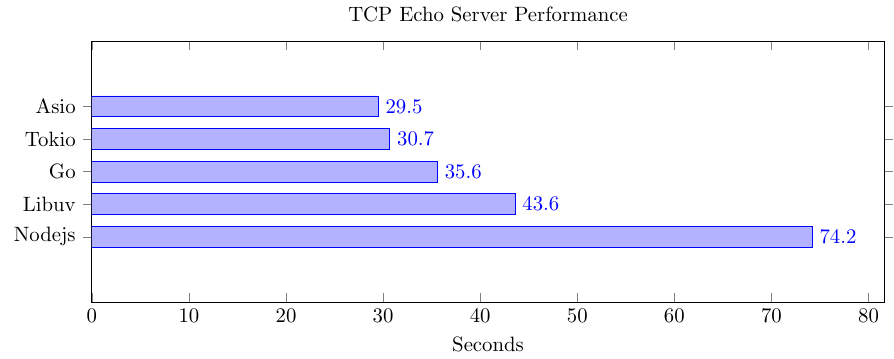
|
||||
|
||||
The tests were performed with a 1000 concurrent TCP connections on the
|
||||
localhost where latency is 0.07ms on average on my machine. On higher
|
||||
latency networks the difference among libraries is expected to
|
||||
decrease.
|
||||
|
||||
* I expected Libuv to have similar performance to Asio and Tokio.
|
||||
* I did expect nodejs to come a little behind given it is is
|
||||
javascript code. Otherwise I did expect it to have similar
|
||||
performance to libuv since it is the framework behind it.
|
||||
* Go did surprise me: faster than nodejs and libuv!
|
||||
|
||||
The code used in the benchmarks can be found at
|
||||
|
||||
* [Asio](https://github.com/boostorg/redis/blob/3fb018ccc6138d310ac8b73540391cdd8f2fdad6/benchmarks/cpp/asio/echo_server_direct.cpp): A variation of [this](https://github.com/chriskohlhoff/asio/blob/4915cfd8a1653c157a1480162ae5601318553eb8/asio/src/examples/cpp20/coroutines/echo_server.cpp) Asio example.
|
||||
* [Libuv](https://github.com/boostorg/redis/tree/835a1decf477b09317f391eddd0727213cdbe12b/benchmarks/c/libuv): Taken from [here](https://github.com/libuv/libuv/blob/06948c6ee502862524f233af4e2c3e4ca876f5f6/docs/code/tcp-echo-server/main.c) Libuv example .
|
||||
* [Tokio](https://github.com/boostorg/redis/tree/3fb018ccc6138d310ac8b73540391cdd8f2fdad6/benchmarks/rust/echo_server_direct): Taken from [here](https://docs.rs/tokio/latest/tokio/).
|
||||
* [Nodejs](https://github.com/boostorg/redis/tree/3fb018ccc6138d310ac8b73540391cdd8f2fdad6/benchmarks/nodejs/echo_server_direct)
|
||||
* [Go](https://github.com/boostorg/redis/blob/3fb018ccc6138d310ac8b73540391cdd8f2fdad6/benchmarks/go/echo_server_direct.go)
|
||||
|
||||
### With Redis
|
||||
|
||||
This is similar to the echo server described above but messages are
|
||||
echoed by Redis and not by the echo-server itself, which acts
|
||||
as a proxy between the client and the Redis server. The results
|
||||
can be seen below
|
||||
|
||||
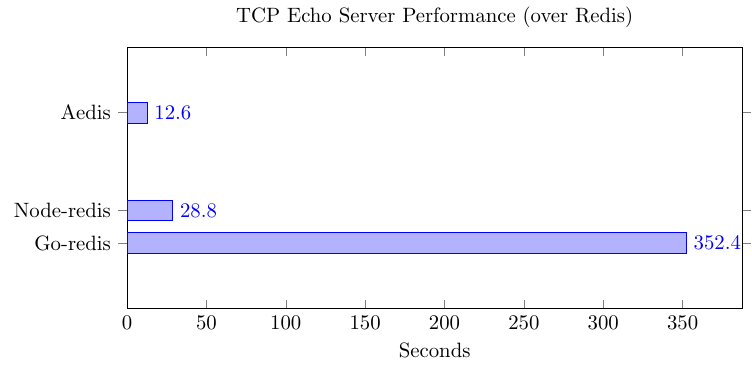
|
||||
|
||||
The tests were performed on a network where latency is 35ms on
|
||||
average, otherwise it uses the same number of TCP connections
|
||||
as the previous example.
|
||||
|
||||
As the reader can see, the Libuv and the Rust test are not depicted
|
||||
in the graph, the reasons are
|
||||
|
||||
* [redis-rs](https://github.com/redis-rs/redis-rs): This client
|
||||
comes so far behind that it can't even be represented together
|
||||
with the other benchmarks without making them look insignificant.
|
||||
I don't know for sure why it is so slow, I suppose it has
|
||||
something to do with its lack of automatic
|
||||
[pipelining](https://redis.io/docs/manual/pipelining/) support.
|
||||
In fact, the more TCP connections I lauch the worse its
|
||||
performance gets.
|
||||
|
||||
* Libuv: I left it out because it would require me writing to much
|
||||
c code. More specifically, I would have to use hiredis and
|
||||
implement support for pipelines manually.
|
||||
|
||||
The code used in the benchmarks can be found at
|
||||
|
||||
* [Boost.Redis](https://github.com/boostorg/redis): [code](https://github.com/boostorg/redis/blob/3fb018ccc6138d310ac8b73540391cdd8f2fdad6/examples/echo_server.cpp)
|
||||
* [node-redis](https://github.com/redis/node-redis): [code](https://github.com/boostorg/redis/tree/3fb018ccc6138d310ac8b73540391cdd8f2fdad6/benchmarks/nodejs/echo_server_over_redis)
|
||||
* [go-redis](https://github.com/go-redis/redis): [code](https://github.com/boostorg/redis/blob/3fb018ccc6138d310ac8b73540391cdd8f2fdad6/benchmarks/go/echo_server_over_redis.go)
|
||||
|
||||
### Conclusion
|
||||
|
||||
Redis clients have to support automatic pipelining to have competitive performance. For updates to this document follow https://github.com/boostorg/redis.
|
||||
|
||||
## Comparison
|
||||
|
||||
The main reason for why I started writing Boost.Redis was to have a client
|
||||
compatible with the Asio asynchronous model. As I made progresses I could
|
||||
also address what I considered weaknesses in other libraries. Due to
|
||||
time constraints I won't be able to give a detailed comparison with
|
||||
each client listed in the
|
||||
[official](https://redis.io/docs/clients/#cpp) list,
|
||||
instead I will focus on the most popular C++ client on github in number of
|
||||
stars, namely
|
||||
|
||||
* https://github.com/sewenew/redis-plus-plus
|
||||
|
||||
### Boost.Redis vs Redis-plus-plus
|
||||
|
||||
Before we start it is important to mention some of the things
|
||||
redis-plus-plus does not support
|
||||
|
||||
* The latest version of the communication protocol RESP3. Without that it is impossible to support some important Redis features like client side caching, among other things.
|
||||
* Coroutines.
|
||||
* Reading responses directly in user data structures to avoid creating temporaries.
|
||||
* Error handling with support for error-code.
|
||||
* Cancellation.
|
||||
|
||||
The remaining points will be addressed individually. Let us first
|
||||
have a look at what sending a command a pipeline and a transaction
|
||||
look like
|
||||
|
||||
```cpp
|
||||
auto redis = Redis("tcp://127.0.0.1:6379");
|
||||
|
||||
// Send commands
|
||||
redis.set("key", "val");
|
||||
auto val = redis.get("key"); // val is of type OptionalString.
|
||||
if (val)
|
||||
std::cout << *val << std::endl;
|
||||
|
||||
// Sending pipelines
|
||||
auto pipe = redis.pipeline();
|
||||
auto pipe_replies = pipe.set("key", "value")
|
||||
.get("key")
|
||||
.rename("key", "new-key")
|
||||
.rpush("list", {"a", "b", "c"})
|
||||
.lrange("list", 0, -1)
|
||||
.exec();
|
||||
|
||||
// Parse reply with reply type and index.
|
||||
auto set_cmd_result = pipe_replies.get<bool>(0);
|
||||
// ...
|
||||
|
||||
// Sending a transaction
|
||||
auto tx = redis.transaction();
|
||||
auto tx_replies = tx.incr("num0")
|
||||
.incr("num1")
|
||||
.mget({"num0", "num1"})
|
||||
.exec();
|
||||
|
||||
auto incr_result0 = tx_replies.get<long long>(0);
|
||||
// ...
|
||||
```
|
||||
|
||||
Some of the problems with this API are
|
||||
|
||||
* Heterogeneous treatment of commands, pipelines and transaction. This makes auto-pipelining impossible.
|
||||
* Any Api that sends individual commands has a very restricted scope of usability and should be avoided for performance reasons.
|
||||
* The API imposes exceptions on users, no error-code overload is provided.
|
||||
* No way to reuse the buffer for new calls to e.g. redis.get in order to avoid further dynamic memory allocations.
|
||||
* Error handling of resolve and connection not clear.
|
||||
|
||||
According to the documentation, pipelines in redis-plus-plus have
|
||||
the following characteristics
|
||||
|
||||
> NOTE: By default, creating a Pipeline object is NOT cheap, since
|
||||
> it creates a new connection.
|
||||
|
||||
This is clearly a downside in the API as pipelines should be the
|
||||
default way of communicating and not an exception, paying such a
|
||||
high price for each pipeline imposes a severe cost in performance.
|
||||
Transactions also suffer from the very same problem.
|
||||
|
||||
> NOTE: Creating a Transaction object is NOT cheap, since it
|
||||
> creates a new connection.
|
||||
|
||||
In Boost.Redis there is no difference between sending one command, a
|
||||
pipeline or a transaction because requests are decoupled
|
||||
from the IO objects.
|
||||
|
||||
> redis-plus-plus also supports async interface, however, async
|
||||
> support for Transaction and Subscriber is still on the way.
|
||||
>
|
||||
> The async interface depends on third-party event library, and so
|
||||
> far, only libuv is supported.
|
||||
|
||||
Async code in redis-plus-plus looks like the following
|
||||
|
||||
```cpp
|
||||
auto async_redis = AsyncRedis(opts, pool_opts);
|
||||
|
||||
Future<string> ping_res = async_redis.ping();
|
||||
|
||||
cout << ping_res.get() << endl;
|
||||
```
|
||||
As the reader can see, the async interface is based on futures
|
||||
which is also known to have a bad performance. The biggest
|
||||
problem however with this async design is that it makes it
|
||||
impossible to write asynchronous programs correctly since it
|
||||
starts an async operation on every command sent instead of
|
||||
enqueueing a message and triggering a write when it can be sent.
|
||||
It is also not clear how are pipelines realised with this design
|
||||
(if at all).
|
||||
|
||||
<a name="api-reference"></a>
|
||||
## Reference
|
||||
|
||||
The [High-Level](#high-level-api) page documents all public types.
|
||||
|
||||
## Acknowledgement
|
||||
|
||||
Acknowledgement to people that helped shape Boost.Redis
|
||||
|
||||
* Richard Hodges ([madmongo1](https://github.com/madmongo1)): For very helpful support with Asio, the design of asynchronous programs, etc.
|
||||
* Vinícius dos Santos Oliveira ([vinipsmaker](https://github.com/vinipsmaker)): For useful discussion about how Boost.Redis consumes buffers in the read operation.
|
||||
* Petr Dannhofer ([Eddie-cz](https://github.com/Eddie-cz)): For helping me understand how the `AUTH` and `HELLO` command can influence each other.
|
||||
* Mohammad Nejati ([ashtum](https://github.com/ashtum)): For pointing out scenarios where calls to `async_exec` should fail when the connection is lost.
|
||||
* Klemens Morgenstern ([klemens-morgenstern](https://github.com/klemens-morgenstern)): For useful discussion about timeouts, cancellation, synchronous interfaces and general help with Asio.
|
||||
* Vinnie Falco ([vinniefalco](https://github.com/vinniefalco)): For general suggestions about how to improve the code and the documentation.
|
||||
* Bram Veldhoen ([bveldhoen](https://github.com/bveldhoen)): For contributing a Redis-streams example.
|
||||
|
||||
Also many thanks to all individuals that participated in the Boost
|
||||
review
|
||||
|
||||
* Zach Laine: https://lists.boost.org/Archives/boost/2023/01/253883.php
|
||||
* Vinnie Falco: https://lists.boost.org/Archives/boost/2023/01/253886.php
|
||||
* Christian Mazakas: https://lists.boost.org/Archives/boost/2023/01/253900.php
|
||||
* Ruben Perez: https://lists.boost.org/Archives/boost/2023/01/253915.php
|
||||
* Dmitry Arkhipov: https://lists.boost.org/Archives/boost/2023/01/253925.php
|
||||
* Alan de Freitas: https://lists.boost.org/Archives/boost/2023/01/253927.php
|
||||
* Mohammad Nejati: https://lists.boost.org/Archives/boost/2023/01/253929.php
|
||||
* Sam Hartsfield: https://lists.boost.org/Archives/boost/2023/01/253931.php
|
||||
* Miguel Portilla: https://lists.boost.org/Archives/boost/2023/01/253935.php
|
||||
* Robert A.H. Leahy: https://lists.boost.org/Archives/boost/2023/01/253928.php
|
||||
|
||||
The Reviews can be found at:
|
||||
https://lists.boost.org/Archives/boost/2023/01/date.php. The thread
|
||||
with the ACCEPT from the review manager can be found here:
|
||||
https://lists.boost.org/Archives/boost/2023/01/253944.php.
|
||||
|
||||
## Changelog
|
||||
|
||||
### develop (incorporates changes to conform the boost review and more)
|
||||
|
||||
* Adds `boost::redis::config::database_index` to make it possible to
|
||||
choose a database before starting running commands e.g. after an
|
||||
automatic reconnection.
|
||||
|
||||
* Massive performance improvement. One of my tests went from
|
||||
140k req/s to 390k/s. This was possible after a parser
|
||||
simplification that reduced the number of reschedules and buffer
|
||||
rotations.
|
||||
|
||||
* Adds Redis stream example.
|
||||
|
||||
* Renames the project to Boost.Redis and moves the code into namespace
|
||||
`boost::redis`.
|
||||
|
||||
* As pointed out in the reviews the `to_bulk` and `from_bulk` names were too
|
||||
generic for ADL customization points. They gained the prefix `boost_redis_`.
|
||||
|
||||
* Moves `boost::redis::resp3::request` to `boost::redis::request`.
|
||||
|
||||
* Adds new typedef `boost::redis::response` that should be used instead of
|
||||
`std::tuple`.
|
||||
|
||||
* Adds new typedef `boost::redis::generic_response` that should be used instead
|
||||
of `std::vector<resp3::node<std::string>>`.
|
||||
|
||||
* Renames `redis::ignore` to `redis::ignore_t`.
|
||||
|
||||
* Changes `async_exec` to receive a `redis::response` instead of an adapter,
|
||||
namely, instead of passing `adapt(resp)` users should pass `resp` directly.
|
||||
|
||||
* Introduces `boost::redis::adapter::result` to store responses to commands
|
||||
including possible resp3 errors without losing the error diagnostic part. To
|
||||
access values now use `std::get<N>(resp).value()` instead of
|
||||
`std::get<N>(resp)`.
|
||||
|
||||
* Implements full-duplex communication. Before these changes the connection
|
||||
would wait for a response to arrive before sending the next one. Now requests
|
||||
are continuously coalesced and written to the socket. `request::coalesce`
|
||||
became unnecessary and was removed. I could measure significative performance
|
||||
gains with theses changes.
|
||||
|
||||
* Improves serialization examples using Boost.Describe to serialize to JSON and protobuf. See
|
||||
cpp20_json.cpp and cpp20_protobuf.cpp for more details.
|
||||
|
||||
* Upgrades to Boost 1.81.0.
|
||||
|
||||
* Fixes build with libc++.
|
||||
|
||||
* Adds high-level functionality to the connection classes. For
|
||||
example, `boost::redis::connection::async_run` will automatically
|
||||
resolve, connect, reconnect and perform health checks.
|
||||
|
||||
### v1.4.0-1
|
||||
|
||||
* Renames `retry_on_connection_lost` to `cancel_if_unresponded`. (v1.4.1)
|
||||
* Removes dependency on Boost.Hana, `boost::string_view`, Boost.Variant2 and Boost.Spirit.
|
||||
* Fixes build and setup CI on windows.
|
||||
|
||||
### v1.3.0-1
|
||||
|
||||
* Upgrades to Boost 1.80.0
|
||||
|
||||
* Removes automatic sending of the `HELLO` command. This can't be
|
||||
implemented properly without bloating the connection class. It is
|
||||
now a user responsibility to send HELLO. Requests that contain it have
|
||||
priority over other requests and will be moved to the front of the
|
||||
queue, see `aedis::request::config`
|
||||
|
||||
* Automatic name resolving and connecting have been removed from
|
||||
`aedis::connection::async_run`. Users have to do this step manually
|
||||
now. The reason for this change is that having them built-in doesn't
|
||||
offer enough flexibility that is need for boost users.
|
||||
|
||||
* Removes healthy checks and idle timeout. This functionality must now
|
||||
be implemented by users, see the examples. This is
|
||||
part of making Aedis useful to a larger audience and suitable for
|
||||
the Boost review process.
|
||||
|
||||
* The `aedis::connection` is now using a typeddef to a
|
||||
`net::ip::tcp::socket` and `aedis::ssl::connection` to
|
||||
`net::ssl::stream<net::ip::tcp::socket>`. Users that need to use
|
||||
other stream type must now specialize `aedis::basic_connection`.
|
||||
|
||||
* Adds a low level example of async code.
|
||||
|
||||
### v1.2.0
|
||||
|
||||
* `aedis::adapt` supports now tuples created with `std::tie`.
|
||||
`aedis::ignore` is now an alias to the type of `std::ignore`.
|
||||
|
||||
* Provides allocator support for the internal queue used in the
|
||||
`aedis::connection` class.
|
||||
|
||||
* Changes the behaviour of `async_run` to complete with success if
|
||||
asio::error::eof is received. This makes it easier to write
|
||||
composed operations with awaitable operators.
|
||||
|
||||
* Adds allocator support in the `aedis::request` (a
|
||||
contribution from Klemens Morgenstern).
|
||||
|
||||
* Renames `aedis::request::push_range2` to `push_range`. The
|
||||
suffix 2 was used for disambiguation. Klemens fixed it with SFINAE.
|
||||
|
||||
* Renames `fail_on_connection_lost` to
|
||||
`aedis::request::config::cancel_on_connection_lost`. Now, it will
|
||||
only cause connections to be canceled when `async_run` completes.
|
||||
|
||||
* Introduces `aedis::request::config::cancel_if_not_connected` which will
|
||||
cause a request to be canceled if `async_exec` is called before a
|
||||
connection has been established.
|
||||
|
||||
* Introduces new request flag `aedis::request::config::retry` that if
|
||||
set to true will cause the request to not be canceled when it was
|
||||
sent to Redis but remained unresponded after `async_run` completed.
|
||||
It provides a way to avoid executing commands twice.
|
||||
|
||||
* Removes the `aedis::connection::async_run` overload that takes
|
||||
request and adapter as parameters.
|
||||
|
||||
* Changes the way `aedis::adapt()` behaves with
|
||||
`std::vector<aedis::resp3::node<T>>`. Receiving RESP3 simple errors,
|
||||
blob errors or null won't causes an error but will be treated as
|
||||
normal response. It is the user responsibility to check the content
|
||||
in the vector.
|
||||
|
||||
* Fixes a bug in `connection::cancel(operation::exec)`. Now this
|
||||
call will only cancel non-written requests.
|
||||
|
||||
* Implements per-operation implicit cancellation support for
|
||||
`aedis::connection::async_exec`. The following call will `co_await (conn.async_exec(...) || timer.async_wait(...))`
|
||||
will cancel the request as long as it has not been written.
|
||||
|
||||
* Changes `aedis::connection::async_run` completion signature to
|
||||
`f(error_code)`. This is how is was in the past, the second
|
||||
parameter was not helpful.
|
||||
|
||||
* Renames `operation::receive_push` to `aedis::operation::receive`.
|
||||
|
||||
### v1.1.0-1
|
||||
|
||||
* Removes `coalesce_requests` from the `aedis::connection::config`, it
|
||||
became a request property now, see `aedis::request::config::coalesce`.
|
||||
|
||||
* Removes `max_read_size` from the `aedis::connection::config`. The maximum
|
||||
read size can be specified now as a parameter of the
|
||||
`aedis::adapt()` function.
|
||||
|
||||
* Removes `aedis::sync` class, see intro_sync.cpp for how to perform
|
||||
synchronous and thread safe calls. This is possible in Boost. 1.80
|
||||
only as it requires `boost::asio::deferred`.
|
||||
|
||||
* Moves from `boost::optional` to `std::optional`. This is part of
|
||||
moving to C++17.
|
||||
|
||||
* Changes the behaviour of the second `aedis::connection::async_run` overload
|
||||
so that it always returns an error when the connection is lost.
|
||||
|
||||
* Adds TLS support, see intro_tls.cpp.
|
||||
|
||||
* Adds an example that shows how to resolve addresses over sentinels,
|
||||
see subscriber_sentinel.cpp.
|
||||
|
||||
* Adds a `aedis::connection::timeouts::resp3_handshake_timeout`. This is
|
||||
timeout used to send the `HELLO` command.
|
||||
|
||||
* Adds `aedis::endpoint` where in addition to host and port, users can
|
||||
optionally provide username, password and the expected server role
|
||||
(see `aedis::error::unexpected_server_role`).
|
||||
|
||||
* `aedis::connection::async_run` checks whether the server role received in
|
||||
the hello command is equal to the expected server role specified in
|
||||
`aedis::endpoint`. To skip this check let the role variable empty.
|
||||
|
||||
* Removes reconnect functionality from `aedis::connection`. It
|
||||
is possible in simple reconnection strategies but bloats the class
|
||||
in more complex scenarios, for example, with sentinel,
|
||||
authentication and TLS. This is trivial to implement in a separate
|
||||
coroutine. As a result the `enum event` and `async_receive_event`
|
||||
have been removed from the class too.
|
||||
|
||||
* Fixes a bug in `connection::async_receive_push` that prevented
|
||||
passing any response adapter other that `adapt(std::vector<node>)`.
|
||||
|
||||
* Changes the behaviour of `aedis::adapt()` that caused RESP3 errors
|
||||
to be ignored. One consequence of it is that `connection::async_run`
|
||||
would not exit with failure in servers that required authentication.
|
||||
|
||||
* Changes the behaviour of `connection::async_run` that would cause it
|
||||
to complete with success when an error in the
|
||||
`connection::async_exec` occurred.
|
||||
|
||||
* Ports the buildsystem from autotools to CMake.
|
||||
|
||||
### v1.0.0
|
||||
|
||||
* Adds experimental cmake support for windows users.
|
||||
|
||||
* Adds new class `aedis::sync` that wraps an `aedis::connection` in
|
||||
a thread-safe and synchronous API. All free functions from the
|
||||
`sync.hpp` are now member functions of `aedis::sync`.
|
||||
|
||||
* Split `aedis::connection::async_receive_event` in two functions, one
|
||||
to receive events and another for server side pushes, see
|
||||
`aedis::connection::async_receive_push`.
|
||||
|
||||
* Removes collision between `aedis::adapter::adapt` and
|
||||
`aedis::adapt`.
|
||||
|
||||
* Adds `connection::operation` enum to replace `cancel_*` member
|
||||
functions with a single cancel function that gets the operations
|
||||
that should be cancelled as argument.
|
||||
|
||||
* Bugfix: a bug on reconnect from a state where the `connection` object
|
||||
had unsent commands. It could cause `async_exec` to never
|
||||
complete under certain conditions.
|
||||
|
||||
* Bugfix: Documentation of `adapt()` functions were missing from
|
||||
Doxygen.
|
||||
|
||||
### v0.3.0
|
||||
|
||||
* Adds `experimental::exec` and `receive_event` functions to offer a
|
||||
thread safe and synchronous way of executing requests across
|
||||
threads. See `intro_sync.cpp` and `subscriber_sync.cpp` for
|
||||
examples.
|
||||
|
||||
* `connection::async_read_push` was renamed to `async_receive_event`.
|
||||
|
||||
* `connection::async_receive_event` is now being used to communicate
|
||||
internal events to the user, such as resolve, connect, push etc. For
|
||||
examples see cpp20_subscriber.cpp and `connection::event`.
|
||||
|
||||
* The `aedis` directory has been moved to `include` to look more
|
||||
similar to Boost libraries. Users should now replace `-I/aedis-path`
|
||||
with `-I/aedis-path/include` in the compiler flags.
|
||||
|
||||
* The `AUTH` and `HELLO` commands are now sent automatically. This change was
|
||||
necessary to implement reconnection. The username and password
|
||||
used in `AUTH` should be provided by the user on
|
||||
`connection::config`.
|
||||
|
||||
* Adds support for reconnection. See `connection::enable_reconnect`.
|
||||
|
||||
* Fixes a bug in the `connection::async_run(host, port)` overload
|
||||
that was causing crashes on reconnection.
|
||||
|
||||
* Fixes the executor usage in the connection class. Before theses
|
||||
changes it was imposing `any_io_executor` on users.
|
||||
|
||||
* `connection::async_receiver_event` is not cancelled anymore when
|
||||
`connection::async_run` exits. This change makes user code simpler.
|
||||
|
||||
* `connection::async_exec` with host and port overload has been
|
||||
removed. Use the other `connection::async_run` overload.
|
||||
|
||||
* The host and port parameters from `connection::async_run` have been
|
||||
move to `connection::config` to better support authentication and
|
||||
failover.
|
||||
|
||||
* Many simplifications in the `chat_room` example.
|
||||
|
||||
* Fixes build in clang the compilers and makes some improvements in
|
||||
the documentation.
|
||||
|
||||
### v0.2.0-1
|
||||
|
||||
* Fixes a bug that happens on very high load. (v0.2.1)
|
||||
* Major rewrite of the high-level API. There is no more need to use the low-level API anymore.
|
||||
* No more callbacks: Sending requests follows the ASIO asynchronous model.
|
||||
* Support for reconnection: Pending requests are not canceled when a connection is lost and are re-sent when a new one is established.
|
||||
* The library is not sending HELLO-3 on user behalf anymore. This is important to support AUTH properly.
|
||||
|
||||
### v0.1.0-2
|
||||
|
||||
* Adds reconnect coroutine in the `echo_server` example. (v0.1.2)
|
||||
* Corrects `client::async_wait_for_data` with `make_parallel_group` to launch operation. (v0.1.2)
|
||||
* Improvements in the documentation. (v0.1.2)
|
||||
* Avoids dynamic memory allocation in the client class after reconnection. (v0.1.2)
|
||||
* Improves the documentation and adds some features to the high-level client. (v.0.1.1)
|
||||
* Improvements in the design and documentation.
|
||||
|
||||
### v0.0.1
|
||||
|
||||
* First release to collect design feedback.
|
||||
|
||||
|
||||
@@ -1,82 +0,0 @@
|
||||
/* Copyright (c) 2018-2022 Marcelo Zimbres Silva (mzimbres@gmail.com)
|
||||
*
|
||||
* Distributed under the Boost Software License, Version 1.0. (See
|
||||
* accompanying file LICENSE.txt)
|
||||
*/
|
||||
|
||||
#ifndef AEDIS_ADAPTER_ADAPT_HPP
|
||||
#define AEDIS_ADAPTER_ADAPT_HPP
|
||||
|
||||
#include <aedis/adapter/detail/response_traits.hpp>
|
||||
|
||||
namespace aedis {
|
||||
namespace adapter {
|
||||
|
||||
template <class T>
|
||||
using adapter_t = typename detail::adapter_t<T>;
|
||||
|
||||
/** \brief Creates a dummy response adapter.
|
||||
\ingroup any
|
||||
|
||||
The adapter returned by this function ignores responses. It is
|
||||
useful to avoid wasting time with responses which are not needed.
|
||||
|
||||
Example:
|
||||
|
||||
@code
|
||||
// Pushes and writes some commands to the server.
|
||||
sr.push(command::hello, 3);
|
||||
sr.push(command::ping);
|
||||
sr.push(command::quit);
|
||||
net::write(socket, net::buffer(request));
|
||||
|
||||
// Ignores all responses except for the response to ping.
|
||||
std::string buffer;
|
||||
resp3::read(socket, dynamic_buffer(buffer), adapt()); // hello
|
||||
resp3::read(socket, dynamic_buffer(buffer), adapt(resp)); // ping
|
||||
resp3::read(socket, dynamic_buffer(buffer, adapt())); // quit
|
||||
@endcode
|
||||
*/
|
||||
inline
|
||||
auto adapt() noexcept
|
||||
{ return detail::response_traits<void>::adapt(); }
|
||||
|
||||
/** \brief Adapts user data to read operations.
|
||||
* \ingroup any
|
||||
*
|
||||
* STL containers, \c std::tuple and built-in types are supported and
|
||||
* can be used in conjunction with \c boost::optional<T>.
|
||||
*
|
||||
* Example usage:
|
||||
*
|
||||
* @code
|
||||
* std::unordered_map<std::string, std::string> cont;
|
||||
* co_await async_read(socket, buffer, adapt(cont));
|
||||
* @endcode
|
||||
*
|
||||
* For a transaction
|
||||
*
|
||||
* @code
|
||||
* sr.push(command::multi);
|
||||
* sr.push(command::ping, ...);
|
||||
* sr.push(command::incr, ...);
|
||||
* sr.push_range(command::rpush, ...);
|
||||
* sr.push(command::lrange, ...);
|
||||
* sr.push(command::incr, ...);
|
||||
* sr.push(command::exec);
|
||||
*
|
||||
* co_await async_write(socket, buffer(request));
|
||||
*
|
||||
* // Reads the response to a transaction
|
||||
* std::tuple<std::string, int, int, std::vector<std::string>, int> execs;
|
||||
* co_await resp3::async_read(socket, dynamic_buffer(buffer), adapt(execs));
|
||||
* @endcode
|
||||
*/
|
||||
template<class T>
|
||||
auto adapt(T& t) noexcept
|
||||
{ return detail::response_traits<T>::adapt(t); }
|
||||
|
||||
} // adapter
|
||||
} // aedis
|
||||
|
||||
#endif // AEDIS_ADAPTER_ADAPT_HPP
|
||||
@@ -1,161 +0,0 @@
|
||||
/* Copyright (c) 2018-2022 Marcelo Zimbres Silva (mzimbres@gmail.com)
|
||||
*
|
||||
* Distributed under the Boost Software License, Version 1.0. (See
|
||||
* accompanying file LICENSE.txt)
|
||||
*/
|
||||
|
||||
#ifndef AEDIS_ADAPTER_RESPONSE_TRAITS_HPP
|
||||
#define AEDIS_ADAPTER_RESPONSE_TRAITS_HPP
|
||||
|
||||
#include <vector>
|
||||
#include <tuple>
|
||||
|
||||
#include <boost/mp11.hpp>
|
||||
#include <boost/variant2.hpp>
|
||||
|
||||
#include <aedis/resp3/type.hpp>
|
||||
#include <aedis/resp3/read.hpp>
|
||||
#include <aedis/adapter/detail/adapters.hpp>
|
||||
#include <aedis/adapter/error.hpp>
|
||||
|
||||
namespace aedis {
|
||||
namespace adapter {
|
||||
namespace detail {
|
||||
|
||||
/* Traits class for response objects.
|
||||
*
|
||||
* Provides traits for all supported response types i.e. all STL
|
||||
* containers and C++ buil-in types.
|
||||
*/
|
||||
template <class ResponseType>
|
||||
struct response_traits
|
||||
{
|
||||
using adapter_type = adapter::detail::wrapper<ResponseType>;
|
||||
static auto adapt(ResponseType& r) noexcept { return adapter_type{&r}; }
|
||||
};
|
||||
|
||||
template <class T>
|
||||
using adapter_t = typename response_traits<T>::adapter_type;
|
||||
|
||||
template <class T>
|
||||
struct response_traits<resp3::node<T>>
|
||||
{
|
||||
using response_type = resp3::node<T>;
|
||||
using adapter_type = adapter::detail::general_simple<response_type>;
|
||||
static auto adapt(response_type& v) noexcept { return adapter_type{&v}; }
|
||||
};
|
||||
|
||||
template <class String, class Allocator>
|
||||
struct response_traits<std::vector<resp3::node<String>, Allocator>>
|
||||
{
|
||||
using response_type = std::vector<resp3::node<String>, Allocator>;
|
||||
using adapter_type = adapter::detail::general_aggregate<response_type>;
|
||||
static auto adapt(response_type& v) noexcept { return adapter_type{&v}; }
|
||||
};
|
||||
|
||||
template <>
|
||||
struct response_traits<void>
|
||||
{
|
||||
using response_type = void;
|
||||
using adapter_type = resp3::detail::ignore_response;
|
||||
static auto adapt() noexcept { return adapter_type{}; }
|
||||
};
|
||||
|
||||
namespace detail {
|
||||
|
||||
// Duplicated here to avoid circular include dependency.
|
||||
template<class T>
|
||||
auto internal_adapt(T& t) noexcept
|
||||
{ return response_traits<T>::adapt(t); }
|
||||
|
||||
template <std::size_t N>
|
||||
struct assigner {
|
||||
template <class T1, class T2>
|
||||
static void assign(T1& dest, T2& from)
|
||||
{
|
||||
dest[N] = internal_adapt(std::get<N>(from));
|
||||
assigner<N - 1>::assign(dest, from);
|
||||
}
|
||||
};
|
||||
|
||||
template <>
|
||||
struct assigner<0> {
|
||||
template <class T1, class T2>
|
||||
static void assign(T1& dest, T2& from)
|
||||
{
|
||||
dest[0] = internal_adapt(std::get<0>(from));
|
||||
}
|
||||
};
|
||||
|
||||
template <class Tuple>
|
||||
class static_aggregate_adapter {
|
||||
private:
|
||||
using adapters_array_type =
|
||||
std::array<
|
||||
boost::mp11::mp_unique<
|
||||
boost::mp11::mp_rename<
|
||||
boost::mp11::mp_transform<
|
||||
adapter_t, Tuple>,
|
||||
boost::variant2::variant>>,
|
||||
std::tuple_size<Tuple>::value>;
|
||||
|
||||
std::size_t i_ = 0;
|
||||
std::size_t aggregate_size_ = 0;
|
||||
adapters_array_type adapters_;
|
||||
|
||||
public:
|
||||
static_aggregate_adapter(Tuple* r = nullptr)
|
||||
{
|
||||
detail::assigner<std::tuple_size<Tuple>::value - 1>::assign(adapters_, *r);
|
||||
}
|
||||
|
||||
void count(resp3::node<boost::string_view> const& nd)
|
||||
{
|
||||
if (nd.depth == 1) {
|
||||
if (is_aggregate(nd.data_type))
|
||||
aggregate_size_ = element_multiplicity(nd.data_type) * nd.aggregate_size;
|
||||
else
|
||||
++i_;
|
||||
|
||||
return;
|
||||
}
|
||||
|
||||
if (--aggregate_size_ == 0)
|
||||
++i_;
|
||||
}
|
||||
|
||||
void
|
||||
operator()(
|
||||
resp3::node<boost::string_view> const& nd,
|
||||
boost::system::error_code& ec)
|
||||
{
|
||||
using boost::variant2::visit;
|
||||
|
||||
if (nd.depth == 0) {
|
||||
auto const real_aggr_size = nd.aggregate_size * element_multiplicity(nd.data_type);
|
||||
if (real_aggr_size != std::tuple_size<Tuple>::value)
|
||||
ec = error::incompatible_size;
|
||||
|
||||
return;
|
||||
}
|
||||
|
||||
visit([&](auto& arg){arg(nd, ec);}, adapters_[i_]);
|
||||
count(nd);
|
||||
}
|
||||
};
|
||||
|
||||
} // detail
|
||||
|
||||
template <class... Ts>
|
||||
struct response_traits<std::tuple<Ts...>>
|
||||
{
|
||||
using response_type = std::tuple<Ts...>;
|
||||
using adapter_type = detail::static_aggregate_adapter<response_type>;
|
||||
static auto adapt(response_type& r) noexcept { return adapter_type{&r}; }
|
||||
};
|
||||
|
||||
} // detail
|
||||
} // adapter
|
||||
} // aedis
|
||||
|
||||
#endif // AEDIS_ADAPTER_RESPONSE_TRAITS_HPP
|
||||
@@ -1,66 +0,0 @@
|
||||
/* Copyright (c) 2018-2022 Marcelo Zimbres Silva (mzimbres@gmail.com)
|
||||
*
|
||||
* Distributed under the Boost Software License, Version 1.0. (See
|
||||
* accompanying file LICENSE.txt)
|
||||
*/
|
||||
|
||||
#ifndef AEDIS_ADAPTER_ERROR_HPP
|
||||
#define AEDIS_ADAPTER_ERROR_HPP
|
||||
|
||||
#include <system_error>
|
||||
|
||||
namespace aedis {
|
||||
namespace adapter {
|
||||
|
||||
/** \brief Adapter errors.
|
||||
* \ingroup any
|
||||
*/
|
||||
enum class error
|
||||
{
|
||||
/// Expects a simple RESP3 type but got an aggregate.
|
||||
expects_simple_type = 1,
|
||||
|
||||
/// Expects aggregate type.
|
||||
expects_aggregate_type,
|
||||
|
||||
/// Expects a map but got other aggregate.
|
||||
expects_map_type,
|
||||
|
||||
/// Expects a set aggregate but got something else.
|
||||
expects_set_type,
|
||||
|
||||
/// Nested response not supported.
|
||||
nested_aggregate_unsupported,
|
||||
|
||||
/// Got RESP3 simple error.
|
||||
simple_error,
|
||||
|
||||
/// Got RESP3 blob_error.
|
||||
blob_error,
|
||||
|
||||
/// Aggregate container has incompatible size.
|
||||
incompatible_size,
|
||||
|
||||
/// Not a double
|
||||
not_a_double,
|
||||
|
||||
/// Got RESP3 null type.
|
||||
null
|
||||
};
|
||||
|
||||
/** \brief Creates a error_code object from an error.
|
||||
* \ingroup any
|
||||
*/
|
||||
boost::system::error_code make_error_code(error e);
|
||||
|
||||
} // adapter
|
||||
} // aedis
|
||||
|
||||
namespace std {
|
||||
|
||||
template<>
|
||||
struct is_error_code_enum<::aedis::adapter::error> : std::true_type {};
|
||||
|
||||
} // std
|
||||
|
||||
#endif // AEDIS_ADAPTER_ERROR_HPP
|
||||
@@ -1,53 +0,0 @@
|
||||
/* Copyright (c) 2018-2022 Marcelo Zimbres Silva (mzimbres@gmail.com)
|
||||
*
|
||||
* Distributed under the Boost Software License, Version 1.0. (See
|
||||
* accompanying file LICENSE.txt)
|
||||
*/
|
||||
|
||||
#include <system_error>
|
||||
#include <boost/assert.hpp>
|
||||
|
||||
namespace aedis {
|
||||
namespace adapter {
|
||||
namespace detail {
|
||||
|
||||
struct error_category_impl : boost::system::error_category {
|
||||
|
||||
char const* name() const noexcept override
|
||||
{
|
||||
return "aedis.adapter";
|
||||
}
|
||||
|
||||
std::string message(int ev) const override
|
||||
{
|
||||
switch(static_cast<error>(ev)) {
|
||||
case error::expects_simple_type: return "Expects a simple RESP3 type.";
|
||||
case error::expects_aggregate_type: return "Expects aggregate type.";
|
||||
case error::expects_map_type: return "Expects map type.";
|
||||
case error::expects_set_type: return "Expects set type.";
|
||||
case error::nested_aggregate_unsupported: return "Nested aggregate unsupported.";
|
||||
case error::simple_error: return "Got RESP3 simple-error.";
|
||||
case error::blob_error: return "Got RESP3 blob-error.";
|
||||
case error::incompatible_size: return "Aggregate container has incompatible size.";
|
||||
case error::not_a_double: return "Not a double.";
|
||||
case error::null: return "Got RESP3 null.";
|
||||
default: BOOST_ASSERT(false);
|
||||
}
|
||||
}
|
||||
};
|
||||
|
||||
boost::system::error_category const& category()
|
||||
{
|
||||
static error_category_impl instance;
|
||||
return instance;
|
||||
}
|
||||
|
||||
} // detail
|
||||
|
||||
boost::system::error_code make_error_code(error e)
|
||||
{
|
||||
return boost::system::error_code{static_cast<int>(e), detail::category()};
|
||||
}
|
||||
|
||||
} // adapter
|
||||
} // aedis
|
||||
847
aedis/aedis.hpp
847
aedis/aedis.hpp
@@ -1,847 +0,0 @@
|
||||
/* Copyright (c) 2018-2022 Marcelo Zimbres Silva (mzimbres@gmail.com)
|
||||
*
|
||||
* Distributed under the Boost Software License, Version 1.0. (See
|
||||
* accompanying file LICENSE.txt)
|
||||
*/
|
||||
|
||||
#ifndef AEDIS_HPP
|
||||
#define AEDIS_HPP
|
||||
|
||||
#include <aedis/resp3/read.hpp>
|
||||
#include <aedis/adapter/adapt.hpp>
|
||||
#include <aedis/adapter/error.hpp>
|
||||
#include <aedis/redis/command.hpp>
|
||||
#include <aedis/sentinel/command.hpp>
|
||||
#include <aedis/generic/error.hpp>
|
||||
#include <aedis/generic/client.hpp>
|
||||
#include <aedis/generic/serializer.hpp>
|
||||
|
||||
/** \mainpage Documentation
|
||||
\tableofcontents
|
||||
|
||||
\section Overview
|
||||
|
||||
Aedis is a [Redis](https://redis.io/) client library built on top
|
||||
of [Asio](https://www.boost.org/doc/libs/release/doc/html/boost_asio.html)
|
||||
that provides simple and efficient communication with a Redis
|
||||
server. Some of its distinctive features are
|
||||
|
||||
@li Support for the latest version of the Redis communication protocol [RESP3](https://github.com/redis/redis-specifications/blob/master/protocol/RESP3.md).
|
||||
@li First class support for STL containers and C++ built-in types.
|
||||
@li Serialization and deserialization of your own data types that avoid unnecessary copies.
|
||||
@li Support for Redis [sentinel](https://redis.io/docs/manual/sentinel).
|
||||
@li Sync and async API.
|
||||
|
||||
In addition to that, Aedis provides a high-level client that offers the following functionality
|
||||
|
||||
@li Management of message queues.
|
||||
@li Simplified handling of server pushes.
|
||||
@li Zero asymptotic allocations by means of memory reuse.
|
||||
@li Healthy checks.
|
||||
|
||||
If you are interested in a detailed comparison of Redis clients
|
||||
and the design rationale behind Aedis jump to \ref why-aedis. Now
|
||||
let us have a look at the low-level API.
|
||||
|
||||
\section low-level-api Low-level API
|
||||
|
||||
The low-level API is very useful for tasks that can be performed
|
||||
in short lived connections, for example, assume we want to perform
|
||||
the following steps
|
||||
|
||||
@li Set the value of a Redis key.
|
||||
@li Set the expiration of that key to two seconds.
|
||||
@li Get and return its old value.
|
||||
@li Quit
|
||||
|
||||
The coroutine-based asynchronous implementation of the steps above look like
|
||||
|
||||
@code
|
||||
net::awaitable<std::string> set(net::ip::tcp::endpoint ep)
|
||||
{
|
||||
// To make code less verbose
|
||||
using tcp_socket = net::use_awaitable_t<>::as_default_on_t<net::ip::tcp::socket>;
|
||||
|
||||
tcp_socket socket{co_await net::this_coro::executor};
|
||||
co_await socket.async_connect(ep);
|
||||
|
||||
std::string buffer, response;
|
||||
|
||||
auto sr = make_serializer(request);
|
||||
sr.push(command::hello, 3);
|
||||
sr.push(command::set, "key", "Value", "EX", "2", "get");
|
||||
sr.push(command::quit);
|
||||
co_await net::async_write(socket, net::buffer(buffer));
|
||||
buffer.clear();
|
||||
|
||||
auto dbuffer = net::dynamic_buffer(read_buffer);
|
||||
co_await resp3::async_read(socket, dbuffer); // Hello ignored.
|
||||
co_await resp3::async_read(socket, dbuffer, adapt(response)); // Set
|
||||
co_await resp3::async_read(socket, dbuffer); // Quit ignored.
|
||||
|
||||
co_return response;
|
||||
}
|
||||
@endcode
|
||||
|
||||
The simplicity of the code above makes it self explanatory
|
||||
|
||||
@li Connect to the Redis server.
|
||||
@li Declare a \c std::string to hold the request and add some commands in it with a serializer.
|
||||
@li Write the payload to the socket and read the responses in the same order they were sent.
|
||||
@li Return the response to the user.
|
||||
|
||||
The @c hello command above is always required and must be sent
|
||||
first as it informs we want to communicate over RESP3.
|
||||
|
||||
\subsection requests Requests
|
||||
|
||||
As stated above, requests are created by defining a storage object
|
||||
and a serializer that knows how to convert user data into valid
|
||||
RESP3 wire-format. They are composed of one or more
|
||||
commands (in Redis documentation they are called [pipelines](https://redis.io/topics/pipelining)),
|
||||
which means users can add
|
||||
as many commands to the request as they like, a feature that aids
|
||||
performance.
|
||||
|
||||
The individual commands in a request assume many
|
||||
different forms
|
||||
|
||||
@li With and without keys.
|
||||
@li Variable length arguments.
|
||||
@li Ranges.
|
||||
@li etc.
|
||||
|
||||
To account for all these variations, the \c serializer class
|
||||
offers some member functions, each of them with a couple of
|
||||
overloads, for example
|
||||
|
||||
@code
|
||||
// Some data to send to Redis.
|
||||
std::string value = "some value";
|
||||
|
||||
std::list<std::string> list {"channel1", "channel2", "channel3"};
|
||||
|
||||
std::map<std::string, mystruct> map
|
||||
{ {"key1", "value1"}
|
||||
, {"key2", "value2"}
|
||||
, {"key3", "value3"}};
|
||||
|
||||
// Command with no arguments
|
||||
sr.push(command::quit);
|
||||
|
||||
// Command with variable lenght arguments.
|
||||
sr.push(command::set, "key", value, "EX", "2");
|
||||
|
||||
// Sends a container, no key.
|
||||
sr.push_range(command::subscribe, list);
|
||||
|
||||
// Same as above but an iterator range.
|
||||
sr.push_range2(command::subscribe, std::cbegin(list), std::cend(list));
|
||||
|
||||
// Sends a container, with key.
|
||||
sr.push_range(command::hset, "key", map);
|
||||
|
||||
// Same as above but as iterator range.
|
||||
sr.push_range2(command::hset, "key", std::cbegin(map), std::cend(map));
|
||||
@endcode
|
||||
|
||||
Once all commands have been added to the request, we can write it
|
||||
as usual by writing the payload to the socket
|
||||
|
||||
@code
|
||||
co_await net::async_write(socket, buffer(request));
|
||||
@endcode
|
||||
|
||||
\subsubsection requests-serialization Serialization
|
||||
|
||||
The \c send and \c send_range functions above work with integers
|
||||
e.g. \c int and \c std::string out of the box. To send your own
|
||||
data type defined the \c to_bulk function like this
|
||||
|
||||
@code
|
||||
// Example struct.
|
||||
struct mystruct {
|
||||
// ...
|
||||
};
|
||||
|
||||
void to_bulk(std::string& to, mystruct const& obj)
|
||||
{
|
||||
// Convert to obj string and call to_bulk (see also add_header
|
||||
// and add_separator)
|
||||
auto dummy = "Dummy serializaiton string.";
|
||||
aedis::resp3::to_bulk(to, dummy);
|
||||
}
|
||||
|
||||
std::map<std::string, mystruct> map
|
||||
{ {"key1", {...}}
|
||||
, {"key2", {...}}
|
||||
, {"key3", {...}}};
|
||||
|
||||
db.send_range(command::hset, "key", map);
|
||||
@endcode
|
||||
|
||||
It is quite common to store json string in Redis for example.
|
||||
|
||||
\subsection low-level-responses Responses
|
||||
|
||||
To read responses effectively, users must know their RESP3 type,
|
||||
this can be found in the Redis documentation of each command
|
||||
(https://redis.io/commands). For example
|
||||
|
||||
Command | RESP3 type | Documentation
|
||||
---------|-------------------------------------|--------------
|
||||
lpush | Number | https://redis.io/commands/lpush
|
||||
lrange | Array | https://redis.io/commands/lrange
|
||||
set | Simple-string, null or blob-string | https://redis.io/commands/set
|
||||
get | Blob-string | https://redis.io/commands/get
|
||||
smembers | Set | https://redis.io/commands/smembers
|
||||
hgetall | Map | https://redis.io/commands/hgetall
|
||||
|
||||
Once the RESP3 type of a given response is known we can choose a
|
||||
proper C++ data structure to receive it in. Fortunately, this is a
|
||||
simple task for most types. The table below summarises the options
|
||||
|
||||
RESP3 type | C++ | Type
|
||||
---------------|--------------------------------------------------------------|------------------
|
||||
Simple-string | \c std::string | Simple
|
||||
Simple-error | \c std::string | Simple
|
||||
Blob-string | \c std::string, \c std::vector | Simple
|
||||
Blob-error | \c std::string, \c std::vector | Simple
|
||||
Number | `long long`, `int`, `std::size_t`, \c std::string | Simple
|
||||
Double | `double`, \c std::string | Simple
|
||||
Null | `boost::optional<T>` | Simple
|
||||
Array | \c std::vector, \c std::list, \c std::array, \c std::deque | Aggregate
|
||||
Map | \c std::vector, \c std::map, \c std::unordered_map | Aggregate
|
||||
Set | \c std::vector, \c std::set, \c std::unordered_set | Aggregate
|
||||
Push | \c std::vector, \c std::map, \c std::unordered_map | Aggregate
|
||||
|
||||
Responses that contain nested aggregates or heterogeneous data
|
||||
types will be given special treatment later. As of this writing,
|
||||
not all RESP3 types are used by the Redis server, which means in
|
||||
practice users will be concerned with a reduced subset of the
|
||||
RESP3 specification. Now let us see some examples
|
||||
|
||||
@code
|
||||
auto dbuffer = dynamic_buffer(buffer);
|
||||
|
||||
// To ignore the response.
|
||||
co_await resp3::async_read(socket, dbuffer, adapt());
|
||||
|
||||
// Read in a std::string e.g. get.
|
||||
std::string str;
|
||||
co_await resp3::async_read(socket, dbuffer, adapt(str));
|
||||
|
||||
// Read in a long long e.g. rpush.
|
||||
long long number;
|
||||
co_await resp3::async_read(socket, dbuffer, adapt(number));
|
||||
|
||||
// Read in a std::set e.g. smembers.
|
||||
std::set<T, U> set;
|
||||
co_await resp3::async_read(socket, dbuffer, adapt(set));
|
||||
|
||||
// Read in a std::map e.g. hgetall.
|
||||
std::map<T, U> set;
|
||||
co_await resp3::async_read(socket, dbuffer, adapt(map));
|
||||
|
||||
// Read in a std::unordered_map e.g. hgetall.
|
||||
std::unordered_map<T, U> umap;
|
||||
co_await resp3::async_read(socket, dbuffer, adapt(umap));
|
||||
|
||||
// Read in a std::vector e.g. lrange.
|
||||
std::vector<T> vec;
|
||||
co_await resp3::async_read(socket, dbuffer, adapt(vec));
|
||||
@endcode
|
||||
|
||||
In other words, it is straightforward, just pass the result of \c
|
||||
adapt to the read function and make sure the response data type is
|
||||
compatible with the data structure you are calling @c adapter(...)
|
||||
with. All standard C++ containers are supported by Aedis.
|
||||
|
||||
\subsubsection Optional
|
||||
|
||||
It is not uncommon for apps to access keys that do not exist or
|
||||
that have already expired in the Redis server, to deal with these
|
||||
cases Aedis provides support for \c boost::optional. To use it,
|
||||
wrap your type around \c boost::optional like this
|
||||
|
||||
@code
|
||||
boost::optional<std::unordered_map<T, U>> umap;
|
||||
co_await resp3::async_read(socket, dynamic_buffer(buffer), adapt(umap));
|
||||
@endcode
|
||||
|
||||
Everything else stays the same, before accessing data, users will
|
||||
have to check or assert the optional contains a value.
|
||||
|
||||
\subsubsection heterogeneous_aggregates Heterogeneous aggregates
|
||||
|
||||
There are cases where Redis returns aggregates that
|
||||
contain heterogeneous data, for example, an array that contains
|
||||
integers, strings nested sets etc. Aedis supports reading such
|
||||
aggregates in a \c std::tuple efficiently as long as the they
|
||||
don't contain 3-order nested aggregates e.g. an array that
|
||||
contains an array of arrays. For example, to read the response to
|
||||
a \c hello command we can use the following response type.
|
||||
|
||||
@code
|
||||
using hello_type = std::tuple<
|
||||
std::string, std::string,
|
||||
std::string, std::string,
|
||||
std::string, int,
|
||||
std::string, int,
|
||||
std::string, std::string,
|
||||
std::string, std::string,
|
||||
std::string, std::vector<std::string>>;
|
||||
@endcode
|
||||
|
||||
Transactions are another example where this feature is useful, for
|
||||
example, the response to the transaction below
|
||||
|
||||
@code
|
||||
db.send(command::multi);
|
||||
db.send(command::get, "key1");
|
||||
db.send(command::lrange, "key2", 0, -1);
|
||||
db.send(command::hgetall, "key3");
|
||||
db.send(command::exec);
|
||||
@endcode
|
||||
|
||||
can be read in the following way
|
||||
|
||||
@code
|
||||
std::tuple<
|
||||
boost::optional<std::string>, // Response to get
|
||||
boost::optional<std::vector<std::string>>, // Response to lrange
|
||||
boost::optional<std::map<std::string, std::string>> // Response to hgetall
|
||||
> trans;
|
||||
|
||||
co_await resp3::async_read(socket, dynamic_buffer(buffer)); // Ignore multi
|
||||
co_await resp3::async_read(socket, dynamic_buffer(buffer)); // Ignore get
|
||||
co_await resp3::async_read(socket, dynamic_buffer(buffer)); // Ignore lrange
|
||||
co_await resp3::async_read(socket, dynamic_buffer(buffer)); // Ignore hgetall
|
||||
co_await resp3::async_read(socket, dynamic_buffer(buffer), adapt(trans));
|
||||
@endcode
|
||||
|
||||
Note that above we are not ignoring the response to the commands
|
||||
themselves but whether they have been successfully queued. Only
|
||||
after @c exec is received Redis will execute them in sequence and
|
||||
send all responses together in an array.
|
||||
|
||||
\subsubsection Serialization
|
||||
|
||||
As mentioned in \ref requests-serialization, it is common for
|
||||
users to serialized data before sending it to Redis e.g. json
|
||||
strings, for example
|
||||
|
||||
@code
|
||||
sr.push(command::set, "key", "{"Server": "Redis"}"); // Unquoted for readability.
|
||||
sr.push(command::get, "key")
|
||||
@endcode
|
||||
|
||||
For performance and convenience reasons, we may want to avoid
|
||||
receiving the response to the \c get command above as a string
|
||||
just to convert it later to a e.g. deserialized json. To support
|
||||
this, Aedis calls a user defined \c from_string function while
|
||||
parsing the response. In simple terms, define your type
|
||||
|
||||
@code
|
||||
struct mystruct {
|
||||
// struct fields.
|
||||
};
|
||||
@endcode
|
||||
|
||||
and deserialize it from a string in a function \c from_string with
|
||||
the following signature
|
||||
|
||||
@code
|
||||
void from_string(mystruct& obj, char const* p, std::size_t size, boost::system::error_code& ec)
|
||||
{
|
||||
// Deserializes p into obj.
|
||||
}
|
||||
@endcode
|
||||
|
||||
After that, you can start receiving data efficiently in the desired
|
||||
types e.g. \c mystruct, \c std::map<std::string, mystruct> etc.
|
||||
|
||||
\subsubsection gen-case The general case
|
||||
|
||||
As already mentioned, there are cases where responses to Redis
|
||||
commands won't fit in the model presented above, some examples are
|
||||
|
||||
@li Commands (like \c set) whose response don't have a fixed
|
||||
RESP3 type. Expecting an \c int and receiving a blob-string
|
||||
will result in error.
|
||||
@li RESP3 aggregates that contain nested aggregates can't be read in STL containers.
|
||||
@li Transactions with a dynamic number of commands can't be read in a \c std::tuple.
|
||||
|
||||
To deal with these cases Aedis provides the \c resp3::node
|
||||
type, that is the most general form of an element in a response,
|
||||
be it a simple RESP3 type or an aggregate. It is defined like this
|
||||
|
||||
@code
|
||||
template <class String>
|
||||
struct node {
|
||||
// The RESP3 type of the data in this node.
|
||||
type data_type;
|
||||
|
||||
// The number of elements of an aggregate (or 1 for simple data).
|
||||
std::size_t aggregate_size;
|
||||
|
||||
// The depth of this node in the response tree.
|
||||
std::size_t depth;
|
||||
|
||||
// The actual data. For aggregate types this is always empty.
|
||||
String value;
|
||||
};
|
||||
@endcode
|
||||
|
||||
Any response to a Redis command can be received in a \c
|
||||
std::vector<node<std::string>>. The vector can be seen as a
|
||||
pre-order view of the response tree
|
||||
(https://en.wikipedia.org/wiki/Tree_traversal#Pre-order,_NLR).
|
||||
Using it is no different that using other types
|
||||
|
||||
@code
|
||||
// Receives any RESP3 simple data type.
|
||||
node<std::string> resp;
|
||||
co_await resp3::async_read(socket, dynamic_buffer(buffer), adapt(resp));
|
||||
|
||||
// Receives any RESP3 simple or aggregate data type.
|
||||
std::vector<node<std::string>> resp;
|
||||
co_await resp3::async_read(socket, dynamic_buffer(buffer), adapt(resp));
|
||||
@endcode
|
||||
|
||||
For example, suppose we want to retrieve a hash data structure
|
||||
from Redis with \c hgetall, some of the options are
|
||||
|
||||
@li \c std::vector<node<std::string>: Works always.
|
||||
@li \c std::vector<std::string>: Efficient and flat, all elements as string.
|
||||
@li \c std::map<std::string, std::string>: Efficient if you need the data as a \c std::map
|
||||
@li \c std::map<U, V>: Efficient if you are storing serialized data. Avoids temporaries and requires \c from_string for \c U and \c V.
|
||||
|
||||
In addition to the above users can also use unordered versions of the containers. The same reasoning also applies to sets e.g. \c smembers.
|
||||
|
||||
\subsubsection low-level-adapters Adapters
|
||||
|
||||
Users that are not satisfied with any of the options above can
|
||||
write their own adapters very easily. For example, the adapter below
|
||||
can be used to print incoming data to the screen.
|
||||
|
||||
@code
|
||||
auto adapter = [](resp3::node<boost::string_view> const& nd, boost::system::error_code&)
|
||||
{
|
||||
std::cout << nd << std::endl;
|
||||
};
|
||||
|
||||
co_await resp3::async_read(socket, dynamic_buffer(buffer), adapter);
|
||||
@endcode
|
||||
|
||||
See more in the \ref examples section.
|
||||
|
||||
\section high-level-api High-level API
|
||||
|
||||
As stated earlier, the low-level API is very useful for tasks that
|
||||
can be performed with short lived connections. Sometimes however,
|
||||
the need for long-lived connections becomes compeling
|
||||
|
||||
@li \b Server \b pushes: Short lived connections can't deal with server pushes, that means no [client side caching](https://redis.io/topics/client-side-caching), [notifications](https://redis.io/topics/notifications) and [pubsub](https://redis.io/topics/pubsub).
|
||||
@li \b Performance: Keep opening and closing connections impact performance serverely.
|
||||
@li \b Pipeline: Code such as shown in \ref low-level-api don't support pipelines well since it can only send a fixed number of commands at time. It misses important optimization opportunities (https://redis.io/topics/pipelining).
|
||||
|
||||
A serious implementation that supports the points listed above is
|
||||
far from trivial and involves many complex asynchronous operations
|
||||
|
||||
@li \c async_resolve: Resolve a hostname.
|
||||
@li \c async_connect: Connect to Redis.
|
||||
@li \c async_read: Performed in a loop as long as the connection lives.
|
||||
@li \c async_write: Performed everytime a new message is added.
|
||||
@li \c async_wait: To timout all operations above if the server becomes unresponsive.
|
||||
|
||||
Notice that many of the operations above will run concurrently with each other and, in addition to that
|
||||
|
||||
@li \c async_write operations require management of the message queue to prevent concurrent writes.
|
||||
@li Healthy checks must be sent periodically by the client to detect a dead or unresponsive server.
|
||||
@li Recovery after a disconnection to avoid loosing enqueued commands.
|
||||
|
||||
Expecting users to implement these points themselves is
|
||||
unrealistic and could result in code that performs poorly and
|
||||
can't handle errors properly. To avoid all of that, Aedis
|
||||
provides its own implementation. The general form of a program
|
||||
that uses the high-level API looks like this
|
||||
|
||||
@code
|
||||
int main()
|
||||
{
|
||||
net::io_context ioc;
|
||||
|
||||
client_type db(ioc.get_executor());
|
||||
auto recv = std::make_shared<receiver>(db);
|
||||
db.set_receiver(recv);
|
||||
|
||||
db.async_run("127.0.0.1", "6379", [](auto ec){ ... });
|
||||
|
||||
ioc.run();
|
||||
}
|
||||
@endcode
|
||||
|
||||
Users are concerned only with the implementation of the
|
||||
receiver. For example
|
||||
|
||||
@code
|
||||
// Callbacks.
|
||||
struct receiver {
|
||||
void on_resp3(command cmd, node<string_view> const& nd, error_code& ec) { ... }
|
||||
void on_read(command cmd, std::size_t) { ... }
|
||||
void on_push(std::size_t n) { }
|
||||
void on_write(std::size_t n) { ... }
|
||||
};
|
||||
@endcode
|
||||
|
||||
The functions in the receiver above are callbacks that will be
|
||||
called when events arrives
|
||||
|
||||
@li \c on_resp3: Called when a new chunk of resp3 data is parsed.
|
||||
@li \c on_read: Called after the response to a command has been successfully read.
|
||||
@li \c on_push: Called when a server push is received.
|
||||
@li \c on_write: Called after a request has been successfully written to the stream.
|
||||
|
||||
The callbacks above are never called on errors, instead the \c
|
||||
async_run function returns. Reconnection is also supported, for
|
||||
example
|
||||
|
||||
@code
|
||||
net::awaitable<void> run(std::shared_ptr<client_type> db)
|
||||
{
|
||||
auto ex = co_await net::this_coro::executor;
|
||||
|
||||
boost::asio::steady_timer timer{ex};
|
||||
|
||||
for (error_code ec;;) {
|
||||
co_await db->async_run("127.0.0.1", "6379", redirect_error(use_awaitable, ec));
|
||||
|
||||
// Log the error.
|
||||
std::clog << ec.message() << std::endl;
|
||||
|
||||
// Wait two seconds and try again.
|
||||
timer.expires_after(std::chrono::seconds{2});
|
||||
co_await timer.async_wait(redirect_error(use_awaitable, ec));
|
||||
}
|
||||
}
|
||||
@endcode
|
||||
|
||||
when reconnecting the client will recover requests that haven't
|
||||
been sent to Redis yet.
|
||||
|
||||
\subsection high-level-sending-cmds Sending commands
|
||||
|
||||
The db object from the example above can be passed around to other
|
||||
objects so that commands can be sent from everywhere in the app.
|
||||
Sending commands is also similar to what has been discussed before
|
||||
|
||||
@code
|
||||
void foo(client<net::ip::tcp::socket>& db)
|
||||
{
|
||||
db.send(command::ping, "O rato roeu a roupa do rei de Roma");
|
||||
db.send(command::incr, "counter");
|
||||
db.send(command::set, "key", "Três pratos de trigo para três tigres");
|
||||
db.send(command::get, "key");
|
||||
...
|
||||
}
|
||||
@endcode
|
||||
|
||||
The \c send functions in this case will add commands to the output
|
||||
queue and send them only if there is no pending response. This is
|
||||
so because RESP3 is a request/response protocol, which means
|
||||
clients must wait for responses before sending
|
||||
the next request.
|
||||
|
||||
\section examples Examples
|
||||
|
||||
To better fix what has been said above, users should have a look at some simple examples.
|
||||
|
||||
\b Low \b level \b API (sync)
|
||||
|
||||
@li intro_sync.cpp: Synchronous API usage example.
|
||||
@li serialization_sync.cpp: Shows how serialize your own types.
|
||||
|
||||
\b Low \b level \b API (async-coroutine)
|
||||
|
||||
@li subscriber.cpp: Shows how channel subscription works at the low level.
|
||||
@li transaction.cpp: Shows how to read the response to transactions.
|
||||
@li custom_adapter.cpp: Shows how to write a response adapter that prints to the screen, see \ref low-level-adapters.
|
||||
|
||||
\b High \b level \b API (async only)
|
||||
|
||||
@li intro_high_level.cpp: High-level API usage example.
|
||||
@li aggregates_high_level.cpp: Shows how receive RESP3 aggregate data types in a general way or in STL containers.
|
||||
@li subscriber_high_level.cpp: Shows how channel [subscription](https://redis.io/topics/pubsub) works at a high-level.
|
||||
|
||||
\b Asynchronous \b Servers (high-level API)
|
||||
|
||||
@li echo_server.cpp: Shows the basic principles behind asynchronous communication with a database in an asynchronous server.
|
||||
@li chat_room.cpp: Shows how to build a scalable chat room.
|
||||
|
||||
\section using-aedis Using Aedis
|
||||
|
||||
To install and use Aedis you will need
|
||||
|
||||
- Boost 1.78 or greater.
|
||||
- Unix Shell and Make.
|
||||
- C++14. Some examples require C++20 with coroutine support.
|
||||
- Redis server.
|
||||
|
||||
Some examples will also require interaction with
|
||||
|
||||
- redis-cli: Used in one example.
|
||||
- Redis Sentinel Server: used in some examples.
|
||||
|
||||
Aedis has been tested with the following compilers
|
||||
|
||||
- Tested with gcc: 7.5.0, 8.4.0, 9.3.0, 10.3.0.
|
||||
- Tested with clang: 11.0.0, 10.0.0, 9.0.1, 8.0.1, 7.0.1.
|
||||
|
||||
\subsection Installation
|
||||
|
||||
The first thing to do is to download and unpack Aedis
|
||||
|
||||
```
|
||||
# Download the latest release on github
|
||||
$ wget https://github.com/mzimbres/aedis/releases
|
||||
|
||||
# Uncompress the tarball and cd into the dir
|
||||
$ tar -xzvf aedis-version.tar.gz
|
||||
```
|
||||
|
||||
If you can't use \c configure and \c make (e.g. Windows users)
|
||||
you can already add the directory where you unpacked Aedis to the
|
||||
include directories in your project, otherwise run
|
||||
|
||||
```
|
||||
# See configure --help for all options.
|
||||
$ ./configure --prefix=/opt/aedis-version --with-boost=/opt/boost_1_78_0
|
||||
|
||||
# Install Aedis in the path specified in --prefix
|
||||
$ sudo make install
|
||||
|
||||
```
|
||||
|
||||
and include the following header
|
||||
|
||||
```cpp
|
||||
#include <aedis/src.hpp>
|
||||
|
||||
```
|
||||
|
||||
in exactly one source file in your applications. At this point you
|
||||
can start using Aedis. To build the examples and run the tests run
|
||||
|
||||
```
|
||||
# Build aedis examples.
|
||||
$ make examples
|
||||
|
||||
# Test aedis in your machine.
|
||||
$ make check
|
||||
```
|
||||
|
||||
\subsection Developers
|
||||
|
||||
To generate the build system run
|
||||
|
||||
```
|
||||
$ autoreconf -i
|
||||
```
|
||||
|
||||
After that you will have a configure script
|
||||
that you can run as explained above, for example, to use a
|
||||
compiler other that the system compiler run
|
||||
|
||||
```
|
||||
$ CC=/opt/gcc-10.2.0/bin/gcc-10.2.0 CXX=/opt/gcc-10.2.0/bin/g++-10.2.0 CXXFLAGS="-g -Wall -Werror" ./configure ...
|
||||
$ make distcheck
|
||||
```
|
||||
|
||||
\section why-aedis Why Aedis
|
||||
|
||||
At the time of this writing there are seventeen Redis clients
|
||||
listed in the [official](https://redis.io/docs/clients/#cpp) list.
|
||||
With so many clients available it is not unlikely that users are
|
||||
asking themselves why yet another one. In this section I will try
|
||||
to compare Aedis to the most popular clients and why we need
|
||||
Aedis. Notice however that this is ongoing work as comparing
|
||||
client objectively is difficult and time consuming.
|
||||
|
||||
The most popular client at the moment of this writing ranked by
|
||||
github stars is
|
||||
|
||||
@li https://github.com/sewenew/redis-plus-plus
|
||||
|
||||
Before we start it is worth mentioning some of the things it does
|
||||
not support
|
||||
|
||||
@li RESP3. Without RESP3 is impossible to support some important
|
||||
Redis features like client side caching, among other things.
|
||||
@li The Asio asynchronous model.
|
||||
@li Serialization of user data types that avoids temporaries.
|
||||
@li Error handling with error-code and exception overloads.
|
||||
@li Healthy checks.
|
||||
@li Fine control over memory allocation by means of allocators.
|
||||
|
||||
The remaining points will be addressed individually.
|
||||
|
||||
@subsection redis-plus-plus
|
||||
|
||||
Let us first have a look at what sending a command a pipeline and a
|
||||
transaction look like
|
||||
|
||||
@code
|
||||
auto redis = Redis("tcp://127.0.0.1:6379");
|
||||
|
||||
// Send commands
|
||||
redis.set("key", "val");
|
||||
auto val = redis.get("key"); // val is of type OptionalString.
|
||||
if (val)
|
||||
std::cout << *val << std::endl;
|
||||
|
||||
// Sending pipelines
|
||||
auto pipe = redis.pipeline();
|
||||
auto pipe_replies = pipe.set("key", "value")
|
||||
.get("key")
|
||||
.rename("key", "new-key")
|
||||
.rpush("list", {"a", "b", "c"})
|
||||
.lrange("list", 0, -1)
|
||||
.exec();
|
||||
|
||||
// Parse reply with reply type and index.
|
||||
auto set_cmd_result = pipe_replies.get<bool>(0);
|
||||
// ...
|
||||
|
||||
// Sending a transaction
|
||||
auto tx = redis.transaction();
|
||||
auto tx_replies = tx.incr("num0")
|
||||
.incr("num1")
|
||||
.mget({"num0", "num1"})
|
||||
.exec();
|
||||
|
||||
auto incr_result0 = tx_replies.get<long long>(0);
|
||||
// ...
|
||||
@endcode
|
||||
|
||||
Some of the problems with this API are
|
||||
|
||||
@li Heterogeneous treatment of commands, pipelines and transaction.
|
||||
@li Having to manually finish the pipeline with \c .exec() is a major source of headache. This is not required by the protocol itself but results from the abstraction used.
|
||||
@li Any Api that sends individual commands has a very restricted scope of usability and should be avoided in anything that needs minimum performance guarantees.
|
||||
@li The API imposes exceptions on users, no error-code overload is provided.
|
||||
@li No control over dynamic allocations.
|
||||
@li No way to reuse the buffer for new calls to e.g. \c redis.get in order to avoid further dynamic memory allocations.
|
||||
@li Error handling of resolve and connection no clear.
|
||||
|
||||
According to the documentation, pipelines in redis-plus-plus have
|
||||
the following characteristics
|
||||
|
||||
> NOTE: By default, creating a Pipeline object is NOT cheap, since
|
||||
> it creates a new connection.
|
||||
|
||||
This is clearly a downside of the API as pipelines should be the
|
||||
default way of communicating and not an exception, paying such a
|
||||
high price for each pipeline imposes a severe cost in performance.
|
||||
Transactions also suffer from the very same problem
|
||||
|
||||
> NOTE: Creating a Transaction object is NOT cheap, since it
|
||||
> creates a new connection.
|
||||
|
||||
In Aedis there is no difference between sending one command, a
|
||||
pipeline or a transaction because creating the request is decoupled
|
||||
from the IO objects, for example
|
||||
|
||||
@code
|
||||
std::string request;
|
||||
auto sr = make_serializer(request);
|
||||
sr.push(command::hello, 3);
|
||||
sr.push(command::multi);
|
||||
sr.push(command::ping, "Some message.");
|
||||
sr.push(command::set, "low-level-key", "some content", "EX", "2");
|
||||
sr.push(command::exec);
|
||||
sr.push(command::ping, "Another message.");
|
||||
net::write(socket, net::buffer(request));
|
||||
@endcode
|
||||
|
||||
The request created above will be sent to Redis in a single
|
||||
pipeline and imposes no restriction on what it contains e.g. the
|
||||
number of commands, transactions etc. The problems mentioned above
|
||||
simply do not exist in Aedis. The way responses are read is
|
||||
also more flexible
|
||||
|
||||
@code
|
||||
std::string buffer;
|
||||
auto dbuffer = net::dynamic_buffer(buffer);
|
||||
|
||||
std::tuple<std::string, boost::optional<std::string>> response;
|
||||
resp3::read(socket, dbuffer); // hellp
|
||||
resp3::read(socket, dbuffer); // multi
|
||||
resp3::read(socket, dbuffer); // ping
|
||||
resp3::read(socket, dbuffer); // set
|
||||
resp3::read(socket, dbuffer, adapt(response));
|
||||
resp3::read(socket, dbuffer); // quit
|
||||
@endcode
|
||||
|
||||
@li The response objects are passed by the caller to the read
|
||||
functions so that he has fine control over memory allocations and
|
||||
object lifetime.
|
||||
@li The user can either use error-code or exceptions.
|
||||
@li Each response can be read individually in the response object
|
||||
avoiding temporaries.
|
||||
@li It is possible to ignore responses.
|
||||
|
||||
This was the blocking API, now let us compare the async interface
|
||||
|
||||
> redis-plus-plus also supports async interface, however, async
|
||||
> support for Transaction and Subscriber is still on the way.
|
||||
>
|
||||
> The async interface depends on third-party event library, and so
|
||||
> far, only libuv is supported.
|
||||
|
||||
Async code in redis-plus-plus looks like the following
|
||||
|
||||
@code
|
||||
auto async_redis = AsyncRedis(opts, pool_opts);
|
||||
|
||||
Future<string> ping_res = async_redis.ping();
|
||||
|
||||
cout << ping_res.get() << endl;
|
||||
@endcode
|
||||
|
||||
As the reader can see, the async interface is based on futures
|
||||
which is also known to have a bad performance. The biggest
|
||||
problem however with this async design is that it makes it
|
||||
impossible to write asynchronous programs correctly since it
|
||||
starts an async operation on every command sent instead of
|
||||
enqueueing a message and triggering a write. It is also not clear
|
||||
how are pipelines realised with the design (if at all).
|
||||
|
||||
In Aedis the send function looks like this
|
||||
|
||||
@code
|
||||
template <class... Ts>
|
||||
void client::send(Command cmd, Ts const&... args);
|
||||
@endcode
|
||||
|
||||
and the response is delivered through a callback.
|
||||
|
||||
\section Acknowledgement
|
||||
|
||||
Some people that were helpful in the development of Aedis
|
||||
|
||||
@li Richard Hodges ([madmongo1](https://github.com/madmongo1)): For answering pretty much every question I had about Asio and the design of asynchronous programs.
|
||||
@li Vinícius dos Santos Oliveira ([vinipsmaker](https://github.com/vinipsmaker)): For useful discussion about how Aedis consumes buffers in the read operation (among other things).
|
||||
|
||||
\section Reference
|
||||
|
||||
See \subpage any.
|
||||
|
||||
*/
|
||||
|
||||
/** \defgroup any Reference
|
||||
*
|
||||
* This page contains the documentation of all user facing code.
|
||||
*/
|
||||
|
||||
#endif // AEDIS_HPP
|
||||
@@ -1,701 +0,0 @@
|
||||
/* Copyright (c) 2018-2022 Marcelo Zimbres Silva (mzimbres@gmail.com)
|
||||
*
|
||||
* Distributed under the Boost Software License, Version 1.0. (See
|
||||
* accompanying file LICENSE.txt)
|
||||
*/
|
||||
|
||||
#ifndef AEDIS_GENERIC_CLIENT_HPP
|
||||
#define AEDIS_GENERIC_CLIENT_HPP
|
||||
|
||||
#include <vector>
|
||||
#include <limits>
|
||||
#include <functional>
|
||||
#include <iterator>
|
||||
#include <algorithm>
|
||||
#include <utility>
|
||||
#include <chrono>
|
||||
|
||||
#include <boost/asio/ip/tcp.hpp>
|
||||
#include <boost/asio/steady_timer.hpp>
|
||||
|
||||
#include <aedis/resp3/type.hpp>
|
||||
#include <aedis/resp3/node.hpp>
|
||||
#include <aedis/redis/command.hpp>
|
||||
#include <aedis/generic/detail/client_ops.hpp>
|
||||
|
||||
namespace aedis {
|
||||
namespace generic {
|
||||
|
||||
/** \brief A high level Redis client.
|
||||
* \ingroup any
|
||||
*
|
||||
* This class keeps a connection open to the Redis server where
|
||||
* commands can be sent at any time. For more details, please see the
|
||||
* documentation of each individual function.
|
||||
*/
|
||||
template <class AsyncReadWriteStream, class Command>
|
||||
class client {
|
||||
public:
|
||||
/// Executor type.
|
||||
using executor_type = typename AsyncReadWriteStream::executor_type;
|
||||
|
||||
/// Callback type of read operations.
|
||||
using read_handler_type = std::function<void(Command cmd, std::size_t)>;
|
||||
|
||||
/// Callback type of write operations.
|
||||
using write_handler_type = std::function<void(std::size_t)>;
|
||||
|
||||
/// Callback type of push operations.
|
||||
using push_handler_type = std::function<void(std::size_t)>;
|
||||
|
||||
/// Callback type of resp3 operations.
|
||||
using resp3_handler_type = std::function<void(Command, resp3::node<boost::string_view> const&, boost::system::error_code&)>;
|
||||
|
||||
using default_completion_token_type = boost::asio::default_completion_token_t<executor_type>;
|
||||
|
||||
/** @brief Configuration parameters.
|
||||
*/
|
||||
struct config {
|
||||
/// Timeout of the \c async_resolve operation.
|
||||
std::chrono::seconds resolve_timeout = std::chrono::seconds{5};
|
||||
|
||||
/// Timeout of the \c async_connect operation.
|
||||
std::chrono::seconds connect_timeout = std::chrono::seconds{5};
|
||||
|
||||
/// Timeout of the \c async_read operation.
|
||||
std::chrono::seconds read_timeout = std::chrono::seconds{5};
|
||||
|
||||
/// Timeout of the \c async_write operation.
|
||||
std::chrono::seconds write_timeout = std::chrono::seconds{5};
|
||||
|
||||
/// Time after which a connection is considered idle if no data is received.
|
||||
std::chrono::seconds idle_timeout = std::chrono::seconds{10};
|
||||
|
||||
/// The maximum size allwed in a read operation.
|
||||
std::size_t max_read_size = (std::numeric_limits<std::size_t>::max)();
|
||||
};
|
||||
|
||||
/** \brief Constructor.
|
||||
*
|
||||
* \param ex The executor.
|
||||
* \param cfg Configuration parameters.
|
||||
*/
|
||||
client(boost::asio::any_io_executor ex, config cfg = config{})
|
||||
: resv_{ex}
|
||||
, read_timer_{ex}
|
||||
, write_timer_{ex}
|
||||
, wait_write_timer_{ex}
|
||||
, check_idle_timer_{ex}
|
||||
, cfg_{cfg}
|
||||
, on_read_{[](Command, std::size_t){}}
|
||||
, on_write_{[](std::size_t){}}
|
||||
, on_push_{[](std::size_t){}}
|
||||
, on_resp3_{[](Command, resp3::node<boost::string_view> const&, boost::system::error_code&) {}}
|
||||
, sr_{requests_}
|
||||
, last_data_{std::chrono::time_point<std::chrono::steady_clock>::min()}
|
||||
, type_{resp3::type::invalid}
|
||||
, cmd_info_{std::make_pair<Command>(Command::invalid, 0)}
|
||||
{
|
||||
if (cfg.idle_timeout < std::chrono::seconds{2})
|
||||
cfg.idle_timeout = std::chrono::seconds{2};
|
||||
}
|
||||
|
||||
/// Returns the executor.
|
||||
auto get_executor() {return read_timer_.get_executor();}
|
||||
|
||||
/** @brief Adds a command to the output command queue.
|
||||
*
|
||||
* Adds a command to the end of the next request and signals the
|
||||
* writer operation there is a new message awaiting to be sent.
|
||||
* Otherwise the function is equivalent to serializer::push. @sa
|
||||
* serializer.
|
||||
*/
|
||||
template <class... Ts>
|
||||
void send(Command cmd, Ts const&... args)
|
||||
{
|
||||
auto const can_write = prepare_next();
|
||||
|
||||
auto const before = requests_.size();
|
||||
sr_.push(cmd, args...);
|
||||
auto const d = requests_.size() - before;
|
||||
BOOST_ASSERT(d != 0);
|
||||
info_.back().size += d;;
|
||||
|
||||
if (!has_push_response(cmd)) {
|
||||
commands_.push_back(std::make_pair(cmd, d));
|
||||
++info_.back().cmds;
|
||||
}
|
||||
|
||||
if (can_write)
|
||||
wait_write_timer_.cancel_one();
|
||||
}
|
||||
|
||||
/** @brief Adds a command to the output command queue.
|
||||
*
|
||||
* Adds a command to the end of the next request and signals the
|
||||
* writer operation there is a new message awaiting to be sent.
|
||||
* Otherwise the function is equivalent to
|
||||
* serializer::push_range2.
|
||||
* @sa serializer.
|
||||
*/
|
||||
template <class Key, class ForwardIterator>
|
||||
void send_range2(Command cmd, Key const& key, ForwardIterator begin, ForwardIterator end)
|
||||
{
|
||||
if (begin == end)
|
||||
return;
|
||||
|
||||
auto const can_write = prepare_next();
|
||||
|
||||
auto const before = requests_.size();
|
||||
sr_.push_range2(cmd, key, begin, end);
|
||||
auto const d = requests_.size() - before;
|
||||
BOOST_ASSERT(d != 0);
|
||||
info_.back().size += d;
|
||||
|
||||
if (!has_push_response(cmd)) {
|
||||
commands_.push_back(std::make_pair(cmd, d));
|
||||
++info_.back().cmds;
|
||||
}
|
||||
|
||||
if (can_write)
|
||||
wait_write_timer_.cancel_one();
|
||||
}
|
||||
|
||||
/** @brief Adds a command to the output command queue.
|
||||
*
|
||||
* Adds a command to the end of the next request and signals the
|
||||
* writer operation there is a new message awaiting to be sent.
|
||||
* Otherwise the function is equivalent to
|
||||
* serializer::push_range2.
|
||||
* @sa serializer.
|
||||
*/
|
||||
template <class ForwardIterator>
|
||||
void send_range2(Command cmd, ForwardIterator begin, ForwardIterator end)
|
||||
{
|
||||
if (begin == end)
|
||||
return;
|
||||
|
||||
auto const can_write = prepare_next();
|
||||
|
||||
auto const before = requests_.size();
|
||||
sr_.push_range2(cmd, begin, end);
|
||||
auto const d = requests_.size() - before;
|
||||
BOOST_ASSERT(d != 0);
|
||||
info_.back().size += d;
|
||||
|
||||
if (!has_push_response(cmd)) {
|
||||
commands_.push_back(std::make_pair(cmd, d));
|
||||
++info_.back().cmds;
|
||||
}
|
||||
|
||||
if (can_write)
|
||||
wait_write_timer_.cancel_one();
|
||||
}
|
||||
|
||||
/** @brief Adds a command to the output command queue.
|
||||
*
|
||||
* Adds a command to the end of the next request and signals the
|
||||
* writer operation there is a new message awaiting to be sent.
|
||||
* Otherwise the function is equivalent to
|
||||
* serializer::push_range.
|
||||
* @sa serializer.
|
||||
*/
|
||||
template <class Key, class Range>
|
||||
void send_range(Command cmd, Key const& key, Range const& range)
|
||||
{
|
||||
using std::begin;
|
||||
using std::end;
|
||||
send_range2(cmd, key, begin(range), end(range));
|
||||
}
|
||||
|
||||
/** @brief Adds a command to the output command queue.
|
||||
*
|
||||
* Adds a command to the end of the next request and signals the
|
||||
* writer operation there is a new message awaiting to be sent.
|
||||
* Otherwise the function is equivalent to
|
||||
* serializer::push_range.
|
||||
* @sa serializer.
|
||||
*/
|
||||
template <class Range>
|
||||
void send_range(Command cmd, Range const& range)
|
||||
{
|
||||
using std::begin;
|
||||
using std::end;
|
||||
send_range2(cmd, begin(range), end(range));
|
||||
}
|
||||
|
||||
/** @brief Starts communication with the Redis server asynchronously.
|
||||
*
|
||||
* This function performs the following steps
|
||||
*
|
||||
* @li Resolves the Redis host as of \c async_resolve with the
|
||||
* timeout passed in client::config::resolve_timeout.
|
||||
*
|
||||
* @li Connects to one of the endpoints returned by the resolve
|
||||
* operation with the timeout passed in client::config::connect_timeout.
|
||||
*
|
||||
* @li Starts the \c async_read operation that keeps reading incoming
|
||||
* responses. Each individual read uses the timeout passed on
|
||||
* client::config::read_timeout. After each successful read it
|
||||
* will call the read or push callback.
|
||||
*
|
||||
* @li Starts the \c async_write operation that waits for new commands
|
||||
* to be sent to Redis. Each individual write uses the timeout
|
||||
* passed on client::config::write_timeout. After a successful
|
||||
* write it will call the write callback.
|
||||
*
|
||||
* @li Starts the check idle operation with the timeout specified
|
||||
* in client::config::idle_timeout. If no data is received during
|
||||
* that time interval \c async_run completes with
|
||||
* generic::error::idle_timeout.
|
||||
*
|
||||
* @li Starts the healthy check operation that sends
|
||||
* redis::command::ping to Redis with a frequency equal to
|
||||
* client::config::idle_timeout / 2.
|
||||
*
|
||||
* In addition to the callbacks mentioned above, the read
|
||||
* operations will call the resp3 callback as soon a new chunks of
|
||||
* data become available to the user.
|
||||
*
|
||||
* It is safe to call \c async_run after it has returned. In this
|
||||
* case, any outstanding commands will be sent after the
|
||||
* connection is restablished. If a disconnect occurs while the
|
||||
* response to a request has not been received, the client doesn't
|
||||
* try to resend it to avoid resubmission.
|
||||
*
|
||||
* Example:
|
||||
*
|
||||
* @code
|
||||
* awaitable<void> run_with_reconnect(std::shared_ptr<client_type> db)
|
||||
* {
|
||||
* auto ex = co_await this_coro::executor;
|
||||
* asio::steady_timer timer{ex};
|
||||
*
|
||||
* for (error_code ec;;) {
|
||||
* co_await db->async_run("127.0.0.1", "6379", redirect_error(use_awaitable, ec));
|
||||
* timer.expires_after(std::chrono::seconds{2});
|
||||
* co_await timer.async_wait(redirect_error(use_awaitable, ec));
|
||||
* }
|
||||
* }
|
||||
* @endcode
|
||||
*
|
||||
* \param host Ip address or name of the Redis server.
|
||||
* \param port Port where the Redis server is listening.
|
||||
* \param token The completion token.
|
||||
*
|
||||
* The completion token must have the following signature
|
||||
*
|
||||
* @code
|
||||
* void f(boost::system::error_code);
|
||||
* @endcode
|
||||
*
|
||||
* \return This function returns only when there is an error.
|
||||
*/
|
||||
template <class CompletionToken = default_completion_token_type>
|
||||
auto
|
||||
async_run(
|
||||
boost::string_view host = "127.0.0.1",
|
||||
boost::string_view port = "6379",
|
||||
CompletionToken token = CompletionToken{})
|
||||
{
|
||||
host_ = host;
|
||||
port_ = port;
|
||||
|
||||
return boost::asio::async_compose
|
||||
< CompletionToken
|
||||
, void(boost::system::error_code)
|
||||
>(detail::run_op<client>{this}, token, read_timer_, write_timer_, wait_write_timer_);
|
||||
}
|
||||
|
||||
/// Set the read handler.
|
||||
void set_read_handler(read_handler_type rh)
|
||||
{ on_read_ = std::move(rh); }
|
||||
|
||||
/// Set the write handler.
|
||||
void set_write_handler(write_handler_type wh)
|
||||
{ on_write_ = std::move(wh); }
|
||||
|
||||
/// Set the push handler.
|
||||
void set_push_handler(push_handler_type ph)
|
||||
{ on_push_ = std::move(ph); }
|
||||
|
||||
/// Set the resp3 handler.
|
||||
void set_resp3_handler(resp3_handler_type rh)
|
||||
{ on_resp3_ = std::move(rh); }
|
||||
|
||||
/** @brief Convenience callback setter.
|
||||
*
|
||||
* Expects a class with the following member functions
|
||||
*
|
||||
* @code
|
||||
* struct receiver {
|
||||
* void on_resp3(Command cmd, resp3::node<boost::string_view> const& nd, boost::system::error_code& ec);
|
||||
* void on_read(Command cmd, std::size_t);
|
||||
* void on_write(std::size_t n);
|
||||
* void on_push(std::size_t n);
|
||||
* };
|
||||
* @endcode
|
||||
*/
|
||||
template <class Receiver>
|
||||
void set_receiver(std::shared_ptr<Receiver> recv)
|
||||
{
|
||||
on_resp3_ = [recv](Command cmd, resp3::node<boost::string_view> const& nd, boost::system::error_code& ec){recv->on_resp3(cmd, nd, ec);};
|
||||
on_read_ = [recv](Command cmd, std::size_t n){recv->on_read(cmd, n);};
|
||||
on_write_ = [recv](std::size_t n){recv->on_write(n);};
|
||||
on_push_ = [recv](std::size_t n){recv->on_push(n);};
|
||||
}
|
||||
|
||||
private:
|
||||
using command_info_type = std::pair<Command, std::size_t>;
|
||||
using time_point_type = std::chrono::time_point<std::chrono::steady_clock>;
|
||||
|
||||
template <class T, class V> friend struct detail::reader_op;
|
||||
template <class T, class V> friend struct detail::ping_after_op;
|
||||
template <class T> friend struct detail::read_op;
|
||||
template <class T> friend struct detail::read_until_op;
|
||||
template <class T> friend struct detail::writer_op;
|
||||
template <class T> friend struct detail::write_op;
|
||||
template <class T> friend struct detail::run_op;
|
||||
template <class T> friend struct detail::connect_op;
|
||||
template <class T> friend struct detail::resolve_op;
|
||||
template <class T> friend struct detail::check_idle_op;
|
||||
template <class T> friend struct detail::init_op;
|
||||
template <class T> friend struct detail::read_write_check_op;
|
||||
template <class T> friend struct detail::wait_for_data_op;
|
||||
|
||||
void on_resolve()
|
||||
{
|
||||
// If we are coming from a connection that was lost we have to
|
||||
// reset the socket to a fresh state.
|
||||
socket_ =
|
||||
std::make_shared<AsyncReadWriteStream>(read_timer_.get_executor());
|
||||
}
|
||||
|
||||
void on_connect()
|
||||
{
|
||||
// When we are reconnecting we can't simply call send(hello)
|
||||
// as that will add the command to the end of the queue, we need
|
||||
// it as the first element.
|
||||
if (info_.empty()) {
|
||||
// Either we are connecting for the first time or there are
|
||||
// no commands that were left unresponded from the last
|
||||
// connection. We can send hello as usual.
|
||||
BOOST_ASSERT(requests_.empty());
|
||||
BOOST_ASSERT(commands_.empty());
|
||||
send(Command::hello, 3);
|
||||
return;
|
||||
}
|
||||
|
||||
if (info_.front().sent) {
|
||||
// There is one request that was left unresponded when we
|
||||
// e.g. lost the connection, since we erase requests right
|
||||
// after writing them to the socket (to avoid resubmission) it
|
||||
// is lost and we have to remove it.
|
||||
|
||||
// Noop if info_.front().size is already zero, which happens
|
||||
// when the request was successfully writen to the socket.
|
||||
// In the future we may want to avoid erasing but resend (at
|
||||
// the risc of resubmission).
|
||||
requests_.erase(0, info_.front().size);
|
||||
|
||||
// Erases the commands that were lost as well.
|
||||
commands_.erase(
|
||||
std::begin(commands_),
|
||||
std::begin(commands_) + info_.front().cmds);
|
||||
|
||||
info_.front().cmds = 0;
|
||||
|
||||
// Do not erase the info_ front as we will use it below.
|
||||
// info_.erase(std::begin(info_));
|
||||
}
|
||||
|
||||
// Code below will add a hello to the front of the request and
|
||||
// update info_ and commands_ accordingly.
|
||||
|
||||
auto const old_size = requests_.size();
|
||||
sr_.push(Command::hello, 3);
|
||||
auto const hello_size = requests_.size() - old_size;;
|
||||
|
||||
// Now we have to rotate the hello to the front of the request
|
||||
// (Remember it must always be the first command).
|
||||
std::rotate(
|
||||
std::begin(requests_),
|
||||
std::begin(requests_) + old_size,
|
||||
std::end(requests_));
|
||||
|
||||
// Updates info_.
|
||||
info_.front().size += hello_size;
|
||||
info_.front().cmds += 1;
|
||||
|
||||
// Updates commands_
|
||||
commands_.push_back(std::make_pair(Command::hello, hello_size));
|
||||
std::rotate(
|
||||
std::begin(commands_),
|
||||
std::prev(std::end(commands_)),
|
||||
std::end(commands_));
|
||||
}
|
||||
|
||||
// Prepares the back of the queue to receive further commands. If
|
||||
// true is returned the request in the front of the queue can be
|
||||
// sent to the server.
|
||||
bool prepare_next()
|
||||
{
|
||||
if (info_.empty()) {
|
||||
info_.push_back({});
|
||||
return true;
|
||||
}
|
||||
|
||||
if (info_.front().sent) {
|
||||
// There is a pending response, we can't modify the front of
|
||||
// the vector.
|
||||
BOOST_ASSERT(info_.front().cmds != 0);
|
||||
if (info_.size() == 1)
|
||||
info_.push_back({});
|
||||
|
||||
return false;
|
||||
}
|
||||
|
||||
// When cmds = 0 there are only commands with push response on
|
||||
// the request and we are not waiting for any response.
|
||||
return info_.front().cmds == 0;
|
||||
}
|
||||
|
||||
// Returns true when the next request can be written.
|
||||
bool on_cmd(command_info_type)
|
||||
{
|
||||
BOOST_ASSERT(!info_.empty());
|
||||
BOOST_ASSERT(!commands_.empty());
|
||||
|
||||
commands_.erase(std::begin(commands_));
|
||||
|
||||
if (--info_.front().cmds != 0)
|
||||
return false;
|
||||
|
||||
info_.erase(std::begin(info_));
|
||||
|
||||
return !info_.empty();
|
||||
}
|
||||
|
||||
// Resolves the address passed in async_run and store the results
|
||||
// in endpoints_.
|
||||
template <class CompletionToken = default_completion_token_type>
|
||||
auto
|
||||
async_resolve(CompletionToken&& token = default_completion_token_type{})
|
||||
{
|
||||
return boost::asio::async_compose
|
||||
< CompletionToken
|
||||
, void(boost::system::error_code)
|
||||
>(detail::resolve_op<client>{this}, token, resv_.get_executor());
|
||||
}
|
||||
|
||||
// Connects the socket to one of the endpoints in endpoints_ and
|
||||
// stores the successful endpoint in endpoint_.
|
||||
template <class CompletionToken = default_completion_token_type>
|
||||
auto
|
||||
async_connect(CompletionToken&& token = default_completion_token_type{})
|
||||
{
|
||||
return boost::asio::async_compose
|
||||
< CompletionToken
|
||||
, void(boost::system::error_code)
|
||||
>(detail::connect_op<client>{this}, token, write_timer_.get_executor());
|
||||
}
|
||||
|
||||
template <class CompletionToken = default_completion_token_type>
|
||||
auto
|
||||
async_read_until(CompletionToken&& token = default_completion_token_type{})
|
||||
{
|
||||
return boost::asio::async_compose
|
||||
< CompletionToken
|
||||
, void(boost::system::error_code)
|
||||
>(detail::read_until_op<client>{this}, token, read_timer_.get_executor());
|
||||
}
|
||||
|
||||
// Reads a complete resp3 response from the socket using the
|
||||
// timeout config::read_timeout. On a successful read calls
|
||||
// on_read_ or on_push_ depending on whether the response is a push
|
||||
// or a response to a command.
|
||||
template <class CompletionToken = default_completion_token_type>
|
||||
auto
|
||||
async_read(CompletionToken&& token = default_completion_token_type{})
|
||||
{
|
||||
return boost::asio::async_compose
|
||||
< CompletionToken
|
||||
, void(boost::system::error_code)
|
||||
>(detail::read_op<client>{this}, token, read_timer_.get_executor());
|
||||
}
|
||||
|
||||
// Loops on async_read described above.
|
||||
template <class CompletionToken = default_completion_token_type>
|
||||
auto
|
||||
reader(CompletionToken&& token = default_completion_token_type{})
|
||||
{
|
||||
return boost::asio::async_compose
|
||||
< CompletionToken
|
||||
, void(boost::system::error_code)
|
||||
>(detail::reader_op<client, Command>{this}, token, read_timer_.get_executor());
|
||||
}
|
||||
|
||||
// Write with a timeout.
|
||||
template <class CompletionToken = default_completion_token_type>
|
||||
auto
|
||||
async_write(
|
||||
CompletionToken&& token = default_completion_token_type{})
|
||||
{
|
||||
return boost::asio::async_compose
|
||||
< CompletionToken
|
||||
, void(boost::system::error_code)
|
||||
>(detail::write_op<client>{this}, token, write_timer_);
|
||||
}
|
||||
|
||||
template <class CompletionToken = default_completion_token_type>
|
||||
auto
|
||||
writer(CompletionToken&& token = default_completion_token_type{})
|
||||
{
|
||||
return boost::asio::async_compose
|
||||
< CompletionToken
|
||||
, void(boost::system::error_code)
|
||||
>(detail::writer_op<client>{this}, token, wait_write_timer_);
|
||||
}
|
||||
|
||||
template <class CompletionToken = default_completion_token_type>
|
||||
auto
|
||||
async_init(CompletionToken&& token = default_completion_token_type{})
|
||||
{
|
||||
return boost::asio::async_compose
|
||||
< CompletionToken
|
||||
, void(boost::system::error_code)
|
||||
>(detail::init_op<client>{this}, token, write_timer_, resv_);
|
||||
}
|
||||
|
||||
template <class CompletionToken = default_completion_token_type>
|
||||
auto
|
||||
async_read_write_check(CompletionToken&& token = default_completion_token_type{})
|
||||
{
|
||||
return boost::asio::async_compose
|
||||
< CompletionToken
|
||||
, void(boost::system::error_code)
|
||||
>(detail::read_write_check_op<client>{this}, token, read_timer_, write_timer_, wait_write_timer_, check_idle_timer_);
|
||||
}
|
||||
|
||||
template <class CompletionToken = default_completion_token_type>
|
||||
auto
|
||||
async_ping_after(CompletionToken&& token = default_completion_token_type{})
|
||||
{
|
||||
return boost::asio::async_compose
|
||||
< CompletionToken
|
||||
, void(boost::system::error_code)
|
||||
>(detail::ping_after_op<client, Command>{this}, token, read_timer_);
|
||||
}
|
||||
|
||||
template <class CompletionToken = default_completion_token_type>
|
||||
auto
|
||||
async_wait_for_data(CompletionToken&& token = default_completion_token_type{})
|
||||
{
|
||||
return boost::asio::async_compose
|
||||
< CompletionToken
|
||||
, void(boost::system::error_code)
|
||||
>(detail::wait_for_data_op<client>{this}, token, read_timer_);
|
||||
}
|
||||
|
||||
template <class CompletionToken = default_completion_token_type>
|
||||
auto
|
||||
async_check_idle(CompletionToken&& token = default_completion_token_type{})
|
||||
{
|
||||
return boost::asio::async_compose
|
||||
< CompletionToken
|
||||
, void(boost::system::error_code)
|
||||
>(detail::check_idle_op<client>{this}, token, check_idle_timer_);
|
||||
}
|
||||
|
||||
void on_reader_exit()
|
||||
{
|
||||
socket_->close();
|
||||
wait_write_timer_.expires_at(std::chrono::steady_clock::now());
|
||||
}
|
||||
|
||||
// Stores information about a request.
|
||||
struct info {
|
||||
// Set to true before calling async_write.
|
||||
bool sent = false;
|
||||
|
||||
// Request size in bytes. After a successful write it is set to
|
||||
// zero.
|
||||
std::size_t size = 0;
|
||||
|
||||
// The number of commands it contains. Commands with push
|
||||
// responses are not counted.
|
||||
std::size_t cmds = 0;
|
||||
};
|
||||
|
||||
// Used to resolve the host on async_resolve.
|
||||
boost::asio::ip::tcp::resolver resv_;
|
||||
|
||||
// The tcp socket.
|
||||
std::shared_ptr<AsyncReadWriteStream> socket_;
|
||||
|
||||
// Timer used with async_read.
|
||||
boost::asio::steady_timer read_timer_;
|
||||
|
||||
// Timer used with async_write.
|
||||
boost::asio::steady_timer write_timer_;
|
||||
|
||||
// Timer that is canceled when a new message is added to the output
|
||||
// queue.
|
||||
boost::asio::steady_timer wait_write_timer_;
|
||||
|
||||
// Check idle timer.
|
||||
boost::asio::steady_timer check_idle_timer_;
|
||||
|
||||
// Configuration parameters.
|
||||
config cfg_;
|
||||
|
||||
// Called when a complete message is read.
|
||||
read_handler_type on_read_;
|
||||
|
||||
// Called when a request has been written to the socket.
|
||||
write_handler_type on_write_;
|
||||
|
||||
// Called when a complete push message is received.
|
||||
push_handler_type on_push_;
|
||||
|
||||
// Called by the parser after each new chunk of resp3 data is
|
||||
// processed.
|
||||
resp3_handler_type on_resp3_;
|
||||
|
||||
// Buffer used by the read operations.
|
||||
std::string read_buffer_;
|
||||
|
||||
// Requests payload and its serializer.
|
||||
std::string requests_;
|
||||
serializer<std::string> sr_;
|
||||
|
||||
// The commands contained in the requests.
|
||||
std::vector<command_info_type> commands_;
|
||||
|
||||
// Info about the requests.
|
||||
std::vector<info> info_;
|
||||
|
||||
// Last time we received data.
|
||||
time_point_type last_data_;
|
||||
|
||||
// Used by the read_op.
|
||||
resp3::type type_;
|
||||
|
||||
// Used by the read_op.
|
||||
command_info_type cmd_info_;
|
||||
|
||||
// See async_connect.
|
||||
boost::asio::ip::tcp::endpoint endpoint_;
|
||||
|
||||
// See async_resolve.
|
||||
boost::asio::ip::tcp::resolver::results_type endpoints_;
|
||||
|
||||
// Host and port passed to async_run.
|
||||
boost::string_view host_;
|
||||
boost::string_view port_;
|
||||
};
|
||||
|
||||
} // generic
|
||||
} // aedis
|
||||
|
||||
#endif // AEDIS_GENERIC_CLIENT_HPP
|
||||
@@ -1,554 +0,0 @@
|
||||
/* Copyright (c) 2018-2022 Marcelo Zimbres Silva (mzimbres@gmail.com)
|
||||
*
|
||||
* Distributed under the Boost Software License, Version 1.0. (See
|
||||
* accompanying file LICENSE.txt)
|
||||
*/
|
||||
|
||||
#ifndef AEDIS_GENERIC_CLIENT_OPS_HPP
|
||||
#define AEDIS_GENERIC_CLIENT_OPS_HPP
|
||||
|
||||
#include <array>
|
||||
|
||||
#include <boost/system.hpp>
|
||||
#include <boost/asio/write.hpp>
|
||||
#include <boost/asio/connect.hpp>
|
||||
#include <boost/core/ignore_unused.hpp>
|
||||
#include <boost/assert.hpp>
|
||||
#include <boost/asio/experimental/parallel_group.hpp>
|
||||
|
||||
#include <aedis/resp3/type.hpp>
|
||||
#include <aedis/resp3/detail/parser.hpp>
|
||||
#include <aedis/resp3/read.hpp>
|
||||
#include <aedis/generic/error.hpp>
|
||||
|
||||
namespace aedis {
|
||||
namespace generic {
|
||||
namespace detail {
|
||||
|
||||
#include <boost/asio/yield.hpp>
|
||||
|
||||
template <class Client, class Command>
|
||||
struct ping_after_op {
|
||||
Client* cli;
|
||||
boost::asio::coroutine coro;
|
||||
|
||||
template <class Self>
|
||||
void
|
||||
operator()(Self& self, boost::system::error_code ec = {})
|
||||
{
|
||||
reenter (coro)
|
||||
{
|
||||
BOOST_ASSERT((cli->cfg_.idle_timeout / 2) != std::chrono::seconds{0});
|
||||
cli->read_timer_.expires_after(cli->cfg_.idle_timeout / 2);
|
||||
yield cli->read_timer_.async_wait(std::move(self));
|
||||
if (ec) {
|
||||
self.complete(ec);
|
||||
return;
|
||||
}
|
||||
|
||||
// The timer fired, send the ping.
|
||||
cli->send(Command::ping);
|
||||
self.complete({});
|
||||
}
|
||||
}
|
||||
};
|
||||
|
||||
template <class Client>
|
||||
struct read_until_op {
|
||||
Client* cli;
|
||||
boost::asio::coroutine coro;
|
||||
|
||||
template <class Self>
|
||||
void operator()( Self& self
|
||||
, boost::system::error_code ec = {}
|
||||
, std::size_t n = 0)
|
||||
{
|
||||
reenter (coro)
|
||||
{
|
||||
// Waits for incomming data.
|
||||
yield
|
||||
boost::asio::async_read_until(
|
||||
*cli->socket_,
|
||||
boost::asio::dynamic_buffer(cli->read_buffer_, cli->cfg_.max_read_size),
|
||||
"\r\n",
|
||||
std::move(self));
|
||||
|
||||
// Cancels the async_ping_after.
|
||||
cli->read_timer_.cancel();
|
||||
self.complete(ec);
|
||||
}
|
||||
}
|
||||
};
|
||||
|
||||
template <class Client>
|
||||
struct wait_for_data_op {
|
||||
Client* cli;
|
||||
boost::asio::coroutine coro;
|
||||
|
||||
template <class Self>
|
||||
void operator()( Self& self
|
||||
, std::array<std::size_t, 2> order = {}
|
||||
, boost::system::error_code ec1 = {}
|
||||
, boost::system::error_code ec2 = {})
|
||||
{
|
||||
reenter (coro)
|
||||
{
|
||||
yield
|
||||
boost::asio::experimental::make_parallel_group(
|
||||
[this](auto token) { return cli->async_read_until(token);},
|
||||
[this](auto token) { return cli->async_ping_after(token);}
|
||||
).async_wait(
|
||||
boost::asio::experimental::wait_for_all(),
|
||||
std::move(self));
|
||||
|
||||
// The order of completion is not important.
|
||||
self.complete(ec1);
|
||||
}
|
||||
}
|
||||
};
|
||||
|
||||
template <class Client>
|
||||
struct check_idle_op {
|
||||
Client* cli;
|
||||
boost::asio::coroutine coro;
|
||||
|
||||
template <class Self>
|
||||
void operator()(Self& self, boost::system::error_code ec = {})
|
||||
{
|
||||
reenter (coro) for(;;)
|
||||
{
|
||||
cli->check_idle_timer_.expires_after(cli->cfg_.idle_timeout);
|
||||
yield cli->check_idle_timer_.async_wait(std::move(self));
|
||||
if (ec) {
|
||||
self.complete(ec);
|
||||
return;
|
||||
}
|
||||
|
||||
auto const now = std::chrono::steady_clock::now();
|
||||
if (cli->last_data_ + cli->cfg_.idle_timeout < now) {
|
||||
cli->on_reader_exit();
|
||||
self.complete(error::idle_timeout);
|
||||
return;
|
||||
}
|
||||
|
||||
cli->last_data_ = now;
|
||||
}
|
||||
}
|
||||
};
|
||||
|
||||
template <class Client>
|
||||
struct resolve_op {
|
||||
Client* cli;
|
||||
boost::asio::coroutine coro;
|
||||
|
||||
template <class Self>
|
||||
void
|
||||
operator()( Self& self
|
||||
, boost::system::error_code ec = {}
|
||||
, boost::asio::ip::tcp::resolver::results_type res = {})
|
||||
{
|
||||
reenter (coro)
|
||||
{
|
||||
yield
|
||||
cli->resv_.async_resolve(cli->host_.data(), cli->port_.data(), std::move(self));
|
||||
if (ec) {
|
||||
self.complete(ec);
|
||||
return;
|
||||
}
|
||||
|
||||
cli->endpoints_ = res;
|
||||
self.complete({});
|
||||
}
|
||||
}
|
||||
};
|
||||
|
||||
template <class Client>
|
||||
struct connect_op {
|
||||
Client* cli;
|
||||
boost::asio::coroutine coro;
|
||||
|
||||
template <class Self>
|
||||
void
|
||||
operator()( Self& self
|
||||
, boost::system::error_code ec = {}
|
||||
, boost::asio::ip::tcp::endpoint const& ep = {})
|
||||
{
|
||||
reenter (coro)
|
||||
{
|
||||
yield
|
||||
boost::asio::async_connect(
|
||||
*cli->socket_,
|
||||
cli->endpoints_,
|
||||
std::move(self));
|
||||
|
||||
if (ec) {
|
||||
self.complete(ec);
|
||||
return;
|
||||
}
|
||||
|
||||
cli->endpoint_ = ep;
|
||||
self.complete({});
|
||||
}
|
||||
}
|
||||
};
|
||||
|
||||
template <class Client>
|
||||
struct init_op {
|
||||
Client* cli;
|
||||
boost::asio::coroutine coro;
|
||||
|
||||
template <class Self>
|
||||
void operator()( Self& self
|
||||
, std::array<std::size_t, 2> order = {}
|
||||
, boost::system::error_code ec1 = {}
|
||||
, boost::system::error_code ec2 = {})
|
||||
{
|
||||
reenter (coro)
|
||||
{
|
||||
// Tries to resolve with a timeout. We can use the writer
|
||||
// timer here as there is no ongoing write operation.
|
||||
cli->write_timer_.expires_after(cli->cfg_.resolve_timeout);
|
||||
|
||||
yield
|
||||
boost::asio::experimental::make_parallel_group(
|
||||
[this](auto token) { return cli->async_resolve(token);},
|
||||
[this](auto token) { return cli->write_timer_.async_wait(token);}
|
||||
).async_wait(
|
||||
boost::asio::experimental::wait_for_one(),
|
||||
std::move(self));
|
||||
|
||||
switch (order[0]) {
|
||||
case 0:
|
||||
{
|
||||
if (ec1) {
|
||||
self.complete(ec1);
|
||||
return;
|
||||
}
|
||||
|
||||
cli->on_resolve();
|
||||
} break;
|
||||
|
||||
case 1:
|
||||
{
|
||||
if (!ec2) {
|
||||
self.complete(generic::error::resolve_timeout);
|
||||
return;
|
||||
}
|
||||
} break;
|
||||
|
||||
default: BOOST_ASSERT(false);
|
||||
}
|
||||
|
||||
// Tries a connection with a timeout. We can use the writer
|
||||
// timer here as there is no ongoing write operation.
|
||||
cli->write_timer_.expires_after(cli->cfg_.connect_timeout);
|
||||
|
||||
yield
|
||||
boost::asio::experimental::make_parallel_group(
|
||||
[this](auto token) { return cli->async_connect(token);},
|
||||
[this](auto token) { return cli->write_timer_.async_wait(token);}
|
||||
).async_wait(
|
||||
boost::asio::experimental::wait_for_one(),
|
||||
std::move(self));
|
||||
|
||||
switch (order[0]) {
|
||||
case 0:
|
||||
{
|
||||
if (ec1) {
|
||||
self.complete(ec1);
|
||||
return;
|
||||
}
|
||||
|
||||
cli->on_connect();
|
||||
} break;
|
||||
|
||||
case 1:
|
||||
{
|
||||
if (!ec2) {
|
||||
self.complete(generic::error::connect_timeout);
|
||||
return;
|
||||
}
|
||||
} break;
|
||||
|
||||
default: BOOST_ASSERT(false);
|
||||
}
|
||||
|
||||
self.complete({});
|
||||
}
|
||||
}
|
||||
};
|
||||
|
||||
template <class Client>
|
||||
struct read_write_check_op {
|
||||
Client* cli;
|
||||
boost::asio::coroutine coro;
|
||||
|
||||
template <class Self>
|
||||
void operator()( Self& self
|
||||
, std::array<std::size_t, 3> order = {}
|
||||
, boost::system::error_code ec1 = {}
|
||||
, boost::system::error_code ec2 = {}
|
||||
, boost::system::error_code ec3 = {})
|
||||
{
|
||||
reenter (coro)
|
||||
{
|
||||
// Starts the reader and writer ops.
|
||||
cli->wait_write_timer_.expires_at(std::chrono::steady_clock::time_point::max());
|
||||
|
||||
yield
|
||||
boost::asio::experimental::make_parallel_group(
|
||||
[this](auto token) { return cli->writer(token);},
|
||||
[this](auto token) { return cli->reader(token);},
|
||||
[this](auto token) { return cli->async_check_idle(token);}
|
||||
).async_wait(
|
||||
boost::asio::experimental::wait_for_one_error(),
|
||||
std::move(self));
|
||||
|
||||
switch (order[0]) {
|
||||
case 0:
|
||||
{
|
||||
BOOST_ASSERT(ec1);
|
||||
self.complete(ec1);
|
||||
} break;
|
||||
case 1:
|
||||
{
|
||||
BOOST_ASSERT(ec2);
|
||||
self.complete(ec2);
|
||||
} break;
|
||||
case 2:
|
||||
{
|
||||
BOOST_ASSERT(ec3);
|
||||
self.complete(ec3);
|
||||
} break;
|
||||
default: BOOST_ASSERT(false);
|
||||
}
|
||||
}
|
||||
}
|
||||
};
|
||||
|
||||
template <class Client>
|
||||
struct run_op {
|
||||
Client* cli;
|
||||
boost::asio::coroutine coro;
|
||||
|
||||
template <class Self>
|
||||
void operator()(Self& self, boost::system::error_code ec = {})
|
||||
{
|
||||
reenter (coro)
|
||||
{
|
||||
yield cli->async_init(std::move(self));
|
||||
if (ec) {
|
||||
self.complete(ec);
|
||||
return;
|
||||
}
|
||||
|
||||
yield cli->async_read_write_check(std::move(self));
|
||||
if (ec) {
|
||||
self.complete(ec);
|
||||
return;
|
||||
}
|
||||
|
||||
BOOST_ASSERT(false);
|
||||
}
|
||||
}
|
||||
};
|
||||
|
||||
template <class Client>
|
||||
struct write_op {
|
||||
Client* cli;
|
||||
boost::asio::coroutine coro;
|
||||
|
||||
template <class Self>
|
||||
void operator()( Self& self
|
||||
, std::array<std::size_t, 2> order = {}
|
||||
, boost::system::error_code ec1 = {}
|
||||
, std::size_t n = 0
|
||||
, boost::system::error_code ec2 = {})
|
||||
{
|
||||
reenter (coro)
|
||||
{
|
||||
BOOST_ASSERT(!cli->info_.empty());
|
||||
BOOST_ASSERT(cli->info_.front().size != 0);
|
||||
BOOST_ASSERT(!cli->requests_.empty());
|
||||
|
||||
cli->write_timer_.expires_after(cli->cfg_.write_timeout);
|
||||
cli->info_.front().sent = true;
|
||||
yield
|
||||
boost::asio::experimental::make_parallel_group(
|
||||
[this](auto token) { return boost::asio::async_write(*cli->socket_, boost::asio::buffer(cli->requests_.data(), cli->info_.front().size), token);},
|
||||
[this](auto token) { return cli->write_timer_.async_wait(token);}
|
||||
).async_wait(
|
||||
boost::asio::experimental::wait_for_one(),
|
||||
std::move(self));
|
||||
|
||||
switch (order[0]) {
|
||||
case 0:
|
||||
{
|
||||
if (ec1) {
|
||||
self.complete(ec1);
|
||||
return;
|
||||
}
|
||||
} break;
|
||||
|
||||
case 1:
|
||||
{
|
||||
if (!ec2) {
|
||||
self.complete(generic::error::write_timeout);
|
||||
return;
|
||||
}
|
||||
} break;
|
||||
|
||||
default: BOOST_ASSERT(false);
|
||||
}
|
||||
|
||||
BOOST_ASSERT(!cli->info_.empty());
|
||||
BOOST_ASSERT(cli->info_.front().size != 0);
|
||||
BOOST_ASSERT(!cli->requests_.empty());
|
||||
BOOST_ASSERT(n == cli->info_.front().size);
|
||||
|
||||
cli->requests_.erase(0, n);
|
||||
cli->info_.front().size = 0;
|
||||
if (cli->info_.front().cmds == 0)
|
||||
cli->info_.erase(std::begin(cli->info_));
|
||||
|
||||
cli->on_write_(n);
|
||||
self.complete({});
|
||||
}
|
||||
}
|
||||
};
|
||||
|
||||
template <class Client>
|
||||
struct writer_op {
|
||||
Client* cli;
|
||||
boost::asio::coroutine coro;
|
||||
|
||||
template <class Self>
|
||||
void operator()(Self& self , boost::system::error_code ec = {})
|
||||
{
|
||||
reenter (coro) for (;;)
|
||||
{
|
||||
yield cli->async_write(std::move(self));
|
||||
if (ec) {
|
||||
cli->socket_->close();
|
||||
self.complete(ec);
|
||||
return;
|
||||
}
|
||||
|
||||
yield cli->wait_write_timer_.async_wait(std::move(self));
|
||||
|
||||
if (!cli->socket_->is_open()) {
|
||||
self.complete(error::write_stop_requested);
|
||||
return;
|
||||
}
|
||||
}
|
||||
}
|
||||
};
|
||||
|
||||
template <class Client>
|
||||
struct read_op {
|
||||
Client* cli;
|
||||
boost::asio::coroutine coro;
|
||||
|
||||
template <class Self>
|
||||
void operator()( Self& self
|
||||
, std::array<std::size_t, 2> order = {}
|
||||
, boost::system::error_code ec1 = {}
|
||||
, std::size_t n = 0
|
||||
, boost::system::error_code ec2 = {})
|
||||
{
|
||||
reenter (coro)
|
||||
{
|
||||
cli->read_timer_.expires_after(cli->cfg_.read_timeout);
|
||||
|
||||
yield
|
||||
boost::asio::experimental::make_parallel_group(
|
||||
[this](auto token) { return resp3::async_read(*cli->socket_, boost::asio::dynamic_buffer(cli->read_buffer_, cli->cfg_.max_read_size), [cli_ = cli](resp3::node<boost::string_view> const& nd, boost::system::error_code& ec) mutable {cli_->on_resp3_(cli_->cmd_info_.first, nd, ec);}, token);},
|
||||
[this](auto token) { return cli->read_timer_.async_wait(token);}
|
||||
).async_wait(
|
||||
boost::asio::experimental::wait_for_one(),
|
||||
std::move(self));
|
||||
|
||||
switch (order[0]) {
|
||||
case 0:
|
||||
{
|
||||
if (ec1) {
|
||||
self.complete(ec1);
|
||||
return;
|
||||
}
|
||||
} break;
|
||||
|
||||
case 1:
|
||||
{
|
||||
if (!ec2) {
|
||||
self.complete(generic::error::read_timeout);
|
||||
return;
|
||||
}
|
||||
} break;
|
||||
|
||||
default: BOOST_ASSERT(false);
|
||||
}
|
||||
|
||||
if (cli->type_ == resp3::type::push) {
|
||||
cli->on_push_(n);
|
||||
} else {
|
||||
if (cli->on_cmd(cli->cmd_info_))
|
||||
cli->wait_write_timer_.cancel_one();
|
||||
|
||||
cli->on_read_(cli->cmd_info_.first, n);
|
||||
}
|
||||
|
||||
self.complete({});
|
||||
}
|
||||
}
|
||||
};
|
||||
|
||||
template <class Client, class Command>
|
||||
struct reader_op {
|
||||
Client* cli;
|
||||
boost::asio::coroutine coro;
|
||||
|
||||
template <class Self>
|
||||
void operator()( Self& self
|
||||
, boost::system::error_code ec = {}
|
||||
, std::size_t n = 0)
|
||||
{
|
||||
boost::ignore_unused(n);
|
||||
|
||||
reenter (coro) for (;;)
|
||||
{
|
||||
if (cli->read_buffer_.empty()) {
|
||||
yield cli->async_wait_for_data(std::move(self));
|
||||
if (ec) {
|
||||
cli->on_reader_exit();
|
||||
self.complete(ec);
|
||||
return;
|
||||
}
|
||||
}
|
||||
|
||||
BOOST_ASSERT(!cli->read_buffer_.empty());
|
||||
cli->type_ = resp3::to_type(cli->read_buffer_.front());
|
||||
cli->cmd_info_ = std::make_pair(Command::invalid, 0);
|
||||
if (cli->type_ != resp3::type::push) {
|
||||
BOOST_ASSERT(!cli->commands_.empty());
|
||||
cli->cmd_info_ = cli->commands_.front();
|
||||
}
|
||||
|
||||
cli->last_data_ = std::chrono::steady_clock::now();
|
||||
|
||||
yield cli->async_read(std::move(self));
|
||||
if (ec) {
|
||||
cli->on_reader_exit();
|
||||
self.complete(ec);
|
||||
return;
|
||||
}
|
||||
}
|
||||
}
|
||||
};
|
||||
|
||||
#include <boost/asio/unyield.hpp>
|
||||
|
||||
} // detail
|
||||
} // generic
|
||||
} // aedis
|
||||
|
||||
#endif // AEDIS_GENERIC_CLIENT_OPS_HPP
|
||||
@@ -1,54 +0,0 @@
|
||||
/* Copyright (c) 2018-2022 Marcelo Zimbres Silva (mzimbres@gmail.com)
|
||||
*
|
||||
* Distributed under the Boost Software License, Version 1.0. (See
|
||||
* accompanying file LICENSE.txt)
|
||||
*/
|
||||
|
||||
#ifndef AEDIS_GENERIC_ERROR_HPP
|
||||
#define AEDIS_GENERIC_ERROR_HPP
|
||||
|
||||
#include <boost/system/error_code.hpp>
|
||||
|
||||
namespace aedis {
|
||||
namespace generic {
|
||||
|
||||
/** \brief Generic errors.
|
||||
* \ingroup any
|
||||
*/
|
||||
enum class error
|
||||
{
|
||||
/// Represents the timeout of the resolve operation.
|
||||
resolve_timeout = 1,
|
||||
|
||||
/// Represents the timeout of the connect operation.
|
||||
connect_timeout,
|
||||
|
||||
/// Represents the timeout of the read operation.
|
||||
read_timeout,
|
||||
|
||||
/// Represents the timeout of the write operation.
|
||||
write_timeout,
|
||||
|
||||
/// Idle timeout.
|
||||
idle_timeout,
|
||||
|
||||
/// Write stop requested.
|
||||
write_stop_requested,
|
||||
};
|
||||
|
||||
/** \brief Creates a error_code object from an error.
|
||||
* \ingroup any
|
||||
*/
|
||||
boost::system::error_code make_error_code(error e);
|
||||
|
||||
} // generic
|
||||
} // aedis
|
||||
|
||||
namespace std {
|
||||
|
||||
template<>
|
||||
struct is_error_code_enum<::aedis::generic::error> : std::true_type {};
|
||||
|
||||
} // std
|
||||
|
||||
#endif // AEDIS_GENERIC_ERROR_HPP
|
||||
@@ -1,48 +0,0 @@
|
||||
/* Copyright (c) 2018-2022 Marcelo Zimbres Silva (mzimbres@gmail.com)
|
||||
*
|
||||
* Distributed under the Boost Software License, Version 1.0. (See
|
||||
* accompanying file LICENSE.txt)
|
||||
*/
|
||||
|
||||
#include <aedis/generic/error.hpp>
|
||||
|
||||
namespace aedis {
|
||||
namespace generic {
|
||||
namespace detail {
|
||||
|
||||
struct error_category_impl : boost::system::error_category {
|
||||
|
||||
char const* name() const noexcept override
|
||||
{
|
||||
return "aedis.generic";
|
||||
}
|
||||
|
||||
std::string message(int ev) const override
|
||||
{
|
||||
switch(static_cast<error>(ev)) {
|
||||
case error::resolve_timeout: return "Resolve operation timeout.";
|
||||
case error::connect_timeout: return "Connect operation timeout.";
|
||||
case error::read_timeout: return "Read operation timeout.";
|
||||
case error::write_timeout: return "Write operation timeout.";
|
||||
case error::idle_timeout: return "Idle timeout.";
|
||||
case error::write_stop_requested: return "Write stop requested.";
|
||||
default: BOOST_ASSERT(false);
|
||||
}
|
||||
}
|
||||
};
|
||||
|
||||
boost::system::error_category const& category()
|
||||
{
|
||||
static error_category_impl instance;
|
||||
return instance;
|
||||
}
|
||||
|
||||
} // detail
|
||||
|
||||
boost::system::error_code make_error_code(error e)
|
||||
{
|
||||
return boost::system::error_code{static_cast<int>(e), detail::category()};
|
||||
}
|
||||
|
||||
} // generic
|
||||
} // aedis
|
||||
@@ -1,203 +0,0 @@
|
||||
/* Copyright (c) 2018-2022 Marcelo Zimbres Silva (mzimbres@gmail.com)
|
||||
*
|
||||
* Distributed under the Boost Software License, Version 1.0. (See
|
||||
* accompanying file LICENSE.txt)
|
||||
*/
|
||||
|
||||
#ifndef AEDIS_GENERIC_SERIALIZER_HPP
|
||||
#define AEDIS_GENERIC_SERIALIZER_HPP
|
||||
|
||||
#include <boost/hana.hpp>
|
||||
#include <aedis/resp3/compose.hpp>
|
||||
|
||||
// NOTE: Consider detecting tuples in the type in the parameter pack
|
||||
// to calculate the header size correctly.
|
||||
//
|
||||
// NOTE: For some commands like hset it would be a good idea to assert
|
||||
// the value type is a pair.
|
||||
|
||||
namespace aedis {
|
||||
namespace generic {
|
||||
|
||||
/** @brief Creates Redis requests from user data.
|
||||
* \ingroup any
|
||||
*
|
||||
* A request is composed of one or more redis commands and is
|
||||
* referred to in the redis documentation as a pipeline, see
|
||||
* https://redis.io/topics/pipelining.
|
||||
*
|
||||
* Example
|
||||
*
|
||||
* @code
|
||||
* std::string request;
|
||||
* auto sr = make_serializer(request);
|
||||
* sr.push(command::hello, 3);
|
||||
* sr.push(command::flushall);
|
||||
* sr.push(command::ping);
|
||||
* sr.push(command::incr, "key");
|
||||
* sr.push(command::quit);
|
||||
* co_await async_write(socket, buffer(request));
|
||||
* @endcode
|
||||
*
|
||||
* \tparam Storage The storage type e.g \c std::string.
|
||||
*
|
||||
* \remarks Non-string types will be converted to string by using \c
|
||||
* to_bulk, which must be made available over ADL.
|
||||
*/
|
||||
template <class Storage>
|
||||
class serializer {
|
||||
private:
|
||||
Storage* request_;
|
||||
|
||||
public:
|
||||
/** \brief Constructor
|
||||
*
|
||||
* \param storage The underlying storage object i.e. where the
|
||||
* request is to be stored.
|
||||
*/
|
||||
serializer(Storage& storage) : request_(&storage) {}
|
||||
|
||||
/** @brief Appends a new command to the end of the request.
|
||||
*
|
||||
* For example
|
||||
*
|
||||
* \code
|
||||
* std::string request;
|
||||
* auto sr = make_serializer<command>(request);
|
||||
* sr.push(command::set, "key", "some string", "EX", "2");
|
||||
* \endcode
|
||||
*
|
||||
* will add the \c set command with value "some string" and an
|
||||
* expiration of 2 seconds.
|
||||
*
|
||||
* \param cmd The command e.g redis or sentinel command.
|
||||
* \param args Command arguments.
|
||||
*/
|
||||
template <class Command, class... Ts>
|
||||
void push(Command cmd, Ts const&... args)
|
||||
{
|
||||
using boost::hana::for_each;
|
||||
using boost::hana::make_tuple;
|
||||
using resp3::type;
|
||||
|
||||
auto constexpr pack_size = sizeof...(Ts);
|
||||
resp3::add_header(*request_, type::array, 1 + pack_size);
|
||||
|
||||
resp3::add_bulk(*request_, to_string(cmd));
|
||||
resp3::add_bulk(*request_, make_tuple(args...));
|
||||
}
|
||||
|
||||
/** @brief Appends a new command to the end of the request.
|
||||
*
|
||||
* This overload is useful for commands that have a key and have a
|
||||
* dynamic range of arguments. For example
|
||||
*
|
||||
* @code
|
||||
* std::map<std::string, std::string> map
|
||||
* { {"key1", "value1"}
|
||||
* , {"key2", "value2"}
|
||||
* , {"key3", "value3"}
|
||||
* };
|
||||
*
|
||||
* request req;
|
||||
* req.push_range2(command::hset, "key", std::cbegin(map), std::cend(map));
|
||||
* @endcode
|
||||
*
|
||||
* \param cmd The command e.g. Redis or Sentinel command.
|
||||
* \param key The command key.
|
||||
* \param begin Iterator to the begin of the range.
|
||||
* \param end Iterator to the end of the range.
|
||||
*/
|
||||
template <class Command, class Key, class ForwardIterator>
|
||||
void push_range2(Command cmd, Key const& key, ForwardIterator begin, ForwardIterator end)
|
||||
{
|
||||
using value_type = typename std::iterator_traits<ForwardIterator>::value_type;
|
||||
using resp3::type;
|
||||
|
||||
if (begin == end)
|
||||
return;
|
||||
|
||||
auto constexpr size = resp3::bulk_counter<value_type>::size;
|
||||
auto const distance = std::distance(begin, end);
|
||||
resp3::add_header(*request_, type::array, 2 + size * distance);
|
||||
resp3::add_bulk(*request_, to_string(cmd));
|
||||
resp3::add_bulk(*request_, key);
|
||||
|
||||
for (; begin != end; ++begin)
|
||||
resp3::add_bulk(*request_, *begin);
|
||||
}
|
||||
|
||||
/** @brief Appends a new command to the end of the request.
|
||||
*
|
||||
* This overload is useful for commands that have a dynamic number
|
||||
* of arguments and don't have a key. For example
|
||||
*
|
||||
* \code
|
||||
* std::set<std::string> channels
|
||||
* { "channel1" , "channel2" , "channel3" }
|
||||
*
|
||||
* request req;
|
||||
* req.push(command::subscribe, std::cbegin(channels), std::cedn(channels));
|
||||
* \endcode
|
||||
*
|
||||
* \param cmd The Redis command
|
||||
* \param begin Iterator to the begin of the range.
|
||||
* \param end Iterator to the end of the range.
|
||||
*/
|
||||
template <class Command, class ForwardIterator>
|
||||
void push_range2(Command cmd, ForwardIterator begin, ForwardIterator end)
|
||||
{
|
||||
using value_type = typename std::iterator_traits<ForwardIterator>::value_type;
|
||||
using resp3::type;
|
||||
|
||||
if (begin == end)
|
||||
return;
|
||||
|
||||
auto constexpr size = resp3::bulk_counter<value_type>::size;
|
||||
auto const distance = std::distance(begin, end);
|
||||
resp3::add_header(*request_, type::array, 1 + size * distance);
|
||||
resp3::add_bulk(*request_, to_string(cmd));
|
||||
|
||||
for (; begin != end; ++begin)
|
||||
resp3::add_bulk(*request_, *begin);
|
||||
}
|
||||
|
||||
/** @brief Appends a new command to the end of the request.
|
||||
*
|
||||
* Equivalent to the overload taking a range (i.e. send_range2).
|
||||
*/
|
||||
template <class Command, class Key, class Range>
|
||||
void push_range(Command cmd, Key const& key, Range const& range)
|
||||
{
|
||||
using std::begin;
|
||||
using std::end;
|
||||
push_range2(cmd, key, begin(range), end(range));
|
||||
}
|
||||
|
||||
/** @brief Appends a new command to the end of the request.
|
||||
*
|
||||
* Equivalent to the overload taking a range (i.e. send_range2).
|
||||
*/
|
||||
template <class Command, class Range>
|
||||
void push_range(Command cmd, Range const& range)
|
||||
{
|
||||
using std::begin;
|
||||
using std::end;
|
||||
push_range2(cmd, begin(range), end(range));
|
||||
}
|
||||
};
|
||||
|
||||
/** \brief Creates a serializer.
|
||||
* \ingroup any
|
||||
* \param storage The string.
|
||||
*/
|
||||
template <class CharT, class Traits, class Allocator>
|
||||
auto make_serializer(std::basic_string<CharT, Traits, Allocator>& storage)
|
||||
{
|
||||
return serializer<std::basic_string<CharT, Traits, Allocator>>(storage);
|
||||
}
|
||||
|
||||
} // generic
|
||||
} // aedis
|
||||
|
||||
#endif // AEDIS_GENERIC_SERIALIZER_HPP
|
||||
@@ -1,457 +0,0 @@
|
||||
/* Copyright (c) 2018-2022 Marcelo Zimbres Silva (mzimbres@gmail.com)
|
||||
*
|
||||
* Distributed under the Boost Software License, Version 1.0. (See
|
||||
* accompanying file LICENSE.txt)
|
||||
*/
|
||||
|
||||
#ifndef AEDIS_REDIS_COMMAND_HPP
|
||||
#define AEDIS_REDIS_COMMAND_HPP
|
||||
|
||||
#include <ostream>
|
||||
#include <string>
|
||||
|
||||
namespace aedis {
|
||||
namespace redis {
|
||||
|
||||
/** \brief Redis commands.
|
||||
* \ingroup any
|
||||
*
|
||||
* The full list of of commands can be found at
|
||||
* https://redis.io/commands.
|
||||
*
|
||||
* \remark This list was created with the help of the \c command
|
||||
* command.
|
||||
*/
|
||||
enum class command {
|
||||
/// https://redis.io/commands/acl
|
||||
acl,
|
||||
/// https://redis.io/commands/append
|
||||
append,
|
||||
/// https://redis.io/commands/asking
|
||||
asking,
|
||||
/// https://redis.io/commands/auth
|
||||
auth,
|
||||
/// https://redis.io/commands/bgrewriteaof
|
||||
bgrewriteaof,
|
||||
/// https://redis.io/commands/bgsave
|
||||
bgsave,
|
||||
/// https://redis.io/commands/bitcount
|
||||
bitcount,
|
||||
/// https://redis.io/commands/bitfield
|
||||
bitfield,
|
||||
/// https://redis.io/commands/bitfield_ro
|
||||
bitfield_ro,
|
||||
/// https://redis.io/commands/bitop
|
||||
bitop,
|
||||
/// https://redis.io/commands/bitpos
|
||||
bitpos,
|
||||
/// https://redis.io/commands/blpop
|
||||
blpop,
|
||||
/// https://redis.io/commands/brpop
|
||||
brpop,
|
||||
/// https://redis.io/commands/brpoplpush
|
||||
brpoplpush,
|
||||
/// https://redis.io/commands/bzpopmax
|
||||
bzpopmax,
|
||||
/// https://redis.io/commands/bzpopmin
|
||||
bzpopmin,
|
||||
/// https://redis.io/commands/client
|
||||
client,
|
||||
/// https://redis.io/commands/cluster
|
||||
cluster,
|
||||
/// https://redis.io/commands/command
|
||||
command,
|
||||
/// https://redis.io/commands/config
|
||||
config,
|
||||
/// https://redis.io/commands/dbsize
|
||||
dbsize,
|
||||
/// https://redis.io/commands/debug
|
||||
debug,
|
||||
/// https://redis.io/commands/decr
|
||||
decr,
|
||||
/// https://redis.io/commands/decrby
|
||||
decrby,
|
||||
/// https://redis.io/commands/del
|
||||
del,
|
||||
/// https://redis.io/commands/discard
|
||||
discard,
|
||||
/// https://redis.io/commands/dump
|
||||
dump,
|
||||
/// https://redis.io/commands/echo
|
||||
echo,
|
||||
/// https://redis.io/commands/eval
|
||||
eval,
|
||||
/// https://redis.io/commands/evalsha
|
||||
evalsha,
|
||||
/// https://redis.io/commands/exec
|
||||
exec,
|
||||
/// https://redis.io/commands/exists
|
||||
exists,
|
||||
/// https://redis.io/commands/expire
|
||||
expire,
|
||||
/// https://redis.io/commands/expireat
|
||||
expireat,
|
||||
/// https://redis.io/commands/flushall
|
||||
flushall,
|
||||
/// https://redis.io/commands/flushdb
|
||||
flushdb,
|
||||
/// https://redis.io/commands/geoadd
|
||||
geoadd,
|
||||
/// https://redis.io/commands/geodist
|
||||
geodist,
|
||||
/// https://redis.io/commands/geohash
|
||||
geohash,
|
||||
/// https://redis.io/commands/geopos
|
||||
geopos,
|
||||
/// https://redis.io/commands/georadius
|
||||
georadius,
|
||||
/// https://redis.io/commands/georadius_ro
|
||||
georadius_ro,
|
||||
/// https://redis.io/commands/georadiusbymember
|
||||
georadiusbymember,
|
||||
/// https://redis.io/commands/georadiusbymember_ro
|
||||
georadiusbymember_ro,
|
||||
/// https://redis.io/commands/get
|
||||
get,
|
||||
/// https://redis.io/commands/getbit
|
||||
getbit,
|
||||
/// https://redis.io/commands/getrange
|
||||
getrange,
|
||||
/// https://redis.io/commands/getset
|
||||
getset,
|
||||
/// https://redis.io/commands/hdel
|
||||
hdel,
|
||||
/// https://redis.io/commands/hello
|
||||
hello,
|
||||
/// https://redis.io/commands/hexists
|
||||
hexists,
|
||||
/// https://redis.io/commands/hget
|
||||
hget,
|
||||
/// https://redis.io/commands/hgetall
|
||||
hgetall,
|
||||
/// https://redis.io/commands/hincrby
|
||||
hincrby,
|
||||
/// https://redis.io/commands/hincrbyfloat
|
||||
hincrbyfloat,
|
||||
/// https://redis.io/commands/hkeys
|
||||
hkeys,
|
||||
/// https://redis.io/commands/hlen
|
||||
hlen,
|
||||
/// https://redis.io/commands/hmget
|
||||
hmget,
|
||||
/// https://redis.io/commands/hmset
|
||||
hmset,
|
||||
/// https://redis.io/commands/hscan
|
||||
hscan,
|
||||
/// https://redis.io/commands/hset
|
||||
hset,
|
||||
/// https://redis.io/commands/hsetnx
|
||||
hsetnx,
|
||||
/// https://redis.io/commands/hstrlen
|
||||
hstrlen,
|
||||
/// https://redis.io/commands/hvals
|
||||
hvals,
|
||||
/// https://redis.io/commands/incr
|
||||
incr,
|
||||
/// https://redis.io/commands/incrby
|
||||
incrby,
|
||||
/// https://redis.io/commands/incrbyfloat
|
||||
incrbyfloat,
|
||||
/// https://redis.io/commands/info
|
||||
info,
|
||||
/// https://redis.io/commands/keys
|
||||
keys,
|
||||
/// https://redis.io/commands/lastsave
|
||||
lastsave,
|
||||
/// https://redis.io/commands/latency
|
||||
latency,
|
||||
/// https://redis.io/commands/lindex
|
||||
lindex,
|
||||
/// https://redis.io/commands/linsert
|
||||
linsert,
|
||||
/// https://redis.io/commands/llen
|
||||
llen,
|
||||
/// https://redis.io/commands/lolwut
|
||||
lolwut,
|
||||
/// https://redis.io/commands/lpop
|
||||
lpop,
|
||||
/// https://redis.io/commands/lpos
|
||||
lpos,
|
||||
/// https://redis.io/commands/lpush
|
||||
lpush,
|
||||
/// https://redis.io/commands/lpushx
|
||||
lpushx,
|
||||
/// https://redis.io/commands/lrange
|
||||
lrange,
|
||||
/// https://redis.io/commands/lrem
|
||||
lrem,
|
||||
/// https://redis.io/commands/lset
|
||||
lset,
|
||||
/// https://redis.io/commands/ltrim
|
||||
ltrim,
|
||||
/// https://redis.io/commands/memory
|
||||
memory,
|
||||
/// https://redis.io/commands/mget
|
||||
mget,
|
||||
/// https://redis.io/commands/migrate
|
||||
migrate,
|
||||
/// https://redis.io/commands/module
|
||||
module,
|
||||
/// https://redis.io/commands/monitor
|
||||
monitor,
|
||||
/// https://redis.io/commands/move
|
||||
move,
|
||||
/// https://redis.io/commands/mset
|
||||
mset,
|
||||
/// https://redis.io/commands/msetnx
|
||||
msetnx,
|
||||
/// https://redis.io/commands/multi
|
||||
multi,
|
||||
/// https://redis.io/commands/object
|
||||
object,
|
||||
/// https://redis.io/commands/persist
|
||||
persist,
|
||||
/// https://redis.io/commands/pexpire
|
||||
pexpire,
|
||||
/// https://redis.io/commands/pexpireat
|
||||
pexpireat,
|
||||
/// https://redis.io/commands/pfadd
|
||||
pfadd,
|
||||
/// https://redis.io/commands/pfcount
|
||||
pfcount,
|
||||
/// https://redis.io/commands/pfdebug
|
||||
pfdebug,
|
||||
/// https://redis.io/commands/pfmerge
|
||||
pfmerge,
|
||||
/// https://redis.io/commands/pfselftest
|
||||
pfselftest,
|
||||
/// https://redis.io/commands/ping
|
||||
ping,
|
||||
/// https://redis.io/commands/post
|
||||
post,
|
||||
/// https://redis.io/commands/psetex
|
||||
psetex,
|
||||
/// https://redis.io/commands/psubscribe
|
||||
psubscribe,
|
||||
/// https://redis.io/commands/psync
|
||||
psync,
|
||||
/// https://redis.io/commands/pttl
|
||||
pttl,
|
||||
/// https://redis.io/commands/publish
|
||||
publish,
|
||||
/// https://redis.io/commands/pubsub
|
||||
pubsub,
|
||||
/// https://redis.io/commands/punsubscribe
|
||||
punsubscribe,
|
||||
/// https://redis.io/commands/randomkey
|
||||
randomkey,
|
||||
/// https://redis.io/commands/readonly
|
||||
readonly,
|
||||
/// https://redis.io/commands/readwrite
|
||||
readwrite,
|
||||
/// https://redis.io/commands/rename
|
||||
rename,
|
||||
/// https://redis.io/commands/renamenx
|
||||
renamenx,
|
||||
/// https://redis.io/commands/replconf
|
||||
replconf,
|
||||
/// https://redis.io/commands/replicaof
|
||||
replicaof,
|
||||
/// https://redis.io/commands/restore
|
||||
restore,
|
||||
/// https://redis.io/commands/role
|
||||
role,
|
||||
/// https://redis.io/commands/rpop
|
||||
rpop,
|
||||
/// https://redis.io/commands/rpoplpush
|
||||
rpoplpush,
|
||||
/// https://redis.io/commands/rpush
|
||||
rpush,
|
||||
/// https://redis.io/commands/rpushx
|
||||
rpushx,
|
||||
/// https://redis.io/commands/sadd
|
||||
sadd,
|
||||
/// https://redis.io/commands/save
|
||||
save,
|
||||
/// https://redis.io/commands/scan
|
||||
scan,
|
||||
/// https://redis.io/commands/scard
|
||||
scard,
|
||||
/// https://redis.io/commands/script
|
||||
script,
|
||||
/// https://redis.io/commands/sdiff
|
||||
sdiff,
|
||||
/// https://redis.io/commands/sdiffstore
|
||||
sdiffstore,
|
||||
/// https://redis.io/commands/select
|
||||
select,
|
||||
/// https://redis.io/commands/set
|
||||
set,
|
||||
/// https://redis.io/commands/setbit
|
||||
setbit,
|
||||
/// https://redis.io/commands/setex
|
||||
setex,
|
||||
/// https://redis.io/commands/setnx
|
||||
setnx,
|
||||
/// https://redis.io/commands/setrange
|
||||
setrange,
|
||||
/// https://redis.io/commands/shutdown
|
||||
shutdown,
|
||||
/// https://redis.io/commands/sinter
|
||||
sinter,
|
||||
/// https://redis.io/commands/sinterstore
|
||||
sinterstore,
|
||||
/// https://redis.io/commands/sismember
|
||||
sismember,
|
||||
/// https://redis.io/commands/slaveof
|
||||
slaveof,
|
||||
/// https://redis.io/commands/slowlog
|
||||
slowlog,
|
||||
/// https://redis.io/commands/smembers
|
||||
smembers,
|
||||
/// https://redis.io/commands/smove
|
||||
smove,
|
||||
/// https://redis.io/commands/sort
|
||||
sort,
|
||||
/// https://redis.io/commands/spop
|
||||
spop,
|
||||
/// https://redis.io/commands/srandmember
|
||||
srandmember,
|
||||
/// https://redis.io/commands/srem
|
||||
srem,
|
||||
/// https://redis.io/commands/sscan
|
||||
sscan,
|
||||
/// https://redis.io/commands/stralgo
|
||||
stralgo,
|
||||
/// https://redis.io/commands/strlen
|
||||
strlen,
|
||||
/// https://redis.io/commands/subscribe
|
||||
subscribe,
|
||||
/// https://redis.io/commands/substr
|
||||
substr,
|
||||
/// https://redis.io/commands/sunion
|
||||
sunion,
|
||||
/// https://redis.io/commands/sunionstore
|
||||
sunionstore,
|
||||
/// https://redis.io/commands/swapdb
|
||||
swapdb,
|
||||
/// https://redis.io/commands/sync
|
||||
sync,
|
||||
/// https://redis.io/commands/time
|
||||
time,
|
||||
/// https://redis.io/commands/touch
|
||||
touch,
|
||||
/// https://redis.io/commands/ttl
|
||||
ttl,
|
||||
/// https://redis.io/commands/type
|
||||
type,
|
||||
/// https://redis.io/commands/unlink
|
||||
unlink,
|
||||
/// https://redis.io/commands/quit
|
||||
quit,
|
||||
/// https://redis.io/commands/unsubscribe
|
||||
unsubscribe,
|
||||
/// https://redis.io/commands/unwatch
|
||||
unwatch,
|
||||
/// https://redis.io/commands/wait
|
||||
wait,
|
||||
/// https://redis.io/commands/watch
|
||||
watch,
|
||||
/// https://redis.io/commands/xack
|
||||
xack,
|
||||
/// https://redis.io/commands/xadd
|
||||
xadd,
|
||||
/// https://redis.io/commands/xclaim
|
||||
xclaim,
|
||||
/// https://redis.io/commands/xdel
|
||||
xdel,
|
||||
/// https://redis.io/commands/xgroup
|
||||
xgroup,
|
||||
/// https://redis.io/commands/xinfo
|
||||
xinfo,
|
||||
/// https://redis.io/commands/xlen
|
||||
xlen,
|
||||
/// https://redis.io/commands/xpending
|
||||
xpending,
|
||||
/// https://redis.io/commands/xrange
|
||||
xrange,
|
||||
/// https://redis.io/commands/xread
|
||||
xread,
|
||||
/// https://redis.io/commands/xreadgroup
|
||||
xreadgroup,
|
||||
/// https://redis.io/commands/xrevrange
|
||||
xrevrange,
|
||||
/// https://redis.io/commands/xsetid
|
||||
xsetid,
|
||||
/// https://redis.io/commands/xtrim
|
||||
xtrim,
|
||||
/// https://redis.io/commands/zadd
|
||||
zadd,
|
||||
/// https://redis.io/commands/zcard
|
||||
zcard,
|
||||
/// https://redis.io/commands/zcount
|
||||
zcount,
|
||||
/// https://redis.io/commands/zincrby
|
||||
zincrby,
|
||||
/// https://redis.io/commands/zinterstore
|
||||
zinterstore,
|
||||
/// https://redis.io/commands/zlexcount
|
||||
zlexcount,
|
||||
/// https://redis.io/commands/zpopmax
|
||||
zpopmax,
|
||||
/// https://redis.io/commands/zpopmin
|
||||
zpopmin,
|
||||
/// https://redis.io/commands/zrange
|
||||
zrange,
|
||||
/// https://redis.io/commands/zrangebylex
|
||||
zrangebylex,
|
||||
/// https://redis.io/commands/zrangebyscore
|
||||
zrangebyscore,
|
||||
/// https://redis.io/commands/zrank
|
||||
zrank,
|
||||
/// https://redis.io/commands/zrem
|
||||
zrem,
|
||||
/// https://redis.io/commands/zremrangebylex
|
||||
zremrangebylex,
|
||||
/// https://redis.io/commands/zremrangebyrank
|
||||
zremrangebyrank,
|
||||
/// https://redis.io/commands/zremrangebyscore
|
||||
zremrangebyscore,
|
||||
/// https://redis.io/commands/zrevrange
|
||||
zrevrange,
|
||||
/// https://redis.io/commands/zrevrangebylex
|
||||
zrevrangebylex,
|
||||
/// https://redis.io/commands/zrevrangebyscore
|
||||
zrevrangebyscore,
|
||||
/// https://redis.io/commands/zrevrank
|
||||
zrevrank,
|
||||
/// https://redis.io/commands/zscan
|
||||
zscan,
|
||||
/// https://redis.io/commands/zscore
|
||||
zscore,
|
||||
/// https://redis.io/commands/zunionstore
|
||||
zunionstore,
|
||||
/// Invalid command.
|
||||
invalid
|
||||
};
|
||||
|
||||
/** \brief Converts the command to a string.
|
||||
* \ingroup any
|
||||
* \param c The command to convert.
|
||||
*/
|
||||
char const* to_string(command c);
|
||||
|
||||
/** \brief Writes the command string to the stream.
|
||||
* \ingroup any
|
||||
* \param os Output stream.
|
||||
* \param c Redis command
|
||||
*/
|
||||
std::ostream& operator<<(std::ostream& os, command c);
|
||||
|
||||
// Checks whether a command has push response.
|
||||
bool has_push_response(command cmd);
|
||||
|
||||
} // redis
|
||||
} // aedis
|
||||
|
||||
#endif // AEDIS_REDIS_COMMAND_HPP
|
||||
@@ -1,245 +0,0 @@
|
||||
/* Copyright (c) 2018-2022 Marcelo Zimbres Silva (mzimbres@gmail.com)
|
||||
*
|
||||
* Distributed under the Boost Software License, Version 1.0. (See
|
||||
* accompanying file LICENSE.txt)
|
||||
*/
|
||||
|
||||
#include <aedis/redis/command.hpp>
|
||||
|
||||
namespace aedis {
|
||||
namespace redis {
|
||||
|
||||
char const* to_string(command c)
|
||||
{
|
||||
static char const* table[] = {
|
||||
"ACL",
|
||||
"APPEND",
|
||||
"ASKING",
|
||||
"AUTH",
|
||||
"BGREWRITEAOF",
|
||||
"BGSAVE",
|
||||
"BITCOUNT",
|
||||
"BITFIELD",
|
||||
"BITFIELD_RO",
|
||||
"BITOP",
|
||||
"BITPOS",
|
||||
"BLPOP",
|
||||
"BRPOP",
|
||||
"BRPOPLPUSH",
|
||||
"BZPOPMAX",
|
||||
"BZPOPMIN",
|
||||
"CLIENT",
|
||||
"CLUSTER",
|
||||
"COMMAND",
|
||||
"CONFIG",
|
||||
"DBSIZE",
|
||||
"DEBUG",
|
||||
"DECR",
|
||||
"DECRBY",
|
||||
"DEL",
|
||||
"DISCARD",
|
||||
"DUMP",
|
||||
"ECHO",
|
||||
"EVAL",
|
||||
"EVALSHA",
|
||||
"EXEC",
|
||||
"EXISTS",
|
||||
"EXPIRE",
|
||||
"EXPIREAT",
|
||||
"FLUSHALL",
|
||||
"FLUSHDB",
|
||||
"GEOADD",
|
||||
"GEODIST",
|
||||
"GEOHASH",
|
||||
"GEOPOS",
|
||||
"GEORADIUS",
|
||||
"GEORADIUS_RO",
|
||||
"GEORADIUSBYMEMBER",
|
||||
"GEORADIUSBYMEMBER_RO",
|
||||
"GET",
|
||||
"GETBIT",
|
||||
"GETRANGE",
|
||||
"GETSET",
|
||||
"HDEL",
|
||||
"HELLO",
|
||||
"HEXISTS",
|
||||
"HGET",
|
||||
"HGETALL",
|
||||
"HINCRBY",
|
||||
"HINCRBYFLOAT",
|
||||
"HKEYS",
|
||||
"HLEN",
|
||||
"HMGET",
|
||||
"HMSET",
|
||||
"HSCAN",
|
||||
"HSET",
|
||||
"HSETNX",
|
||||
"HSTRLEN",
|
||||
"HVALS",
|
||||
"INCR",
|
||||
"INCRBY",
|
||||
"INCRBYFLOAT",
|
||||
"INFO",
|
||||
"KEYS",
|
||||
"LASTSAVE",
|
||||
"LATENCY",
|
||||
"LINDEX",
|
||||
"LINSERT",
|
||||
"LLEN",
|
||||
"LOLWUT",
|
||||
"LPOP",
|
||||
"LPOS",
|
||||
"LPUSH",
|
||||
"LPUSHX",
|
||||
"LRANGE",
|
||||
"LREM",
|
||||
"LSET",
|
||||
"LTRIM",
|
||||
"MEMORY",
|
||||
"MGET",
|
||||
"MIGRATE",
|
||||
"MODULE",
|
||||
"MONITOR",
|
||||
"MOVE",
|
||||
"MSET",
|
||||
"MSETNX",
|
||||
"MULTI",
|
||||
"OBJECT",
|
||||
"PERSIST",
|
||||
"PEXPIRE",
|
||||
"PEXPIREAT",
|
||||
"PFADD",
|
||||
"PFCOUNT",
|
||||
"PFDEBUG",
|
||||
"PFMERGE",
|
||||
"PFSELFTEST",
|
||||
"PING",
|
||||
"POST",
|
||||
"PSETEX",
|
||||
"PSUBSCRIBE",
|
||||
"PSYNC",
|
||||
"PTTL",
|
||||
"PUBLISH",
|
||||
"PUBSUB",
|
||||
"PUNSUBSCRIBE",
|
||||
"RANDOMKEY",
|
||||
"READONLY",
|
||||
"READWRITE",
|
||||
"RENAME",
|
||||
"RENAMENX",
|
||||
"REPLCONF",
|
||||
"REPLICAOF",
|
||||
"RESTORE",
|
||||
"ROLE",
|
||||
"RPOP",
|
||||
"RPOPLPUSH",
|
||||
"RPUSH",
|
||||
"RPUSHX",
|
||||
"SADD",
|
||||
"SAVE",
|
||||
"SCAN",
|
||||
"SCARD",
|
||||
"SCRIPT",
|
||||
"SDIFF",
|
||||
"SDIFFSTORE",
|
||||
"SELECT",
|
||||
"SET",
|
||||
"SETBIT",
|
||||
"SETEX",
|
||||
"SETNX",
|
||||
"SETRANGE",
|
||||
"SHUTDOWN",
|
||||
"SINTER",
|
||||
"SINTERSTORE",
|
||||
"SISMEMBER",
|
||||
"SLAVEOF",
|
||||
"SLOWLOG",
|
||||
"SMEMBERS",
|
||||
"SMOVE",
|
||||
"SORT",
|
||||
"SPOP",
|
||||
"SRANDMEMBER",
|
||||
"SREM",
|
||||
"SSCAN",
|
||||
"STRALGO",
|
||||
"STRLEN",
|
||||
"SUBSCRIBE",
|
||||
"SUBSTR",
|
||||
"SUNION",
|
||||
"SUNIONSTORE",
|
||||
"SWAPDB",
|
||||
"SYNC",
|
||||
"TIME",
|
||||
"TOUCH",
|
||||
"TTL",
|
||||
"TYPE",
|
||||
"UNLINK",
|
||||
"QUIT",
|
||||
"UNSUBSCRIBE",
|
||||
"UNWATCH",
|
||||
"WAIT",
|
||||
"WATCH",
|
||||
"XACK",
|
||||
"XADD",
|
||||
"XCLAIM",
|
||||
"XDEL",
|
||||
"XGROUP",
|
||||
"XINFO",
|
||||
"XLEN",
|
||||
"XPENDING",
|
||||
"XRANGE",
|
||||
"XREAD",
|
||||
"XREADGROUP",
|
||||
"XREVRANGE",
|
||||
"XSETID",
|
||||
"XTRIM",
|
||||
"ZADD",
|
||||
"ZCARD",
|
||||
"ZCOUNT",
|
||||
"ZINCRBY",
|
||||
"ZINTERSTORE",
|
||||
"ZLEXCOUNT",
|
||||
"ZPOPMAX",
|
||||
"ZPOPMIN",
|
||||
"ZRANGE",
|
||||
"ZRANGEBYLEX",
|
||||
"ZRANGEBYSCORE",
|
||||
"ZRANK",
|
||||
"ZREM",
|
||||
"ZREMRANGEBYLEX",
|
||||
"ZREMRANGEBYRANK",
|
||||
"ZREMRANGEBYSCORE",
|
||||
"ZREVRANGE",
|
||||
"ZREVRANGEBYLEX",
|
||||
"ZREVRANGEBYSCORE",
|
||||
"ZREVRANK",
|
||||
"ZSCAN",
|
||||
"ZSCORE",
|
||||
"ZUNIONSTORE",
|
||||
"INVALID",
|
||||
};
|
||||
|
||||
return table[static_cast<int>(c)];
|
||||
}
|
||||
|
||||
std::ostream& operator<<(std::ostream& os, command c)
|
||||
{
|
||||
os << to_string(c);
|
||||
return os;
|
||||
}
|
||||
|
||||
bool has_push_response(command cmd)
|
||||
{
|
||||
switch (cmd) {
|
||||
case command::subscribe:
|
||||
case command::unsubscribe:
|
||||
case command::psubscribe:
|
||||
return true;
|
||||
|
||||
default:
|
||||
return false;
|
||||
}
|
||||
}
|
||||
|
||||
} // redis
|
||||
} // aedis
|
||||
@@ -1,159 +0,0 @@
|
||||
/* Copyright (c) 2018-2022 Marcelo Zimbres Silva (mzimbres@gmail.com)
|
||||
*
|
||||
* Distributed under the Boost Software License, Version 1.0. (See
|
||||
* accompanying file LICENSE.txt)
|
||||
*/
|
||||
|
||||
#ifndef AEDIS_RESP3_COMPOSE_HPP
|
||||
#define AEDIS_RESP3_COMPOSE_HPP
|
||||
|
||||
#include <string>
|
||||
#include <tuple>
|
||||
|
||||
#include <boost/hana.hpp>
|
||||
#include <boost/utility/string_view.hpp>
|
||||
|
||||
#include <aedis/resp3/type.hpp>
|
||||
|
||||
namespace aedis {
|
||||
namespace resp3 {
|
||||
|
||||
constexpr char separator[] = "\r\n";
|
||||
|
||||
/** @brief Adds a bulk to the request.
|
||||
* @ingroup any
|
||||
*
|
||||
* This function is useful in serialization of your own data
|
||||
* structures in a request. For example
|
||||
*
|
||||
* @code
|
||||
* void to_bulk(std::string& to, mystruct const& obj)
|
||||
* {
|
||||
* auto const str = // Convert obj to a string.
|
||||
* resp3::to_bulk(to, str);
|
||||
* }
|
||||
* @endcode
|
||||
*
|
||||
* See more in \ref requests-serialization.
|
||||
*/
|
||||
template <class Request>
|
||||
void to_bulk(Request& to, boost::string_view data)
|
||||
{
|
||||
auto const str = std::to_string(data.size());
|
||||
|
||||
to += to_code(type::blob_string);
|
||||
to.append(std::cbegin(str), std::cend(str));
|
||||
to += separator;
|
||||
to.append(std::cbegin(data), std::cend(data));
|
||||
to += separator;
|
||||
}
|
||||
|
||||
template <class Request, class T, typename = typename std::enable_if<std::is_integral<T>::value>::type>
|
||||
void to_bulk(Request& to, T n)
|
||||
{
|
||||
auto const s = std::to_string(n);
|
||||
to_bulk(to, boost::string_view{s});
|
||||
}
|
||||
|
||||
namespace detail {
|
||||
|
||||
template <class T>
|
||||
struct add_bulk_impl {
|
||||
template <class Request>
|
||||
static void add(Request& to, T const& from)
|
||||
{
|
||||
using namespace aedis::resp3;
|
||||
to_bulk(to, from);
|
||||
}
|
||||
};
|
||||
|
||||
template <class U, class V>
|
||||
struct add_bulk_impl<std::pair<U, V>> {
|
||||
template <class Request>
|
||||
static void add(Request& to, std::pair<U, V> const& from)
|
||||
{
|
||||
using namespace aedis::resp3;
|
||||
to_bulk(to, from.first);
|
||||
to_bulk(to, from.second);
|
||||
}
|
||||
};
|
||||
|
||||
template <class ...Ts>
|
||||
struct add_bulk_impl<boost::hana::tuple<Ts...>> {
|
||||
template <class Request>
|
||||
static void add(Request& to, boost::hana::tuple<Ts...> const& from)
|
||||
{
|
||||
using boost::hana::for_each;
|
||||
|
||||
// Fold expressions is C++17 so we use hana.
|
||||
//(resp3::add_bulk(*request_, args), ...);
|
||||
|
||||
for_each(from, [&](auto const& e) {
|
||||
using namespace aedis::resp3;
|
||||
to_bulk(to, e);
|
||||
});
|
||||
}
|
||||
};
|
||||
|
||||
} // detail
|
||||
|
||||
/** @brief Adds a resp3 header to the request.
|
||||
* @ingroup any
|
||||
*
|
||||
* See mystruct.hpp for an example.
|
||||
*/
|
||||
template <class Request>
|
||||
void add_header(Request& to, type t, std::size_t size)
|
||||
{
|
||||
auto const str = std::to_string(size);
|
||||
|
||||
to += to_code(t);
|
||||
to.append(std::cbegin(str), std::cend(str));
|
||||
to += separator;
|
||||
}
|
||||
|
||||
/* Adds a rep3 bulk to the request.
|
||||
*
|
||||
* This function adds \c data as a bulk string to the request \c to.
|
||||
*/
|
||||
template <class Request, class T>
|
||||
void add_bulk(Request& to, T const& data)
|
||||
{
|
||||
detail::add_bulk_impl<T>::add(to, data);
|
||||
}
|
||||
|
||||
template <class>
|
||||
struct bulk_counter;
|
||||
|
||||
template <class>
|
||||
struct bulk_counter {
|
||||
static constexpr auto size = 1U;
|
||||
};
|
||||
|
||||
template <class T, class U>
|
||||
struct bulk_counter<std::pair<T, U>> {
|
||||
static constexpr auto size = 2U;
|
||||
};
|
||||
|
||||
template <class Request>
|
||||
void add_blob(Request& to, boost::string_view blob)
|
||||
{
|
||||
to.append(std::cbegin(blob), std::cend(blob));
|
||||
to += separator;
|
||||
}
|
||||
|
||||
/** @brief Adds a separator to the request.
|
||||
* @ingroup any
|
||||
*
|
||||
* See mystruct.hpp for an example.
|
||||
*/
|
||||
template <class Request>
|
||||
void add_separator(Request& to)
|
||||
{
|
||||
to += separator;
|
||||
}
|
||||
|
||||
} // resp3
|
||||
} // aedis
|
||||
|
||||
#endif // AEDIS_RESP3_COMPOSE_HPP
|
||||
@@ -1,30 +0,0 @@
|
||||
/* Copyright (c) 2018-2022 Marcelo Zimbres Silva (mzimbres@gmail.com)
|
||||
*
|
||||
* Distributed under the Boost Software License, Version 1.0. (See
|
||||
* accompanying file LICENSE.txt)
|
||||
*/
|
||||
|
||||
#include <boost/spirit/include/qi.hpp>
|
||||
#include <boost/spirit/home/x3.hpp>
|
||||
|
||||
#include <aedis/resp3/detail/parser.hpp>
|
||||
#include <aedis/resp3/type.hpp>
|
||||
|
||||
namespace aedis {
|
||||
namespace resp3 {
|
||||
namespace detail {
|
||||
|
||||
std::size_t
|
||||
parse_uint(char const* data, std::size_t size, boost::system::error_code& ec)
|
||||
{
|
||||
static constexpr boost::spirit::x3::uint_parser<std::size_t, 10> p{};
|
||||
std::size_t ret;
|
||||
if (!parse(data, data + size, p, ret))
|
||||
ec = error::not_a_number;
|
||||
|
||||
return ret;
|
||||
}
|
||||
|
||||
} // detail
|
||||
} // resp3
|
||||
} // aedis
|
||||
@@ -1,226 +0,0 @@
|
||||
/* Copyright (c) 2018-2022 Marcelo Zimbres Silva (mzimbres@gmail.com)
|
||||
*
|
||||
* Distributed under the Boost Software License, Version 1.0. (See
|
||||
* accompanying file LICENSE.txt)
|
||||
*/
|
||||
|
||||
#ifndef AEDIS_RESP3_PARSER_HPP
|
||||
#define AEDIS_RESP3_PARSER_HPP
|
||||
|
||||
#include <limits>
|
||||
#include <system_error>
|
||||
|
||||
#include <boost/assert.hpp>
|
||||
#include <boost/utility/string_view.hpp>
|
||||
|
||||
#include <aedis/resp3/error.hpp>
|
||||
#include <aedis/resp3/node.hpp>
|
||||
|
||||
namespace aedis {
|
||||
namespace resp3 {
|
||||
namespace detail {
|
||||
|
||||
std::size_t parse_uint(char const* data, std::size_t size, boost::system::error_code& ec);
|
||||
|
||||
template <class ResponseAdapter>
|
||||
class parser {
|
||||
private:
|
||||
using node_type = node<boost::string_view>;
|
||||
static constexpr std::size_t max_embedded_depth = 5;
|
||||
|
||||
ResponseAdapter adapter_;
|
||||
|
||||
// The current depth. Simple data types will have depth 0, whereas
|
||||
// the elements of aggregates will have depth 1. Embedded types
|
||||
// will have increasing depth.
|
||||
std::size_t depth_ = 0;
|
||||
|
||||
// The parser supports up to 5 levels of nested structures. The
|
||||
// first element in the sizes stack is a sentinel and must be
|
||||
// different from 1.
|
||||
std::size_t sizes_[max_embedded_depth + 1] = {1};
|
||||
|
||||
// Contains the length expected in the next bulk read.
|
||||
std::size_t bulk_length_ = (std::numeric_limits<std::size_t>::max)();
|
||||
|
||||
// The type of the next bulk. Contains type::invalid if no bulk is
|
||||
// expected.
|
||||
type bulk_ = type::invalid;
|
||||
|
||||
public:
|
||||
parser(ResponseAdapter adapter)
|
||||
: adapter_{adapter}
|
||||
{
|
||||
sizes_[0] = 2; // The sentinel must be more than 1.
|
||||
}
|
||||
|
||||
// Returns the number of bytes that have been consumed.
|
||||
std::size_t
|
||||
consume(char const* data, std::size_t n, boost::system::error_code& ec)
|
||||
{
|
||||
if (bulk_ != type::invalid) {
|
||||
n = bulk_length_ + 2;
|
||||
switch (bulk_) {
|
||||
case type::streamed_string_part:
|
||||
{
|
||||
BOOST_ASSERT(bulk_length_ != 0);
|
||||
adapter_({bulk_, 1, depth_, {data, bulk_length_}}, ec);
|
||||
if (ec)
|
||||
return 0;
|
||||
} break;
|
||||
default:
|
||||
{
|
||||
adapter_({bulk_, 1, depth_, {data, bulk_length_}}, ec);
|
||||
if (ec)
|
||||
return 0;
|
||||
}
|
||||
}
|
||||
|
||||
bulk_ = type::invalid;
|
||||
--sizes_[depth_];
|
||||
|
||||
} else if (sizes_[depth_] != 0) {
|
||||
auto const t = to_type(*data);
|
||||
switch (t) {
|
||||
case type::streamed_string_part:
|
||||
{
|
||||
bulk_length_ = parse_uint(data + 1, n - 2, ec);
|
||||
if (ec)
|
||||
return 0;
|
||||
|
||||
if (bulk_length_ == 0) {
|
||||
adapter_({type::streamed_string_part, 1, depth_, {}}, ec);
|
||||
sizes_[depth_] = 0; // We are done.
|
||||
} else {
|
||||
bulk_ = type::streamed_string_part;
|
||||
}
|
||||
} break;
|
||||
case type::blob_error:
|
||||
case type::verbatim_string:
|
||||
case type::blob_string:
|
||||
{
|
||||
if (*(data + 1) == '?') {
|
||||
// NOTE: This can only be triggered with blob_string.
|
||||
// Trick: A streamed string is read as an aggregate
|
||||
// of infinite lenght. When the streaming is done
|
||||
// the server is supposed to send a part with length
|
||||
// 0.
|
||||
sizes_[++depth_] = (std::numeric_limits<std::size_t>::max)();
|
||||
} else {
|
||||
bulk_length_ = parse_uint(data + 1, n - 2, ec);
|
||||
if (ec)
|
||||
return 0;
|
||||
|
||||
bulk_ = t;
|
||||
}
|
||||
} break;
|
||||
case type::boolean:
|
||||
{
|
||||
if (n == 3) {
|
||||
ec = error::empty_field;
|
||||
return 0;
|
||||
}
|
||||
|
||||
if (*(data + 1) != 'f' && *(data + 1) != 't') {
|
||||
ec = error::unexpected_bool_value;
|
||||
return 0;
|
||||
}
|
||||
|
||||
adapter_({t, 1, depth_, {data + 1, n - 3}}, ec);
|
||||
if (ec)
|
||||
return 0;
|
||||
|
||||
--sizes_[depth_];
|
||||
} break;
|
||||
case type::doublean:
|
||||
case type::big_number:
|
||||
case type::number:
|
||||
{
|
||||
if (n == 3) {
|
||||
ec = error::empty_field;
|
||||
return 0;
|
||||
}
|
||||
|
||||
adapter_({t, 1, depth_, {data + 1, n - 3}}, ec);
|
||||
if (ec)
|
||||
return 0;
|
||||
|
||||
--sizes_[depth_];
|
||||
} break;
|
||||
case type::simple_error:
|
||||
case type::simple_string:
|
||||
{
|
||||
adapter_({t, 1, depth_, {data + 1, n - 3}}, ec);
|
||||
if (ec)
|
||||
return 0;
|
||||
|
||||
--sizes_[depth_];
|
||||
} break;
|
||||
case type::null:
|
||||
{
|
||||
adapter_({type::null, 1, depth_, {}}, ec);
|
||||
if (ec)
|
||||
return 0;
|
||||
|
||||
--sizes_[depth_];
|
||||
} break;
|
||||
case type::push:
|
||||
case type::set:
|
||||
case type::array:
|
||||
case type::attribute:
|
||||
case type::map:
|
||||
{
|
||||
auto const l = parse_uint(data + 1, n - 2, ec);
|
||||
if (ec)
|
||||
return 0;
|
||||
|
||||
adapter_({t, l, depth_, {}}, ec);
|
||||
if (ec)
|
||||
return 0;
|
||||
|
||||
if (l == 0) {
|
||||
--sizes_[depth_];
|
||||
} else {
|
||||
if (depth_ == max_embedded_depth) {
|
||||
ec = error::exceeeds_max_nested_depth;
|
||||
return 0;
|
||||
}
|
||||
|
||||
++depth_;
|
||||
|
||||
sizes_[depth_] = l * element_multiplicity(t);
|
||||
}
|
||||
} break;
|
||||
default:
|
||||
{
|
||||
ec = error::invalid_type;
|
||||
return 0;
|
||||
}
|
||||
}
|
||||
}
|
||||
|
||||
while (sizes_[depth_] == 0) {
|
||||
--depth_;
|
||||
--sizes_[depth_];
|
||||
}
|
||||
|
||||
return n;
|
||||
}
|
||||
|
||||
// Returns true when the parser is done with the current message.
|
||||
auto done() const noexcept
|
||||
{ return depth_ == 0 && bulk_ == type::invalid; }
|
||||
|
||||
// The bulk type expected in the next read. If none is expected returns
|
||||
// type::invalid.
|
||||
auto bulk() const noexcept { return bulk_; }
|
||||
|
||||
// The length expected in the the next bulk.
|
||||
auto bulk_length() const noexcept { return bulk_length_; }
|
||||
};
|
||||
|
||||
} // detail
|
||||
} // resp3
|
||||
} // aedis
|
||||
|
||||
#endif // AEDIS_RESP3_PARSER_HPP
|
||||
@@ -1,115 +0,0 @@
|
||||
/* Copyright (c) 2018-2022 Marcelo Zimbres Silva (mzimbres@gmail.com)
|
||||
*
|
||||
* Distributed under the Boost Software License, Version 1.0. (See
|
||||
* accompanying file LICENSE.txt)
|
||||
*/
|
||||
|
||||
#ifndef AEDIS_RESP3_READ_OPS_HPP
|
||||
#define AEDIS_RESP3_READ_OPS_HPP
|
||||
|
||||
#include <boost/assert.hpp>
|
||||
#include <boost/asio/read.hpp>
|
||||
#include <boost/asio/read_until.hpp>
|
||||
#include <boost/asio/coroutine.hpp>
|
||||
#include <boost/core/ignore_unused.hpp>
|
||||
#include <boost/utility/string_view.hpp>
|
||||
|
||||
#include <aedis/resp3/detail/parser.hpp>
|
||||
|
||||
namespace aedis {
|
||||
namespace resp3 {
|
||||
namespace detail {
|
||||
|
||||
#include <boost/asio/yield.hpp>
|
||||
|
||||
struct ignore_response {
|
||||
void operator()(node<boost::string_view>, boost::system::error_code&) { }
|
||||
};
|
||||
|
||||
template <
|
||||
class AsyncReadStream,
|
||||
class DynamicBuffer,
|
||||
class ResponseAdapter>
|
||||
class parse_op {
|
||||
private:
|
||||
AsyncReadStream& stream_;
|
||||
DynamicBuffer buf_;
|
||||
parser<ResponseAdapter> parser_;
|
||||
std::size_t consumed_;
|
||||
std::size_t buffer_size_;
|
||||
boost::asio::coroutine coro_;
|
||||
|
||||
public:
|
||||
parse_op(AsyncReadStream& stream, DynamicBuffer buf, ResponseAdapter adapter)
|
||||
: stream_ {stream}
|
||||
, buf_ {buf}
|
||||
, parser_ {adapter}
|
||||
, consumed_{0}
|
||||
{ }
|
||||
|
||||
template <class Self>
|
||||
void operator()( Self& self
|
||||
, boost::system::error_code ec = {}
|
||||
, std::size_t n = 0)
|
||||
{
|
||||
reenter (coro_) for (;;) {
|
||||
if (parser_.bulk() == type::invalid) {
|
||||
yield
|
||||
boost::asio::async_read_until(stream_, buf_, "\r\n", std::move(self));
|
||||
|
||||
if (ec) {
|
||||
self.complete(ec, 0);
|
||||
return;
|
||||
}
|
||||
} else {
|
||||
// On a bulk read we can't read until delimiter since the
|
||||
// payload may contain the delimiter itself so we have to
|
||||
// read the whole chunk. However if the bulk blob is small
|
||||
// enough it may be already on the buffer (from the last
|
||||
// read), in which case there is no need of initiating
|
||||
// another async op, otherwise we have to read the missing
|
||||
// bytes.
|
||||
if (buf_.size() < (parser_.bulk_length() + 2)) {
|
||||
buffer_size_ = buf_.size();
|
||||
buf_.grow(parser_.bulk_length() + 2 - buffer_size_);
|
||||
|
||||
yield
|
||||
boost::asio::async_read(
|
||||
stream_,
|
||||
buf_.data(buffer_size_, parser_.bulk_length() + 2 - buffer_size_),
|
||||
boost::asio::transfer_all(),
|
||||
std::move(self));
|
||||
|
||||
if (ec) {
|
||||
self.complete(ec, 0);
|
||||
return;
|
||||
}
|
||||
}
|
||||
|
||||
n = parser_.bulk_length() + 2;
|
||||
BOOST_ASSERT(buf_.size() >= n);
|
||||
}
|
||||
|
||||
n = parser_.consume((char const*)buf_.data(0, n).data(), n, ec);
|
||||
if (ec) {
|
||||
self.complete(ec, 0);
|
||||
return;
|
||||
}
|
||||
|
||||
buf_.consume(n);
|
||||
consumed_ += n;
|
||||
if (parser_.done()) {
|
||||
self.complete({}, consumed_);
|
||||
return;
|
||||
}
|
||||
}
|
||||
}
|
||||
};
|
||||
|
||||
#include <boost/asio/unyield.hpp>
|
||||
|
||||
} // detail
|
||||
} // resp3
|
||||
} // aedis
|
||||
|
||||
#endif // AEDIS_RESP3_READ_OPS_HPP
|
||||
@@ -1,54 +0,0 @@
|
||||
/* Copyright (c) 2018-2022 Marcelo Zimbres Silva (mzimbres@gmail.com)
|
||||
*
|
||||
* Distributed under the Boost Software License, Version 1.0. (See
|
||||
* accompanying file LICENSE.txt)
|
||||
*/
|
||||
|
||||
#ifndef AEDIS_RESP3_ERROR_HPP
|
||||
#define AEDIS_RESP3_ERROR_HPP
|
||||
|
||||
#include <boost/system/error_code.hpp>
|
||||
|
||||
namespace aedis {
|
||||
namespace resp3 {
|
||||
|
||||
/** \brief RESP3 errors.
|
||||
* \ingroup any
|
||||
*/
|
||||
enum class error
|
||||
{
|
||||
/// Invalid RESP3 type.
|
||||
invalid_type = 1,
|
||||
|
||||
/// Can't parse the string as a number.
|
||||
not_a_number,
|
||||
|
||||
/// Received less bytes than expected.
|
||||
unexpected_read_size,
|
||||
|
||||
/// The maximum depth of a nested response was exceeded.
|
||||
exceeeds_max_nested_depth,
|
||||
|
||||
/// Unexpects bool value.
|
||||
unexpected_bool_value,
|
||||
|
||||
/// Expected field value is empty.
|
||||
empty_field
|
||||
};
|
||||
|
||||
/** \brief Creates a error_code object from an error.
|
||||
* \ingroup any
|
||||
*/
|
||||
boost::system::error_code make_error_code(error e);
|
||||
|
||||
} // resp3
|
||||
} // aedis
|
||||
|
||||
namespace std {
|
||||
|
||||
template<>
|
||||
struct is_error_code_enum<::aedis::resp3::error> : std::true_type {};
|
||||
|
||||
} // std
|
||||
|
||||
#endif // AEDIS_RESP3_ERROR_HPP
|
||||
@@ -1,49 +0,0 @@
|
||||
/* Copyright (c) 2018-2022 Marcelo Zimbres Silva (mzimbres@gmail.com)
|
||||
*
|
||||
* Distributed under the Boost Software License, Version 1.0. (See
|
||||
* accompanying file LICENSE.txt)
|
||||
*/
|
||||
|
||||
#include <boost/assert.hpp>
|
||||
#include <aedis/resp3/error.hpp>
|
||||
|
||||
namespace aedis {
|
||||
namespace resp3 {
|
||||
namespace detail {
|
||||
|
||||
struct error_category_impl : boost::system::error_category {
|
||||
|
||||
char const* name() const noexcept override
|
||||
{
|
||||
return "aedis.resp3";
|
||||
}
|
||||
|
||||
std::string message(int ev) const override
|
||||
{
|
||||
switch(static_cast<error>(ev)) {
|
||||
case error::invalid_type: return "Invalid resp3 type.";
|
||||
case error::not_a_number: return "Can't convert string to number.";
|
||||
case error::unexpected_read_size: return "Unexpected read size.";
|
||||
case error::exceeeds_max_nested_depth: return "Exceeds the maximum number of nested responses.";
|
||||
case error::unexpected_bool_value: return "Unexpected bool value.";
|
||||
case error::empty_field: return "Expected field value is empty.";
|
||||
default: BOOST_ASSERT(false);
|
||||
}
|
||||
}
|
||||
};
|
||||
|
||||
boost::system::error_category const& category()
|
||||
{
|
||||
static error_category_impl instance;
|
||||
return instance;
|
||||
}
|
||||
|
||||
} // detail
|
||||
|
||||
boost::system::error_code make_error_code(error e)
|
||||
{
|
||||
return boost::system::error_code{static_cast<int>(e), detail::category()};
|
||||
}
|
||||
|
||||
} // resp3
|
||||
} // aedis
|
||||
@@ -1,90 +0,0 @@
|
||||
/* Copyright (c) 2018-2022 Marcelo Zimbres Silva (mzimbres@gmail.com)
|
||||
*
|
||||
* Distributed under the Boost Software License, Version 1.0. (See
|
||||
* accompanying file LICENSE.txt)
|
||||
*/
|
||||
|
||||
#ifndef AEDIS_RESP3_NODE_HPP
|
||||
#define AEDIS_RESP3_NODE_HPP
|
||||
|
||||
#include <aedis/resp3/type.hpp>
|
||||
|
||||
#include <string>
|
||||
#include <vector>
|
||||
|
||||
namespace aedis {
|
||||
namespace resp3 {
|
||||
|
||||
/** \brief A node in the response tree.
|
||||
* \ingroup any
|
||||
*
|
||||
* Redis responses are the pre-order view of the response tree (see
|
||||
* https://en.wikipedia.org/wiki/Tree_traversal#Pre-order,_NLR).
|
||||
*
|
||||
* \remark Any Redis response can be received in an array of nodes,
|
||||
* for example \c std::vector<node<std::string>>.
|
||||
*/
|
||||
template <class String>
|
||||
struct node {
|
||||
/// The RESP3 type of the data in this node.
|
||||
resp3::type data_type;
|
||||
|
||||
/// The number of elements of an aggregate.
|
||||
std::size_t aggregate_size;
|
||||
|
||||
/// The depth of this node in the response tree.
|
||||
std::size_t depth;
|
||||
|
||||
/// The actual data. For aggregate types this is usually empty.
|
||||
String value;
|
||||
};
|
||||
|
||||
/** \brief Converts the node to a string.
|
||||
* \ingroup any
|
||||
*
|
||||
* \param in The node object.
|
||||
*/
|
||||
template <class String>
|
||||
std::string to_string(node<String> const& in)
|
||||
{
|
||||
std::string out;
|
||||
out += std::to_string(in.depth);
|
||||
out += '\t';
|
||||
out += to_string(in.data_type);
|
||||
out += '\t';
|
||||
out += std::to_string(in.aggregate_size);
|
||||
out += '\t';
|
||||
if (!is_aggregate(in.data_type))
|
||||
out.append(in.value.data(), in.value.size());
|
||||
|
||||
return out;
|
||||
}
|
||||
|
||||
/** \brief Compares a node for equality.
|
||||
* \ingroup any
|
||||
*/
|
||||
template <class String>
|
||||
bool operator==(node<String> const& a, node<String> const& b)
|
||||
{
|
||||
return a.aggregate_size == b.aggregate_size
|
||||
&& a.depth == b.depth
|
||||
&& a.data_type == b.data_type
|
||||
&& a.value == b.value;
|
||||
};
|
||||
|
||||
/** \brief Writes the node string to the stream.
|
||||
* \ingroup any
|
||||
*
|
||||
* NOTE: Binary data is not converted to text.
|
||||
*/
|
||||
template <class String>
|
||||
std::ostream& operator<<(std::ostream& os, node<String> const& o)
|
||||
{
|
||||
os << to_string(o);
|
||||
return os;
|
||||
}
|
||||
|
||||
} // adapter
|
||||
} // aedis
|
||||
|
||||
#endif // AEDIS_RESP3_NODE_HPP
|
||||
@@ -1,194 +0,0 @@
|
||||
/* Copyright (c) 2018-2022 Marcelo Zimbres Silva (mzimbres@gmail.com)
|
||||
*
|
||||
* Distributed under the Boost Software License, Version 1.0. (See
|
||||
* accompanying file LICENSE.txt)
|
||||
*/
|
||||
|
||||
#ifndef AEDIS_RESP3_READ_HPP
|
||||
#define AEDIS_RESP3_READ_HPP
|
||||
|
||||
#include <aedis/resp3/type.hpp>
|
||||
#include <aedis/resp3/detail/parser.hpp>
|
||||
#include <aedis/resp3/detail/read_ops.hpp>
|
||||
|
||||
#include <boost/asio/read.hpp>
|
||||
#include <boost/asio/compose.hpp>
|
||||
#include <boost/asio/async_result.hpp>
|
||||
#include <boost/asio/yield.hpp>
|
||||
|
||||
namespace aedis {
|
||||
namespace resp3 {
|
||||
|
||||
/** \brief Reads a complete response to a command sychronously.
|
||||
* \ingroup any
|
||||
*
|
||||
* This function reads a complete response to a command or a
|
||||
* server push synchronously. For example
|
||||
*
|
||||
* @code
|
||||
* int resp;
|
||||
* std::string buffer;
|
||||
* resp3::read(socket, dynamic_buffer(buffer), adapt(resp));
|
||||
* @endcode
|
||||
*
|
||||
* For a complete example see examples/intro_sync.cpp. This function
|
||||
* is implemented in terms of one or more calls to @c
|
||||
* asio::read_until and @c asio::read functions, and is known as a @a
|
||||
* composed @a operation. Furthermore, the implementation may read
|
||||
* additional bytes from the stream that lie past the end of the
|
||||
* message being read. These additional bytes are stored in the
|
||||
* dynamic buffer, which must be preserved for subsequent reads.
|
||||
*
|
||||
* \param stream The stream from which to read e.g. a tcp socket.
|
||||
* \param buf Dynamic buffer (version 2).
|
||||
* \param adapter The response adapter, see more on \ref low-level-responses.
|
||||
* \param ec If an error occurs, it will be assigned to this paramter.
|
||||
* \returns The number of bytes that have been consumed from the dynamic buffer.
|
||||
*
|
||||
* \remark This function calls buf.consume() in each chunk of data
|
||||
* after it has been passed to the adapter. Users must not consume
|
||||
* the bytes after it returns.
|
||||
*/
|
||||
template <
|
||||
class SyncReadStream,
|
||||
class DynamicBuffer,
|
||||
class ResponseAdapter
|
||||
>
|
||||
std::size_t
|
||||
read(
|
||||
SyncReadStream& stream,
|
||||
DynamicBuffer buf,
|
||||
ResponseAdapter adapter,
|
||||
boost::system::error_code& ec)
|
||||
{
|
||||
detail::parser<ResponseAdapter> p {adapter};
|
||||
std::size_t n = 0;
|
||||
std::size_t consumed = 0;
|
||||
do {
|
||||
if (p.bulk() == type::invalid) {
|
||||
n = boost::asio::read_until(stream, buf, "\r\n", ec);
|
||||
if (ec)
|
||||
return 0;
|
||||
|
||||
if (n < 3) {
|
||||
ec = error::unexpected_read_size;
|
||||
return 0;
|
||||
}
|
||||
} else {
|
||||
auto const s = buf.size();
|
||||
auto const l = p.bulk_length();
|
||||
if (s < (l + 2)) {
|
||||
auto const to_read = l + 2 - s;
|
||||
buf.grow(to_read);
|
||||
n = boost::asio::read(stream, buf.data(s, to_read), ec);
|
||||
if (ec)
|
||||
return 0;
|
||||
|
||||
if (n < to_read) {
|
||||
ec = error::unexpected_read_size;
|
||||
return 0;
|
||||
}
|
||||
}
|
||||
}
|
||||
|
||||
auto const* data = (char const*) buf.data(0, n).data();
|
||||
n = p.consume(data, n, ec);
|
||||
if (ec)
|
||||
return 0;
|
||||
|
||||
buf.consume(n);
|
||||
consumed += n;
|
||||
} while (!p.done());
|
||||
|
||||
return consumed;
|
||||
}
|
||||
|
||||
/** \brief Reads a complete response to a command sychronously.
|
||||
* \ingroup any
|
||||
*
|
||||
* Same as the error_code overload but throws on error.
|
||||
*/
|
||||
template<
|
||||
class SyncReadStream,
|
||||
class DynamicBuffer,
|
||||
class ResponseAdapter = detail::ignore_response>
|
||||
std::size_t
|
||||
read(
|
||||
SyncReadStream& stream,
|
||||
DynamicBuffer buf,
|
||||
ResponseAdapter adapter = ResponseAdapter{})
|
||||
{
|
||||
boost::system::error_code ec;
|
||||
auto const n = resp3::read(stream, buf, adapter, ec);
|
||||
|
||||
if (ec)
|
||||
BOOST_THROW_EXCEPTION(boost::system::system_error{ec});
|
||||
|
||||
return n;
|
||||
}
|
||||
|
||||
/** @brief Reads a complete response to a Redis command asynchronously.
|
||||
* \ingroup any
|
||||
*
|
||||
* This function reads a complete response to a command or a
|
||||
* server push asynchronously. For example
|
||||
*
|
||||
* @code
|
||||
* std::string buffer;
|
||||
* std::set<std::string> resp;
|
||||
* co_await resp3::async_read(socket, dynamic_buffer(buffer), adapt(resp));
|
||||
* @endcode
|
||||
*
|
||||
* For a complete example see examples/transaction.cpp. This function
|
||||
* is implemented in terms of one or more calls to @c
|
||||
* asio::async_read_until and @c asio::async_read functions, and is
|
||||
* known as a @a composed @a operation. Furthermore, the
|
||||
* implementation may read additional bytes from the stream that lie
|
||||
* past the end of the message being read. These additional bytes are
|
||||
* stored in the dynamic buffer, which must be preserved for
|
||||
* subsequent reads.
|
||||
*
|
||||
* \param stream The stream from which to read e.g. a tcp socket.
|
||||
* \param buffer Dynamic buffer (version 2).
|
||||
* \param adapter The response adapter, see more on \ref low-level-responses.
|
||||
* \param token The completion token.
|
||||
*
|
||||
* The completion handler will receive as a parameter the total
|
||||
* number of bytes transferred from the stream and must have the
|
||||
* following signature
|
||||
*
|
||||
* @code
|
||||
* void(boost::system::error_code, std::size_t);
|
||||
* @endcode
|
||||
*
|
||||
* \remark This function calls buf.consume() in each chunk of data
|
||||
* after it has been passed to the adapter. Users must not consume
|
||||
* the bytes after it returns.
|
||||
*/
|
||||
template <
|
||||
class AsyncReadStream,
|
||||
class DynamicBuffer,
|
||||
class ResponseAdapter = detail::ignore_response,
|
||||
class CompletionToken = boost::asio::default_completion_token_t<typename AsyncReadStream::executor_type>
|
||||
>
|
||||
auto async_read(
|
||||
AsyncReadStream& stream,
|
||||
DynamicBuffer buffer,
|
||||
ResponseAdapter adapter = ResponseAdapter{},
|
||||
CompletionToken&& token =
|
||||
boost::asio::default_completion_token_t<typename AsyncReadStream::executor_type>{})
|
||||
{
|
||||
return boost::asio::async_compose
|
||||
< CompletionToken
|
||||
, void(boost::system::error_code, std::size_t)
|
||||
>(detail::parse_op<AsyncReadStream, DynamicBuffer, ResponseAdapter> {stream, buffer, adapter},
|
||||
token,
|
||||
stream);
|
||||
}
|
||||
|
||||
} // resp3
|
||||
} // aedis
|
||||
|
||||
#include <boost/asio/unyield.hpp>
|
||||
|
||||
#endif // AEDIS_RESP3_READ_HPP
|
||||
@@ -1,89 +0,0 @@
|
||||
/* Copyright (c) 2018-2022 Marcelo Zimbres Silva (mzimbres@gmail.com)
|
||||
*
|
||||
* Distributed under the Boost Software License, Version 1.0. (See
|
||||
* accompanying file LICENSE.txt)
|
||||
*/
|
||||
|
||||
#ifndef AEDIS_RESP3_TYPE_HPP
|
||||
#define AEDIS_RESP3_TYPE_HPP
|
||||
|
||||
#include <ostream>
|
||||
#include <vector>
|
||||
#include <string>
|
||||
|
||||
namespace aedis {
|
||||
namespace resp3 {
|
||||
|
||||
/** \brief RESP3 data types.
|
||||
\ingroup any
|
||||
|
||||
The RESP3 specification can be found at https://github.com/redis/redis-specifications/blob/master/protocol/RESP3.md.
|
||||
*/
|
||||
enum class type
|
||||
{ /// Aggregate
|
||||
array,
|
||||
/// Aaggregate
|
||||
push,
|
||||
/// Aggregate
|
||||
set,
|
||||
/// Aggregate
|
||||
map,
|
||||
/// Aggregate
|
||||
attribute,
|
||||
/// Simple
|
||||
simple_string,
|
||||
/// Simple
|
||||
simple_error,
|
||||
/// Simple
|
||||
number,
|
||||
/// Simple
|
||||
doublean,
|
||||
/// Simple
|
||||
boolean,
|
||||
/// Simple
|
||||
big_number,
|
||||
/// Simple
|
||||
null,
|
||||
/// Simple
|
||||
blob_error,
|
||||
/// Simple
|
||||
verbatim_string,
|
||||
/// Simple
|
||||
blob_string,
|
||||
/// Simple
|
||||
streamed_string_part,
|
||||
/// Invalid
|
||||
invalid
|
||||
};
|
||||
|
||||
/** \brief Converts the data type to a string.
|
||||
* \ingroup any
|
||||
* \param t RESP3 type.
|
||||
*/
|
||||
char const* to_string(type t);
|
||||
|
||||
/** \brief Writes the type to the output stream.
|
||||
* \ingroup any
|
||||
* \param os Output stream.
|
||||
* \param t RESP3 type.
|
||||
*/
|
||||
std::ostream& operator<<(std::ostream& os, type t);
|
||||
|
||||
/* Checks whether the data type is an aggregate.
|
||||
*/
|
||||
bool is_aggregate(type t);
|
||||
|
||||
// For map and attribute data types this function returns 2. All
|
||||
// other types have value 1.
|
||||
std::size_t element_multiplicity(type t);
|
||||
|
||||
// Returns the wire code of a given type.
|
||||
char to_code(type t);
|
||||
|
||||
// Converts a wire-format RESP3 type (char) to a resp3 type.
|
||||
type to_type(char c);
|
||||
|
||||
} // resp3
|
||||
} // aedis
|
||||
|
||||
#endif // AEDIS_RESP3_TYPE_HPP
|
||||
@@ -1,78 +0,0 @@
|
||||
/* Copyright (c) 2018-2022 Marcelo Zimbres Silva (mzimbres@gmail.com)
|
||||
*
|
||||
* Distributed under the Boost Software License, Version 1.0. (See
|
||||
* accompanying file LICENSE.txt)
|
||||
*/
|
||||
|
||||
#ifndef AEDIS_SENTINEL_COMMAND_HPP
|
||||
#define AEDIS_SENTINEL_COMMAND_HPP
|
||||
|
||||
#include <ostream>
|
||||
|
||||
namespace aedis {
|
||||
namespace sentinel {
|
||||
|
||||
/** \brief Sentinel commands.
|
||||
* \ingroup any
|
||||
*
|
||||
* The full list of Sentinel commands can be found at
|
||||
* https://redis.io/topics/sentinel.
|
||||
*
|
||||
* \remark This list was created with the help of the \c command
|
||||
* command.
|
||||
*/
|
||||
enum class command {
|
||||
/// https://redis.io/commands/acl
|
||||
acl,
|
||||
/// https://redis.io/commands/auth
|
||||
auth,
|
||||
/// https://redis.io/commands/client
|
||||
client,
|
||||
/// https://redis.io/commands/command
|
||||
command,
|
||||
/// https://redis.io/commands/hello
|
||||
hello,
|
||||
/// https://redis.io/commands/info
|
||||
info,
|
||||
/// https://redis.io/commands/ping
|
||||
ping,
|
||||
/// https://redis.io/commands/psubscribe
|
||||
psubscribe,
|
||||
/// https://redis.io/commands/publish
|
||||
publish,
|
||||
/// https://redis.io/commands/punsubscribe
|
||||
punsubscribe,
|
||||
/// https://redis.io/commands/role
|
||||
role,
|
||||
/// https://redis.io/topics/sentinel
|
||||
sentinel,
|
||||
/// https://redis.io/commands/shutdown
|
||||
shutdown,
|
||||
/// https://redis.io/commands/subscribe
|
||||
subscribe,
|
||||
/// https://redis.io/commands/unsubscribe
|
||||
unsubscribe,
|
||||
/// Unknown/invalid command.
|
||||
invalid,
|
||||
};
|
||||
|
||||
/** \brief Converts the command to a string.
|
||||
* \ingroup any
|
||||
* \param c The command to convert.
|
||||
*/
|
||||
char const* to_string(command c);
|
||||
|
||||
/** \brief Writes the command string to the stream.
|
||||
* \ingroup any
|
||||
* \param os Output stream.
|
||||
* \param c Sentinel command
|
||||
*/
|
||||
std::ostream& operator<<(std::ostream& os, command c);
|
||||
|
||||
// Checks whether a command has push response.
|
||||
bool has_push_response(command cmd);
|
||||
|
||||
} // sentinel
|
||||
} // aedis
|
||||
|
||||
#endif // AEDIS_SENTINEL_COMMAND_HPP
|
||||
@@ -1,55 +0,0 @@
|
||||
/* Copyright (c) 2018-2022 Marcelo Zimbres Silva (mzimbres@gmail.com)
|
||||
*
|
||||
* Distributed under the Boost Software License, Version 1.0. (See
|
||||
* accompanying file LICENSE.txt)
|
||||
*/
|
||||
|
||||
#include <aedis/sentinel/command.hpp>
|
||||
|
||||
namespace aedis {
|
||||
namespace sentinel {
|
||||
|
||||
char const* to_string(command c)
|
||||
{
|
||||
static char const* table[] = {
|
||||
"ACL",
|
||||
"AUTH",
|
||||
"CLIENT",
|
||||
"COMMAND",
|
||||
"HELLO",
|
||||
"INFO",
|
||||
"PING",
|
||||
"PSUBSCRIBE",
|
||||
"PUBLISH",
|
||||
"PUNSUBSCRIBE",
|
||||
"ROLE",
|
||||
"SENTINEL",
|
||||
"SHUTDOWN",
|
||||
"SUBSCRIBE",
|
||||
"UNSUBSCRIBE",
|
||||
};
|
||||
|
||||
return table[static_cast<int>(c)];
|
||||
}
|
||||
|
||||
std::ostream& operator<<(std::ostream& os, command c)
|
||||
{
|
||||
os << to_string(c);
|
||||
return os;
|
||||
}
|
||||
|
||||
bool has_push_response(command cmd)
|
||||
{
|
||||
switch (cmd) {
|
||||
case command::subscribe:
|
||||
case command::unsubscribe:
|
||||
case command::psubscribe:
|
||||
return true;
|
||||
|
||||
default:
|
||||
return false;
|
||||
}
|
||||
}
|
||||
|
||||
} // sentinel
|
||||
} // aedis
|
||||
@@ -1,13 +0,0 @@
|
||||
/* Copyright (c) 2018-2022 Marcelo Zimbres Silva (mzimbres@gmail.com)
|
||||
*
|
||||
* Distributed under the Boost Software License, Version 1.0. (See
|
||||
* accompanying file LICENSE.txt)
|
||||
*/
|
||||
|
||||
#include <aedis/resp3/impl/type.ipp>
|
||||
#include <aedis/resp3/detail/impl/parser.ipp>
|
||||
#include <aedis/resp3/impl/error.ipp>
|
||||
#include <aedis/redis/impl/command.ipp>
|
||||
#include <aedis/adapter/impl/error.ipp>
|
||||
#include <aedis/sentinel/impl/command.ipp>
|
||||
#include <aedis/generic/impl/error.ipp>
|
||||
71
benchmarks/benchmarks.tex
Normal file
71
benchmarks/benchmarks.tex
Normal file
@@ -0,0 +1,71 @@
|
||||
\documentclass{article}
|
||||
\usepackage{pgfplots}
|
||||
\pgfrealjobname{echo}
|
||||
\pgfplotsset{compat=newest}
|
||||
|
||||
\begin{document}
|
||||
|
||||
\beginpgfgraphicnamed{echo-f0}
|
||||
% time ./echo_server_client 1000 5000
|
||||
\begin{tikzpicture}[scale=1.0]
|
||||
\begin{axis}[
|
||||
y dir=reverse,
|
||||
%xbar stacked,
|
||||
xbar, xmin=0,
|
||||
%hide x axis,
|
||||
bar shift=0pt,
|
||||
width=15cm, height=6cm, enlarge y limits=0.5,
|
||||
title={TCP Echo Server Performance},
|
||||
xlabel={Seconds},
|
||||
symbolic y coords={Asio,Tokio,Go,Libuv,Nodejs},
|
||||
ytick=data,
|
||||
%bar width=1cm,
|
||||
nodes near coords,
|
||||
nodes near coords align={horizontal},
|
||||
]
|
||||
\addplot coordinates {
|
||||
(29.5,Asio)
|
||||
(30.7,Tokio)
|
||||
(35.6,Go)
|
||||
(43.6,Libuv)
|
||||
(74.2,Nodejs)
|
||||
};
|
||||
\end{axis}
|
||||
\end{tikzpicture}
|
||||
\endpgfgraphicnamed
|
||||
|
||||
\beginpgfgraphicnamed{echo-f1}
|
||||
%$ time ./echo_server_client 1000 1000
|
||||
\begin{tikzpicture}[scale=1.0]
|
||||
\begin{axis}[
|
||||
y dir=reverse,
|
||||
%xbar stacked,
|
||||
xbar, xmin=0,
|
||||
%hide x axis,
|
||||
bar shift=0pt,
|
||||
width=12cm, height=6cm, enlarge y limits=0.5,
|
||||
title={TCP Echo Server Performance (over Redis)},
|
||||
xlabel={Seconds},
|
||||
symbolic y coords={Aedis,Rust-rs,Libuv,Node-redis,Go-redis},
|
||||
ytick=data,
|
||||
%bar width=1cm,
|
||||
nodes near coords,
|
||||
nodes near coords align={horizontal},
|
||||
]
|
||||
\addplot coordinates {
|
||||
(12.6,Aedis)
|
||||
(28.8,Node-redis)
|
||||
(352.4,Go-redis)
|
||||
};
|
||||
%\addplot coordinates {
|
||||
% (30.0,Asio)
|
||||
% (90.6,Rust-rs)
|
||||
% (0.0,Libuv)
|
||||
% (68.9,Nodejs)
|
||||
% (0.0,Go)
|
||||
%};
|
||||
\end{axis}
|
||||
\end{tikzpicture}
|
||||
\endpgfgraphicnamed
|
||||
|
||||
\end{document}
|
||||
7
benchmarks/c/libuv/README.md
Normal file
7
benchmarks/c/libuv/README.md
Normal file
@@ -0,0 +1,7 @@
|
||||
This example was taken from
|
||||
|
||||
https://github.com/libuv/libuv/tree/v1.x/docs/code/tcp-echo-server
|
||||
|
||||
To build it run, for example
|
||||
|
||||
$ gcc echo_server_direct.c -luv -O2 -o echo_server_direct
|
||||
87
benchmarks/c/libuv/echo_server_direct.c
Normal file
87
benchmarks/c/libuv/echo_server_direct.c
Normal file
@@ -0,0 +1,87 @@
|
||||
#include <stdio.h>
|
||||
#include <stdlib.h>
|
||||
#include <string.h>
|
||||
#include <uv.h>
|
||||
|
||||
#define DEFAULT_PORT 55555
|
||||
#define DEFAULT_BACKLOG 1024
|
||||
|
||||
uv_loop_t *loop;
|
||||
struct sockaddr_in addr;
|
||||
|
||||
typedef struct {
|
||||
uv_write_t req;
|
||||
uv_buf_t buf;
|
||||
} write_req_t;
|
||||
|
||||
void free_write_req(uv_write_t *req) {
|
||||
write_req_t *wr = (write_req_t*) req;
|
||||
free(wr->buf.base);
|
||||
free(wr);
|
||||
}
|
||||
|
||||
void alloc_buffer(uv_handle_t *handle, size_t suggested_size, uv_buf_t *buf) {
|
||||
buf->base = (char*) malloc(suggested_size);
|
||||
buf->len = suggested_size;
|
||||
}
|
||||
|
||||
void on_close(uv_handle_t* handle) {
|
||||
free(handle);
|
||||
}
|
||||
|
||||
void echo_write(uv_write_t *req, int status) {
|
||||
if (status) {
|
||||
fprintf(stderr, "Write error %s\n", uv_strerror(status));
|
||||
}
|
||||
free_write_req(req);
|
||||
}
|
||||
|
||||
void echo_read(uv_stream_t *client, ssize_t nread, const uv_buf_t *buf) {
|
||||
if (nread > 0) {
|
||||
write_req_t *req = (write_req_t*) malloc(sizeof(write_req_t));
|
||||
req->buf = uv_buf_init(buf->base, nread);
|
||||
uv_write((uv_write_t*) req, client, &req->buf, 1, echo_write);
|
||||
return;
|
||||
}
|
||||
if (nread < 0) {
|
||||
if (nread != UV_EOF)
|
||||
fprintf(stderr, "Read error %s\n", uv_err_name(nread));
|
||||
uv_close((uv_handle_t*) client, on_close);
|
||||
}
|
||||
|
||||
free(buf->base);
|
||||
}
|
||||
|
||||
void on_new_connection(uv_stream_t *server, int status) {
|
||||
if (status < 0) {
|
||||
fprintf(stderr, "New connection error %s\n", uv_strerror(status));
|
||||
// error!
|
||||
return;
|
||||
}
|
||||
|
||||
uv_tcp_t *client = (uv_tcp_t*) malloc(sizeof(uv_tcp_t));
|
||||
uv_tcp_init(loop, client);
|
||||
if (uv_accept(server, (uv_stream_t*) client) == 0) {
|
||||
uv_read_start((uv_stream_t*) client, alloc_buffer, echo_read);
|
||||
}
|
||||
else {
|
||||
uv_close((uv_handle_t*) client, on_close);
|
||||
}
|
||||
}
|
||||
|
||||
int main() {
|
||||
loop = uv_default_loop();
|
||||
|
||||
uv_tcp_t server;
|
||||
uv_tcp_init(loop, &server);
|
||||
|
||||
uv_ip4_addr("0.0.0.0", DEFAULT_PORT, &addr);
|
||||
|
||||
uv_tcp_bind(&server, (const struct sockaddr*)&addr, 0);
|
||||
int r = uv_listen((uv_stream_t*) &server, DEFAULT_BACKLOG, on_new_connection);
|
||||
if (r) {
|
||||
fprintf(stderr, "Listen error %s\n", uv_strerror(r));
|
||||
return 1;
|
||||
}
|
||||
return uv_run(loop, UV_RUN_DEFAULT);
|
||||
}
|
||||
67
benchmarks/cpp/asio/echo_server_client.cpp
Normal file
67
benchmarks/cpp/asio/echo_server_client.cpp
Normal file
@@ -0,0 +1,67 @@
|
||||
/* Copyright (c) 2018-2022 Marcelo Zimbres Silva (mzimbres@gmail.com)
|
||||
*
|
||||
* Distributed under the Boost Software License, Version 1.0. (See
|
||||
* accompanying file LICENSE.txt)
|
||||
*/
|
||||
|
||||
#include <iostream>
|
||||
#include <boost/asio.hpp>
|
||||
#if defined(BOOST_ASIO_HAS_CO_AWAIT)
|
||||
|
||||
namespace net = boost::asio;
|
||||
|
||||
using net::ip::tcp;
|
||||
using tcp_socket = net::use_awaitable_t<>::as_default_on_t<net::ip::tcp::socket>;
|
||||
using timer_type = net::use_awaitable_t<>::as_default_on_t<net::steady_timer>;
|
||||
|
||||
auto example(boost::asio::ip::tcp::endpoint ep, std::string msg, int n) -> net::awaitable<void>
|
||||
{
|
||||
try {
|
||||
auto ex = co_await net::this_coro::executor;
|
||||
|
||||
tcp_socket socket{ex};
|
||||
co_await socket.async_connect(ep);
|
||||
|
||||
std::string buffer;
|
||||
auto dbuffer = net::dynamic_buffer(buffer);
|
||||
for (int i = 0; i < n; ++i) {
|
||||
co_await net::async_write(socket, net::buffer(msg));
|
||||
auto n = co_await net::async_read_until(socket, dbuffer, "\n");
|
||||
//std::printf("> %s", buffer.data());
|
||||
dbuffer.consume(n);
|
||||
}
|
||||
|
||||
//std::printf("Ok: %s", msg.data());
|
||||
} catch (std::exception const& e) {
|
||||
std::cerr << "Error: " << e.what() << std::endl;
|
||||
}
|
||||
}
|
||||
|
||||
int main(int argc, char* argv[])
|
||||
{
|
||||
try {
|
||||
int sessions = 1;
|
||||
int msgs = 1;
|
||||
|
||||
if (argc == 3) {
|
||||
sessions = std::stoi(argv[1]);
|
||||
msgs = std::stoi(argv[2]);
|
||||
}
|
||||
|
||||
net::io_context ioc;
|
||||
|
||||
tcp::resolver resv{ioc};
|
||||
auto const res = resv.resolve("127.0.0.1", "55555");
|
||||
auto ep = *std::begin(res);
|
||||
|
||||
for (int i = 0; i < sessions; ++i)
|
||||
net::co_spawn(ioc, example(ep, "Some message\n", msgs), net::detached);
|
||||
|
||||
ioc.run();
|
||||
} catch (std::exception const& e) {
|
||||
std::cerr << e.what() << std::endl;
|
||||
}
|
||||
}
|
||||
#else // defined(BOOST_ASIO_HAS_CO_AWAIT)
|
||||
auto main() -> int {std::cout << "Requires coroutine support." << std::endl; return 1;}
|
||||
#endif // defined(BOOST_ASIO_HAS_CO_AWAIT)
|
||||
63
benchmarks/cpp/asio/echo_server_direct.cpp
Normal file
63
benchmarks/cpp/asio/echo_server_direct.cpp
Normal file
@@ -0,0 +1,63 @@
|
||||
//
|
||||
// echo_server.cpp
|
||||
// ~~~~~~~~~~~~~~~
|
||||
//
|
||||
// Copyright (c) 2003-2022 Christopher M. Kohlhoff (chris at kohlhoff dot com)
|
||||
//
|
||||
// Distributed under the Boost Software License, Version 1.0. (See accompanying
|
||||
// file LICENSE_1_0.txt or copy at http://www.boost.org/LICENSE_1_0.txt)
|
||||
//
|
||||
|
||||
#include <cstdio>
|
||||
#include <iostream>
|
||||
#include <boost/asio.hpp>
|
||||
#if defined(BOOST_ASIO_HAS_CO_AWAIT)
|
||||
|
||||
namespace net = boost::asio;
|
||||
namespace this_coro = net::this_coro;
|
||||
using net::ip::tcp;
|
||||
using net::detached;
|
||||
using executor_type = net::io_context::executor_type;
|
||||
using socket_type = net::basic_stream_socket<net::ip::tcp, executor_type>;
|
||||
using tcp_socket = net::use_awaitable_t<executor_type>::as_default_on_t<socket_type>;
|
||||
using acceptor_type = net::basic_socket_acceptor<net::ip::tcp, executor_type>;
|
||||
using tcp_acceptor = net::use_awaitable_t<executor_type>::as_default_on_t<acceptor_type>;
|
||||
using awaitable_type = net::awaitable<void, executor_type>;
|
||||
constexpr net::use_awaitable_t<executor_type> use_awaitable;
|
||||
|
||||
awaitable_type echo(tcp_socket socket)
|
||||
{
|
||||
try {
|
||||
char data[1024];
|
||||
for (;;) {
|
||||
std::size_t n = co_await socket.async_read_some(net::buffer(data), use_awaitable);
|
||||
co_await async_write(socket, net::buffer(data, n), use_awaitable);
|
||||
}
|
||||
} catch (std::exception const&) {
|
||||
//std::printf("echo Exception: %s\n", e.what());
|
||||
}
|
||||
}
|
||||
|
||||
awaitable_type listener()
|
||||
{
|
||||
auto ex = co_await this_coro::executor;
|
||||
tcp_acceptor acceptor(ex, {tcp::v4(), 55555});
|
||||
for (;;) {
|
||||
tcp_socket socket = co_await acceptor.async_accept(use_awaitable);
|
||||
co_spawn(ex, echo(std::move(socket)), detached);
|
||||
}
|
||||
}
|
||||
|
||||
int main()
|
||||
{
|
||||
try {
|
||||
net::io_context io_context{BOOST_ASIO_CONCURRENCY_HINT_UNSAFE_IO};
|
||||
co_spawn(io_context, listener(), detached);
|
||||
io_context.run();
|
||||
} catch (std::exception const& e) {
|
||||
std::printf("Exception: %s\n", e.what());
|
||||
}
|
||||
}
|
||||
#else // defined(BOOST_ASIO_HAS_CO_AWAIT)
|
||||
auto main() -> int {std::cout << "Requires coroutine support." << std::endl; return 1;}
|
||||
#endif // defined(BOOST_ASIO_HAS_CO_AWAIT)
|
||||
43
benchmarks/go/echo_server_direct.go
Normal file
43
benchmarks/go/echo_server_direct.go
Normal file
@@ -0,0 +1,43 @@
|
||||
package main
|
||||
|
||||
import (
|
||||
"fmt"
|
||||
"net"
|
||||
"os"
|
||||
"runtime"
|
||||
)
|
||||
|
||||
func echo(conn net.Conn) {
|
||||
buf := make([]byte, 1024)
|
||||
for {
|
||||
n, err := conn.Read(buf)
|
||||
if err != nil {
|
||||
break;
|
||||
}
|
||||
|
||||
conn.Write(buf[:n])
|
||||
if err != nil {
|
||||
fmt.Println("ERROR", err)
|
||||
os.Exit(1)
|
||||
}
|
||||
}
|
||||
}
|
||||
|
||||
func main() {
|
||||
runtime.GOMAXPROCS(1)
|
||||
|
||||
l, err := net.Listen("tcp", "0.0.0.0:55555")
|
||||
if err != nil {
|
||||
fmt.Println("ERROR", err)
|
||||
os.Exit(1)
|
||||
}
|
||||
|
||||
for {
|
||||
conn, err := l.Accept()
|
||||
if err != nil {
|
||||
fmt.Println("ERROR", err)
|
||||
continue
|
||||
}
|
||||
go echo(conn)
|
||||
}
|
||||
}
|
||||
54
benchmarks/go/echo_server_over_redis.go
Normal file
54
benchmarks/go/echo_server_over_redis.go
Normal file
@@ -0,0 +1,54 @@
|
||||
package main
|
||||
|
||||
import (
|
||||
"context"
|
||||
"github.com/go-redis/redis/v8"
|
||||
"bufio"
|
||||
"fmt"
|
||||
"io"
|
||||
"net"
|
||||
"os"
|
||||
)
|
||||
|
||||
var ctx = context.Background()
|
||||
var rdb = redis.NewClient(&redis.Options{Addr: "db.occase.de:6379", Password: "", DB: 0,})
|
||||
|
||||
func echo(conn net.Conn) {
|
||||
r := bufio.NewReader(conn)
|
||||
for {
|
||||
line, err := r.ReadBytes(byte('\n'))
|
||||
switch err {
|
||||
case nil:
|
||||
break
|
||||
case io.EOF:
|
||||
default:
|
||||
fmt.Println("ERROR", err)
|
||||
}
|
||||
|
||||
err2 := rdb.Ping(ctx).Err()
|
||||
if err2 != nil {
|
||||
fmt.Println("ERROR", err2)
|
||||
panic(err2)
|
||||
}
|
||||
|
||||
conn.Write(line)
|
||||
}
|
||||
}
|
||||
|
||||
func main() {
|
||||
l, err := net.Listen("tcp", "0.0.0.0:55555")
|
||||
if err != nil {
|
||||
fmt.Println("ERROR", err)
|
||||
os.Exit(1)
|
||||
}
|
||||
|
||||
for {
|
||||
conn, err := l.Accept()
|
||||
if err != nil {
|
||||
fmt.Println("ERROR", err)
|
||||
continue
|
||||
}
|
||||
|
||||
go echo(conn)
|
||||
}
|
||||
}
|
||||
105
benchmarks/java/echo_server_direct/TcpEchoServer.java
Normal file
105
benchmarks/java/echo_server_direct/TcpEchoServer.java
Normal file
@@ -0,0 +1,105 @@
|
||||
import java.nio.*;
|
||||
import java.nio.channels.*;
|
||||
import java.net.*;
|
||||
import java.util.*;
|
||||
import java.io.IOException;
|
||||
|
||||
public class TcpEchoServer {
|
||||
|
||||
public static int DEFAULT_PORT = 55555;
|
||||
|
||||
public static void main(String[] args) {
|
||||
int port;
|
||||
try {
|
||||
port = Integer.parseInt(args[0]);
|
||||
}
|
||||
|
||||
catch (Exception ex) {
|
||||
port = DEFAULT_PORT;
|
||||
}
|
||||
|
||||
//System.out.println("Listening for connections on port " + port);
|
||||
ServerSocketChannel serverChannel;
|
||||
Selector selector;
|
||||
try {
|
||||
serverChannel = ServerSocketChannel.open( );
|
||||
ServerSocket ss = serverChannel.socket( );
|
||||
InetSocketAddress address = new InetSocketAddress(port);
|
||||
ss.bind(address);
|
||||
serverChannel.configureBlocking(false);
|
||||
selector = Selector.open( );
|
||||
serverChannel.register(selector, SelectionKey.OP_ACCEPT);
|
||||
}
|
||||
catch (IOException ex) {
|
||||
ex.printStackTrace( );
|
||||
return;
|
||||
}
|
||||
while (true) {
|
||||
try {
|
||||
selector.select( );
|
||||
}
|
||||
catch (IOException ex) {
|
||||
ex.printStackTrace( );
|
||||
break;
|
||||
}
|
||||
Set readyKeys = selector.selectedKeys( );
|
||||
Iterator iterator = readyKeys.iterator( );
|
||||
while (iterator.hasNext( )) {
|
||||
SelectionKey key = (SelectionKey) iterator.next( );
|
||||
iterator.remove( );
|
||||
try {
|
||||
if (key.isAcceptable( )) {
|
||||
ServerSocketChannel server = (ServerSocketChannel ) key.channel( );
|
||||
SocketChannel client = server.accept( );
|
||||
//System.out.println("Accepted connection from " + client);
|
||||
client.configureBlocking(false);
|
||||
SelectionKey clientKey = client.register(
|
||||
selector, SelectionKey.OP_WRITE | SelectionKey.OP_READ);
|
||||
ByteBuffer buffer = ByteBuffer.allocate(100);
|
||||
clientKey.attach(buffer);
|
||||
//System.out.println(buffer.toString());
|
||||
|
||||
}
|
||||
|
||||
if (key.isReadable( )) {
|
||||
SocketChannel client = (SocketChannel) key.channel( );
|
||||
ByteBuffer output = (ByteBuffer) key.attachment( );
|
||||
client.read(output);
|
||||
}
|
||||
|
||||
if (key.isWritable( )) {
|
||||
SocketChannel client = (SocketChannel) key.channel( );
|
||||
ByteBuffer output = (ByteBuffer) key.attachment( );
|
||||
output.flip( );
|
||||
client.write(output);
|
||||
output.compact( );
|
||||
|
||||
}
|
||||
|
||||
}
|
||||
|
||||
catch (IOException ex) {
|
||||
key.cancel( );
|
||||
try {
|
||||
key.channel().close();
|
||||
}
|
||||
|
||||
catch (IOException cex) {}
|
||||
|
||||
}
|
||||
|
||||
|
||||
|
||||
}
|
||||
|
||||
|
||||
|
||||
}
|
||||
|
||||
|
||||
|
||||
}
|
||||
|
||||
|
||||
|
||||
}
|
||||
4
benchmarks/nodejs/README.txt
Normal file
4
benchmarks/nodejs/README.txt
Normal file
@@ -0,0 +1,4 @@
|
||||
|
||||
$ npm install
|
||||
|
||||
$ node echo_server_over_redis.js
|
||||
@@ -0,0 +1,7 @@
|
||||
var net = require('net');
|
||||
|
||||
net.createServer(function(socket){
|
||||
socket.on('data', function(data){
|
||||
socket.write(data.toString())
|
||||
});
|
||||
}).listen(55555);
|
||||
2
benchmarks/nodejs/echo_server_direct/package.json
Normal file
2
benchmarks/nodejs/echo_server_direct/package.json
Normal file
@@ -0,0 +1,2 @@
|
||||
{
|
||||
}
|
||||
@@ -0,0 +1,13 @@
|
||||
import { createClient } from 'redis';
|
||||
import * as net from 'net';
|
||||
|
||||
const client = createClient({url: 'redis://aedis.occase.de:63799' });
|
||||
client.on('error', (err) => console.log('Redis Client Error', err));
|
||||
await client.connect();
|
||||
|
||||
net.createServer(function(socket){
|
||||
socket.on('data', async function(data) {
|
||||
const value = await client.ping(data.toString());
|
||||
socket.write(data)
|
||||
});
|
||||
}).listen(55555);
|
||||
169
benchmarks/nodejs/echo_server_over_redis/package-lock.json
generated
Normal file
169
benchmarks/nodejs/echo_server_over_redis/package-lock.json
generated
Normal file
@@ -0,0 +1,169 @@
|
||||
{
|
||||
"name": "echo_server_over_redis",
|
||||
"lockfileVersion": 2,
|
||||
"requires": true,
|
||||
"packages": {
|
||||
"": {
|
||||
"dependencies": {
|
||||
"redis": "^4.2.0"
|
||||
}
|
||||
},
|
||||
"node_modules/@redis/bloom": {
|
||||
"version": "1.0.2",
|
||||
"resolved": "https://registry.npmjs.org/@redis/bloom/-/bloom-1.0.2.tgz",
|
||||
"integrity": "sha512-EBw7Ag1hPgFzdznK2PBblc1kdlj5B5Cw3XwI9/oG7tSn85/HKy3X9xHy/8tm/eNXJYHLXHJL/pkwBpFMVVefkw==",
|
||||
"peerDependencies": {
|
||||
"@redis/client": "^1.0.0"
|
||||
}
|
||||
},
|
||||
"node_modules/@redis/client": {
|
||||
"version": "1.2.0",
|
||||
"resolved": "https://registry.npmjs.org/@redis/client/-/client-1.2.0.tgz",
|
||||
"integrity": "sha512-a8Nlw5fv2EIAFJxTDSSDVUT7yfBGpZO96ybZXzQpgkyLg/dxtQ1uiwTc0EGfzg1mrPjZokeBSEGTbGXekqTNOg==",
|
||||
"dependencies": {
|
||||
"cluster-key-slot": "1.1.0",
|
||||
"generic-pool": "3.8.2",
|
||||
"yallist": "4.0.0"
|
||||
},
|
||||
"engines": {
|
||||
"node": ">=14"
|
||||
}
|
||||
},
|
||||
"node_modules/@redis/graph": {
|
||||
"version": "1.0.1",
|
||||
"resolved": "https://registry.npmjs.org/@redis/graph/-/graph-1.0.1.tgz",
|
||||
"integrity": "sha512-oDE4myMCJOCVKYMygEMWuriBgqlS5FqdWerikMoJxzmmTUErnTRRgmIDa2VcgytACZMFqpAOWDzops4DOlnkfQ==",
|
||||
"peerDependencies": {
|
||||
"@redis/client": "^1.0.0"
|
||||
}
|
||||
},
|
||||
"node_modules/@redis/json": {
|
||||
"version": "1.0.3",
|
||||
"resolved": "https://registry.npmjs.org/@redis/json/-/json-1.0.3.tgz",
|
||||
"integrity": "sha512-4X0Qv0BzD9Zlb0edkUoau5c1bInWSICqXAGrpwEltkncUwcxJIGEcVryZhLgb0p/3PkKaLIWkjhHRtLe9yiA7Q==",
|
||||
"peerDependencies": {
|
||||
"@redis/client": "^1.0.0"
|
||||
}
|
||||
},
|
||||
"node_modules/@redis/search": {
|
||||
"version": "1.0.6",
|
||||
"resolved": "https://registry.npmjs.org/@redis/search/-/search-1.0.6.tgz",
|
||||
"integrity": "sha512-pP+ZQRis5P21SD6fjyCeLcQdps+LuTzp2wdUbzxEmNhleighDDTD5ck8+cYof+WLec4csZX7ks+BuoMw0RaZrA==",
|
||||
"peerDependencies": {
|
||||
"@redis/client": "^1.0.0"
|
||||
}
|
||||
},
|
||||
"node_modules/@redis/time-series": {
|
||||
"version": "1.0.3",
|
||||
"resolved": "https://registry.npmjs.org/@redis/time-series/-/time-series-1.0.3.tgz",
|
||||
"integrity": "sha512-OFp0q4SGrTH0Mruf6oFsHGea58u8vS/iI5+NpYdicaM+7BgqBZH8FFvNZ8rYYLrUO/QRqMq72NpXmxLVNcdmjA==",
|
||||
"peerDependencies": {
|
||||
"@redis/client": "^1.0.0"
|
||||
}
|
||||
},
|
||||
"node_modules/cluster-key-slot": {
|
||||
"version": "1.1.0",
|
||||
"resolved": "https://registry.npmjs.org/cluster-key-slot/-/cluster-key-slot-1.1.0.tgz",
|
||||
"integrity": "sha512-2Nii8p3RwAPiFwsnZvukotvow2rIHM+yQ6ZcBXGHdniadkYGZYiGmkHJIbZPIV9nfv7m/U1IPMVVcAhoWFeklw==",
|
||||
"engines": {
|
||||
"node": ">=0.10.0"
|
||||
}
|
||||
},
|
||||
"node_modules/generic-pool": {
|
||||
"version": "3.8.2",
|
||||
"resolved": "https://registry.npmjs.org/generic-pool/-/generic-pool-3.8.2.tgz",
|
||||
"integrity": "sha512-nGToKy6p3PAbYQ7p1UlWl6vSPwfwU6TMSWK7TTu+WUY4ZjyZQGniGGt2oNVvyNSpyZYSB43zMXVLcBm08MTMkg==",
|
||||
"engines": {
|
||||
"node": ">= 4"
|
||||
}
|
||||
},
|
||||
"node_modules/redis": {
|
||||
"version": "4.2.0",
|
||||
"resolved": "https://registry.npmjs.org/redis/-/redis-4.2.0.tgz",
|
||||
"integrity": "sha512-bCR0gKVhIXFg8zCQjXEANzgI01DDixtPZgIUZHBCmwqixnu+MK3Tb2yqGjh+HCLASQVVgApiwhNkv+FoedZOGQ==",
|
||||
"dependencies": {
|
||||
"@redis/bloom": "1.0.2",
|
||||
"@redis/client": "1.2.0",
|
||||
"@redis/graph": "1.0.1",
|
||||
"@redis/json": "1.0.3",
|
||||
"@redis/search": "1.0.6",
|
||||
"@redis/time-series": "1.0.3"
|
||||
}
|
||||
},
|
||||
"node_modules/yallist": {
|
||||
"version": "4.0.0",
|
||||
"resolved": "https://registry.npmjs.org/yallist/-/yallist-4.0.0.tgz",
|
||||
"integrity": "sha512-3wdGidZyq5PB084XLES5TpOSRA3wjXAlIWMhum2kRcv/41Sn2emQ0dycQW4uZXLejwKvg6EsvbdlVL+FYEct7A=="
|
||||
}
|
||||
},
|
||||
"dependencies": {
|
||||
"@redis/bloom": {
|
||||
"version": "1.0.2",
|
||||
"resolved": "https://registry.npmjs.org/@redis/bloom/-/bloom-1.0.2.tgz",
|
||||
"integrity": "sha512-EBw7Ag1hPgFzdznK2PBblc1kdlj5B5Cw3XwI9/oG7tSn85/HKy3X9xHy/8tm/eNXJYHLXHJL/pkwBpFMVVefkw==",
|
||||
"requires": {}
|
||||
},
|
||||
"@redis/client": {
|
||||
"version": "1.2.0",
|
||||
"resolved": "https://registry.npmjs.org/@redis/client/-/client-1.2.0.tgz",
|
||||
"integrity": "sha512-a8Nlw5fv2EIAFJxTDSSDVUT7yfBGpZO96ybZXzQpgkyLg/dxtQ1uiwTc0EGfzg1mrPjZokeBSEGTbGXekqTNOg==",
|
||||
"requires": {
|
||||
"cluster-key-slot": "1.1.0",
|
||||
"generic-pool": "3.8.2",
|
||||
"yallist": "4.0.0"
|
||||
}
|
||||
},
|
||||
"@redis/graph": {
|
||||
"version": "1.0.1",
|
||||
"resolved": "https://registry.npmjs.org/@redis/graph/-/graph-1.0.1.tgz",
|
||||
"integrity": "sha512-oDE4myMCJOCVKYMygEMWuriBgqlS5FqdWerikMoJxzmmTUErnTRRgmIDa2VcgytACZMFqpAOWDzops4DOlnkfQ==",
|
||||
"requires": {}
|
||||
},
|
||||
"@redis/json": {
|
||||
"version": "1.0.3",
|
||||
"resolved": "https://registry.npmjs.org/@redis/json/-/json-1.0.3.tgz",
|
||||
"integrity": "sha512-4X0Qv0BzD9Zlb0edkUoau5c1bInWSICqXAGrpwEltkncUwcxJIGEcVryZhLgb0p/3PkKaLIWkjhHRtLe9yiA7Q==",
|
||||
"requires": {}
|
||||
},
|
||||
"@redis/search": {
|
||||
"version": "1.0.6",
|
||||
"resolved": "https://registry.npmjs.org/@redis/search/-/search-1.0.6.tgz",
|
||||
"integrity": "sha512-pP+ZQRis5P21SD6fjyCeLcQdps+LuTzp2wdUbzxEmNhleighDDTD5ck8+cYof+WLec4csZX7ks+BuoMw0RaZrA==",
|
||||
"requires": {}
|
||||
},
|
||||
"@redis/time-series": {
|
||||
"version": "1.0.3",
|
||||
"resolved": "https://registry.npmjs.org/@redis/time-series/-/time-series-1.0.3.tgz",
|
||||
"integrity": "sha512-OFp0q4SGrTH0Mruf6oFsHGea58u8vS/iI5+NpYdicaM+7BgqBZH8FFvNZ8rYYLrUO/QRqMq72NpXmxLVNcdmjA==",
|
||||
"requires": {}
|
||||
},
|
||||
"cluster-key-slot": {
|
||||
"version": "1.1.0",
|
||||
"resolved": "https://registry.npmjs.org/cluster-key-slot/-/cluster-key-slot-1.1.0.tgz",
|
||||
"integrity": "sha512-2Nii8p3RwAPiFwsnZvukotvow2rIHM+yQ6ZcBXGHdniadkYGZYiGmkHJIbZPIV9nfv7m/U1IPMVVcAhoWFeklw=="
|
||||
},
|
||||
"generic-pool": {
|
||||
"version": "3.8.2",
|
||||
"resolved": "https://registry.npmjs.org/generic-pool/-/generic-pool-3.8.2.tgz",
|
||||
"integrity": "sha512-nGToKy6p3PAbYQ7p1UlWl6vSPwfwU6TMSWK7TTu+WUY4ZjyZQGniGGt2oNVvyNSpyZYSB43zMXVLcBm08MTMkg=="
|
||||
},
|
||||
"redis": {
|
||||
"version": "4.2.0",
|
||||
"resolved": "https://registry.npmjs.org/redis/-/redis-4.2.0.tgz",
|
||||
"integrity": "sha512-bCR0gKVhIXFg8zCQjXEANzgI01DDixtPZgIUZHBCmwqixnu+MK3Tb2yqGjh+HCLASQVVgApiwhNkv+FoedZOGQ==",
|
||||
"requires": {
|
||||
"@redis/bloom": "1.0.2",
|
||||
"@redis/client": "1.2.0",
|
||||
"@redis/graph": "1.0.1",
|
||||
"@redis/json": "1.0.3",
|
||||
"@redis/search": "1.0.6",
|
||||
"@redis/time-series": "1.0.3"
|
||||
}
|
||||
},
|
||||
"yallist": {
|
||||
"version": "4.0.0",
|
||||
"resolved": "https://registry.npmjs.org/yallist/-/yallist-4.0.0.tgz",
|
||||
"integrity": "sha512-3wdGidZyq5PB084XLES5TpOSRA3wjXAlIWMhum2kRcv/41Sn2emQ0dycQW4uZXLejwKvg6EsvbdlVL+FYEct7A=="
|
||||
}
|
||||
}
|
||||
}
|
||||
6
benchmarks/nodejs/echo_server_over_redis/package.json
Normal file
6
benchmarks/nodejs/echo_server_over_redis/package.json
Normal file
@@ -0,0 +1,6 @@
|
||||
{
|
||||
"type": "module",
|
||||
"dependencies": {
|
||||
"redis": "^4.2.0"
|
||||
}
|
||||
}
|
||||
309
benchmarks/rust/echo_server_direct/Cargo.lock
generated
Normal file
309
benchmarks/rust/echo_server_direct/Cargo.lock
generated
Normal file
@@ -0,0 +1,309 @@
|
||||
# This file is automatically @generated by Cargo.
|
||||
# It is not intended for manual editing.
|
||||
version = 3
|
||||
|
||||
[[package]]
|
||||
name = "autocfg"
|
||||
version = "1.1.0"
|
||||
source = "registry+https://github.com/rust-lang/crates.io-index"
|
||||
checksum = "d468802bab17cbc0cc575e9b053f41e72aa36bfa6b7f55e3529ffa43161b97fa"
|
||||
|
||||
[[package]]
|
||||
name = "bitflags"
|
||||
version = "1.3.2"
|
||||
source = "registry+https://github.com/rust-lang/crates.io-index"
|
||||
checksum = "bef38d45163c2f1dde094a7dfd33ccf595c92905c8f8f4fdc18d06fb1037718a"
|
||||
|
||||
[[package]]
|
||||
name = "bytes"
|
||||
version = "1.1.0"
|
||||
source = "registry+https://github.com/rust-lang/crates.io-index"
|
||||
checksum = "c4872d67bab6358e59559027aa3b9157c53d9358c51423c17554809a8858e0f8"
|
||||
|
||||
[[package]]
|
||||
name = "cfg-if"
|
||||
version = "1.0.0"
|
||||
source = "registry+https://github.com/rust-lang/crates.io-index"
|
||||
checksum = "baf1de4339761588bc0619e3cbc0120ee582ebb74b53b4efbf79117bd2da40fd"
|
||||
|
||||
[[package]]
|
||||
name = "echo_server_direct"
|
||||
version = "0.1.0"
|
||||
dependencies = [
|
||||
"tokio",
|
||||
]
|
||||
|
||||
[[package]]
|
||||
name = "hermit-abi"
|
||||
version = "0.1.19"
|
||||
source = "registry+https://github.com/rust-lang/crates.io-index"
|
||||
checksum = "62b467343b94ba476dcb2500d242dadbb39557df889310ac77c5d99100aaac33"
|
||||
dependencies = [
|
||||
"libc",
|
||||
]
|
||||
|
||||
[[package]]
|
||||
name = "libc"
|
||||
version = "0.2.126"
|
||||
source = "registry+https://github.com/rust-lang/crates.io-index"
|
||||
checksum = "349d5a591cd28b49e1d1037471617a32ddcda5731b99419008085f72d5a53836"
|
||||
|
||||
[[package]]
|
||||
name = "lock_api"
|
||||
version = "0.4.7"
|
||||
source = "registry+https://github.com/rust-lang/crates.io-index"
|
||||
checksum = "327fa5b6a6940e4699ec49a9beae1ea4845c6bab9314e4f84ac68742139d8c53"
|
||||
dependencies = [
|
||||
"autocfg",
|
||||
"scopeguard",
|
||||
]
|
||||
|
||||
[[package]]
|
||||
name = "log"
|
||||
version = "0.4.17"
|
||||
source = "registry+https://github.com/rust-lang/crates.io-index"
|
||||
checksum = "abb12e687cfb44aa40f41fc3978ef76448f9b6038cad6aef4259d3c095a2382e"
|
||||
dependencies = [
|
||||
"cfg-if",
|
||||
]
|
||||
|
||||
[[package]]
|
||||
name = "memchr"
|
||||
version = "2.5.0"
|
||||
source = "registry+https://github.com/rust-lang/crates.io-index"
|
||||
checksum = "2dffe52ecf27772e601905b7522cb4ef790d2cc203488bbd0e2fe85fcb74566d"
|
||||
|
||||
[[package]]
|
||||
name = "mio"
|
||||
version = "0.8.4"
|
||||
source = "registry+https://github.com/rust-lang/crates.io-index"
|
||||
checksum = "57ee1c23c7c63b0c9250c339ffdc69255f110b298b901b9f6c82547b7b87caaf"
|
||||
dependencies = [
|
||||
"libc",
|
||||
"log",
|
||||
"wasi",
|
||||
"windows-sys",
|
||||
]
|
||||
|
||||
[[package]]
|
||||
name = "num_cpus"
|
||||
version = "1.13.1"
|
||||
source = "registry+https://github.com/rust-lang/crates.io-index"
|
||||
checksum = "19e64526ebdee182341572e50e9ad03965aa510cd94427a4549448f285e957a1"
|
||||
dependencies = [
|
||||
"hermit-abi",
|
||||
"libc",
|
||||
]
|
||||
|
||||
[[package]]
|
||||
name = "once_cell"
|
||||
version = "1.13.0"
|
||||
source = "registry+https://github.com/rust-lang/crates.io-index"
|
||||
checksum = "18a6dbe30758c9f83eb00cbea4ac95966305f5a7772f3f42ebfc7fc7eddbd8e1"
|
||||
|
||||
[[package]]
|
||||
name = "parking_lot"
|
||||
version = "0.12.1"
|
||||
source = "registry+https://github.com/rust-lang/crates.io-index"
|
||||
checksum = "3742b2c103b9f06bc9fff0a37ff4912935851bee6d36f3c02bcc755bcfec228f"
|
||||
dependencies = [
|
||||
"lock_api",
|
||||
"parking_lot_core",
|
||||
]
|
||||
|
||||
[[package]]
|
||||
name = "parking_lot_core"
|
||||
version = "0.9.3"
|
||||
source = "registry+https://github.com/rust-lang/crates.io-index"
|
||||
checksum = "09a279cbf25cb0757810394fbc1e359949b59e348145c643a939a525692e6929"
|
||||
dependencies = [
|
||||
"cfg-if",
|
||||
"libc",
|
||||
"redox_syscall",
|
||||
"smallvec",
|
||||
"windows-sys",
|
||||
]
|
||||
|
||||
[[package]]
|
||||
name = "pin-project-lite"
|
||||
version = "0.2.9"
|
||||
source = "registry+https://github.com/rust-lang/crates.io-index"
|
||||
checksum = "e0a7ae3ac2f1173085d398531c705756c94a4c56843785df85a60c1a0afac116"
|
||||
|
||||
[[package]]
|
||||
name = "proc-macro2"
|
||||
version = "1.0.39"
|
||||
source = "registry+https://github.com/rust-lang/crates.io-index"
|
||||
checksum = "c54b25569025b7fc9651de43004ae593a75ad88543b17178aa5e1b9c4f15f56f"
|
||||
dependencies = [
|
||||
"unicode-ident",
|
||||
]
|
||||
|
||||
[[package]]
|
||||
name = "quote"
|
||||
version = "1.0.19"
|
||||
source = "registry+https://github.com/rust-lang/crates.io-index"
|
||||
checksum = "f53dc8cf16a769a6f677e09e7ff2cd4be1ea0f48754aac39520536962011de0d"
|
||||
dependencies = [
|
||||
"proc-macro2",
|
||||
]
|
||||
|
||||
[[package]]
|
||||
name = "redox_syscall"
|
||||
version = "0.2.13"
|
||||
source = "registry+https://github.com/rust-lang/crates.io-index"
|
||||
checksum = "62f25bc4c7e55e0b0b7a1d43fb893f4fa1361d0abe38b9ce4f323c2adfe6ef42"
|
||||
dependencies = [
|
||||
"bitflags",
|
||||
]
|
||||
|
||||
[[package]]
|
||||
name = "scopeguard"
|
||||
version = "1.1.0"
|
||||
source = "registry+https://github.com/rust-lang/crates.io-index"
|
||||
checksum = "d29ab0c6d3fc0ee92fe66e2d99f700eab17a8d57d1c1d3b748380fb20baa78cd"
|
||||
|
||||
[[package]]
|
||||
name = "signal-hook-registry"
|
||||
version = "1.4.0"
|
||||
source = "registry+https://github.com/rust-lang/crates.io-index"
|
||||
checksum = "e51e73328dc4ac0c7ccbda3a494dfa03df1de2f46018127f60c693f2648455b0"
|
||||
dependencies = [
|
||||
"libc",
|
||||
]
|
||||
|
||||
[[package]]
|
||||
name = "smallvec"
|
||||
version = "1.9.0"
|
||||
source = "registry+https://github.com/rust-lang/crates.io-index"
|
||||
checksum = "2fd0db749597d91ff862fd1d55ea87f7855a744a8425a64695b6fca237d1dad1"
|
||||
|
||||
[[package]]
|
||||
name = "socket2"
|
||||
version = "0.4.4"
|
||||
source = "registry+https://github.com/rust-lang/crates.io-index"
|
||||
checksum = "66d72b759436ae32898a2af0a14218dbf55efde3feeb170eb623637db85ee1e0"
|
||||
dependencies = [
|
||||
"libc",
|
||||
"winapi",
|
||||
]
|
||||
|
||||
[[package]]
|
||||
name = "syn"
|
||||
version = "1.0.98"
|
||||
source = "registry+https://github.com/rust-lang/crates.io-index"
|
||||
checksum = "c50aef8a904de4c23c788f104b7dddc7d6f79c647c7c8ce4cc8f73eb0ca773dd"
|
||||
dependencies = [
|
||||
"proc-macro2",
|
||||
"quote",
|
||||
"unicode-ident",
|
||||
]
|
||||
|
||||
[[package]]
|
||||
name = "tokio"
|
||||
version = "1.20.0"
|
||||
source = "registry+https://github.com/rust-lang/crates.io-index"
|
||||
checksum = "57aec3cfa4c296db7255446efb4928a6be304b431a806216105542a67b6ca82e"
|
||||
dependencies = [
|
||||
"autocfg",
|
||||
"bytes",
|
||||
"libc",
|
||||
"memchr",
|
||||
"mio",
|
||||
"num_cpus",
|
||||
"once_cell",
|
||||
"parking_lot",
|
||||
"pin-project-lite",
|
||||
"signal-hook-registry",
|
||||
"socket2",
|
||||
"tokio-macros",
|
||||
"winapi",
|
||||
]
|
||||
|
||||
[[package]]
|
||||
name = "tokio-macros"
|
||||
version = "1.8.0"
|
||||
source = "registry+https://github.com/rust-lang/crates.io-index"
|
||||
checksum = "9724f9a975fb987ef7a3cd9be0350edcbe130698af5b8f7a631e23d42d052484"
|
||||
dependencies = [
|
||||
"proc-macro2",
|
||||
"quote",
|
||||
"syn",
|
||||
]
|
||||
|
||||
[[package]]
|
||||
name = "unicode-ident"
|
||||
version = "1.0.1"
|
||||
source = "registry+https://github.com/rust-lang/crates.io-index"
|
||||
checksum = "5bd2fe26506023ed7b5e1e315add59d6f584c621d037f9368fea9cfb988f368c"
|
||||
|
||||
[[package]]
|
||||
name = "wasi"
|
||||
version = "0.11.0+wasi-snapshot-preview1"
|
||||
source = "registry+https://github.com/rust-lang/crates.io-index"
|
||||
checksum = "9c8d87e72b64a3b4db28d11ce29237c246188f4f51057d65a7eab63b7987e423"
|
||||
|
||||
[[package]]
|
||||
name = "winapi"
|
||||
version = "0.3.9"
|
||||
source = "registry+https://github.com/rust-lang/crates.io-index"
|
||||
checksum = "5c839a674fcd7a98952e593242ea400abe93992746761e38641405d28b00f419"
|
||||
dependencies = [
|
||||
"winapi-i686-pc-windows-gnu",
|
||||
"winapi-x86_64-pc-windows-gnu",
|
||||
]
|
||||
|
||||
[[package]]
|
||||
name = "winapi-i686-pc-windows-gnu"
|
||||
version = "0.4.0"
|
||||
source = "registry+https://github.com/rust-lang/crates.io-index"
|
||||
checksum = "ac3b87c63620426dd9b991e5ce0329eff545bccbbb34f3be09ff6fb6ab51b7b6"
|
||||
|
||||
[[package]]
|
||||
name = "winapi-x86_64-pc-windows-gnu"
|
||||
version = "0.4.0"
|
||||
source = "registry+https://github.com/rust-lang/crates.io-index"
|
||||
checksum = "712e227841d057c1ee1cd2fb22fa7e5a5461ae8e48fa2ca79ec42cfc1931183f"
|
||||
|
||||
[[package]]
|
||||
name = "windows-sys"
|
||||
version = "0.36.1"
|
||||
source = "registry+https://github.com/rust-lang/crates.io-index"
|
||||
checksum = "ea04155a16a59f9eab786fe12a4a450e75cdb175f9e0d80da1e17db09f55b8d2"
|
||||
dependencies = [
|
||||
"windows_aarch64_msvc",
|
||||
"windows_i686_gnu",
|
||||
"windows_i686_msvc",
|
||||
"windows_x86_64_gnu",
|
||||
"windows_x86_64_msvc",
|
||||
]
|
||||
|
||||
[[package]]
|
||||
name = "windows_aarch64_msvc"
|
||||
version = "0.36.1"
|
||||
source = "registry+https://github.com/rust-lang/crates.io-index"
|
||||
checksum = "9bb8c3fd39ade2d67e9874ac4f3db21f0d710bee00fe7cab16949ec184eeaa47"
|
||||
|
||||
[[package]]
|
||||
name = "windows_i686_gnu"
|
||||
version = "0.36.1"
|
||||
source = "registry+https://github.com/rust-lang/crates.io-index"
|
||||
checksum = "180e6ccf01daf4c426b846dfc66db1fc518f074baa793aa7d9b9aaeffad6a3b6"
|
||||
|
||||
[[package]]
|
||||
name = "windows_i686_msvc"
|
||||
version = "0.36.1"
|
||||
source = "registry+https://github.com/rust-lang/crates.io-index"
|
||||
checksum = "e2e7917148b2812d1eeafaeb22a97e4813dfa60a3f8f78ebe204bcc88f12f024"
|
||||
|
||||
[[package]]
|
||||
name = "windows_x86_64_gnu"
|
||||
version = "0.36.1"
|
||||
source = "registry+https://github.com/rust-lang/crates.io-index"
|
||||
checksum = "4dcd171b8776c41b97521e5da127a2d86ad280114807d0b2ab1e462bc764d9e1"
|
||||
|
||||
[[package]]
|
||||
name = "windows_x86_64_msvc"
|
||||
version = "0.36.1"
|
||||
source = "registry+https://github.com/rust-lang/crates.io-index"
|
||||
checksum = "c811ca4a8c853ef420abd8592ba53ddbbac90410fab6903b3e79972a631f7680"
|
||||
9
benchmarks/rust/echo_server_direct/Cargo.toml
Normal file
9
benchmarks/rust/echo_server_direct/Cargo.toml
Normal file
@@ -0,0 +1,9 @@
|
||||
[package]
|
||||
name = "echo_server_direct"
|
||||
version = "0.1.0"
|
||||
edition = "2021"
|
||||
|
||||
# See more keys and their definitions at https://doc.rust-lang.org/cargo/reference/manifest.html
|
||||
|
||||
[dependencies]
|
||||
tokio = { version = "1.0", features = ["full"] }
|
||||
35
benchmarks/rust/echo_server_direct/src/main.rs
Normal file
35
benchmarks/rust/echo_server_direct/src/main.rs
Normal file
@@ -0,0 +1,35 @@
|
||||
use tokio::net::TcpListener;
|
||||
use tokio::io::AsyncReadExt;
|
||||
use tokio::io::AsyncWriteExt;
|
||||
|
||||
#[tokio::main(flavor = "current_thread")]
|
||||
async fn main() -> Result<(), Box<dyn std::error::Error>> {
|
||||
let listener = TcpListener::bind("127.0.0.1:55555").await?;
|
||||
|
||||
loop {
|
||||
let (mut socket, _) = listener.accept().await?;
|
||||
|
||||
tokio::spawn(async move {
|
||||
let mut buf = [0; 1024];
|
||||
|
||||
// In a loop, read data from the socket and write the data back.
|
||||
loop {
|
||||
let n = match socket.read(&mut buf).await {
|
||||
// socket closed
|
||||
Ok(n) if n == 0 => return,
|
||||
Ok(n) => n,
|
||||
Err(e) => {
|
||||
eprintln!("failed to read from socket; err = {:?}", e);
|
||||
return;
|
||||
}
|
||||
};
|
||||
|
||||
// Write the data back
|
||||
if let Err(e) = socket.write_all(&buf[0..n]).await {
|
||||
eprintln!("failed to write to socket; err = {:?}", e);
|
||||
return;
|
||||
}
|
||||
}
|
||||
});
|
||||
}
|
||||
}
|
||||
11
benchmarks/rust/echo_server_over_redis/Cargo.toml
Normal file
11
benchmarks/rust/echo_server_over_redis/Cargo.toml
Normal file
@@ -0,0 +1,11 @@
|
||||
[package]
|
||||
name = "echo_server_over_redis"
|
||||
version = "0.1.0"
|
||||
edition = "2021"
|
||||
|
||||
# See more keys and their definitions at https://doc.rust-lang.org/cargo/reference/manifest.html
|
||||
|
||||
[dependencies]
|
||||
tokio = { version = "1.16.1", features = ["full"] }
|
||||
redis = { version = "0.21.5", features = ["tokio-comp"] }
|
||||
futures = "0.3"
|
||||
44
benchmarks/rust/echo_server_over_redis/src/main.rs
Normal file
44
benchmarks/rust/echo_server_over_redis/src/main.rs
Normal file
@@ -0,0 +1,44 @@
|
||||
use tokio::net::TcpListener;
|
||||
use tokio::io::AsyncReadExt;
|
||||
use tokio::io::AsyncWriteExt;
|
||||
use tokio::sync::Mutex;
|
||||
use std::sync::{Arc};
|
||||
|
||||
#[tokio::main]
|
||||
async fn main() -> Result<(), Box<dyn std::error::Error>> {
|
||||
let listener = TcpListener::bind("127.0.0.1:55555").await?;
|
||||
let client = redis::Client::open("redis://db.occase.de/").unwrap();
|
||||
let con = Arc::new(Mutex::new(client.get_async_connection().await?));
|
||||
|
||||
loop {
|
||||
let conn = Arc::clone(&con);
|
||||
let (mut socket, _) = listener.accept().await?;
|
||||
|
||||
tokio::spawn(async move {
|
||||
let mut buf = [0; 1024];
|
||||
|
||||
loop {
|
||||
let n = match socket.read(&mut buf).await {
|
||||
Ok(n) if n == 0 => return,
|
||||
Ok(n) => n,
|
||||
Err(e) => {
|
||||
eprintln!("failed to read from socket; err = {:?}", e);
|
||||
return;
|
||||
}
|
||||
};
|
||||
|
||||
let mut local_conn = conn.lock().await;
|
||||
|
||||
let result =
|
||||
redis::cmd("PING")
|
||||
.arg(&buf[0..n])
|
||||
.query_async::<redis::aio::Connection, String>(&mut local_conn).await.unwrap();
|
||||
|
||||
if let Err(e) = socket.write_all(result.as_bytes()).await {
|
||||
eprintln!("failed to write to socket; err = {:?}", e);
|
||||
return;
|
||||
}
|
||||
}
|
||||
});
|
||||
}
|
||||
}
|
||||
4
cmake/BoostRedisConfig.cmake.in
Normal file
4
cmake/BoostRedisConfig.cmake.in
Normal file
@@ -0,0 +1,4 @@
|
||||
@PACKAGE_INIT@
|
||||
|
||||
include("${CMAKE_CURRENT_LIST_DIR}/Aedis.cmake")
|
||||
check_required_components("@PROJECT_NAME@")
|
||||
27
configure.ac
27
configure.ac
@@ -1,27 +0,0 @@
|
||||
AC_PREREQ([2.69])
|
||||
AC_INIT([Aedis], [0.1.2], [mzimbres@gmail.com])
|
||||
AC_CONFIG_MACRO_DIR([m4])
|
||||
#AC_CONFIG_SRCDIR([src/aedis.cpp])
|
||||
AC_CONFIG_HEADERS([config.h])
|
||||
AM_INIT_AUTOMAKE([-Wall foreign])
|
||||
|
||||
# Checks for programs.
|
||||
AC_PROG_CXX
|
||||
AC_PROG_INSTALL
|
||||
AC_PROG_LN_S
|
||||
AC_PROG_RANLIB
|
||||
AM_PROG_AR
|
||||
|
||||
AX_BOOST_BASE([1.78],, AC_MSG_ERROR[Boost not found])
|
||||
|
||||
AC_CHECK_HEADER_STDBOOL
|
||||
AC_TYPE_UINT64_T
|
||||
AC_CHECK_TYPES([ptrdiff_t])
|
||||
|
||||
AX_CXX_COMPILE_STDCXX(14, , mandatory)
|
||||
AX_CXX_COMPILE_STDCXX(20, , optional)
|
||||
|
||||
AM_CONDITIONAL(HAVE_CXX20,[test x$HAVE_CXX20 == x1])
|
||||
|
||||
AC_CONFIG_FILES([Makefile doc/Doxyfile])
|
||||
AC_OUTPUT
|
||||
544
doc/Doxyfile.in
544
doc/Doxyfile.in
@@ -1,4 +1,4 @@
|
||||
# Doxyfile 1.8.17
|
||||
# Doxyfile 1.9.4
|
||||
|
||||
# This file describes the settings to be used by the documentation system
|
||||
# doxygen (www.doxygen.org) for a project.
|
||||
@@ -12,6 +12,15 @@
|
||||
# For lists, items can also be appended using:
|
||||
# TAG += value [value, ...]
|
||||
# Values that contain spaces should be placed between quotes (\" \").
|
||||
#
|
||||
# Note:
|
||||
#
|
||||
# Use doxygen to compare the used configuration file with the template
|
||||
# configuration file:
|
||||
# doxygen -x [configFile]
|
||||
# Use doxygen to compare the used configuration file with the template
|
||||
# configuration file without replacing the environment variables:
|
||||
# doxygen -x_noenv [configFile]
|
||||
|
||||
#---------------------------------------------------------------------------
|
||||
# Project related configuration options
|
||||
@@ -32,19 +41,19 @@ DOXYFILE_ENCODING = UTF-8
|
||||
# title of most generated pages and in a few other places.
|
||||
# The default value is: My Project.
|
||||
|
||||
PROJECT_NAME = "@PACKAGE_NAME@"
|
||||
PROJECT_NAME = @PROJECT_NAME@
|
||||
|
||||
# The PROJECT_NUMBER tag can be used to enter a project or revision number. This
|
||||
# could be handy for archiving the generated documentation or if some version
|
||||
# control system is used.
|
||||
|
||||
PROJECT_NUMBER = "@PACKAGE_VERSION@"
|
||||
PROJECT_NUMBER = @PROJECT_VERSION@
|
||||
|
||||
# Using the PROJECT_BRIEF tag one can provide an optional one line description
|
||||
# for a project that appears at the top of each page and should give viewer a
|
||||
# quick idea about the purpose of the project. Keep the description short.
|
||||
|
||||
PROJECT_BRIEF = "Low level Redis client library"
|
||||
PROJECT_BRIEF = @PROJECT_DESCRIPTION@
|
||||
|
||||
# With the PROJECT_LOGO tag one can specify a logo or an icon that is included
|
||||
# in the documentation. The maximum height of the logo should not exceed 55
|
||||
@@ -58,18 +67,30 @@ PROJECT_LOGO =
|
||||
# entered, it will be relative to the location where doxygen was started. If
|
||||
# left blank the current directory will be used.
|
||||
|
||||
OUTPUT_DIRECTORY = ../aedis-gh-pages
|
||||
OUTPUT_DIRECTORY = @DOXYGEN_OUTPUT_DIRECTORY@
|
||||
|
||||
# If the CREATE_SUBDIRS tag is set to YES then doxygen will create 4096 sub-
|
||||
# directories (in 2 levels) under the output directory of each output format and
|
||||
# will distribute the generated files over these directories. Enabling this
|
||||
# If the CREATE_SUBDIRS tag is set to YES then doxygen will create up to 4096
|
||||
# sub-directories (in 2 levels) under the output directory of each output format
|
||||
# and will distribute the generated files over these directories. Enabling this
|
||||
# option can be useful when feeding doxygen a huge amount of source files, where
|
||||
# putting all generated files in the same directory would otherwise causes
|
||||
# performance problems for the file system.
|
||||
# performance problems for the file system. Adapt CREATE_SUBDIRS_LEVEL to
|
||||
# control the number of sub-directories.
|
||||
# The default value is: NO.
|
||||
|
||||
CREATE_SUBDIRS = NO
|
||||
|
||||
# Controls the number of sub-directories that will be created when
|
||||
# CREATE_SUBDIRS tag is set to YES. Level 0 represents 16 directories, and every
|
||||
# level increment doubles the number of directories, resulting in 4096
|
||||
# directories at level 8 which is the default and also the maximum value. The
|
||||
# sub-directories are organized in 2 levels, the first level always has a fixed
|
||||
# numer of 16 directories.
|
||||
# Minimum value: 0, maximum value: 8, default value: 8.
|
||||
# This tag requires that the tag CREATE_SUBDIRS is set to YES.
|
||||
|
||||
CREATE_SUBDIRS_LEVEL = 8
|
||||
|
||||
# If the ALLOW_UNICODE_NAMES tag is set to YES, doxygen will allow non-ASCII
|
||||
# characters to appear in the names of generated files. If set to NO, non-ASCII
|
||||
# characters will be escaped, for example _xE3_x81_x84 will be used for Unicode
|
||||
@@ -81,26 +102,18 @@ ALLOW_UNICODE_NAMES = NO
|
||||
# The OUTPUT_LANGUAGE tag is used to specify the language in which all
|
||||
# documentation generated by doxygen is written. Doxygen will use this
|
||||
# information to generate all constant output in the proper language.
|
||||
# Possible values are: Afrikaans, Arabic, Armenian, Brazilian, Catalan, Chinese,
|
||||
# Chinese-Traditional, Croatian, Czech, Danish, Dutch, English (United States),
|
||||
# Esperanto, Farsi (Persian), Finnish, French, German, Greek, Hungarian,
|
||||
# Indonesian, Italian, Japanese, Japanese-en (Japanese with English messages),
|
||||
# Korean, Korean-en (Korean with English messages), Latvian, Lithuanian,
|
||||
# Macedonian, Norwegian, Persian (Farsi), Polish, Portuguese, Romanian, Russian,
|
||||
# Serbian, Serbian-Cyrillic, Slovak, Slovene, Spanish, Swedish, Turkish,
|
||||
# Ukrainian and Vietnamese.
|
||||
# Possible values are: Afrikaans, Arabic, Armenian, Brazilian, Bulgarian,
|
||||
# Catalan, Chinese, Chinese-Traditional, Croatian, Czech, Danish, Dutch, English
|
||||
# (United States), Esperanto, Farsi (Persian), Finnish, French, German, Greek,
|
||||
# Hindi, Hungarian, Indonesian, Italian, Japanese, Japanese-en (Japanese with
|
||||
# English messages), Korean, Korean-en (Korean with English messages), Latvian,
|
||||
# Lithuanian, Macedonian, Norwegian, Persian (Farsi), Polish, Portuguese,
|
||||
# Romanian, Russian, Serbian, Serbian-Cyrillic, Slovak, Slovene, Spanish,
|
||||
# Swedish, Turkish, Ukrainian and Vietnamese.
|
||||
# The default value is: English.
|
||||
|
||||
OUTPUT_LANGUAGE = English
|
||||
|
||||
# The OUTPUT_TEXT_DIRECTION tag is used to specify the direction in which all
|
||||
# documentation generated by doxygen is written. Doxygen will use this
|
||||
# information to generate all generated output in the proper direction.
|
||||
# Possible values are: None, LTR, RTL and Context.
|
||||
# The default value is: None.
|
||||
|
||||
OUTPUT_TEXT_DIRECTION = None
|
||||
|
||||
# If the BRIEF_MEMBER_DESC tag is set to YES, doxygen will include brief member
|
||||
# descriptions after the members that are listed in the file and class
|
||||
# documentation (similar to Javadoc). Set to NO to disable this.
|
||||
@@ -170,7 +183,8 @@ FULL_PATH_NAMES = YES
|
||||
# will be relative from the directory where doxygen is started.
|
||||
# This tag requires that the tag FULL_PATH_NAMES is set to YES.
|
||||
|
||||
STRIP_FROM_PATH =
|
||||
STRIP_FROM_PATH = @PROJECT_SOURCE_DIR@/include \
|
||||
@PROJECT_SOURCE_DIR@
|
||||
|
||||
# The STRIP_FROM_INC_PATH tag can be used to strip a user-defined part of the
|
||||
# path mentioned in the documentation of a class, which tells the reader which
|
||||
@@ -227,6 +241,14 @@ QT_AUTOBRIEF = NO
|
||||
|
||||
MULTILINE_CPP_IS_BRIEF = NO
|
||||
|
||||
# By default Python docstrings are displayed as preformatted text and doxygen's
|
||||
# special commands cannot be used. By setting PYTHON_DOCSTRING to NO the
|
||||
# doxygen's special commands can be used and the contents of the docstring
|
||||
# documentation blocks is shown as doxygen documentation.
|
||||
# The default value is: YES.
|
||||
|
||||
PYTHON_DOCSTRING = YES
|
||||
|
||||
# If the INHERIT_DOCS tag is set to YES then an undocumented member inherits the
|
||||
# documentation from any documented member that it re-implements.
|
||||
# The default value is: YES.
|
||||
@@ -250,16 +272,16 @@ TAB_SIZE = 4
|
||||
# the documentation. An alias has the form:
|
||||
# name=value
|
||||
# For example adding
|
||||
# "sideeffect=@par Side Effects:\n"
|
||||
# "sideeffect=@par Side Effects:^^"
|
||||
# will allow you to put the command \sideeffect (or @sideeffect) in the
|
||||
# documentation, which will result in a user-defined paragraph with heading
|
||||
# "Side Effects:". You can put \n's in the value part of an alias to insert
|
||||
# newlines (in the resulting output). You can put ^^ in the value part of an
|
||||
# alias to insert a newline as if a physical newline was in the original file.
|
||||
# When you need a literal { or } or , in the value part of an alias you have to
|
||||
# escape them by means of a backslash (\), this can lead to conflicts with the
|
||||
# commands \{ and \} for these it is advised to use the version @{ and @} or use
|
||||
# a double escape (\\{ and \\})
|
||||
# "Side Effects:". Note that you cannot put \n's in the value part of an alias
|
||||
# to insert newlines (in the resulting output). You can put ^^ in the value part
|
||||
# of an alias to insert a newline as if a physical newline was in the original
|
||||
# file. When you need a literal { or } or , in the value part of an alias you
|
||||
# have to escape them by means of a backslash (\), this can lead to conflicts
|
||||
# with the commands \{ and \} for these it is advised to use the version @{ and
|
||||
# @} or use a double escape (\\{ and \\})
|
||||
|
||||
ALIASES =
|
||||
|
||||
@@ -304,18 +326,21 @@ OPTIMIZE_OUTPUT_SLICE = NO
|
||||
# extension. Doxygen has a built-in mapping, but you can override or extend it
|
||||
# using this tag. The format is ext=language, where ext is a file extension, and
|
||||
# language is one of the parsers supported by doxygen: IDL, Java, JavaScript,
|
||||
# Csharp (C#), C, C++, D, PHP, md (Markdown), Objective-C, Python, Slice,
|
||||
# Fortran (fixed format Fortran: FortranFixed, free formatted Fortran:
|
||||
# Csharp (C#), C, C++, Lex, D, PHP, md (Markdown), Objective-C, Python, Slice,
|
||||
# VHDL, Fortran (fixed format Fortran: FortranFixed, free formatted Fortran:
|
||||
# FortranFree, unknown formatted Fortran: Fortran. In the later case the parser
|
||||
# tries to guess whether the code is fixed or free formatted code, this is the
|
||||
# default for Fortran type files), VHDL, tcl. For instance to make doxygen treat
|
||||
# .inc files as Fortran files (default is PHP), and .f files as C (default is
|
||||
# Fortran), use: inc=Fortran f=C.
|
||||
# default for Fortran type files). For instance to make doxygen treat .inc files
|
||||
# as Fortran files (default is PHP), and .f files as C (default is Fortran),
|
||||
# use: inc=Fortran f=C.
|
||||
#
|
||||
# Note: For files without extension you can use no_extension as a placeholder.
|
||||
#
|
||||
# Note that for custom extensions you also need to set FILE_PATTERNS otherwise
|
||||
# the files are not read by doxygen.
|
||||
# the files are not read by doxygen. When specifying no_extension you should add
|
||||
# * to the FILE_PATTERNS.
|
||||
#
|
||||
# Note see also the list of default file extension mappings.
|
||||
|
||||
EXTENSION_MAPPING =
|
||||
|
||||
@@ -449,6 +474,19 @@ TYPEDEF_HIDES_STRUCT = NO
|
||||
|
||||
LOOKUP_CACHE_SIZE = 0
|
||||
|
||||
# The NUM_PROC_THREADS specifies the number of threads doxygen is allowed to use
|
||||
# during processing. When set to 0 doxygen will based this on the number of
|
||||
# cores available in the system. You can set it explicitly to a value larger
|
||||
# than 0 to get more control over the balance between CPU load and processing
|
||||
# speed. At this moment only the input processing can be done using multiple
|
||||
# threads. Since this is still an experimental feature the default is set to 1,
|
||||
# which effectively disables parallel processing. Please report any issues you
|
||||
# encounter. Generating dot graphs in parallel is controlled by the
|
||||
# DOT_NUM_THREADS setting.
|
||||
# Minimum value: 0, maximum value: 32, default value: 1.
|
||||
|
||||
NUM_PROC_THREADS = 1
|
||||
|
||||
#---------------------------------------------------------------------------
|
||||
# Build related configuration options
|
||||
#---------------------------------------------------------------------------
|
||||
@@ -512,6 +550,13 @@ EXTRACT_LOCAL_METHODS = NO
|
||||
|
||||
EXTRACT_ANON_NSPACES = NO
|
||||
|
||||
# If this flag is set to YES, the name of an unnamed parameter in a declaration
|
||||
# will be determined by the corresponding definition. By default unnamed
|
||||
# parameters remain unnamed in the output.
|
||||
# The default value is: YES.
|
||||
|
||||
RESOLVE_UNNAMED_PARAMS = YES
|
||||
|
||||
# If the HIDE_UNDOC_MEMBERS tag is set to YES, doxygen will hide all
|
||||
# undocumented members inside documented classes or files. If set to NO these
|
||||
# members will be included in the various overviews, but no documentation
|
||||
@@ -549,11 +594,18 @@ HIDE_IN_BODY_DOCS = NO
|
||||
|
||||
INTERNAL_DOCS = NO
|
||||
|
||||
# If the CASE_SENSE_NAMES tag is set to NO then doxygen will only generate file
|
||||
# names in lower-case letters. If set to YES, upper-case letters are also
|
||||
# allowed. This is useful if you have classes or files whose names only differ
|
||||
# in case and if your file system supports case sensitive file names. Windows
|
||||
# (including Cygwin) ands Mac users are advised to set this option to NO.
|
||||
# With the correct setting of option CASE_SENSE_NAMES doxygen will better be
|
||||
# able to match the capabilities of the underlying filesystem. In case the
|
||||
# filesystem is case sensitive (i.e. it supports files in the same directory
|
||||
# whose names only differ in casing), the option must be set to YES to properly
|
||||
# deal with such files in case they appear in the input. For filesystems that
|
||||
# are not case sensitive the option should be set to NO to properly deal with
|
||||
# output files written for symbols that only differ in casing, such as for two
|
||||
# classes, one named CLASS and the other named Class, and to also support
|
||||
# references to files without having to specify the exact matching casing. On
|
||||
# Windows (including Cygwin) and MacOS, users should typically set this option
|
||||
# to NO, whereas on Linux or other Unix flavors it should typically be set to
|
||||
# YES.
|
||||
# The default value is: system dependent.
|
||||
|
||||
CASE_SENSE_NAMES = YES
|
||||
@@ -572,6 +624,12 @@ HIDE_SCOPE_NAMES = NO
|
||||
|
||||
HIDE_COMPOUND_REFERENCE= NO
|
||||
|
||||
# If the SHOW_HEADERFILE tag is set to YES then the documentation for a class
|
||||
# will show which file needs to be included to use the class.
|
||||
# The default value is: YES.
|
||||
|
||||
SHOW_HEADERFILE = YES
|
||||
|
||||
# If the SHOW_INCLUDE_FILES tag is set to YES then doxygen will put a list of
|
||||
# the files that are included by a file in the documentation of that file.
|
||||
# The default value is: YES.
|
||||
@@ -729,7 +787,8 @@ FILE_VERSION_FILTER =
|
||||
# output files in an output format independent way. To create the layout file
|
||||
# that represents doxygen's defaults, run doxygen with the -l option. You can
|
||||
# optionally specify a file name after the option, if omitted DoxygenLayout.xml
|
||||
# will be used as the name of the layout file.
|
||||
# will be used as the name of the layout file. See also section "Changing the
|
||||
# layout of pages" for information.
|
||||
#
|
||||
# Note that if you run doxygen from a directory containing a file called
|
||||
# DoxygenLayout.xml, doxygen will parse it automatically even if the LAYOUT_FILE
|
||||
@@ -775,24 +834,35 @@ WARNINGS = YES
|
||||
WARN_IF_UNDOCUMENTED = YES
|
||||
|
||||
# If the WARN_IF_DOC_ERROR tag is set to YES, doxygen will generate warnings for
|
||||
# potential errors in the documentation, such as not documenting some parameters
|
||||
# in a documented function, or documenting parameters that don't exist or using
|
||||
# markup commands wrongly.
|
||||
# potential errors in the documentation, such as documenting some parameters in
|
||||
# a documented function twice, or documenting parameters that don't exist or
|
||||
# using markup commands wrongly.
|
||||
# The default value is: YES.
|
||||
|
||||
WARN_IF_DOC_ERROR = YES
|
||||
|
||||
# If WARN_IF_INCOMPLETE_DOC is set to YES, doxygen will warn about incomplete
|
||||
# function parameter documentation. If set to NO, doxygen will accept that some
|
||||
# parameters have no documentation without warning.
|
||||
# The default value is: YES.
|
||||
|
||||
WARN_IF_INCOMPLETE_DOC = YES
|
||||
|
||||
# This WARN_NO_PARAMDOC option can be enabled to get warnings for functions that
|
||||
# are documented, but have no documentation for their parameters or return
|
||||
# value. If set to NO, doxygen will only warn about wrong or incomplete
|
||||
# parameter documentation, but not about the absence of documentation. If
|
||||
# EXTRACT_ALL is set to YES then this flag will automatically be disabled.
|
||||
# value. If set to NO, doxygen will only warn about wrong parameter
|
||||
# documentation, but not about the absence of documentation. If EXTRACT_ALL is
|
||||
# set to YES then this flag will automatically be disabled. See also
|
||||
# WARN_IF_INCOMPLETE_DOC
|
||||
# The default value is: NO.
|
||||
|
||||
WARN_NO_PARAMDOC = NO
|
||||
|
||||
# If the WARN_AS_ERROR tag is set to YES then doxygen will immediately stop when
|
||||
# a warning is encountered.
|
||||
# a warning is encountered. If the WARN_AS_ERROR tag is set to FAIL_ON_WARNINGS
|
||||
# then doxygen will continue running as if WARN_AS_ERROR tag is set to NO, but
|
||||
# at the end of the doxygen process doxygen will return with a non-zero status.
|
||||
# Possible values are: NO, YES and FAIL_ON_WARNINGS.
|
||||
# The default value is: NO.
|
||||
|
||||
WARN_AS_ERROR = NO
|
||||
@@ -803,13 +873,27 @@ WARN_AS_ERROR = NO
|
||||
# and the warning text. Optionally the format may contain $version, which will
|
||||
# be replaced by the version of the file (if it could be obtained via
|
||||
# FILE_VERSION_FILTER)
|
||||
# See also: WARN_LINE_FORMAT
|
||||
# The default value is: $file:$line: $text.
|
||||
|
||||
WARN_FORMAT = "$file:$line: $text"
|
||||
|
||||
# In the $text part of the WARN_FORMAT command it is possible that a reference
|
||||
# to a more specific place is given. To make it easier to jump to this place
|
||||
# (outside of doxygen) the user can define a custom "cut" / "paste" string.
|
||||
# Example:
|
||||
# WARN_LINE_FORMAT = "'vi $file +$line'"
|
||||
# See also: WARN_FORMAT
|
||||
# The default value is: at line $line of file $file.
|
||||
|
||||
WARN_LINE_FORMAT = "at line $line of file $file"
|
||||
|
||||
# The WARN_LOGFILE tag can be used to specify a file to which warning and error
|
||||
# messages should be written. If left blank the output is written to standard
|
||||
# error (stderr).
|
||||
# error (stderr). In case the file specified cannot be opened for writing the
|
||||
# warning and error messages are written to standard error. When as file - is
|
||||
# specified the warning and error messages are written to standard output
|
||||
# (stdout).
|
||||
|
||||
WARN_LOGFILE =
|
||||
|
||||
@@ -823,13 +907,13 @@ WARN_LOGFILE =
|
||||
# spaces. See also FILE_PATTERNS and EXTENSION_MAPPING
|
||||
# Note: If this tag is empty the current directory is searched.
|
||||
|
||||
INPUT = aedis examples
|
||||
INPUT = include examples README.md
|
||||
|
||||
# This tag can be used to specify the character encoding of the source files
|
||||
# that doxygen parses. Internally doxygen uses the UTF-8 encoding. Doxygen uses
|
||||
# libiconv (or the iconv built into libc) for the transcoding. See the libiconv
|
||||
# documentation (see: https://www.gnu.org/software/libiconv/) for the list of
|
||||
# possible encodings.
|
||||
# documentation (see:
|
||||
# https://www.gnu.org/software/libiconv/) for the list of possible encodings.
|
||||
# The default value is: UTF-8.
|
||||
|
||||
INPUT_ENCODING = UTF-8
|
||||
@@ -842,15 +926,18 @@ INPUT_ENCODING = UTF-8
|
||||
# need to set EXTENSION_MAPPING for the extension otherwise the files are not
|
||||
# read by doxygen.
|
||||
#
|
||||
# Note the list of default checked file patterns might differ from the list of
|
||||
# default file extension mappings.
|
||||
#
|
||||
# If left blank the following patterns are tested:*.c, *.cc, *.cxx, *.cpp,
|
||||
# *.c++, *.java, *.ii, *.ixx, *.ipp, *.i++, *.inl, *.idl, *.ddl, *.odl, *.h,
|
||||
# *.hh, *.hxx, *.hpp, *.h++, *.cs, *.d, *.php, *.php4, *.php5, *.phtml, *.inc,
|
||||
# *.m, *.markdown, *.md, *.mm, *.dox (to be provided as doxygen C comment),
|
||||
# *.doc (to be provided as doxygen C comment), *.txt (to be provided as doxygen
|
||||
# C comment), *.py, *.pyw, *.f90, *.f95, *.f03, *.f08, *.f, *.for, *.tcl, *.vhd,
|
||||
# *.hh, *.hxx, *.hpp, *.h++, *.l, *.cs, *.d, *.php, *.php4, *.php5, *.phtml,
|
||||
# *.inc, *.m, *.markdown, *.md, *.mm, *.dox (to be provided as doxygen C
|
||||
# comment), *.py, *.pyw, *.f90, *.f95, *.f03, *.f08, *.f18, *.f, *.for, *.vhd,
|
||||
# *.vhdl, *.ucf, *.qsf and *.ice.
|
||||
|
||||
FILE_PATTERNS = *.hpp *.cpp
|
||||
FILE_PATTERNS = *.hpp \
|
||||
*.cpp
|
||||
|
||||
# The RECURSIVE tag can be used to specify whether or not subdirectories should
|
||||
# be searched for input files as well.
|
||||
@@ -887,7 +974,7 @@ EXCLUDE_PATTERNS =
|
||||
# (namespaces, classes, functions, etc.) that should be excluded from the
|
||||
# output. The symbol name can be a fully qualified name, a word, or if the
|
||||
# wildcard * is used, a substring. Examples: ANamespace, AClass,
|
||||
# AClass::ANamespace, ANamespace::*Test
|
||||
# ANamespace::AClass, ANamespace::*Test
|
||||
#
|
||||
# Note that the wildcards are matched against the file with absolute path, so to
|
||||
# exclude all test directories use the pattern */test/*
|
||||
@@ -974,7 +1061,7 @@ FILTER_SOURCE_PATTERNS =
|
||||
# (index.html). This can be useful if you have a project on for instance GitHub
|
||||
# and want to reuse the introduction page also for the doxygen output.
|
||||
|
||||
USE_MDFILE_AS_MAINPAGE =
|
||||
USE_MDFILE_AS_MAINPAGE = README.md
|
||||
|
||||
#---------------------------------------------------------------------------
|
||||
# Configuration options related to source browsing
|
||||
@@ -1063,16 +1150,24 @@ USE_HTAGS = NO
|
||||
VERBATIM_HEADERS = YES
|
||||
|
||||
# If the CLANG_ASSISTED_PARSING tag is set to YES then doxygen will use the
|
||||
# clang parser (see: http://clang.llvm.org/) for more accurate parsing at the
|
||||
# cost of reduced performance. This can be particularly helpful with template
|
||||
# rich C++ code for which doxygen's built-in parser lacks the necessary type
|
||||
# information.
|
||||
# clang parser (see:
|
||||
# http://clang.llvm.org/) for more accurate parsing at the cost of reduced
|
||||
# performance. This can be particularly helpful with template rich C++ code for
|
||||
# which doxygen's built-in parser lacks the necessary type information.
|
||||
# Note: The availability of this option depends on whether or not doxygen was
|
||||
# generated with the -Duse_libclang=ON option for CMake.
|
||||
# The default value is: NO.
|
||||
|
||||
CLANG_ASSISTED_PARSING = NO
|
||||
|
||||
# If the CLANG_ASSISTED_PARSING tag is set to YES and the CLANG_ADD_INC_PATHS
|
||||
# tag is set to YES then doxygen will add the directory of each input to the
|
||||
# include path.
|
||||
# The default value is: YES.
|
||||
# This tag requires that the tag CLANG_ASSISTED_PARSING is set to YES.
|
||||
|
||||
CLANG_ADD_INC_PATHS = YES
|
||||
|
||||
# If clang assisted parsing is enabled you can provide the compiler with command
|
||||
# line options that you would normally use when invoking the compiler. Note that
|
||||
# the include paths will already be set by doxygen for the files and directories
|
||||
@@ -1082,10 +1177,13 @@ CLANG_ASSISTED_PARSING = NO
|
||||
CLANG_OPTIONS =
|
||||
|
||||
# If clang assisted parsing is enabled you can provide the clang parser with the
|
||||
# path to the compilation database (see:
|
||||
# http://clang.llvm.org/docs/HowToSetupToolingForLLVM.html) used when the files
|
||||
# were built. This is equivalent to specifying the "-p" option to a clang tool,
|
||||
# such as clang-check. These options will then be passed to the parser.
|
||||
# path to the directory containing a file called compile_commands.json. This
|
||||
# file is the compilation database (see:
|
||||
# http://clang.llvm.org/docs/HowToSetupToolingForLLVM.html) containing the
|
||||
# options used when the source files were built. This is equivalent to
|
||||
# specifying the -p option to a clang tool, such as clang-check. These options
|
||||
# will then be passed to the parser. Any options specified with CLANG_OPTIONS
|
||||
# will be added as well.
|
||||
# Note: The availability of this option depends on whether or not doxygen was
|
||||
# generated with the -Duse_libclang=ON option for CMake.
|
||||
|
||||
@@ -1152,7 +1250,7 @@ HTML_FILE_EXTENSION = .html
|
||||
# of the possible markers and block names see the documentation.
|
||||
# This tag requires that the tag GENERATE_HTML is set to YES.
|
||||
|
||||
HTML_HEADER = doc/htmlheader.html
|
||||
HTML_HEADER =
|
||||
|
||||
# The HTML_FOOTER tag can be used to specify a user-defined HTML footer for each
|
||||
# generated HTML page. If the tag is left blank doxygen will generate a standard
|
||||
@@ -1162,7 +1260,7 @@ HTML_HEADER = doc/htmlheader.html
|
||||
# that doxygen normally uses.
|
||||
# This tag requires that the tag GENERATE_HTML is set to YES.
|
||||
|
||||
HTML_FOOTER = doc/htmlfooter.html
|
||||
HTML_FOOTER =
|
||||
|
||||
# The HTML_STYLESHEET tag can be used to specify a user-defined cascading style
|
||||
# sheet that is used by each HTML page. It can be used to fine-tune the look of
|
||||
@@ -1187,7 +1285,7 @@ HTML_STYLESHEET =
|
||||
# list). For an example see the documentation.
|
||||
# This tag requires that the tag GENERATE_HTML is set to YES.
|
||||
|
||||
HTML_EXTRA_STYLESHEET = doc/aedis.css
|
||||
HTML_EXTRA_STYLESHEET = doc/doxygen-awesome.css doc/doxygen-awesome-sidebar-only.css
|
||||
|
||||
# The HTML_EXTRA_FILES tag can be used to specify one or more extra images or
|
||||
# other source files which should be copied to the HTML output directory. Note
|
||||
@@ -1201,7 +1299,7 @@ HTML_EXTRA_FILES =
|
||||
|
||||
# The HTML_COLORSTYLE_HUE tag controls the color of the HTML output. Doxygen
|
||||
# will adjust the colors in the style sheet and background images according to
|
||||
# this color. Hue is specified as an angle on a colorwheel, see
|
||||
# this color. Hue is specified as an angle on a color-wheel, see
|
||||
# https://en.wikipedia.org/wiki/Hue for more information. For instance the value
|
||||
# 0 represents red, 60 is yellow, 120 is green, 180 is cyan, 240 is blue, 300
|
||||
# purple, and 360 is red again.
|
||||
@@ -1211,7 +1309,7 @@ HTML_EXTRA_FILES =
|
||||
HTML_COLORSTYLE_HUE = 220
|
||||
|
||||
# The HTML_COLORSTYLE_SAT tag controls the purity (or saturation) of the colors
|
||||
# in the HTML output. For a value of 0 the output will use grayscales only. A
|
||||
# in the HTML output. For a value of 0 the output will use gray-scales only. A
|
||||
# value of 255 will produce the most vivid colors.
|
||||
# Minimum value: 0, maximum value: 255, default value: 100.
|
||||
# This tag requires that the tag GENERATE_HTML is set to YES.
|
||||
@@ -1272,10 +1370,11 @@ HTML_INDEX_NUM_ENTRIES = 100
|
||||
|
||||
# If the GENERATE_DOCSET tag is set to YES, additional index files will be
|
||||
# generated that can be used as input for Apple's Xcode 3 integrated development
|
||||
# environment (see: https://developer.apple.com/xcode/), introduced with OSX
|
||||
# 10.5 (Leopard). To create a documentation set, doxygen will generate a
|
||||
# Makefile in the HTML output directory. Running make will produce the docset in
|
||||
# that directory and running make install will install the docset in
|
||||
# environment (see:
|
||||
# https://developer.apple.com/xcode/), introduced with OSX 10.5 (Leopard). To
|
||||
# create a documentation set, doxygen will generate a Makefile in the HTML
|
||||
# output directory. Running make will produce the docset in that directory and
|
||||
# running make install will install the docset in
|
||||
# ~/Library/Developer/Shared/Documentation/DocSets so that Xcode will find it at
|
||||
# startup. See https://developer.apple.com/library/archive/featuredarticles/Doxy
|
||||
# genXcode/_index.html for more information.
|
||||
@@ -1292,6 +1391,13 @@ GENERATE_DOCSET = NO
|
||||
|
||||
DOCSET_FEEDNAME = "Doxygen generated docs"
|
||||
|
||||
# This tag determines the URL of the docset feed. A documentation feed provides
|
||||
# an umbrella under which multiple documentation sets from a single provider
|
||||
# (such as a company or product suite) can be grouped.
|
||||
# This tag requires that the tag GENERATE_DOCSET is set to YES.
|
||||
|
||||
DOCSET_FEEDURL =
|
||||
|
||||
# This tag specifies a string that should uniquely identify the documentation
|
||||
# set bundle. This should be a reverse domain-name style string, e.g.
|
||||
# com.mycompany.MyDocSet. Doxygen will append .docset to the name.
|
||||
@@ -1317,8 +1423,12 @@ DOCSET_PUBLISHER_NAME = Publisher
|
||||
# If the GENERATE_HTMLHELP tag is set to YES then doxygen generates three
|
||||
# additional HTML index files: index.hhp, index.hhc, and index.hhk. The
|
||||
# index.hhp is a project file that can be read by Microsoft's HTML Help Workshop
|
||||
# (see: https://www.microsoft.com/en-us/download/details.aspx?id=21138) on
|
||||
# Windows.
|
||||
# on Windows. In the beginning of 2021 Microsoft took the original page, with
|
||||
# a.o. the download links, offline the HTML help workshop was already many years
|
||||
# in maintenance mode). You can download the HTML help workshop from the web
|
||||
# archives at Installation executable (see:
|
||||
# http://web.archive.org/web/20160201063255/http://download.microsoft.com/downlo
|
||||
# ad/0/A/9/0A939EF6-E31C-430F-A3DF-DFAE7960D564/htmlhelp.exe).
|
||||
#
|
||||
# The HTML Help Workshop contains a compiler that can convert all HTML output
|
||||
# generated by doxygen into a single compiled HTML file (.chm). Compiled HTML
|
||||
@@ -1348,7 +1458,7 @@ CHM_FILE =
|
||||
HHC_LOCATION =
|
||||
|
||||
# The GENERATE_CHI flag controls if a separate .chi index file is generated
|
||||
# (YES) or that it should be included in the master .chm file (NO).
|
||||
# (YES) or that it should be included in the main .chm file (NO).
|
||||
# The default value is: NO.
|
||||
# This tag requires that the tag GENERATE_HTMLHELP is set to YES.
|
||||
|
||||
@@ -1393,7 +1503,8 @@ QCH_FILE =
|
||||
|
||||
# The QHP_NAMESPACE tag specifies the namespace to use when generating Qt Help
|
||||
# Project output. For more information please see Qt Help Project / Namespace
|
||||
# (see: https://doc.qt.io/archives/qt-4.8/qthelpproject.html#namespace).
|
||||
# (see:
|
||||
# https://doc.qt.io/archives/qt-4.8/qthelpproject.html#namespace).
|
||||
# The default value is: org.doxygen.Project.
|
||||
# This tag requires that the tag GENERATE_QHP is set to YES.
|
||||
|
||||
@@ -1401,8 +1512,8 @@ QHP_NAMESPACE = org.doxygen.Project
|
||||
|
||||
# The QHP_VIRTUAL_FOLDER tag specifies the namespace to use when generating Qt
|
||||
# Help Project output. For more information please see Qt Help Project / Virtual
|
||||
# Folders (see: https://doc.qt.io/archives/qt-4.8/qthelpproject.html#virtual-
|
||||
# folders).
|
||||
# Folders (see:
|
||||
# https://doc.qt.io/archives/qt-4.8/qthelpproject.html#virtual-folders).
|
||||
# The default value is: doc.
|
||||
# This tag requires that the tag GENERATE_QHP is set to YES.
|
||||
|
||||
@@ -1410,16 +1521,16 @@ QHP_VIRTUAL_FOLDER = doc
|
||||
|
||||
# If the QHP_CUST_FILTER_NAME tag is set, it specifies the name of a custom
|
||||
# filter to add. For more information please see Qt Help Project / Custom
|
||||
# Filters (see: https://doc.qt.io/archives/qt-4.8/qthelpproject.html#custom-
|
||||
# filters).
|
||||
# Filters (see:
|
||||
# https://doc.qt.io/archives/qt-4.8/qthelpproject.html#custom-filters).
|
||||
# This tag requires that the tag GENERATE_QHP is set to YES.
|
||||
|
||||
QHP_CUST_FILTER_NAME =
|
||||
|
||||
# The QHP_CUST_FILTER_ATTRS tag specifies the list of the attributes of the
|
||||
# custom filter to add. For more information please see Qt Help Project / Custom
|
||||
# Filters (see: https://doc.qt.io/archives/qt-4.8/qthelpproject.html#custom-
|
||||
# filters).
|
||||
# Filters (see:
|
||||
# https://doc.qt.io/archives/qt-4.8/qthelpproject.html#custom-filters).
|
||||
# This tag requires that the tag GENERATE_QHP is set to YES.
|
||||
|
||||
QHP_CUST_FILTER_ATTRS =
|
||||
@@ -1431,9 +1542,9 @@ QHP_CUST_FILTER_ATTRS =
|
||||
|
||||
QHP_SECT_FILTER_ATTRS =
|
||||
|
||||
# The QHG_LOCATION tag can be used to specify the location of Qt's
|
||||
# qhelpgenerator. If non-empty doxygen will try to run qhelpgenerator on the
|
||||
# generated .qhp file.
|
||||
# The QHG_LOCATION tag can be used to specify the location (absolute path
|
||||
# including file name) of Qt's qhelpgenerator. If non-empty doxygen will try to
|
||||
# run qhelpgenerator on the generated .qhp file.
|
||||
# This tag requires that the tag GENERATE_QHP is set to YES.
|
||||
|
||||
QHG_LOCATION =
|
||||
@@ -1467,7 +1578,7 @@ ECLIPSE_DOC_ID = org.doxygen.Project
|
||||
# The default value is: NO.
|
||||
# This tag requires that the tag GENERATE_HTML is set to YES.
|
||||
|
||||
DISABLE_INDEX = YES
|
||||
DISABLE_INDEX = NO
|
||||
|
||||
# The GENERATE_TREEVIEW tag is used to specify whether a tree-like index
|
||||
# structure should be generated to display hierarchical information. If the tag
|
||||
@@ -1476,15 +1587,27 @@ DISABLE_INDEX = YES
|
||||
# to work a browser that supports JavaScript, DHTML, CSS and frames is required
|
||||
# (i.e. any modern browser). Windows users are probably better off using the
|
||||
# HTML help feature. Via custom style sheets (see HTML_EXTRA_STYLESHEET) one can
|
||||
# further fine-tune the look of the index. As an example, the default style
|
||||
# sheet generated by doxygen has an example that shows how to put an image at
|
||||
# the root of the tree instead of the PROJECT_NAME. Since the tree basically has
|
||||
# the same information as the tab index, you could consider setting
|
||||
# DISABLE_INDEX to YES when enabling this option.
|
||||
# further fine tune the look of the index (see "Fine-tuning the output"). As an
|
||||
# example, the default style sheet generated by doxygen has an example that
|
||||
# shows how to put an image at the root of the tree instead of the PROJECT_NAME.
|
||||
# Since the tree basically has the same information as the tab index, you could
|
||||
# consider setting DISABLE_INDEX to YES when enabling this option.
|
||||
# The default value is: NO.
|
||||
# This tag requires that the tag GENERATE_HTML is set to YES.
|
||||
|
||||
GENERATE_TREEVIEW = NO
|
||||
GENERATE_TREEVIEW = YES
|
||||
|
||||
# When both GENERATE_TREEVIEW and DISABLE_INDEX are set to YES, then the
|
||||
# FULL_SIDEBAR option determines if the side bar is limited to only the treeview
|
||||
# area (value NO) or if it should extend to the full height of the window (value
|
||||
# YES). Setting this to YES gives a layout similar to
|
||||
# https://docs.readthedocs.io with more room for contents, but less room for the
|
||||
# project logo, title, and description. If either GENERATE_TREEVIEW or
|
||||
# DISABLE_INDEX is set to NO, this option has no effect.
|
||||
# The default value is: NO.
|
||||
# This tag requires that the tag GENERATE_HTML is set to YES.
|
||||
|
||||
FULL_SIDEBAR = NO
|
||||
|
||||
# The ENUM_VALUES_PER_LINE tag can be used to set the number of enum values that
|
||||
# doxygen will group on one line in the generated HTML documentation.
|
||||
@@ -1510,6 +1633,24 @@ TREEVIEW_WIDTH = 250
|
||||
|
||||
EXT_LINKS_IN_WINDOW = NO
|
||||
|
||||
# If the OBFUSCATE_EMAILS tag is set to YES, doxygen will obfuscate email
|
||||
# addresses.
|
||||
# The default value is: YES.
|
||||
# This tag requires that the tag GENERATE_HTML is set to YES.
|
||||
|
||||
OBFUSCATE_EMAILS = YES
|
||||
|
||||
# If the HTML_FORMULA_FORMAT option is set to svg, doxygen will use the pdf2svg
|
||||
# tool (see https://github.com/dawbarton/pdf2svg) or inkscape (see
|
||||
# https://inkscape.org) to generate formulas as SVG images instead of PNGs for
|
||||
# the HTML output. These images will generally look nicer at scaled resolutions.
|
||||
# Possible values are: png (the default) and svg (looks nicer but requires the
|
||||
# pdf2svg or inkscape tool).
|
||||
# The default value is: png.
|
||||
# This tag requires that the tag GENERATE_HTML is set to YES.
|
||||
|
||||
HTML_FORMULA_FORMAT = png
|
||||
|
||||
# Use this tag to change the font size of LaTeX formulas included as images in
|
||||
# the HTML documentation. When you change the font size after a successful
|
||||
# doxygen run you need to manually remove any form_*.png images from the HTML
|
||||
@@ -1547,11 +1688,29 @@ FORMULA_MACROFILE =
|
||||
|
||||
USE_MATHJAX = YES
|
||||
|
||||
# With MATHJAX_VERSION it is possible to specify the MathJax version to be used.
|
||||
# Note that the different versions of MathJax have different requirements with
|
||||
# regards to the different settings, so it is possible that also other MathJax
|
||||
# settings have to be changed when switching between the different MathJax
|
||||
# versions.
|
||||
# Possible values are: MathJax_2 and MathJax_3.
|
||||
# The default value is: MathJax_2.
|
||||
# This tag requires that the tag USE_MATHJAX is set to YES.
|
||||
|
||||
MATHJAX_VERSION = MathJax_2
|
||||
|
||||
# When MathJax is enabled you can set the default output format to be used for
|
||||
# the MathJax output. See the MathJax site (see:
|
||||
# http://docs.mathjax.org/en/latest/output.html) for more details.
|
||||
# the MathJax output. For more details about the output format see MathJax
|
||||
# version 2 (see:
|
||||
# http://docs.mathjax.org/en/v2.7-latest/output.html) and MathJax version 3
|
||||
# (see:
|
||||
# http://docs.mathjax.org/en/latest/web/components/output.html).
|
||||
# Possible values are: HTML-CSS (which is slower, but has the best
|
||||
# compatibility), NativeMML (i.e. MathML) and SVG.
|
||||
# compatibility. This is the name for Mathjax version 2, for MathJax version 3
|
||||
# this will be translated into chtml), NativeMML (i.e. MathML. Only supported
|
||||
# for NathJax 2. For MathJax version 3 chtml will be used instead.), chtml (This
|
||||
# is the name for Mathjax version 3, for MathJax version 2 this will be
|
||||
# translated into HTML-CSS) and SVG.
|
||||
# The default value is: HTML-CSS.
|
||||
# This tag requires that the tag USE_MATHJAX is set to YES.
|
||||
|
||||
@@ -1564,22 +1723,29 @@ MATHJAX_FORMAT = HTML-CSS
|
||||
# MATHJAX_RELPATH should be ../mathjax. The default value points to the MathJax
|
||||
# Content Delivery Network so you can quickly see the result without installing
|
||||
# MathJax. However, it is strongly recommended to install a local copy of
|
||||
# MathJax from https://www.mathjax.org before deployment.
|
||||
# The default value is: https://cdnjs.cloudflare.com/ajax/libs/mathjax/2.7.5/.
|
||||
# MathJax from https://www.mathjax.org before deployment. The default value is:
|
||||
# - in case of MathJax version 2: https://cdn.jsdelivr.net/npm/mathjax@2
|
||||
# - in case of MathJax version 3: https://cdn.jsdelivr.net/npm/mathjax@3
|
||||
# This tag requires that the tag USE_MATHJAX is set to YES.
|
||||
|
||||
MATHJAX_RELPATH = https://cdnjs.cloudflare.com/ajax/libs/mathjax/2.7.5/
|
||||
|
||||
# The MATHJAX_EXTENSIONS tag can be used to specify one or more MathJax
|
||||
# extension names that should be enabled during MathJax rendering. For example
|
||||
# for MathJax version 2 (see
|
||||
# https://docs.mathjax.org/en/v2.7-latest/tex.html#tex-and-latex-extensions):
|
||||
# MATHJAX_EXTENSIONS = TeX/AMSmath TeX/AMSsymbols
|
||||
# For example for MathJax version 3 (see
|
||||
# http://docs.mathjax.org/en/latest/input/tex/extensions/index.html):
|
||||
# MATHJAX_EXTENSIONS = ams
|
||||
# This tag requires that the tag USE_MATHJAX is set to YES.
|
||||
|
||||
MATHJAX_EXTENSIONS =
|
||||
|
||||
# The MATHJAX_CODEFILE tag can be used to specify a file with javascript pieces
|
||||
# of code that will be used on startup of the MathJax code. See the MathJax site
|
||||
# (see: http://docs.mathjax.org/en/latest/output.html) for more details. For an
|
||||
# (see:
|
||||
# http://docs.mathjax.org/en/v2.7-latest/output.html) for more details. For an
|
||||
# example see the documentation.
|
||||
# This tag requires that the tag USE_MATHJAX is set to YES.
|
||||
|
||||
@@ -1626,7 +1792,8 @@ SERVER_BASED_SEARCH = NO
|
||||
#
|
||||
# Doxygen ships with an example indexer (doxyindexer) and search engine
|
||||
# (doxysearch.cgi) which are based on the open source search engine library
|
||||
# Xapian (see: https://xapian.org/).
|
||||
# Xapian (see:
|
||||
# https://xapian.org/).
|
||||
#
|
||||
# See the section "External Indexing and Searching" for details.
|
||||
# The default value is: NO.
|
||||
@@ -1639,8 +1806,9 @@ EXTERNAL_SEARCH = NO
|
||||
#
|
||||
# Doxygen ships with an example indexer (doxyindexer) and search engine
|
||||
# (doxysearch.cgi) which are based on the open source search engine library
|
||||
# Xapian (see: https://xapian.org/). See the section "External Indexing and
|
||||
# Searching" for details.
|
||||
# Xapian (see:
|
||||
# https://xapian.org/). See the section "External Indexing and Searching" for
|
||||
# details.
|
||||
# This tag requires that the tag SEARCHENGINE is set to YES.
|
||||
|
||||
SEARCHENGINE_URL =
|
||||
@@ -1749,29 +1917,31 @@ PAPER_TYPE = a4
|
||||
|
||||
EXTRA_PACKAGES =
|
||||
|
||||
# The LATEX_HEADER tag can be used to specify a personal LaTeX header for the
|
||||
# generated LaTeX document. The header should contain everything until the first
|
||||
# chapter. If it is left blank doxygen will generate a standard header. See
|
||||
# section "Doxygen usage" for information on how to let doxygen write the
|
||||
# default header to a separate file.
|
||||
# The LATEX_HEADER tag can be used to specify a user-defined LaTeX header for
|
||||
# the generated LaTeX document. The header should contain everything until the
|
||||
# first chapter. If it is left blank doxygen will generate a standard header. It
|
||||
# is highly recommended to start with a default header using
|
||||
# doxygen -w latex new_header.tex new_footer.tex new_stylesheet.sty
|
||||
# and then modify the file new_header.tex. See also section "Doxygen usage" for
|
||||
# information on how to generate the default header that doxygen normally uses.
|
||||
#
|
||||
# Note: Only use a user-defined header if you know what you are doing! The
|
||||
# following commands have a special meaning inside the header: $title,
|
||||
# $datetime, $date, $doxygenversion, $projectname, $projectnumber,
|
||||
# $projectbrief, $projectlogo. Doxygen will replace $title with the empty
|
||||
# string, for the replacement values of the other commands the user is referred
|
||||
# to HTML_HEADER.
|
||||
# Note: Only use a user-defined header if you know what you are doing!
|
||||
# Note: The header is subject to change so you typically have to regenerate the
|
||||
# default header when upgrading to a newer version of doxygen. The following
|
||||
# commands have a special meaning inside the header (and footer): For a
|
||||
# description of the possible markers and block names see the documentation.
|
||||
# This tag requires that the tag GENERATE_LATEX is set to YES.
|
||||
|
||||
LATEX_HEADER =
|
||||
|
||||
# The LATEX_FOOTER tag can be used to specify a personal LaTeX footer for the
|
||||
# generated LaTeX document. The footer should contain everything after the last
|
||||
# chapter. If it is left blank doxygen will generate a standard footer. See
|
||||
# The LATEX_FOOTER tag can be used to specify a user-defined LaTeX footer for
|
||||
# the generated LaTeX document. The footer should contain everything after the
|
||||
# last chapter. If it is left blank doxygen will generate a standard footer. See
|
||||
# LATEX_HEADER for more information on how to generate a default footer and what
|
||||
# special commands can be used inside the footer.
|
||||
#
|
||||
# Note: Only use a user-defined footer if you know what you are doing!
|
||||
# special commands can be used inside the footer. See also section "Doxygen
|
||||
# usage" for information on how to generate the default footer that doxygen
|
||||
# normally uses. Note: Only use a user-defined footer if you know what you are
|
||||
# doing!
|
||||
# This tag requires that the tag GENERATE_LATEX is set to YES.
|
||||
|
||||
LATEX_FOOTER =
|
||||
@@ -1804,9 +1974,11 @@ LATEX_EXTRA_FILES =
|
||||
|
||||
PDF_HYPERLINKS = YES
|
||||
|
||||
# If the USE_PDFLATEX tag is set to YES, doxygen will use pdflatex to generate
|
||||
# the PDF file directly from the LaTeX files. Set this option to YES, to get a
|
||||
# higher quality PDF documentation.
|
||||
# If the USE_PDFLATEX tag is set to YES, doxygen will use the engine as
|
||||
# specified with LATEX_CMD_NAME to generate the PDF file directly from the LaTeX
|
||||
# files. Set this option to YES, to get a higher quality PDF documentation.
|
||||
#
|
||||
# See also section LATEX_CMD_NAME for selecting the engine.
|
||||
# The default value is: YES.
|
||||
# This tag requires that the tag GENERATE_LATEX is set to YES.
|
||||
|
||||
@@ -1814,8 +1986,7 @@ USE_PDFLATEX = YES
|
||||
|
||||
# If the LATEX_BATCHMODE tag is set to YES, doxygen will add the \batchmode
|
||||
# command to the generated LaTeX files. This will instruct LaTeX to keep running
|
||||
# if errors occur, instead of asking the user for help. This option is also used
|
||||
# when generating formulas in HTML.
|
||||
# if errors occur, instead of asking the user for help.
|
||||
# The default value is: NO.
|
||||
# This tag requires that the tag GENERATE_LATEX is set to YES.
|
||||
|
||||
@@ -1828,16 +1999,6 @@ LATEX_BATCHMODE = NO
|
||||
|
||||
LATEX_HIDE_INDICES = NO
|
||||
|
||||
# If the LATEX_SOURCE_CODE tag is set to YES then doxygen will include source
|
||||
# code with syntax highlighting in the LaTeX output.
|
||||
#
|
||||
# Note that which sources are shown also depends on other settings such as
|
||||
# SOURCE_BROWSER.
|
||||
# The default value is: NO.
|
||||
# This tag requires that the tag GENERATE_LATEX is set to YES.
|
||||
|
||||
LATEX_SOURCE_CODE = NO
|
||||
|
||||
# The LATEX_BIB_STYLE tag can be used to specify the style to use for the
|
||||
# bibliography, e.g. plainnat, or ieeetr. See
|
||||
# https://en.wikipedia.org/wiki/BibTeX and \cite for more info.
|
||||
@@ -1918,16 +2079,6 @@ RTF_STYLESHEET_FILE =
|
||||
|
||||
RTF_EXTENSIONS_FILE =
|
||||
|
||||
# If the RTF_SOURCE_CODE tag is set to YES then doxygen will include source code
|
||||
# with syntax highlighting in the RTF output.
|
||||
#
|
||||
# Note that which sources are shown also depends on other settings such as
|
||||
# SOURCE_BROWSER.
|
||||
# The default value is: NO.
|
||||
# This tag requires that the tag GENERATE_RTF is set to YES.
|
||||
|
||||
RTF_SOURCE_CODE = NO
|
||||
|
||||
#---------------------------------------------------------------------------
|
||||
# Configuration options related to the man page output
|
||||
#---------------------------------------------------------------------------
|
||||
@@ -2024,15 +2175,6 @@ GENERATE_DOCBOOK = NO
|
||||
|
||||
DOCBOOK_OUTPUT = docbook
|
||||
|
||||
# If the DOCBOOK_PROGRAMLISTING tag is set to YES, doxygen will include the
|
||||
# program listings (including syntax highlighting and cross-referencing
|
||||
# information) to the DOCBOOK output. Note that enabling this will significantly
|
||||
# increase the size of the DOCBOOK output.
|
||||
# The default value is: NO.
|
||||
# This tag requires that the tag GENERATE_DOCBOOK is set to YES.
|
||||
|
||||
DOCBOOK_PROGRAMLISTING = NO
|
||||
|
||||
#---------------------------------------------------------------------------
|
||||
# Configuration options for the AutoGen Definitions output
|
||||
#---------------------------------------------------------------------------
|
||||
@@ -2119,7 +2261,8 @@ SEARCH_INCLUDES = YES
|
||||
|
||||
# The INCLUDE_PATH tag can be used to specify one or more directories that
|
||||
# contain include files that are not input files but should be processed by the
|
||||
# preprocessor.
|
||||
# preprocessor. Note that the INCLUDE_PATH is not recursive, so the setting of
|
||||
# RECURSIVE has no effect here.
|
||||
# This tag requires that the tag SEARCH_INCLUDES is set to YES.
|
||||
|
||||
INCLUDE_PATH =
|
||||
@@ -2211,15 +2354,6 @@ EXTERNAL_PAGES = YES
|
||||
# Configuration options related to the dot tool
|
||||
#---------------------------------------------------------------------------
|
||||
|
||||
# If the CLASS_DIAGRAMS tag is set to YES, doxygen will generate a class diagram
|
||||
# (in HTML and LaTeX) for classes with base or super classes. Setting the tag to
|
||||
# NO turns the diagrams off. Note that this option also works with HAVE_DOT
|
||||
# disabled, but it is recommended to install and use dot, since it yields more
|
||||
# powerful graphs.
|
||||
# The default value is: YES.
|
||||
|
||||
CLASS_DIAGRAMS = NO
|
||||
|
||||
# You can include diagrams made with dia in doxygen documentation. Doxygen will
|
||||
# then run dia to produce the diagram and insert it in the documentation. The
|
||||
# DIA_PATH tag allows you to specify the directory where the dia binary resides.
|
||||
@@ -2276,11 +2410,14 @@ DOT_FONTSIZE = 10
|
||||
|
||||
DOT_FONTPATH =
|
||||
|
||||
# If the CLASS_GRAPH tag is set to YES then doxygen will generate a graph for
|
||||
# each documented class showing the direct and indirect inheritance relations.
|
||||
# Setting this tag to YES will force the CLASS_DIAGRAMS tag to NO.
|
||||
# If the CLASS_GRAPH tag is set to YES (or GRAPH) then doxygen will generate a
|
||||
# graph for each documented class showing the direct and indirect inheritance
|
||||
# relations. In case HAVE_DOT is set as well dot will be used to draw the graph,
|
||||
# otherwise the built-in generator will be used. If the CLASS_GRAPH tag is set
|
||||
# to TEXT the direct and indirect inheritance relations will be shown as texts /
|
||||
# links.
|
||||
# Possible values are: NO, YES, TEXT and GRAPH.
|
||||
# The default value is: YES.
|
||||
# This tag requires that the tag HAVE_DOT is set to YES.
|
||||
|
||||
CLASS_GRAPH = NO
|
||||
|
||||
@@ -2294,7 +2431,8 @@ CLASS_GRAPH = NO
|
||||
COLLABORATION_GRAPH = YES
|
||||
|
||||
# If the GROUP_GRAPHS tag is set to YES then doxygen will generate a graph for
|
||||
# groups, showing the direct groups dependencies.
|
||||
# groups, showing the direct groups dependencies. See also the chapter Grouping
|
||||
# in the manual.
|
||||
# The default value is: YES.
|
||||
# This tag requires that the tag HAVE_DOT is set to YES.
|
||||
|
||||
@@ -2317,10 +2455,32 @@ UML_LOOK = NO
|
||||
# but if the number exceeds 15, the total amount of fields shown is limited to
|
||||
# 10.
|
||||
# Minimum value: 0, maximum value: 100, default value: 10.
|
||||
# This tag requires that the tag HAVE_DOT is set to YES.
|
||||
# This tag requires that the tag UML_LOOK is set to YES.
|
||||
|
||||
UML_LIMIT_NUM_FIELDS = 10
|
||||
|
||||
# If the DOT_UML_DETAILS tag is set to NO, doxygen will show attributes and
|
||||
# methods without types and arguments in the UML graphs. If the DOT_UML_DETAILS
|
||||
# tag is set to YES, doxygen will add type and arguments for attributes and
|
||||
# methods in the UML graphs. If the DOT_UML_DETAILS tag is set to NONE, doxygen
|
||||
# will not generate fields with class member information in the UML graphs. The
|
||||
# class diagrams will look similar to the default class diagrams but using UML
|
||||
# notation for the relationships.
|
||||
# Possible values are: NO, YES and NONE.
|
||||
# The default value is: NO.
|
||||
# This tag requires that the tag UML_LOOK is set to YES.
|
||||
|
||||
DOT_UML_DETAILS = NO
|
||||
|
||||
# The DOT_WRAP_THRESHOLD tag can be used to set the maximum number of characters
|
||||
# to display on a single line. If the actual line length exceeds this threshold
|
||||
# significantly it will wrapped across multiple lines. Some heuristics are apply
|
||||
# to avoid ugly line breaks.
|
||||
# Minimum value: 0, maximum value: 1000, default value: 17.
|
||||
# This tag requires that the tag HAVE_DOT is set to YES.
|
||||
|
||||
DOT_WRAP_THRESHOLD = 17
|
||||
|
||||
# If the TEMPLATE_RELATIONS tag is set to YES then the inheritance and
|
||||
# collaboration graphs will show the relations between templates and their
|
||||
# instances.
|
||||
@@ -2387,6 +2547,13 @@ GRAPHICAL_HIERARCHY = YES
|
||||
|
||||
DIRECTORY_GRAPH = NO
|
||||
|
||||
# The DIR_GRAPH_MAX_DEPTH tag can be used to limit the maximum number of levels
|
||||
# of child directories generated in directory dependency graphs by dot.
|
||||
# Minimum value: 1, maximum value: 25, default value: 1.
|
||||
# This tag requires that the tag DIRECTORY_GRAPH is set to YES.
|
||||
|
||||
DIR_GRAPH_MAX_DEPTH = 1
|
||||
|
||||
# The DOT_IMAGE_FORMAT tag can be used to set the image format of the images
|
||||
# generated by dot. For an explanation of the image formats see the section
|
||||
# output formats in the documentation of the dot tool (Graphviz (see:
|
||||
@@ -2394,10 +2561,9 @@ DIRECTORY_GRAPH = NO
|
||||
# Note: If you choose svg you need to set HTML_FILE_EXTENSION to xhtml in order
|
||||
# to make the SVG files visible in IE 9+ (other browsers do not have this
|
||||
# requirement).
|
||||
# Possible values are: png, png:cairo, png:cairo:cairo, png:cairo:gd, png:gd,
|
||||
# png:gd:gd, jpg, jpg:cairo, jpg:cairo:gd, jpg:gd, jpg:gd:gd, gif, gif:cairo,
|
||||
# gif:cairo:gd, gif:gd, gif:gd:gd, svg, png:gd, png:gd:gd, png:cairo,
|
||||
# png:cairo:gd, png:cairo:cairo, png:cairo:gdiplus, png:gdiplus and
|
||||
# Possible values are: png, jpg, jpg:cairo, jpg:cairo:gd, jpg:gd, jpg:gd:gd,
|
||||
# gif, gif:cairo, gif:cairo:gd, gif:gd, gif:gd:gd, svg, png:gd, png:gd:gd,
|
||||
# png:cairo, png:cairo:gd, png:cairo:cairo, png:cairo:gdiplus, png:gdiplus and
|
||||
# png:gdiplus:gdiplus.
|
||||
# The default value is: png.
|
||||
# This tag requires that the tag HAVE_DOT is set to YES.
|
||||
@@ -2442,10 +2608,10 @@ MSCFILE_DIRS =
|
||||
DIAFILE_DIRS =
|
||||
|
||||
# When using plantuml, the PLANTUML_JAR_PATH tag should be used to specify the
|
||||
# path where java can find the plantuml.jar file. If left blank, it is assumed
|
||||
# PlantUML is not used or called during a preprocessing step. Doxygen will
|
||||
# generate a warning when it encounters a \startuml command in this case and
|
||||
# will not generate output for the diagram.
|
||||
# path where java can find the plantuml.jar file or to the filename of jar file
|
||||
# to be used. If left blank, it is assumed PlantUML is not used or called during
|
||||
# a preprocessing step. Doxygen will generate a warning when it encounters a
|
||||
# \startuml command in this case and will not generate output for the diagram.
|
||||
|
||||
PLANTUML_JAR_PATH =
|
||||
|
||||
@@ -2507,14 +2673,18 @@ DOT_MULTI_TARGETS = NO
|
||||
# If the GENERATE_LEGEND tag is set to YES doxygen will generate a legend page
|
||||
# explaining the meaning of the various boxes and arrows in the dot generated
|
||||
# graphs.
|
||||
# Note: This tag requires that UML_LOOK isn't set, i.e. the doxygen internal
|
||||
# graphical representation for inheritance and collaboration diagrams is used.
|
||||
# The default value is: YES.
|
||||
# This tag requires that the tag HAVE_DOT is set to YES.
|
||||
|
||||
GENERATE_LEGEND = YES
|
||||
|
||||
# If the DOT_CLEANUP tag is set to YES, doxygen will remove the intermediate dot
|
||||
# If the DOT_CLEANUP tag is set to YES, doxygen will remove the intermediate
|
||||
# files that are used to generate the various graphs.
|
||||
#
|
||||
# Note: This setting is not only used for dot files but also for msc temporary
|
||||
# files.
|
||||
# The default value is: YES.
|
||||
# This tag requires that the tag HAVE_DOT is set to YES.
|
||||
|
||||
DOT_CLEANUP = YES
|
||||
|
||||
@@ -3,7 +3,7 @@
|
||||
<!-- Navigation index tabs for HTML output -->
|
||||
<navindex>
|
||||
<tab type="mainpage" visible="yes" title="Contents"/>
|
||||
<tab type="pages" visible="no" title="" intro=""/>
|
||||
<tab type="pages" visible="yes" title="" intro=""/>
|
||||
<tab type="modules" visible="no" title="Reference" intro=""/>
|
||||
<tab type="namespaces" visible="no" title="">
|
||||
<tab type="namespacelist" visible="yes" title="" intro=""/>
|
||||
|
||||
@@ -1,30 +0,0 @@
|
||||
/* Doxygen HTML_EXTRA_STYLESHEET */
|
||||
|
||||
div.contents {
|
||||
max-width: 100em;
|
||||
margin-right: 5em;
|
||||
margin-left: 5em;
|
||||
}
|
||||
|
||||
.ui-resizable-e {
|
||||
background-image:url("splitbar.png");
|
||||
background-size:100%;
|
||||
background-repeat:repeat-y;
|
||||
background-attachment: scroll;
|
||||
cursor:ew-resize;
|
||||
height:100%;
|
||||
right:0;
|
||||
top:0;
|
||||
width:1px;
|
||||
}
|
||||
|
||||
.pyrootbox {
|
||||
border: 1px solid #879ecb;
|
||||
background-color: #f9fafc;
|
||||
padding: 15px;
|
||||
}
|
||||
|
||||
code
|
||||
{
|
||||
background-color:#f0e9ce;
|
||||
}
|
||||
115
doc/doxygen-awesome-sidebar-only.css
Normal file
115
doc/doxygen-awesome-sidebar-only.css
Normal file
@@ -0,0 +1,115 @@
|
||||
/**
|
||||
|
||||
Doxygen Awesome
|
||||
https://github.com/jothepro/doxygen-awesome-css
|
||||
|
||||
MIT License
|
||||
|
||||
Copyright (c) 2021 jothepro
|
||||
|
||||
Permission is hereby granted, free of charge, to any person obtaining a copy
|
||||
of this software and associated documentation files (the "Software"), to deal
|
||||
in the Software without restriction, including without limitation the rights
|
||||
to use, copy, modify, merge, publish, distribute, sublicense, and/or sell
|
||||
copies of the Software, and to permit persons to whom the Software is
|
||||
furnished to do so, subject to the following conditions:
|
||||
|
||||
The above copyright notice and this permission notice shall be included in all
|
||||
copies or substantial portions of the Software.
|
||||
|
||||
THE SOFTWARE IS PROVIDED "AS IS", WITHOUT WARRANTY OF ANY KIND, EXPRESS OR
|
||||
IMPLIED, INCLUDING BUT NOT LIMITED TO THE WARRANTIES OF MERCHANTABILITY,
|
||||
FITNESS FOR A PARTICULAR PURPOSE AND NONINFRINGEMENT. IN NO EVENT SHALL THE
|
||||
AUTHORS OR COPYRIGHT HOLDERS BE LIABLE FOR ANY CLAIM, DAMAGES OR OTHER
|
||||
LIABILITY, WHETHER IN AN ACTION OF CONTRACT, TORT OR OTHERWISE, ARISING FROM,
|
||||
OUT OF OR IN CONNECTION WITH THE SOFTWARE OR THE USE OR OTHER DEALINGS IN THE
|
||||
SOFTWARE.
|
||||
|
||||
*/
|
||||
|
||||
html {
|
||||
/* side nav width. MUST be = `TREEVIEW_WIDTH`.
|
||||
* Make sure it is wide enough to contain the page title (logo + title + version)
|
||||
*/
|
||||
--side-nav-fixed-width: 335px;
|
||||
--menu-display: none;
|
||||
|
||||
--top-height: 120px;
|
||||
--toc-sticky-top: -25px;
|
||||
--toc-max-height: calc(100vh - 2 * var(--spacing-medium) - 25px);
|
||||
}
|
||||
|
||||
#projectname {
|
||||
white-space: nowrap;
|
||||
}
|
||||
|
||||
|
||||
@media screen and (min-width: 768px) {
|
||||
html {
|
||||
--searchbar-background: var(--page-background-color);
|
||||
}
|
||||
|
||||
#side-nav {
|
||||
min-width: var(--side-nav-fixed-width);
|
||||
max-width: var(--side-nav-fixed-width);
|
||||
top: var(--top-height);
|
||||
overflow: visible;
|
||||
}
|
||||
|
||||
#nav-tree, #side-nav {
|
||||
height: calc(100vh - var(--top-height)) !important;
|
||||
}
|
||||
|
||||
#nav-tree {
|
||||
padding: 0;
|
||||
}
|
||||
|
||||
#top {
|
||||
display: block;
|
||||
border-bottom: none;
|
||||
height: var(--top-height);
|
||||
margin-bottom: calc(0px - var(--top-height));
|
||||
max-width: var(--side-nav-fixed-width);
|
||||
overflow: hidden;
|
||||
background: var(--side-nav-background);
|
||||
}
|
||||
#main-nav {
|
||||
float: left;
|
||||
padding-right: 0;
|
||||
}
|
||||
|
||||
.ui-resizable-handle {
|
||||
cursor: default;
|
||||
width: 1px !important;
|
||||
box-shadow: 0 calc(-2 * var(--top-height)) 0 0 var(--separator-color);
|
||||
}
|
||||
|
||||
#nav-path {
|
||||
position: fixed;
|
||||
right: 0;
|
||||
left: var(--side-nav-fixed-width);
|
||||
bottom: 0;
|
||||
width: auto;
|
||||
}
|
||||
|
||||
#doc-content {
|
||||
height: calc(100vh - 31px) !important;
|
||||
padding-bottom: calc(3 * var(--spacing-large));
|
||||
padding-top: calc(var(--top-height) - 80px);
|
||||
box-sizing: border-box;
|
||||
margin-left: var(--side-nav-fixed-width) !important;
|
||||
}
|
||||
|
||||
#MSearchBox {
|
||||
width: calc(var(--side-nav-fixed-width) - calc(2 * var(--spacing-medium)));
|
||||
}
|
||||
|
||||
#MSearchField {
|
||||
width: calc(var(--side-nav-fixed-width) - calc(2 * var(--spacing-medium)) - 65px);
|
||||
}
|
||||
|
||||
#MSearchResultsWindow {
|
||||
left: var(--spacing-medium) !important;
|
||||
right: auto;
|
||||
}
|
||||
}
|
||||
2405
doc/doxygen-awesome.css
Normal file
2405
doc/doxygen-awesome.css
Normal file
File diff suppressed because it is too large
Load Diff
@@ -1,19 +0,0 @@
|
||||
<!-- HTML footer for doxygen 1.8.14-->
|
||||
<!-- start footer part -->
|
||||
<!--BEGIN GENERATE_TREEVIEW-->
|
||||
<div id="nav-path" class="navpath"><!-- id is needed for treeview function! -->
|
||||
<ul>
|
||||
$navpath
|
||||
<li class="footer">
|
||||
Aedis 1.0.0 - Reference Guide generated on $datetime using Doxygen $doxygenversion   
|
||||
<img class="footer" src="rootlogo_s.gif" alt="root"/></li>
|
||||
</ul>
|
||||
</div>
|
||||
<!--END GENERATE_TREEVIEW-->
|
||||
<!--BEGIN !GENERATE_TREEVIEW-->
|
||||
<hr class="footer"/><address class="footer">
|
||||
Author: Marcelo Zimbres Silva.
|
||||
</address>
|
||||
<!--END !GENERATE_TREEVIEW-->
|
||||
</body>
|
||||
</html>
|
||||
@@ -1,34 +0,0 @@
|
||||
<!-- HTML header for doxygen 1.8.14-->
|
||||
<!DOCTYPE html PUBLIC "-//W3C//DTD XHTML 1.0 Transitional//EN" "http://www.w3.org/TR/xhtml1/DTD/xhtml1-transitional.dtd">
|
||||
<html xmlns="http://www.w3.org/1999/xhtml">
|
||||
<head>
|
||||
<meta http-equiv="Content-Type" content="text/xhtml;charset=UTF-8"/>
|
||||
<meta http-equiv="X-UA-Compatible" content="IE=9"/>
|
||||
<meta name="generator" content="Doxygen $doxygenversion"/>
|
||||
<meta name="viewport" content="width=device-width, initial-scale=1"/>
|
||||
<!--BEGIN PROJECT_NAME--><title>$projectname: $title</title><!--END PROJECT_NAME-->
|
||||
<!--BEGIN !PROJECT_NAME--><title>$title</title><!--END !PROJECT_NAME-->
|
||||
<link href="$relpath^tabs.css" rel="stylesheet" type="text/css"/>
|
||||
<script type="text/javascript" src="$relpath^jquery.js"></script>
|
||||
<script type="text/javascript" src="$relpath^dynsections.js"></script>
|
||||
$search
|
||||
<link href="$relpath^$stylesheet" rel="stylesheet" type="text/css" />
|
||||
$extrastylesheet
|
||||
|
||||
</head>
|
||||
<body>
|
||||
<div id="top"><!-- do not remove this div, it is closed by doxygen! -->
|
||||
|
||||
<!--BEGIN TITLEAREA-->
|
||||
<div id="titlearea">
|
||||
<table bgcolor="#346295" cellspacing="0" cellpadding="6">
|
||||
<tbody>
|
||||
<tr>
|
||||
<td valign="middle" style="color: #FFFFFF" nowrap="nowrap"><font size="6">$projectname $projectnumber</font>   <br> $projectbrief </td>
|
||||
<td style="width:100%"> $searchbox </td>
|
||||
</tr>
|
||||
</tbody>
|
||||
</table>
|
||||
</div>
|
||||
<!--END TITLEAREA-->
|
||||
<!-- end header part -->
|
||||
@@ -1,132 +0,0 @@
|
||||
/* Copyright (c) 2018-2022 Marcelo Zimbres Silva (mzimbres@gmail.com)
|
||||
*
|
||||
* Distributed under the Boost Software License, Version 1.0. (See
|
||||
* accompanying file LICENSE.txt)
|
||||
*/
|
||||
|
||||
#include <map>
|
||||
#include <set>
|
||||
#include <vector>
|
||||
#include <iostream>
|
||||
|
||||
#include <aedis/aedis.hpp>
|
||||
#include <aedis/src.hpp>
|
||||
|
||||
#include "print.hpp"
|
||||
|
||||
namespace net = boost::asio;
|
||||
using aedis::resp3::node;
|
||||
using aedis::adapter::adapt;
|
||||
using aedis::adapter::adapter_t;
|
||||
using aedis::redis::command;
|
||||
using aedis::generic::client;
|
||||
|
||||
using client_type = client<net::ip::tcp::socket, command>;
|
||||
|
||||
// Response types we use in this example.
|
||||
using T0 = std::vector<node<std::string>>;
|
||||
using T1 = std::set<std::string>;
|
||||
using T2 = std::map<std::string, std::string>;
|
||||
|
||||
// Some containers we will store in Redis as example.
|
||||
std::vector<int> vec
|
||||
{1, 2, 3, 4, 5, 6};
|
||||
|
||||
std::set<std::string> set
|
||||
{"one", "two", "three", "four"};
|
||||
|
||||
std::map<std::string, std::string> map
|
||||
{ {"key1", "value1"}
|
||||
, {"key2", "value2"}
|
||||
, {"key3", "value3"}
|
||||
};
|
||||
|
||||
struct receiver {
|
||||
public:
|
||||
receiver(client_type& db)
|
||||
: adapter0_{adapt(resp0_)}
|
||||
, adapter1_{adapt(resp1_)}
|
||||
, adapter2_{adapt(resp2_)}
|
||||
, db_{&db} {}
|
||||
|
||||
void on_resp3(command cmd, node<boost::string_view> const& nd, boost::system::error_code& ec)
|
||||
{
|
||||
switch (cmd) {
|
||||
case command::lrange: adapter0_(nd, ec); break;
|
||||
case command::smembers: adapter1_(nd, ec); break;
|
||||
case command::hgetall: adapter2_(nd, ec); break;
|
||||
default:;
|
||||
}
|
||||
}
|
||||
|
||||
void on_read(command cmd, std::size_t n)
|
||||
{
|
||||
std::cout << "on_read: " << cmd << ", " << n << "\n";
|
||||
|
||||
switch (cmd) {
|
||||
case command::hello:
|
||||
{
|
||||
db_->send_range(command::rpush, "rpush-key", vec);
|
||||
db_->send_range(command::sadd, "sadd-key", set);
|
||||
db_->send_range(command::hset, "hset-key", map);
|
||||
} break;
|
||||
|
||||
case command::rpush:
|
||||
db_->send(command::lrange, "rpush-key", 0, -1);
|
||||
break;
|
||||
|
||||
case command::sadd:
|
||||
db_->send(command::smembers, "sadd-key");
|
||||
break;
|
||||
|
||||
case command::hset:
|
||||
db_->send(command::hgetall, "hset-key");
|
||||
db_->send(command::quit);
|
||||
break;
|
||||
|
||||
case command::lrange:
|
||||
print_and_clear_aggregate(resp0_);
|
||||
break;
|
||||
|
||||
case command::smembers:
|
||||
print_and_clear(resp1_);
|
||||
break;
|
||||
|
||||
case command::hgetall:
|
||||
print_and_clear(resp2_);
|
||||
break;
|
||||
|
||||
default:;
|
||||
}
|
||||
}
|
||||
|
||||
void on_write(std::size_t n)
|
||||
{
|
||||
std::cout << "on_write: " << n << std::endl;
|
||||
}
|
||||
|
||||
void on_push(std::size_t n) { }
|
||||
|
||||
private:
|
||||
T0 resp0_;
|
||||
T1 resp1_;
|
||||
T2 resp2_;
|
||||
adapter_t<T0> adapter0_;
|
||||
adapter_t<T1> adapter1_;
|
||||
adapter_t<T2> adapter2_;
|
||||
client_type* db_;
|
||||
};
|
||||
|
||||
int main()
|
||||
{
|
||||
net::io_context ioc;
|
||||
client_type db{ioc.get_executor()};
|
||||
|
||||
auto recv = std::make_shared<receiver>(db);
|
||||
db.set_receiver(recv);
|
||||
|
||||
db.async_run("127.0.0.1", "6379",
|
||||
[](auto ec){ std::cout << ec.message() << std::endl;});
|
||||
|
||||
ioc.run();
|
||||
}
|
||||
7
examples/boost_redis.cpp
Normal file
7
examples/boost_redis.cpp
Normal file
@@ -0,0 +1,7 @@
|
||||
/* Copyright (c) 2018-2022 Marcelo Zimbres Silva (mzimbres@gmail.com)
|
||||
*
|
||||
* Distributed under the Boost Software License, Version 1.0. (See
|
||||
* accompanying file LICENSE.txt)
|
||||
*/
|
||||
|
||||
#include <boost/redis/src.hpp>
|
||||
@@ -1,124 +0,0 @@
|
||||
/* Copyright (c) 2018-2022 Marcelo Zimbres Silva (mzimbres@gmail.com)
|
||||
*
|
||||
* Distributed under the Boost Software License, Version 1.0. (See
|
||||
* accompanying file LICENSE.txt)
|
||||
*/
|
||||
|
||||
#include <vector>
|
||||
#include <iostream>
|
||||
|
||||
#include <boost/asio/signal_set.hpp>
|
||||
|
||||
#include <aedis/aedis.hpp>
|
||||
#include <aedis/src.hpp>
|
||||
|
||||
#include "user_session.hpp"
|
||||
|
||||
namespace net = boost::asio;
|
||||
using aedis::resp3::node;
|
||||
using aedis::adapter::adapt;
|
||||
using aedis::adapter::adapter_t;
|
||||
using aedis::redis::command;
|
||||
using aedis::generic::client;
|
||||
using aedis::user_session;
|
||||
using aedis::user_session_base;
|
||||
|
||||
using client_type = client<net::ip::tcp::socket, command>;
|
||||
using response_type = std::vector<node<std::string>>;
|
||||
|
||||
class receiver {
|
||||
public:
|
||||
receiver(std::shared_ptr<client_type> db)
|
||||
: adapter_{adapt(resp_)}
|
||||
, db_{db}
|
||||
{}
|
||||
|
||||
void on_resp3(command cmd, node<boost::string_view> const& nd, boost::system::error_code& ec)
|
||||
{
|
||||
adapter_(nd, ec);
|
||||
}
|
||||
|
||||
void on_read(command cmd, std::size_t)
|
||||
{
|
||||
switch (cmd) {
|
||||
case command::hello:
|
||||
db_->send(command::subscribe, "channel");
|
||||
break;
|
||||
|
||||
case command::incr:
|
||||
std::cout << "Messages so far: " << resp_.front().value << std::endl;
|
||||
break;
|
||||
|
||||
default:;
|
||||
}
|
||||
|
||||
resp_.clear();
|
||||
}
|
||||
|
||||
void on_write(std::size_t n)
|
||||
{
|
||||
std::cout << "Number of bytes written: " << n << std::endl;
|
||||
}
|
||||
|
||||
void on_push(std::size_t)
|
||||
{
|
||||
for (auto& session: sessions_)
|
||||
session->deliver(resp_.at(3).value);
|
||||
|
||||
resp_.clear();
|
||||
}
|
||||
|
||||
auto add(std::shared_ptr<user_session_base> session)
|
||||
{ sessions_.push_back(session); }
|
||||
|
||||
private:
|
||||
response_type resp_;
|
||||
adapter_t<response_type> adapter_;
|
||||
std::shared_ptr<client_type> db_;
|
||||
std::vector<std::shared_ptr<user_session_base>> sessions_;
|
||||
};
|
||||
|
||||
net::awaitable<void>
|
||||
listener(
|
||||
std::shared_ptr<net::ip::tcp::acceptor> acc,
|
||||
std::shared_ptr<client_type> db,
|
||||
std::shared_ptr<receiver> recv)
|
||||
{
|
||||
auto on_user_msg = [db](std::string const& msg)
|
||||
{
|
||||
db->send(command::publish, "channel", msg);
|
||||
db->send(command::incr, "message-counter");
|
||||
};
|
||||
|
||||
for (;;) {
|
||||
auto socket = co_await acc->async_accept(net::use_awaitable);
|
||||
auto session = std::make_shared<user_session>(std::move(socket));
|
||||
session->start(on_user_msg);
|
||||
recv->add(session);
|
||||
}
|
||||
}
|
||||
|
||||
int main()
|
||||
{
|
||||
try {
|
||||
net::io_context ioc{1};
|
||||
|
||||
auto db = std::make_shared<client_type>(ioc.get_executor());
|
||||
auto recv = std::make_shared<receiver>(db);
|
||||
db->set_receiver(recv);
|
||||
|
||||
db->async_run("127.0.0.1", "6379",
|
||||
[](auto ec){ std::cout << ec.message() << std::endl;});
|
||||
|
||||
auto endpoint = net::ip::tcp::endpoint{net::ip::tcp::v4(), 55555};
|
||||
auto acc = std::make_shared<net::ip::tcp::acceptor>(ioc.get_executor(), endpoint);
|
||||
co_spawn(ioc, listener(acc, db, recv), net::detached);
|
||||
|
||||
net::signal_set signals(ioc.get_executor(), SIGINT, SIGTERM);
|
||||
signals.async_wait([&] (auto, int) { ioc.stop(); });
|
||||
|
||||
ioc.run();
|
||||
} catch (std::exception const& e) {
|
||||
std::cerr << e.what() << std::endl;
|
||||
}
|
||||
}
|
||||
50
examples/cpp17_intro.cpp
Normal file
50
examples/cpp17_intro.cpp
Normal file
@@ -0,0 +1,50 @@
|
||||
/* Copyright (c) 2018-2022 Marcelo Zimbres Silva (mzimbres@gmail.com)
|
||||
*
|
||||
* Distributed under the Boost Software License, Version 1.0. (See
|
||||
* accompanying file LICENSE.txt)
|
||||
*/
|
||||
|
||||
#include <boost/redis/connection.hpp>
|
||||
#include <boost/asio/detached.hpp>
|
||||
#include <iostream>
|
||||
|
||||
namespace net = boost::asio;
|
||||
using boost::redis::connection;
|
||||
using boost::redis::request;
|
||||
using boost::redis::response;
|
||||
using boost::redis::config;
|
||||
|
||||
auto main(int argc, char * argv[]) -> int
|
||||
{
|
||||
try {
|
||||
config cfg;
|
||||
|
||||
if (argc == 3) {
|
||||
cfg.addr.host = argv[1];
|
||||
cfg.addr.port = argv[2];
|
||||
}
|
||||
|
||||
request req;
|
||||
req.push("PING", "Hello world");
|
||||
|
||||
response<std::string> resp;
|
||||
|
||||
net::io_context ioc;
|
||||
connection conn{ioc};
|
||||
|
||||
conn.async_run(cfg, {}, net::detached);
|
||||
|
||||
conn.async_exec(req, resp, [&](auto ec, auto) {
|
||||
if (!ec)
|
||||
std::cout << "PING: " << std::get<0>(resp).value() << std::endl;
|
||||
conn.cancel();
|
||||
});
|
||||
|
||||
ioc.run();
|
||||
|
||||
} catch (std::exception const& e) {
|
||||
std::cerr << "Error: " << e.what() << std::endl;
|
||||
return 1;
|
||||
}
|
||||
}
|
||||
|
||||
44
examples/cpp17_intro_sync.cpp
Normal file
44
examples/cpp17_intro_sync.cpp
Normal file
@@ -0,0 +1,44 @@
|
||||
/* Copyright (c) 2018-2022 Marcelo Zimbres Silva (mzimbres@gmail.com)
|
||||
*
|
||||
* Distributed under the Boost Software License, Version 1.0. (See
|
||||
* accompanying file LICENSE.txt)
|
||||
*/
|
||||
|
||||
#include "sync_connection.hpp"
|
||||
|
||||
#include <string>
|
||||
#include <iostream>
|
||||
|
||||
namespace net = boost::asio;
|
||||
using boost::redis::sync_connection;
|
||||
using boost::redis::request;
|
||||
using boost::redis::response;
|
||||
using boost::redis::config;
|
||||
|
||||
auto main(int argc, char * argv[]) -> int
|
||||
{
|
||||
try {
|
||||
config cfg;
|
||||
|
||||
if (argc == 3) {
|
||||
cfg.addr.host = argv[1];
|
||||
cfg.addr.port = argv[2];
|
||||
}
|
||||
|
||||
sync_connection conn;
|
||||
conn.run(cfg);
|
||||
|
||||
request req;
|
||||
req.push("PING");
|
||||
|
||||
response<std::string> resp;
|
||||
|
||||
conn.exec(req, resp);
|
||||
conn.stop();
|
||||
|
||||
std::cout << "Response: " << std::get<0>(resp).value() << std::endl;
|
||||
|
||||
} catch (std::exception const& e) {
|
||||
std::cerr << e.what() << std::endl;
|
||||
}
|
||||
}
|
||||
99
examples/cpp20_chat_room.cpp
Normal file
99
examples/cpp20_chat_room.cpp
Normal file
@@ -0,0 +1,99 @@
|
||||
/* Copyright (c) 2018-2022 Marcelo Zimbres Silva (mzimbres@gmail.com)
|
||||
*
|
||||
* Distributed under the Boost Software License, Version 1.0. (See
|
||||
* accompanying file LICENSE.txt)
|
||||
*/
|
||||
|
||||
#include <boost/redis/connection.hpp>
|
||||
#include <boost/asio/deferred.hpp>
|
||||
#include <boost/asio/signal_set.hpp>
|
||||
#include <boost/asio/co_spawn.hpp>
|
||||
#include <boost/asio/detached.hpp>
|
||||
#include <boost/asio/redirect_error.hpp>
|
||||
#include <boost/asio/posix/stream_descriptor.hpp>
|
||||
#include <unistd.h>
|
||||
#include <iostream>
|
||||
|
||||
#if defined(BOOST_ASIO_HAS_CO_AWAIT)
|
||||
#if defined(BOOST_ASIO_HAS_POSIX_STREAM_DESCRIPTOR)
|
||||
|
||||
namespace net = boost::asio;
|
||||
using stream_descriptor = net::deferred_t::as_default_on_t<net::posix::stream_descriptor>;
|
||||
using signal_set = net::deferred_t::as_default_on_t<net::signal_set>;
|
||||
using boost::redis::request;
|
||||
using boost::redis::generic_response;
|
||||
using boost::redis::config;
|
||||
using boost::redis::connection;
|
||||
using boost::redis::ignore;
|
||||
using net::redirect_error;
|
||||
using net::use_awaitable;
|
||||
using boost::system::error_code;
|
||||
using namespace std::chrono_literals;
|
||||
|
||||
// Chat over Redis pubsub. To test, run this program from multiple
|
||||
// terminals and type messages to stdin.
|
||||
|
||||
auto
|
||||
receiver(std::shared_ptr<connection> conn) -> net::awaitable<void>
|
||||
{
|
||||
request req;
|
||||
req.push("SUBSCRIBE", "channel");
|
||||
|
||||
while (conn->will_reconnect()) {
|
||||
|
||||
// Subscribe to channels.
|
||||
co_await conn->async_exec(req, ignore, net::deferred);
|
||||
|
||||
// Loop reading Redis push messages.
|
||||
for (generic_response resp;;) {
|
||||
error_code ec;
|
||||
co_await conn->async_receive(resp, redirect_error(use_awaitable, ec));
|
||||
if (ec)
|
||||
break; // Connection lost, break so we can reconnect to channels.
|
||||
std::cout
|
||||
<< resp.value().at(1).value
|
||||
<< " " << resp.value().at(2).value
|
||||
<< " " << resp.value().at(3).value
|
||||
<< std::endl;
|
||||
resp.value().clear();
|
||||
}
|
||||
}
|
||||
}
|
||||
|
||||
// Publishes stdin messages to a Redis channel.
|
||||
auto publisher(std::shared_ptr<stream_descriptor> in, std::shared_ptr<connection> conn) -> net::awaitable<void>
|
||||
{
|
||||
for (std::string msg;;) {
|
||||
auto n = co_await net::async_read_until(*in, net::dynamic_buffer(msg, 1024), "\n");
|
||||
request req;
|
||||
req.push("PUBLISH", "channel", msg);
|
||||
co_await conn->async_exec(req, ignore, net::deferred);
|
||||
msg.erase(0, n);
|
||||
}
|
||||
}
|
||||
|
||||
// Called from the main function (see main.cpp)
|
||||
auto co_main(config cfg) -> net::awaitable<void>
|
||||
{
|
||||
auto ex = co_await net::this_coro::executor;
|
||||
auto conn = std::make_shared<connection>(ex);
|
||||
auto stream = std::make_shared<stream_descriptor>(ex, ::dup(STDIN_FILENO));
|
||||
|
||||
net::co_spawn(ex, receiver(conn), net::detached);
|
||||
net::co_spawn(ex, publisher(stream, conn), net::detached);
|
||||
conn->async_run(cfg, {}, net::consign(net::detached, conn));
|
||||
|
||||
signal_set sig_set{ex, SIGINT, SIGTERM};
|
||||
co_await sig_set.async_wait();
|
||||
conn->cancel();
|
||||
stream->cancel();
|
||||
}
|
||||
|
||||
#else // defined(BOOST_ASIO_HAS_POSIX_STREAM_DESCRIPTOR)
|
||||
auto co_main(config const&) -> net::awaitable<void>
|
||||
{
|
||||
std::cout << "Requires support for posix streams." << std::endl;
|
||||
co_return;
|
||||
}
|
||||
#endif // defined(BOOST_ASIO_HAS_POSIX_STREAM_DESCRIPTOR)
|
||||
#endif // defined(BOOST_ASIO_HAS_CO_AWAIT)
|
||||
102
examples/cpp20_containers.cpp
Normal file
102
examples/cpp20_containers.cpp
Normal file
@@ -0,0 +1,102 @@
|
||||
/* Copyright (c) 2018-2022 Marcelo Zimbres Silva (mzimbres@gmail.com)
|
||||
*
|
||||
* Distributed under the Boost Software License, Version 1.0. (See
|
||||
* accompanying file LICENSE.txt)
|
||||
*/
|
||||
|
||||
#include <boost/redis/connection.hpp>
|
||||
#include <boost/asio/deferred.hpp>
|
||||
#include <boost/asio/detached.hpp>
|
||||
#include <boost/asio/co_spawn.hpp>
|
||||
#include <map>
|
||||
#include <vector>
|
||||
#include <iostream>
|
||||
|
||||
#if defined(BOOST_ASIO_HAS_CO_AWAIT)
|
||||
|
||||
namespace net = boost::asio;
|
||||
using boost::redis::request;
|
||||
using boost::redis::response;
|
||||
using boost::redis::ignore_t;
|
||||
using boost::redis::ignore;
|
||||
using boost::redis::config;
|
||||
using boost::redis::connection;
|
||||
|
||||
void print(std::map<std::string, std::string> const& cont)
|
||||
{
|
||||
for (auto const& e: cont)
|
||||
std::cout << e.first << ": " << e.second << "\n";
|
||||
}
|
||||
|
||||
void print(std::vector<int> const& cont)
|
||||
{
|
||||
for (auto const& e: cont) std::cout << e << " ";
|
||||
std::cout << "\n";
|
||||
}
|
||||
|
||||
// Stores the content of some STL containers in Redis.
|
||||
auto store(std::shared_ptr<connection> conn) -> net::awaitable<void>
|
||||
{
|
||||
std::vector<int> vec
|
||||
{1, 2, 3, 4, 5, 6};
|
||||
|
||||
std::map<std::string, std::string> map
|
||||
{{"key1", "value1"}, {"key2", "value2"}, {"key3", "value3"}};
|
||||
|
||||
request req;
|
||||
req.push_range("RPUSH", "rpush-key", vec);
|
||||
req.push_range("HSET", "hset-key", map);
|
||||
|
||||
co_await conn->async_exec(req, ignore, net::deferred);
|
||||
}
|
||||
|
||||
auto hgetall(std::shared_ptr<connection> conn) -> net::awaitable<void>
|
||||
{
|
||||
// A request contains multiple commands.
|
||||
request req;
|
||||
req.push("HGETALL", "hset-key");
|
||||
|
||||
// Responses as tuple elements.
|
||||
response<std::map<std::string, std::string>> resp;
|
||||
|
||||
// Executes the request and reads the response.
|
||||
co_await conn->async_exec(req, resp, net::deferred);
|
||||
|
||||
print(std::get<0>(resp).value());
|
||||
}
|
||||
|
||||
// Retrieves in a transaction.
|
||||
auto transaction(std::shared_ptr<connection> conn) -> net::awaitable<void>
|
||||
{
|
||||
request req;
|
||||
req.push("MULTI");
|
||||
req.push("LRANGE", "rpush-key", 0, -1); // Retrieves
|
||||
req.push("HGETALL", "hset-key"); // Retrieves
|
||||
req.push("EXEC");
|
||||
|
||||
response<
|
||||
ignore_t, // multi
|
||||
ignore_t, // lrange
|
||||
ignore_t, // hgetall
|
||||
response<std::optional<std::vector<int>>, std::optional<std::map<std::string, std::string>>> // exec
|
||||
> resp;
|
||||
|
||||
co_await conn->async_exec(req, resp, net::deferred);
|
||||
|
||||
print(std::get<0>(std::get<3>(resp).value()).value().value());
|
||||
print(std::get<1>(std::get<3>(resp).value()).value().value());
|
||||
}
|
||||
|
||||
// Called from the main function (see main.cpp)
|
||||
net::awaitable<void> co_main(config cfg)
|
||||
{
|
||||
auto conn = std::make_shared<connection>(co_await net::this_coro::executor);
|
||||
conn->async_run(cfg, {}, net::consign(net::detached, conn));
|
||||
|
||||
co_await store(conn);
|
||||
co_await transaction(conn);
|
||||
co_await hgetall(conn);
|
||||
conn->cancel();
|
||||
}
|
||||
|
||||
#endif // defined(BOOST_ASIO_HAS_CO_AWAIT)
|
||||
70
examples/cpp20_echo_server.cpp
Normal file
70
examples/cpp20_echo_server.cpp
Normal file
@@ -0,0 +1,70 @@
|
||||
/* Copyright (c) 2018-2022 Marcelo Zimbres Silva (mzimbres@gmail.com)
|
||||
*
|
||||
* Distributed under the Boost Software License, Version 1.0. (See
|
||||
* accompanying file LICENSE.txt)
|
||||
*/
|
||||
|
||||
#include <boost/redis/connection.hpp>
|
||||
#include <boost/asio/deferred.hpp>
|
||||
#include <boost/asio/signal_set.hpp>
|
||||
#include <boost/asio/detached.hpp>
|
||||
#include <boost/asio/redirect_error.hpp>
|
||||
#include <boost/asio/co_spawn.hpp>
|
||||
#include <iostream>
|
||||
|
||||
#if defined(BOOST_ASIO_HAS_CO_AWAIT)
|
||||
|
||||
namespace net = boost::asio;
|
||||
using tcp_socket = net::deferred_t::as_default_on_t<net::ip::tcp::socket>;
|
||||
using tcp_acceptor = net::deferred_t::as_default_on_t<net::ip::tcp::acceptor>;
|
||||
using signal_set = net::deferred_t::as_default_on_t<net::signal_set>;
|
||||
using boost::redis::request;
|
||||
using boost::redis::response;
|
||||
using boost::redis::config;
|
||||
using boost::system::error_code;
|
||||
using boost::redis::connection;
|
||||
using namespace std::chrono_literals;
|
||||
|
||||
auto echo_server_session(tcp_socket socket, std::shared_ptr<connection> conn) -> net::awaitable<void>
|
||||
{
|
||||
request req;
|
||||
response<std::string> resp;
|
||||
|
||||
for (std::string buffer;;) {
|
||||
auto n = co_await net::async_read_until(socket, net::dynamic_buffer(buffer, 1024), "\n");
|
||||
req.push("PING", buffer);
|
||||
co_await conn->async_exec(req, resp, net::deferred);
|
||||
co_await net::async_write(socket, net::buffer(std::get<0>(resp).value()));
|
||||
std::get<0>(resp).value().clear();
|
||||
req.clear();
|
||||
buffer.erase(0, n);
|
||||
}
|
||||
}
|
||||
|
||||
// Listens for tcp connections.
|
||||
auto listener(std::shared_ptr<connection> conn) -> net::awaitable<void>
|
||||
{
|
||||
try {
|
||||
auto ex = co_await net::this_coro::executor;
|
||||
tcp_acceptor acc(ex, {net::ip::tcp::v4(), 55555});
|
||||
for (;;)
|
||||
net::co_spawn(ex, echo_server_session(co_await acc.async_accept(), conn), net::detached);
|
||||
} catch (std::exception const& e) {
|
||||
std::clog << "Listener: " << e.what() << std::endl;
|
||||
}
|
||||
}
|
||||
|
||||
// Called from the main function (see main.cpp)
|
||||
auto co_main(config cfg) -> net::awaitable<void>
|
||||
{
|
||||
auto ex = co_await net::this_coro::executor;
|
||||
auto conn = std::make_shared<connection>(ex);
|
||||
net::co_spawn(ex, listener(conn), net::detached);
|
||||
conn->async_run(cfg, {}, net::consign(net::detached, conn));
|
||||
|
||||
signal_set sig_set(ex, SIGINT, SIGTERM);
|
||||
co_await sig_set.async_wait();
|
||||
conn->cancel();
|
||||
}
|
||||
|
||||
#endif // defined(BOOST_ASIO_HAS_CO_AWAIT)
|
||||
42
examples/cpp20_intro.cpp
Normal file
42
examples/cpp20_intro.cpp
Normal file
@@ -0,0 +1,42 @@
|
||||
/* Copyright (c) 2018-2022 Marcelo Zimbres Silva (mzimbres@gmail.com)
|
||||
*
|
||||
* Distributed under the Boost Software License, Version 1.0. (See
|
||||
* accompanying file LICENSE.txt)
|
||||
*/
|
||||
|
||||
#include <boost/redis/connection.hpp>
|
||||
#include <boost/asio/deferred.hpp>
|
||||
#include <boost/asio/co_spawn.hpp>
|
||||
#include <boost/asio/detached.hpp>
|
||||
#include <boost/asio/consign.hpp>
|
||||
#include <iostream>
|
||||
|
||||
#if defined(BOOST_ASIO_HAS_CO_AWAIT)
|
||||
|
||||
namespace net = boost::asio;
|
||||
using boost::redis::request;
|
||||
using boost::redis::response;
|
||||
using boost::redis::config;
|
||||
using boost::redis::connection;
|
||||
|
||||
// Called from the main function (see main.cpp)
|
||||
auto co_main(config cfg) -> net::awaitable<void>
|
||||
{
|
||||
auto conn = std::make_shared<connection>(co_await net::this_coro::executor);
|
||||
conn->async_run(cfg, {}, net::consign(net::detached, conn));
|
||||
|
||||
// A request containing only a ping command.
|
||||
request req;
|
||||
req.push("PING", "Hello world");
|
||||
|
||||
// Response where the PONG response will be stored.
|
||||
response<std::string> resp;
|
||||
|
||||
// Executes the request.
|
||||
co_await conn->async_exec(req, resp, net::deferred);
|
||||
conn->cancel();
|
||||
|
||||
std::cout << "PING: " << std::get<0>(resp).value() << std::endl;
|
||||
}
|
||||
|
||||
#endif // defined(BOOST_ASIO_HAS_CO_AWAIT)
|
||||
54
examples/cpp20_intro_tls.cpp
Normal file
54
examples/cpp20_intro_tls.cpp
Normal file
@@ -0,0 +1,54 @@
|
||||
/* Copyright (c) 2018-2022 Marcelo Zimbres Silva (mzimbres@gmail.com)
|
||||
*
|
||||
* Distributed under the Boost Software License, Version 1.0. (See
|
||||
* accompanying file LICENSE.txt)
|
||||
*/
|
||||
|
||||
#include <boost/redis/connection.hpp>
|
||||
#include <boost/asio/deferred.hpp>
|
||||
#include <boost/asio/use_awaitable.hpp>
|
||||
#include <boost/asio/detached.hpp>
|
||||
#include <boost/asio/consign.hpp>
|
||||
#include <iostream>
|
||||
|
||||
#if defined(BOOST_ASIO_HAS_CO_AWAIT)
|
||||
|
||||
namespace net = boost::asio;
|
||||
using boost::redis::request;
|
||||
using boost::redis::response;
|
||||
using boost::redis::config;
|
||||
using boost::redis::logger;
|
||||
using boost::redis::connection;
|
||||
|
||||
auto verify_certificate(bool, net::ssl::verify_context&) -> bool
|
||||
{
|
||||
std::cout << "set_verify_callback" << std::endl;
|
||||
return true;
|
||||
}
|
||||
|
||||
auto co_main(config cfg) -> net::awaitable<void>
|
||||
{
|
||||
cfg.use_ssl = true;
|
||||
cfg.username = "aedis";
|
||||
cfg.password = "aedis";
|
||||
cfg.addr.host = "db.occase.de";
|
||||
cfg.addr.port = "6380";
|
||||
|
||||
auto conn = std::make_shared<connection>(co_await net::this_coro::executor);
|
||||
conn->async_run(cfg, {}, net::consign(net::detached, conn));
|
||||
|
||||
request req;
|
||||
req.push("PING");
|
||||
|
||||
response<std::string> resp;
|
||||
|
||||
conn->next_layer().set_verify_mode(net::ssl::verify_peer);
|
||||
conn->next_layer().set_verify_callback(verify_certificate);
|
||||
|
||||
co_await conn->async_exec(req, resp, net::deferred);
|
||||
conn->cancel();
|
||||
|
||||
std::cout << "Response: " << std::get<0>(resp).value() << std::endl;
|
||||
}
|
||||
|
||||
#endif // defined(BOOST_ASIO_HAS_CO_AWAIT)
|
||||
77
examples/cpp20_json.cpp
Normal file
77
examples/cpp20_json.cpp
Normal file
@@ -0,0 +1,77 @@
|
||||
/* Copyright (c) 2018-2022 Marcelo Zimbres Silva (mzimbres@gmail.com)
|
||||
*
|
||||
* Distributed under the Boost Software License, Version 1.0. (See
|
||||
* accompanying file LICENSE.txt)
|
||||
*/
|
||||
|
||||
#include <boost/redis/connection.hpp>
|
||||
#include <boost/asio/deferred.hpp>
|
||||
#include <boost/asio/detached.hpp>
|
||||
#include <boost/describe.hpp>
|
||||
#include <boost/asio/consign.hpp>
|
||||
#include <boost/asio/use_awaitable.hpp>
|
||||
#include <string>
|
||||
#include <iostream>
|
||||
|
||||
#if defined(BOOST_ASIO_HAS_CO_AWAIT)
|
||||
|
||||
#define BOOST_JSON_NO_LIB
|
||||
#define BOOST_CONTAINER_NO_LIB
|
||||
#include <boost/json/serialize.hpp>
|
||||
#include <boost/json/parse.hpp>
|
||||
#include <boost/json/value_from.hpp>
|
||||
#include <boost/redis/resp3/serialization.hpp>
|
||||
#include <boost/json/src.hpp>
|
||||
|
||||
namespace net = boost::asio;
|
||||
using namespace boost::describe;
|
||||
using boost::redis::request;
|
||||
using boost::redis::response;
|
||||
using boost::redis::ignore_t;
|
||||
using boost::redis::config;
|
||||
using boost::redis::connection;
|
||||
|
||||
// Struct that will be stored in Redis using json serialization.
|
||||
struct user {
|
||||
std::string name;
|
||||
std::string age;
|
||||
std::string country;
|
||||
};
|
||||
|
||||
// The type must be described for serialization to work.
|
||||
BOOST_DESCRIBE_STRUCT(user, (), (name, age, country))
|
||||
|
||||
// Boost.Redis customization points (examples/json.hpp)
|
||||
void boost_redis_to_bulk(std::string& to, user const& u)
|
||||
{ boost::redis::resp3::boost_redis_to_bulk(to, boost::json::serialize(boost::json::value_from(u))); }
|
||||
|
||||
void boost_redis_from_bulk(user& u, std::string_view sv, boost::system::error_code&)
|
||||
{ u = boost::json::value_to<user>(boost::json::parse(sv)); }
|
||||
|
||||
auto co_main(config cfg) -> net::awaitable<void>
|
||||
{
|
||||
auto ex = co_await net::this_coro::executor;
|
||||
auto conn = std::make_shared<connection>(ex);
|
||||
conn->async_run(cfg, {}, net::consign(net::detached, conn));
|
||||
|
||||
// user object that will be stored in Redis in json format.
|
||||
user const u{"Joao", "58", "Brazil"};
|
||||
|
||||
// Stores and retrieves in the same request.
|
||||
request req;
|
||||
req.push("SET", "json-key", u); // Stores in Redis.
|
||||
req.push("GET", "json-key"); // Retrieves from Redis.
|
||||
|
||||
response<ignore_t, user> resp;
|
||||
|
||||
co_await conn->async_exec(req, resp, net::deferred);
|
||||
conn->cancel();
|
||||
|
||||
// Prints the first ping
|
||||
std::cout
|
||||
<< "Name: " << std::get<1>(resp).value().name << "\n"
|
||||
<< "Age: " << std::get<1>(resp).value().age << "\n"
|
||||
<< "Country: " << std::get<1>(resp).value().country << "\n";
|
||||
}
|
||||
|
||||
#endif // defined(BOOST_ASIO_HAS_CO_AWAIT)
|
||||
88
examples/cpp20_protobuf.cpp
Normal file
88
examples/cpp20_protobuf.cpp
Normal file
@@ -0,0 +1,88 @@
|
||||
/* Copyright (c) 2018-2022 Marcelo Zimbres Silva (mzimbres@gmail.com)
|
||||
*
|
||||
* Distributed under the Boost Software License, Version 1.0. (See
|
||||
* accompanying file LICENSE.txt)
|
||||
*/
|
||||
|
||||
#include <boost/redis/connection.hpp>
|
||||
#include <boost/redis/resp3/serialization.hpp>
|
||||
#include <boost/asio/deferred.hpp>
|
||||
#include <boost/asio/co_spawn.hpp>
|
||||
#include <boost/asio/detached.hpp>
|
||||
#include <boost/asio/consign.hpp>
|
||||
#include <boost/system/errc.hpp>
|
||||
#include <iostream>
|
||||
|
||||
// See the definition in person.proto. This header is automatically
|
||||
// generated by CMakeLists.txt.
|
||||
#include "person.pb.h"
|
||||
|
||||
#if defined(BOOST_ASIO_HAS_CO_AWAIT)
|
||||
|
||||
namespace net = boost::asio;
|
||||
using boost::redis::request;
|
||||
using boost::redis::response;
|
||||
using boost::redis::operation;
|
||||
using boost::redis::ignore_t;
|
||||
using boost::redis::config;
|
||||
using boost::redis::connection;
|
||||
|
||||
// The protobuf type described in examples/person.proto
|
||||
using tutorial::person;
|
||||
|
||||
// Boost.Redis customization points (examples/protobuf.hpp)
|
||||
namespace tutorial
|
||||
{
|
||||
|
||||
// Below I am using a Boost.Redis to indicate a protobuf error, this
|
||||
// is ok for an example, users however might want to define their own
|
||||
// error codes.
|
||||
void boost_redis_to_bulk(std::string& to, person const& u)
|
||||
{
|
||||
std::string tmp;
|
||||
if (!u.SerializeToString(&tmp))
|
||||
throw boost::system::system_error(boost::redis::error::invalid_data_type);
|
||||
|
||||
boost::redis::resp3::boost_redis_to_bulk(to, tmp);
|
||||
}
|
||||
|
||||
void boost_redis_from_bulk(person& u, std::string_view sv, boost::system::error_code& ec)
|
||||
{
|
||||
std::string const tmp {sv};
|
||||
if (!u.ParseFromString(tmp))
|
||||
ec = boost::redis::error::invalid_data_type;
|
||||
}
|
||||
|
||||
} // tutorial
|
||||
|
||||
using tutorial::boost_redis_to_bulk;
|
||||
using tutorial::boost_redis_from_bulk;
|
||||
|
||||
net::awaitable<void> co_main(config cfg)
|
||||
{
|
||||
auto ex = co_await net::this_coro::executor;
|
||||
auto conn = std::make_shared<connection>(ex);
|
||||
conn->async_run(cfg, {}, net::consign(net::detached, conn));
|
||||
|
||||
person p;
|
||||
p.set_name("Louis");
|
||||
p.set_id(3);
|
||||
p.set_email("No email yet.");
|
||||
|
||||
request req;
|
||||
req.push("SET", "protobuf-key", p);
|
||||
req.push("GET", "protobuf-key");
|
||||
|
||||
response<ignore_t, person> resp;
|
||||
|
||||
// Sends the request and receives the response.
|
||||
co_await conn->async_exec(req, resp, net::deferred);
|
||||
conn->cancel();
|
||||
|
||||
std::cout
|
||||
<< "Name: " << std::get<1>(resp).value().name() << "\n"
|
||||
<< "Age: " << std::get<1>(resp).value().id() << "\n"
|
||||
<< "Email: " << std::get<1>(resp).value().email() << "\n";
|
||||
}
|
||||
|
||||
#endif // defined(BOOST_ASIO_HAS_CO_AWAIT)
|
||||
75
examples/cpp20_resolve_with_sentinel.cpp
Normal file
75
examples/cpp20_resolve_with_sentinel.cpp
Normal file
@@ -0,0 +1,75 @@
|
||||
/* Copyright (c) 2018-2022 Marcelo Zimbres Silva (mzimbres@gmail.com)
|
||||
*
|
||||
* Distributed under the Boost Software License, Version 1.0. (See
|
||||
* accompanying file LICENSE.txt)
|
||||
*/
|
||||
|
||||
#include <boost/redis/connection.hpp>
|
||||
#include <boost/asio/use_awaitable.hpp>
|
||||
#include <boost/asio/redirect_error.hpp>
|
||||
#include <boost/asio/detached.hpp>
|
||||
#include <iostream>
|
||||
|
||||
#if defined(BOOST_ASIO_HAS_CO_AWAIT)
|
||||
|
||||
namespace net = boost::asio;
|
||||
using endpoints = net::ip::tcp::resolver::results_type;
|
||||
using boost::redis::request;
|
||||
using boost::redis::response;
|
||||
using boost::redis::ignore_t;
|
||||
using boost::redis::config;
|
||||
using boost::redis::address;
|
||||
using boost::redis::connection;
|
||||
|
||||
auto redir(boost::system::error_code& ec)
|
||||
{ return net::redirect_error(net::use_awaitable, ec); }
|
||||
|
||||
// For more info see
|
||||
// - https://redis.io/docs/manual/sentinel.
|
||||
// - https://redis.io/docs/reference/sentinel-clients.
|
||||
auto resolve_master_address(std::vector<address> const& addresses) -> net::awaitable<address>
|
||||
{
|
||||
request req;
|
||||
req.push("SENTINEL", "get-master-addr-by-name", "mymaster");
|
||||
req.push("QUIT");
|
||||
|
||||
auto conn = std::make_shared<connection>(co_await net::this_coro::executor);
|
||||
|
||||
response<std::optional<std::array<std::string, 2>>, ignore_t> resp;
|
||||
for (auto addr : addresses) {
|
||||
boost::system::error_code ec;
|
||||
config cfg;
|
||||
cfg.addr = addr;
|
||||
// TODO: async_run and async_exec should be lauched in
|
||||
// parallel here so we can wait for async_run completion
|
||||
// before eventually calling it again.
|
||||
conn->async_run(cfg, {}, net::consign(net::detached, conn));
|
||||
co_await conn->async_exec(req, resp, redir(ec));
|
||||
conn->cancel();
|
||||
conn->reset_stream();
|
||||
if (!ec && std::get<0>(resp))
|
||||
co_return address{std::get<0>(resp).value().value().at(0), std::get<0>(resp).value().value().at(1)};
|
||||
}
|
||||
|
||||
co_return address{};
|
||||
}
|
||||
|
||||
auto co_main(config cfg) -> net::awaitable<void>
|
||||
{
|
||||
// A list of sentinel addresses from which only one is responsive.
|
||||
// This simulates sentinels that are down.
|
||||
std::vector<address> const addresses
|
||||
{ address{"foo", "26379"}
|
||||
, address{"bar", "26379"}
|
||||
, cfg.addr
|
||||
};
|
||||
|
||||
auto const ep = co_await resolve_master_address(addresses);
|
||||
|
||||
std::clog
|
||||
<< "Host: " << ep.host << "\n"
|
||||
<< "Port: " << ep.port << "\n"
|
||||
<< std::flush;
|
||||
}
|
||||
|
||||
#endif // defined(BOOST_ASIO_HAS_CO_AWAIT)
|
||||
98
examples/cpp20_streams.cpp
Normal file
98
examples/cpp20_streams.cpp
Normal file
@@ -0,0 +1,98 @@
|
||||
/* Copyright (c) 2018-2022 Marcelo Zimbres Silva (mzimbres@gmail.com)
|
||||
*
|
||||
* Distributed under the Boost Software License, Version 1.0. (See
|
||||
* accompanying file LICENSE.txt)
|
||||
*/
|
||||
|
||||
#include <boost/redis/connection.hpp>
|
||||
#include <boost/asio/deferred.hpp>
|
||||
#include <boost/asio/co_spawn.hpp>
|
||||
#include <boost/asio/detached.hpp>
|
||||
#include <boost/asio/consign.hpp>
|
||||
#include <boost/asio/signal_set.hpp>
|
||||
#include <boost/asio/awaitable.hpp>
|
||||
#include <iostream>
|
||||
|
||||
#if defined(BOOST_ASIO_HAS_CO_AWAIT)
|
||||
|
||||
#include <memory>
|
||||
#include <string>
|
||||
#include <thread>
|
||||
#include <vector>
|
||||
|
||||
namespace net = boost::asio;
|
||||
using boost::redis::config;
|
||||
using boost::redis::generic_response;
|
||||
using boost::redis::operation;
|
||||
using boost::redis::request;
|
||||
using boost::redis::connection;
|
||||
using signal_set = net::deferred_t::as_default_on_t<net::signal_set>;
|
||||
|
||||
auto stream_reader(std::shared_ptr<connection> conn) -> net::awaitable<void>
|
||||
{
|
||||
std::string redisStreamKey_;
|
||||
request req;
|
||||
generic_response resp;
|
||||
|
||||
std::string stream_id{"$"};
|
||||
std::string const field = "myfield";
|
||||
|
||||
for (;;) {
|
||||
req.push("XREAD", "BLOCK", "0", "STREAMS", "test-topic", stream_id);
|
||||
co_await conn->async_exec(req, resp, net::deferred);
|
||||
|
||||
//std::cout << "Response: ";
|
||||
//for (auto i = 0UL; i < resp->size(); ++i) {
|
||||
// std::cout << resp->at(i).value << ", ";
|
||||
//}
|
||||
//std::cout << std::endl;
|
||||
|
||||
// The following approach was taken in order to be able to
|
||||
// deal with the responses, as generated by redis in the case
|
||||
// that there are multiple stream 'records' within a single
|
||||
// generic_response. The nesting and number of values in
|
||||
// resp.value() are different, depending on the contents
|
||||
// of the stream in redis. Uncomment the above commented-out
|
||||
// code for examples while running the XADD command.
|
||||
|
||||
std::size_t item_index = 0;
|
||||
while (item_index < std::size(resp.value())) {
|
||||
auto const& val = resp.value().at(item_index).value;
|
||||
|
||||
if (field.compare(val) == 0) {
|
||||
// We've hit a myfield field.
|
||||
// The streamId is located at item_index - 2
|
||||
// The payload is located at item_index + 1
|
||||
stream_id = resp.value().at(item_index - 2).value;
|
||||
std::cout
|
||||
<< "StreamId: " << stream_id << ", "
|
||||
<< "MyField: " << resp.value().at(item_index + 1).value
|
||||
<< std::endl;
|
||||
++item_index; // We can increase so we don't read this again
|
||||
}
|
||||
|
||||
++item_index;
|
||||
}
|
||||
|
||||
req.clear();
|
||||
resp.value().clear();
|
||||
}
|
||||
}
|
||||
|
||||
// Run this in another terminal:
|
||||
// redis-cli -r 100000 -i 0.0001 XADD "test-topic" "*" "myfield" "myfieldvalue1"
|
||||
auto co_main(config cfg) -> net::awaitable<void>
|
||||
{
|
||||
auto ex = co_await net::this_coro::executor;
|
||||
auto conn = std::make_shared<connection>(ex);
|
||||
net::co_spawn(ex, stream_reader(conn), net::detached);
|
||||
|
||||
// Disable health checks.
|
||||
cfg.health_check_interval = std::chrono::seconds::zero();
|
||||
conn->async_run(cfg, {}, net::consign(net::detached, conn));
|
||||
|
||||
signal_set sig_set(ex, SIGINT, SIGTERM);
|
||||
co_await sig_set.async_wait();
|
||||
conn->cancel();
|
||||
}
|
||||
#endif // defined(BOOST_ASIO_HAS_CO_AWAIT)
|
||||
90
examples/cpp20_subscriber.cpp
Normal file
90
examples/cpp20_subscriber.cpp
Normal file
@@ -0,0 +1,90 @@
|
||||
/* Copyright (c) 2018-2022 Marcelo Zimbres Silva (mzimbres@gmail.com)
|
||||
*
|
||||
* Distributed under the Boost Software License, Version 1.0. (See
|
||||
* accompanying file LICENSE.txt)
|
||||
*/
|
||||
|
||||
#include <boost/redis/connection.hpp>
|
||||
#include <boost/redis/logger.hpp>
|
||||
#include <boost/asio/awaitable.hpp>
|
||||
#include <boost/asio/use_awaitable.hpp>
|
||||
#include <boost/asio/deferred.hpp>
|
||||
#include <boost/asio/co_spawn.hpp>
|
||||
#include <boost/asio/detached.hpp>
|
||||
#include <boost/asio/consign.hpp>
|
||||
#include <boost/asio/redirect_error.hpp>
|
||||
#include <boost/asio/signal_set.hpp>
|
||||
#include <iostream>
|
||||
|
||||
#if defined(BOOST_ASIO_HAS_CO_AWAIT)
|
||||
|
||||
namespace net = boost::asio;
|
||||
using namespace std::chrono_literals;
|
||||
using boost::redis::request;
|
||||
using boost::redis::generic_response;
|
||||
using boost::redis::logger;
|
||||
using boost::redis::config;
|
||||
using boost::redis::ignore;
|
||||
using boost::system::error_code;
|
||||
using boost::redis::connection;
|
||||
using signal_set = net::deferred_t::as_default_on_t<net::signal_set>;
|
||||
|
||||
/* This example will subscribe and read pushes indefinitely.
|
||||
*
|
||||
* To test send messages with redis-cli
|
||||
*
|
||||
* $ redis-cli -3
|
||||
* 127.0.0.1:6379> PUBLISH channel some-message
|
||||
* (integer) 3
|
||||
* 127.0.0.1:6379>
|
||||
*
|
||||
* To test reconnection try, for example, to close all clients currently
|
||||
* connected to the Redis instance
|
||||
*
|
||||
* $ redis-cli
|
||||
* > CLIENT kill TYPE pubsub
|
||||
*/
|
||||
|
||||
// Receives server pushes.
|
||||
auto
|
||||
receiver(std::shared_ptr<connection> conn) -> net::awaitable<void>
|
||||
{
|
||||
request req;
|
||||
req.push("SUBSCRIBE", "channel");
|
||||
|
||||
// Loop while reconnection is enabled
|
||||
while (conn->will_reconnect()) {
|
||||
|
||||
// Reconnect to channels.
|
||||
co_await conn->async_exec(req, ignore, net::deferred);
|
||||
|
||||
// Loop reading Redis pushs messages.
|
||||
for (generic_response resp;;) {
|
||||
error_code ec;
|
||||
co_await conn->async_receive(resp, net::redirect_error(net::use_awaitable, ec));
|
||||
if (ec)
|
||||
break; // Connection lost, break so we can reconnect to channels.
|
||||
std::cout
|
||||
<< resp.value().at(1).value
|
||||
<< " " << resp.value().at(2).value
|
||||
<< " " << resp.value().at(3).value
|
||||
<< std::endl;
|
||||
resp.value().clear();
|
||||
}
|
||||
}
|
||||
}
|
||||
|
||||
auto co_main(config cfg) -> net::awaitable<void>
|
||||
{
|
||||
auto ex = co_await net::this_coro::executor;
|
||||
auto conn = std::make_shared<connection>(ex);
|
||||
net::co_spawn(ex, receiver(conn), net::detached);
|
||||
conn->async_run(cfg, {}, net::consign(net::detached, conn));
|
||||
|
||||
signal_set sig_set(ex, SIGINT, SIGTERM);
|
||||
co_await sig_set.async_wait();
|
||||
|
||||
conn->cancel();
|
||||
}
|
||||
|
||||
#endif // defined(BOOST_ASIO_HAS_CO_AWAIT)
|
||||
@@ -1,63 +0,0 @@
|
||||
/* Copyright (c) 2018-2022 Marcelo Zimbres Silva (mzimbres@gmail.com)
|
||||
*
|
||||
* Distributed under the Boost Software License, Version 1.0. (See
|
||||
* accompanying file LICENSE.txt)
|
||||
*/
|
||||
|
||||
#include <iostream>
|
||||
|
||||
#include <boost/asio/use_awaitable.hpp>
|
||||
#include <boost/asio/detached.hpp>
|
||||
#include <boost/asio/co_spawn.hpp>
|
||||
|
||||
#include <aedis/aedis.hpp>
|
||||
#include <aedis/src.hpp>
|
||||
|
||||
namespace net = boost::asio;
|
||||
namespace resp3 = aedis::resp3;
|
||||
|
||||
using aedis::resp3::node;
|
||||
using aedis::redis::command;
|
||||
using aedis::generic::make_serializer;
|
||||
using net::ip::tcp;
|
||||
using tcp_socket = net::use_awaitable_t<>::as_default_on_t<net::ip::tcp::socket>;
|
||||
|
||||
net::awaitable<void> example()
|
||||
{
|
||||
auto ex = co_await net::this_coro::executor;
|
||||
|
||||
tcp::resolver resv{ex};
|
||||
auto const res = resv.resolve("127.0.0.1", "6379");
|
||||
tcp_socket socket{ex};
|
||||
co_await socket.async_connect(*std::begin(res));
|
||||
|
||||
std::string request, buffer;
|
||||
|
||||
auto sr = make_serializer(request);
|
||||
sr.push(command::hello, 3);
|
||||
sr.push(command::ping, "Some message.");
|
||||
sr.push(command::quit);
|
||||
co_await net::async_write(socket, net::buffer(request));
|
||||
|
||||
auto adapter = [](node<boost::string_view> const& nd, boost::system::error_code&)
|
||||
{
|
||||
std::cout << nd << std::endl;
|
||||
};
|
||||
|
||||
auto dbuffer = net::dynamic_buffer(buffer);
|
||||
co_await resp3::async_read(socket, dbuffer); // hello
|
||||
co_await resp3::async_read(socket, dbuffer, adapter);
|
||||
co_await resp3::async_read(socket, dbuffer); // quit
|
||||
}
|
||||
|
||||
int main()
|
||||
{
|
||||
try {
|
||||
net::io_context ioc;
|
||||
net::co_spawn(ioc, example(), net::detached);
|
||||
ioc.run();
|
||||
} catch (std::exception const& e) {
|
||||
std::cerr << e.what() << std::endl;
|
||||
}
|
||||
}
|
||||
|
||||
@@ -1,141 +0,0 @@
|
||||
/* Copyright (c) 2018-2022 Marcelo Zimbres Silva (mzimbres@gmail.com)
|
||||
*
|
||||
* Distributed under the Boost Software License, Version 1.0. (See
|
||||
* accompanying file LICENSE.txt)
|
||||
*/
|
||||
|
||||
#include <iostream>
|
||||
#include <queue>
|
||||
#include <vector>
|
||||
#include <string>
|
||||
|
||||
#include <boost/asio/signal_set.hpp>
|
||||
|
||||
#include <aedis/aedis.hpp>
|
||||
#include <aedis/src.hpp>
|
||||
|
||||
#include "user_session.hpp"
|
||||
|
||||
namespace net = boost::asio;
|
||||
using aedis::resp3::node;
|
||||
using aedis::adapter::adapt;
|
||||
using aedis::adapter::adapter_t;
|
||||
using aedis::redis::command;
|
||||
using aedis::generic::client;
|
||||
using aedis::user_session;
|
||||
using aedis::user_session_base;
|
||||
using client_type = client<net::ip::tcp::socket, command>;
|
||||
using response_type = std::vector<node<std::string>>;
|
||||
|
||||
class receiver {
|
||||
public:
|
||||
receiver(std::shared_ptr<client_type> db)
|
||||
: adapter_{adapt(resp_)}
|
||||
, db_{db}
|
||||
{}
|
||||
|
||||
void on_resp3(command cmd, node<boost::string_view> const& nd, boost::system::error_code& ec)
|
||||
{
|
||||
adapter_(nd, ec);
|
||||
}
|
||||
|
||||
void on_read(command cmd, std::size_t n)
|
||||
{
|
||||
std::cout << "on_read: " << cmd << " " << n << std::endl;
|
||||
|
||||
switch (cmd) {
|
||||
case command::ping:
|
||||
if (resp_.front().value != "PONG") {
|
||||
sessions_.front()->deliver(resp_.front().value);
|
||||
sessions_.pop();
|
||||
}
|
||||
break;
|
||||
|
||||
case command::incr:
|
||||
std::cout << "Echos so far: " << resp_.front().value << std::endl;
|
||||
break;
|
||||
|
||||
default: /* Ignore */;
|
||||
}
|
||||
|
||||
resp_.clear();
|
||||
}
|
||||
|
||||
void on_write(std::size_t n)
|
||||
{
|
||||
std::cout << "Number of bytes written: " << n << std::endl;
|
||||
}
|
||||
|
||||
void on_push(std::size_t n) { }
|
||||
|
||||
void add_user_session(std::shared_ptr<user_session_base> session)
|
||||
{ sessions_.push(session); }
|
||||
|
||||
private:
|
||||
response_type resp_;
|
||||
adapter_t<response_type> adapter_;
|
||||
std::shared_ptr<client_type> db_;
|
||||
std::queue<std::shared_ptr<user_session_base>> sessions_;
|
||||
};
|
||||
|
||||
net::awaitable<void>
|
||||
run_with_reconnect(std::shared_ptr<client_type> db)
|
||||
{
|
||||
auto ex = co_await net::this_coro::executor;
|
||||
|
||||
boost::asio::steady_timer timer{ex};
|
||||
|
||||
for (boost::system::error_code ec;;) {
|
||||
co_await db->async_run("127.0.0.1", "6379",
|
||||
net::redirect_error(net::use_awaitable, ec));
|
||||
|
||||
timer.expires_after(std::chrono::seconds{2});
|
||||
co_await timer.async_wait(net::redirect_error(net::use_awaitable, ec));
|
||||
}
|
||||
}
|
||||
|
||||
net::awaitable<void>
|
||||
listener(
|
||||
std::shared_ptr<net::ip::tcp::acceptor> acc,
|
||||
std::shared_ptr<client_type> db,
|
||||
std::shared_ptr<receiver> recv)
|
||||
{
|
||||
for (;;) {
|
||||
auto socket = co_await acc->async_accept(net::use_awaitable);
|
||||
auto session = std::make_shared<user_session>(std::move(socket));
|
||||
|
||||
auto on_user_msg = [db, recv, session](std::string const& msg)
|
||||
{
|
||||
if (!msg.empty()) {
|
||||
db->send(command::ping, msg);
|
||||
db->send(command::incr, "echo-counter");
|
||||
recv->add_user_session(session);
|
||||
}
|
||||
};
|
||||
|
||||
session->start(on_user_msg);
|
||||
}
|
||||
}
|
||||
|
||||
int main()
|
||||
{
|
||||
try {
|
||||
net::io_context ioc;
|
||||
|
||||
auto db = std::make_shared<client_type>(ioc.get_executor());
|
||||
auto recv = std::make_shared<receiver>(db);
|
||||
db->set_receiver(recv);
|
||||
co_spawn(ioc, run_with_reconnect(db), net::detached);
|
||||
|
||||
auto endpoint = net::ip::tcp::endpoint{net::ip::tcp::v4(), 55555};
|
||||
auto acc = std::make_shared<net::ip::tcp::acceptor>(ioc.get_executor(), endpoint);
|
||||
co_spawn(ioc, listener(acc, db, recv), net::detached);
|
||||
|
||||
net::signal_set signals(ioc.get_executor(), SIGINT, SIGTERM);
|
||||
signals.async_wait([&] (auto, int) { ioc.stop(); });
|
||||
|
||||
ioc.run();
|
||||
} catch (std::exception const& e) {
|
||||
std::cerr << e.what() << std::endl;
|
||||
}
|
||||
}
|
||||
@@ -1,76 +0,0 @@
|
||||
/* Copyright (c) 2018-2022 Marcelo Zimbres Silva (mzimbres@gmail.com)
|
||||
*
|
||||
* Distributed under the Boost Software License, Version 1.0. (See
|
||||
* accompanying file LICENSE.txt)
|
||||
*/
|
||||
|
||||
#include <string>
|
||||
#include <iostream>
|
||||
|
||||
#include <aedis/aedis.hpp>
|
||||
#include <aedis/src.hpp>
|
||||
|
||||
namespace net = boost::asio;
|
||||
using aedis::resp3::node;
|
||||
using aedis::adapter::adapter_t;
|
||||
using aedis::adapter::adapt;
|
||||
using aedis::redis::command;
|
||||
using aedis::generic::client;
|
||||
|
||||
using client_type = client<net::ip::tcp::socket, command>;
|
||||
using response_type = node<std::string>;
|
||||
|
||||
struct receiver {
|
||||
public:
|
||||
receiver(client_type& db)
|
||||
: adapter_{adapt(resp_)}
|
||||
, db_{&db} {}
|
||||
|
||||
void on_resp3(command cmd, node<boost::string_view> const& nd, boost::system::error_code& ec)
|
||||
{
|
||||
adapter_(nd, ec);
|
||||
}
|
||||
|
||||
void on_read(command cmd, std::size_t)
|
||||
{
|
||||
switch (cmd) {
|
||||
case command::hello:
|
||||
db_->send(command::ping, "O rato roeu a roupa do rei de Roma");
|
||||
db_->send(command::incr, "intro-counter");
|
||||
db_->send(command::set, "intro-key", "Três pratos de trigo para três tigres");
|
||||
db_->send(command::get, "intro-key");
|
||||
db_->send(command::quit);
|
||||
break;
|
||||
|
||||
default:
|
||||
std::cout << resp_.value << std::endl;
|
||||
}
|
||||
}
|
||||
|
||||
void on_write(std::size_t n)
|
||||
{
|
||||
std::cout << "Number of bytes written: " << n << std::endl;
|
||||
}
|
||||
|
||||
void on_push(std::size_t n) { }
|
||||
|
||||
private:
|
||||
response_type resp_;
|
||||
adapter_t<response_type> adapter_;
|
||||
client_type* db_;
|
||||
};
|
||||
|
||||
int main()
|
||||
{
|
||||
net::io_context ioc;
|
||||
|
||||
client_type db(ioc.get_executor());
|
||||
auto recv = std::make_shared<receiver>(db);
|
||||
db.set_receiver(recv);
|
||||
|
||||
db.async_run("127.0.0.1", "6379",
|
||||
[](auto ec){ std::cout << ec.message() << std::endl;});
|
||||
|
||||
ioc.run();
|
||||
}
|
||||
|
||||
@@ -1,57 +0,0 @@
|
||||
/* Copyright (c) 2018-2022 Marcelo Zimbres Silva (mzimbres@gmail.com)
|
||||
*
|
||||
* Distributed under the Boost Software License, Version 1.0. (See
|
||||
* accompanying file LICENSE.txt)
|
||||
*/
|
||||
|
||||
#include <string>
|
||||
#include <iostream>
|
||||
|
||||
#include <boost/asio/connect.hpp>
|
||||
|
||||
#include <aedis/aedis.hpp>
|
||||
#include <aedis/src.hpp>
|
||||
|
||||
namespace net = boost::asio;
|
||||
namespace resp3 = aedis::resp3;
|
||||
|
||||
using aedis::redis::command;
|
||||
using aedis::generic::make_serializer;
|
||||
using aedis::adapter::adapt;
|
||||
using net::dynamic_buffer;
|
||||
using net::ip::tcp;
|
||||
|
||||
int main()
|
||||
{
|
||||
try {
|
||||
net::io_context ioc;
|
||||
tcp::resolver resv{ioc};
|
||||
auto const res = resv.resolve("127.0.0.1", "6379");
|
||||
tcp::socket socket{ioc};
|
||||
net::connect(socket, res);
|
||||
|
||||
// Creates the request and writes to the socket.
|
||||
std::string buffer;
|
||||
auto sr = make_serializer(buffer);
|
||||
sr.push(command::hello, 3);
|
||||
sr.push(command::ping);
|
||||
sr.push(command::quit);
|
||||
net::write(socket, net::buffer(buffer));
|
||||
buffer.clear();
|
||||
|
||||
// Responses
|
||||
std::string resp;
|
||||
|
||||
// Reads the responses to all commands in the request.
|
||||
auto dbuffer = dynamic_buffer(buffer);
|
||||
resp3::read(socket, dbuffer);
|
||||
resp3::read(socket, dbuffer, adapt(resp));
|
||||
resp3::read(socket, dbuffer);
|
||||
|
||||
std::cout << "Ping: " << resp << std::endl;
|
||||
|
||||
} catch (std::exception const& e) {
|
||||
std::cerr << e.what() << std::endl;
|
||||
exit(EXIT_FAILURE);
|
||||
}
|
||||
}
|
||||
53
examples/main.cpp
Normal file
53
examples/main.cpp
Normal file
@@ -0,0 +1,53 @@
|
||||
/* Copyright (c) 2018-2022 Marcelo Zimbres Silva (mzimbres@gmail.com)
|
||||
*
|
||||
* Distributed under the Boost Software License, Version 1.0. (See
|
||||
* accompanying file LICENSE.txt)
|
||||
*/
|
||||
|
||||
#include <boost/redis/connection.hpp>
|
||||
#include <boost/redis/config.hpp>
|
||||
#include <boost/asio/co_spawn.hpp>
|
||||
#include <boost/asio/use_awaitable.hpp>
|
||||
#include <boost/asio/io_context.hpp>
|
||||
#include <iostream>
|
||||
|
||||
namespace net = boost::asio;
|
||||
using boost::redis::config;
|
||||
using boost::redis::logger;
|
||||
|
||||
#if defined(BOOST_ASIO_HAS_CO_AWAIT)
|
||||
|
||||
extern net::awaitable<void> co_main(config);
|
||||
|
||||
auto main(int argc, char * argv[]) -> int
|
||||
{
|
||||
try {
|
||||
config cfg;
|
||||
|
||||
if (argc == 3) {
|
||||
cfg.addr.host = argv[1];
|
||||
cfg.addr.port = argv[2];
|
||||
}
|
||||
|
||||
net::io_context ioc;
|
||||
net::co_spawn(ioc, std::move(co_main(cfg)), [](std::exception_ptr p) {
|
||||
if (p)
|
||||
std::rethrow_exception(p);
|
||||
});
|
||||
ioc.run();
|
||||
|
||||
} catch (std::exception const& e) {
|
||||
std::cerr << "(main) " << e.what() << std::endl;
|
||||
return 1;
|
||||
}
|
||||
}
|
||||
|
||||
#else // defined(BOOST_ASIO_HAS_CO_AWAIT)
|
||||
|
||||
auto main() -> int
|
||||
{
|
||||
std::cout << "Requires coroutine support." << std::endl;
|
||||
return 0;
|
||||
}
|
||||
|
||||
#endif // defined(BOOST_ASIO_HAS_CO_AWAIT)
|
||||
@@ -1,53 +0,0 @@
|
||||
/* Copyright (c) 2018-2022 Marcelo Zimbres Silva (mzimbres@gmail.com)
|
||||
*
|
||||
* Distributed under the Boost Software License, Version 1.0. (See
|
||||
* accompanying file LICENSE.txt)
|
||||
*/
|
||||
|
||||
#include <string>
|
||||
#include <iterator>
|
||||
#include <cstdint>
|
||||
#include <iostream>
|
||||
#include <algorithm>
|
||||
|
||||
#include <aedis/aedis.hpp>
|
||||
|
||||
// Arbitrary struct to de/serialize.
|
||||
struct mystruct {
|
||||
std::int32_t x;
|
||||
std::string y;
|
||||
};
|
||||
|
||||
// Serializes mystruct
|
||||
void to_bulk(std::string& to, mystruct const& obj)
|
||||
{
|
||||
using aedis::resp3::type;
|
||||
using aedis::resp3::add_header;
|
||||
using aedis::resp3::add_separator;
|
||||
|
||||
auto const size = sizeof obj.x + obj.y.size();
|
||||
add_header(to, type::blob_string, size);
|
||||
auto const* p = reinterpret_cast<char const*>(&obj.x);
|
||||
std::copy(p, p + sizeof obj.x, std::back_inserter(to));
|
||||
std::copy(std::cbegin(obj.y), std::cend(obj.y), std::back_inserter(to));
|
||||
add_separator(to);
|
||||
}
|
||||
|
||||
// Deserialize the struct.
|
||||
void from_string(mystruct& obj, boost::string_view sv, boost::system::error_code& ec)
|
||||
{
|
||||
char* p = reinterpret_cast<char*>(&obj.x);
|
||||
std::copy(std::cbegin(sv), std::cbegin(sv) + sizeof obj.x, p);
|
||||
std::copy(std::cbegin(sv) + sizeof obj.x, std::cend(sv), std::back_inserter(obj.y));
|
||||
}
|
||||
|
||||
std::ostream& operator<<(std::ostream& os, mystruct const& obj)
|
||||
{
|
||||
os << "x: " << obj.x << ", y: " << obj.y;
|
||||
return os;
|
||||
}
|
||||
|
||||
bool operator<(mystruct const& a, mystruct const& b)
|
||||
{
|
||||
return std::tie(a.x, a.y) < std::tie(b.x, b.y);
|
||||
}
|
||||
9
examples/person.proto
Normal file
9
examples/person.proto
Normal file
@@ -0,0 +1,9 @@
|
||||
syntax = "proto2";
|
||||
|
||||
package tutorial;
|
||||
|
||||
message person {
|
||||
optional string name = 1;
|
||||
optional int32 id = 2;
|
||||
optional string email = 3;
|
||||
}
|
||||
@@ -1,47 +0,0 @@
|
||||
/* Copyright (c) 2018-2022 Marcelo Zimbres Silva (mzimbres@gmail.com)
|
||||
*
|
||||
* Distributed under the Boost Software License, Version 1.0. (See
|
||||
* accompanying file LICENSE.txt)
|
||||
*/
|
||||
|
||||
#include <map>
|
||||
#include <set>
|
||||
#include <vector>
|
||||
#include <string>
|
||||
#include <iostream>
|
||||
|
||||
#include <aedis/resp3/type.hpp>
|
||||
#include <aedis/resp3/node.hpp>
|
||||
|
||||
// Some functions to make the examples less repetitive.
|
||||
|
||||
namespace net = boost::asio;
|
||||
using aedis::resp3::node;
|
||||
using aedis::adapter::adapt;
|
||||
using aedis::adapter::adapter_t;
|
||||
using aedis::redis::command;
|
||||
using aedis::generic::client;
|
||||
|
||||
void print_and_clear_aggregate(std::vector<aedis::resp3::node<std::string>>& v)
|
||||
{
|
||||
auto const m = aedis::resp3::element_multiplicity(v.front().data_type);
|
||||
for (auto i = 0lu; i < m * v.front().aggregate_size; ++i)
|
||||
std::cout << v[i + 1].value << " ";
|
||||
std::cout << "\n";
|
||||
v.clear();
|
||||
}
|
||||
|
||||
void print_and_clear(std::set<std::string>& cont)
|
||||
{
|
||||
for (auto const& e: cont) std::cout << e << " ";
|
||||
std::cout << "\n";
|
||||
cont.clear();
|
||||
}
|
||||
|
||||
void print_and_clear(std::map<std::string, std::string>& cont)
|
||||
{
|
||||
for (auto const& e: cont)
|
||||
std::cout << e.first << ": " << e.second << "\n";
|
||||
cont.clear();
|
||||
}
|
||||
|
||||
@@ -1,68 +0,0 @@
|
||||
/* Copyright (c) 2018-2022 Marcelo Zimbres Silva (mzimbres@gmail.com)
|
||||
*
|
||||
* Distributed under the Boost Software License, Version 1.0. (See
|
||||
* accompanying file LICENSE.txt)
|
||||
*/
|
||||
|
||||
#include <string>
|
||||
#include <iterator>
|
||||
#include <cstdint>
|
||||
#include <iostream>
|
||||
#include <algorithm>
|
||||
|
||||
#include <boost/asio/connect.hpp>
|
||||
|
||||
#include <aedis/aedis.hpp>
|
||||
#include <aedis/src.hpp>
|
||||
|
||||
#include "mystruct.hpp"
|
||||
|
||||
namespace net = boost::asio;
|
||||
namespace resp3 = aedis::resp3;
|
||||
|
||||
using aedis::resp3::type;
|
||||
using aedis::redis::command;
|
||||
using aedis::generic::make_serializer;
|
||||
using aedis::adapter::adapt;
|
||||
using net::ip::tcp;
|
||||
|
||||
int main()
|
||||
{
|
||||
try {
|
||||
net::io_context ioc;
|
||||
tcp::resolver resv{ioc};
|
||||
auto const res = resv.resolve("127.0.0.1", "6379");
|
||||
tcp::socket socket{ioc};
|
||||
net::connect(socket, res);
|
||||
|
||||
// This struct will be serialized and stored on Redis.
|
||||
mystruct in{42, "Some string"};
|
||||
|
||||
// Creates and sends a request to redis.
|
||||
std::string request;
|
||||
auto sr = make_serializer(request);
|
||||
sr.push(command::hello, 3);
|
||||
sr.push(command::set, "key", in);
|
||||
sr.push(command::get, "key");
|
||||
sr.push(command::quit);
|
||||
net::write(socket, net::buffer(request));
|
||||
|
||||
// Object to store the response.
|
||||
mystruct out;
|
||||
|
||||
// Reads the responses to all commands in the request.
|
||||
std::string buffer;
|
||||
auto dbuf = net::dynamic_buffer(buffer);
|
||||
resp3::read(socket, dbuf); // hello
|
||||
resp3::read(socket, dbuf); // set
|
||||
resp3::read(socket, dbuf, adapt(out)); // get
|
||||
resp3::read(socket, dbuf); // quit
|
||||
|
||||
// Should be equal to what has been sent above.
|
||||
std::cout << out << std::endl;
|
||||
|
||||
} catch (std::exception const& e) {
|
||||
std::cerr << e.what() << std::endl;
|
||||
exit(EXIT_FAILURE);
|
||||
}
|
||||
}
|
||||
@@ -1,65 +0,0 @@
|
||||
/* Copyright (c) 2018-2022 Marcelo Zimbres Silva (mzimbres@gmail.com)
|
||||
*
|
||||
* Distributed under the Boost Software License, Version 1.0. (See
|
||||
* accompanying file LICENSE.txt)
|
||||
*/
|
||||
|
||||
#include <iostream>
|
||||
|
||||
#include <boost/asio/use_awaitable.hpp>
|
||||
#include <boost/asio/detached.hpp>
|
||||
#include <boost/asio/co_spawn.hpp>
|
||||
|
||||
#include <aedis/aedis.hpp>
|
||||
#include <aedis/src.hpp>
|
||||
|
||||
namespace net = boost::asio;
|
||||
namespace resp3 = aedis::resp3;
|
||||
|
||||
using aedis::resp3::node;
|
||||
using aedis::redis::command;
|
||||
using aedis::adapter::adapt;
|
||||
using aedis::generic::make_serializer;
|
||||
using net::ip::tcp;
|
||||
using net::write;
|
||||
using net::buffer;
|
||||
using tcp_socket = net::use_awaitable_t<>::as_default_on_t<net::ip::tcp::socket>;
|
||||
|
||||
net::awaitable<void> example()
|
||||
{
|
||||
auto ex = co_await net::this_coro::executor;
|
||||
|
||||
tcp::resolver resv{ex};
|
||||
auto const res = resv.resolve("127.0.0.1", "6379");
|
||||
tcp_socket socket{ex};
|
||||
co_await socket.async_connect(*std::begin(res));
|
||||
|
||||
std::string request;
|
||||
auto sr = make_serializer(request);
|
||||
sr.push(command::hello, 3);
|
||||
sr.push(command::subscribe, "channel1", "channel2");
|
||||
co_await net::async_write(socket, buffer(request));
|
||||
|
||||
// Ignores the response to hello.
|
||||
std::string buffer;
|
||||
co_await resp3::async_read(socket, net::dynamic_buffer(buffer));
|
||||
|
||||
for (std::vector<node<std::string>> resp;;) {
|
||||
co_await resp3::async_read(socket, net::dynamic_buffer(buffer), adapt(resp));
|
||||
for (auto const& e: resp)
|
||||
std::cout << e << std::endl;
|
||||
resp.clear();
|
||||
}
|
||||
}
|
||||
|
||||
int main()
|
||||
{
|
||||
try {
|
||||
net::io_context ioc;
|
||||
net::co_spawn(ioc, example(), net::detached);
|
||||
ioc.run();
|
||||
} catch (std::exception const& e) {
|
||||
std::cerr << e.what() << std::endl;
|
||||
}
|
||||
}
|
||||
|
||||
@@ -1,93 +0,0 @@
|
||||
/* Copyright (c) 2018-2022 Marcelo Zimbres Silva (mzimbres@gmail.com)
|
||||
*
|
||||
* Distributed under the Boost Software License, Version 1.0. (See
|
||||
* accompanying file LICENSE.txt)
|
||||
*/
|
||||
|
||||
#include <iostream>
|
||||
|
||||
#include <aedis/aedis.hpp>
|
||||
#include <aedis/src.hpp>
|
||||
|
||||
namespace net = boost::asio;
|
||||
|
||||
using aedis::resp3::node;
|
||||
using aedis::sentinel::command;
|
||||
using aedis::generic::client;
|
||||
using aedis::adapter::adapt;
|
||||
using client_type = client<net::ip::tcp::socket, command>;
|
||||
using response_type = std::vector<node<std::string>>;
|
||||
using adapter_type = aedis::adapter::adapter_t<response_type>;
|
||||
|
||||
/* In this example we send a subscription to a channel and start
|
||||
* reading server side messages indefinitely.
|
||||
*
|
||||
* After starting the example you can test it by sending messages with
|
||||
* redis-cli like this
|
||||
*
|
||||
* $ redis-cli -3
|
||||
* 127.0.0.1:6379> PUBLISH channel1 some-message
|
||||
* (integer) 3
|
||||
* 127.0.0.1:6379>
|
||||
*
|
||||
* The messages will then appear on the terminal you are running the
|
||||
* example.
|
||||
*/
|
||||
|
||||
class receiver {
|
||||
public:
|
||||
receiver(client_type& db)
|
||||
: adapter_{adapt(resp_)}
|
||||
, db_{&db} {}
|
||||
|
||||
void on_resp3(command cmd, node<boost::string_view> const& nd, boost::system::error_code& ec)
|
||||
{
|
||||
adapter_(nd, ec);
|
||||
}
|
||||
|
||||
void on_read(command cmd, std::size_t)
|
||||
{
|
||||
switch (cmd) {
|
||||
case command::hello:
|
||||
db_->send(command::subscribe, "channel1", "channel2");
|
||||
break;
|
||||
default:;
|
||||
}
|
||||
|
||||
resp_.clear();
|
||||
}
|
||||
|
||||
void on_write(std::size_t n)
|
||||
{
|
||||
std::cout << "Number of bytes written: " << n << std::endl;
|
||||
}
|
||||
|
||||
void on_push(std::size_t)
|
||||
{
|
||||
std::cout
|
||||
<< "Event: " << resp_.at(1).value << "\n"
|
||||
<< "Channel: " << resp_.at(2).value << "\n"
|
||||
<< "Message: " << resp_.at(3).value << "\n"
|
||||
<< std::endl;
|
||||
|
||||
resp_.clear();
|
||||
}
|
||||
|
||||
private:
|
||||
response_type resp_;
|
||||
adapter_type adapter_;
|
||||
client_type* db_;
|
||||
};
|
||||
|
||||
int main()
|
||||
{
|
||||
net::io_context ioc;
|
||||
client_type db{ioc.get_executor()};
|
||||
auto recv = std::make_shared<receiver>(db);
|
||||
db.set_receiver(recv);
|
||||
|
||||
db.async_run("127.0.0.1", "6379",
|
||||
[](auto ec){ std::cout << ec.message() << std::endl;});
|
||||
|
||||
ioc.run();
|
||||
}
|
||||
63
examples/sync_connection.hpp
Normal file
63
examples/sync_connection.hpp
Normal file
@@ -0,0 +1,63 @@
|
||||
|
||||
/* Copyright (c) 2018-2022 Marcelo Zimbres Silva (mzimbres@gmail.com)
|
||||
*
|
||||
* Distributed under the Boost Software License, Version 1.0. (See
|
||||
* accompanying file LICENSE.txt)
|
||||
*/
|
||||
|
||||
#include <boost/redis/connection.hpp>
|
||||
#include <boost/redis/request.hpp>
|
||||
#include <boost/asio/deferred.hpp>
|
||||
#include <boost/asio/detached.hpp>
|
||||
#include <boost/asio/use_future.hpp>
|
||||
#include <thread>
|
||||
#include <chrono>
|
||||
|
||||
using namespace std::chrono_literals;
|
||||
|
||||
namespace boost::redis
|
||||
{
|
||||
|
||||
class sync_connection {
|
||||
public:
|
||||
sync_connection()
|
||||
: ioc_{1}
|
||||
, conn_{std::make_shared<connection>(ioc_)}
|
||||
{ }
|
||||
|
||||
~sync_connection()
|
||||
{
|
||||
thread_.join();
|
||||
}
|
||||
|
||||
void run(config cfg)
|
||||
{
|
||||
// Starts a thread that will can io_context::run on which the
|
||||
// connection will run.
|
||||
thread_ = std::thread{[this, cfg]() {
|
||||
conn_->async_run(cfg, {}, asio::detached);
|
||||
ioc_.run();
|
||||
}};
|
||||
}
|
||||
|
||||
void stop()
|
||||
{
|
||||
asio::dispatch(ioc_, [this]() { conn_->cancel(); });
|
||||
}
|
||||
|
||||
template <class Response>
|
||||
auto exec(request const& req, Response& resp)
|
||||
{
|
||||
asio::dispatch(
|
||||
conn_->get_executor(),
|
||||
asio::deferred([this, &req, &resp]() { return conn_->async_exec(req, resp, asio::deferred); }))
|
||||
(asio::use_future).get();
|
||||
}
|
||||
|
||||
private:
|
||||
asio::io_context ioc_{1};
|
||||
std::shared_ptr<connection> conn_;
|
||||
std::thread thread_;
|
||||
};
|
||||
|
||||
}
|
||||
@@ -1,73 +0,0 @@
|
||||
/* Copyright (c) 2018-2022 Marcelo Zimbres Silva (mzimbres@gmail.com)
|
||||
*
|
||||
* Distributed under the Boost Software License, Version 1.0. (See
|
||||
* accompanying file LICENSE.txt)
|
||||
*/
|
||||
|
||||
#include <iostream>
|
||||
|
||||
#include <boost/asio/use_awaitable.hpp>
|
||||
#include <boost/asio/detached.hpp>
|
||||
#include <boost/asio/co_spawn.hpp>
|
||||
|
||||
#include <aedis/aedis.hpp>
|
||||
#include <aedis/src.hpp>
|
||||
|
||||
namespace net = boost::asio;
|
||||
namespace resp3 = aedis::resp3;
|
||||
using aedis::redis::command;
|
||||
using aedis::adapter::adapt;
|
||||
using aedis::generic::make_serializer;
|
||||
using net::ip::tcp;
|
||||
using tcp_socket = net::use_awaitable_t<>::as_default_on_t<net::ip::tcp::socket>;
|
||||
|
||||
net::awaitable<void> example()
|
||||
{
|
||||
auto ex = co_await net::this_coro::executor;
|
||||
|
||||
tcp::resolver resv{ex};
|
||||
auto const res = resv.resolve("127.0.0.1", "6379");
|
||||
tcp_socket socket{ex};
|
||||
co_await socket.async_connect(*std::begin(res));
|
||||
|
||||
std::string request;
|
||||
auto sr = make_serializer(request);
|
||||
sr.push(command::hello, 3);
|
||||
sr.push(command::multi);
|
||||
sr.push(command::ping, "Some message.");
|
||||
sr.push(command::set, "low-level-key", "some content", "EX", "2");
|
||||
sr.push(command::exec);
|
||||
sr.push(command::quit);
|
||||
co_await net::async_write(socket, net::buffer(request));
|
||||
|
||||
std::tuple<std::string, boost::optional<std::string>> response;
|
||||
|
||||
std::string buffer;
|
||||
auto dbuffer = net::dynamic_buffer(buffer);
|
||||
co_await resp3::async_read(socket, dbuffer); // hellp
|
||||
co_await resp3::async_read(socket, dbuffer); // multi
|
||||
co_await resp3::async_read(socket, dbuffer); // ping
|
||||
co_await resp3::async_read(socket, dbuffer); // set
|
||||
co_await resp3::async_read(socket, dbuffer, adapt(response));
|
||||
co_await resp3::async_read(socket, dbuffer); // quit
|
||||
|
||||
std::cout
|
||||
<< "Ping: " << std::get<0>(response) << "\n"
|
||||
<< "Get (has_value): " << std::get<1>(response).has_value()
|
||||
<< std::endl;
|
||||
|
||||
if (std::get<1>(response).has_value())
|
||||
std::cout << "Get (value): " << std::get<1>(response).value() << std::endl;
|
||||
}
|
||||
|
||||
int main()
|
||||
{
|
||||
try {
|
||||
net::io_context ioc;
|
||||
net::co_spawn(ioc, example(), net::detached);
|
||||
ioc.run();
|
||||
} catch (std::exception const& e) {
|
||||
std::cerr << e.what() << std::endl;
|
||||
}
|
||||
}
|
||||
|
||||
@@ -1,98 +0,0 @@
|
||||
/* Copyright (c) 2018-2022 Marcelo Zimbres Silva (mzimbres@gmail.com)
|
||||
*
|
||||
* Distributed under the Boost Software License, Version 1.0. (See
|
||||
* accompanying file LICENSE.txt)
|
||||
*/
|
||||
|
||||
#ifndef AEDIS_USER_SESSION_HPP
|
||||
#define AEDIS_USER_SESSION_HPP
|
||||
|
||||
#include <functional>
|
||||
|
||||
#include <boost/asio/awaitable.hpp>
|
||||
#include <boost/asio/detached.hpp>
|
||||
#include <boost/asio/co_spawn.hpp>
|
||||
#include <boost/asio/redirect_error.hpp>
|
||||
|
||||
// An example user session.
|
||||
|
||||
namespace aedis
|
||||
{
|
||||
|
||||
// Base class for user sessions.
|
||||
struct user_session_base {
|
||||
virtual ~user_session_base() {}
|
||||
virtual void deliver(std::string const& msg) = 0;
|
||||
};
|
||||
|
||||
class user_session:
|
||||
public user_session_base,
|
||||
public std::enable_shared_from_this<user_session> {
|
||||
public:
|
||||
user_session(boost::asio::ip::tcp::socket socket)
|
||||
: socket_(std::move(socket))
|
||||
, timer_(socket_.get_executor())
|
||||
{ timer_.expires_at(std::chrono::steady_clock::time_point::max()); }
|
||||
|
||||
void start(std::function<void(std::string const&)> on_msg)
|
||||
{
|
||||
co_spawn(socket_.get_executor(),
|
||||
[self = shared_from_this(), on_msg]{ return self->reader(on_msg); },
|
||||
boost::asio::detached);
|
||||
|
||||
co_spawn(socket_.get_executor(),
|
||||
[self = shared_from_this()]{ return self->writer(); },
|
||||
boost::asio::detached);
|
||||
}
|
||||
|
||||
void deliver(std::string const& msg)
|
||||
{
|
||||
write_msgs_.push_back(msg);
|
||||
timer_.cancel_one();
|
||||
}
|
||||
|
||||
private:
|
||||
boost::asio::awaitable<void>
|
||||
reader(std::function<void(std::string const&)> on_msg)
|
||||
{
|
||||
try {
|
||||
for (std::string msg;;) {
|
||||
auto const n = co_await boost::asio::async_read_until(socket_, boost::asio::dynamic_buffer(msg, 1024), "\n", boost::asio::use_awaitable);
|
||||
on_msg(msg);
|
||||
msg.erase(0, n);
|
||||
}
|
||||
} catch (std::exception&) {
|
||||
stop();
|
||||
}
|
||||
}
|
||||
|
||||
boost::asio::awaitable<void> writer()
|
||||
{
|
||||
try {
|
||||
while (socket_.is_open()) {
|
||||
if (write_msgs_.empty()) {
|
||||
boost::system::error_code ec;
|
||||
co_await timer_.async_wait(boost::asio::redirect_error(boost::asio::use_awaitable, ec));
|
||||
} else {
|
||||
co_await boost::asio::async_write(socket_, boost::asio::buffer(write_msgs_.front()), boost::asio::use_awaitable);
|
||||
write_msgs_.pop_front();
|
||||
}
|
||||
}
|
||||
} catch (std::exception&) {
|
||||
stop();
|
||||
}
|
||||
}
|
||||
|
||||
void stop()
|
||||
{
|
||||
socket_.close();
|
||||
timer_.cancel();
|
||||
}
|
||||
|
||||
boost::asio::ip::tcp::socket socket_;
|
||||
boost::asio::steady_timer timer_;
|
||||
std::deque<std::string> write_msgs_;
|
||||
};
|
||||
|
||||
} // aedis
|
||||
#endif // AEDIS_USER_SESSION_HPP
|
||||
28
include/boost/redis.hpp
Normal file
28
include/boost/redis.hpp
Normal file
@@ -0,0 +1,28 @@
|
||||
/* Copyright (c) 2018-2022 Marcelo Zimbres Silva (mzimbres@gmail.com)
|
||||
*
|
||||
* Distributed under the Boost Software License, Version 1.0. (See
|
||||
* accompanying file LICENSE.txt)
|
||||
*/
|
||||
|
||||
#ifndef BOOST_REDIS_HPP
|
||||
#define BOOST_REDIS_HPP
|
||||
|
||||
#include <boost/redis/config.hpp>
|
||||
#include <boost/redis/error.hpp>
|
||||
#include <boost/redis/connection.hpp>
|
||||
#include <boost/redis/request.hpp>
|
||||
#include <boost/redis/response.hpp>
|
||||
#include <boost/redis/ignore.hpp>
|
||||
#include <boost/redis/logger.hpp>
|
||||
|
||||
/** @defgroup high-level-api Reference
|
||||
*
|
||||
* This page contains the documentation of the Aedis high-level API.
|
||||
*/
|
||||
|
||||
/** @defgroup low-level-api Reference
|
||||
*
|
||||
* This page contains the documentation of the Aedis low-level API.
|
||||
*/
|
||||
|
||||
#endif // BOOST_REDIS_HPP
|
||||
80
include/boost/redis/adapter/adapt.hpp
Normal file
80
include/boost/redis/adapter/adapt.hpp
Normal file
@@ -0,0 +1,80 @@
|
||||
/* Copyright (c) 2018-2022 Marcelo Zimbres Silva (mzimbres@gmail.com)
|
||||
*
|
||||
* Distributed under the Boost Software License, Version 1.0. (See
|
||||
* accompanying file LICENSE.txt)
|
||||
*/
|
||||
|
||||
#ifndef BOOST_REDIS_ADAPTER_ADAPT_HPP
|
||||
#define BOOST_REDIS_ADAPTER_ADAPT_HPP
|
||||
|
||||
#include <boost/redis/resp3/node.hpp>
|
||||
#include <boost/redis/response.hpp>
|
||||
#include <boost/redis/adapter/detail/result_traits.hpp>
|
||||
#include <boost/redis/adapter/detail/response_traits.hpp>
|
||||
#include <boost/mp11.hpp>
|
||||
#include <boost/system.hpp>
|
||||
|
||||
#include <tuple>
|
||||
#include <limits>
|
||||
#include <string_view>
|
||||
#include <variant>
|
||||
|
||||
namespace boost::redis::adapter
|
||||
{
|
||||
|
||||
/** @brief Adapts a type to be used as a response.
|
||||
*
|
||||
* The type T must be either
|
||||
*
|
||||
* 1. a response<T1, T2, T3, ...> or
|
||||
* 2. std::vector<node<String>>
|
||||
*
|
||||
* The types T1, T2, etc can be any STL container, any integer type
|
||||
* and `std::string`.
|
||||
*
|
||||
* @param t Tuple containing the responses.
|
||||
*/
|
||||
template<class T>
|
||||
auto boost_redis_adapt(T& t) noexcept
|
||||
{
|
||||
return detail::response_traits<T>::adapt(t);
|
||||
}
|
||||
|
||||
/** @brief Adapts user data to read operations.
|
||||
* @ingroup low-level-api
|
||||
*
|
||||
* STL containers, \c resp3::response and built-in types are supported and
|
||||
* can be used in conjunction with \c std::optional<T>.
|
||||
*
|
||||
* Example usage:
|
||||
*
|
||||
* @code
|
||||
* std::unordered_map<std::string, std::string> cont;
|
||||
* co_await async_read(socket, buffer, adapt(cont));
|
||||
* @endcode
|
||||
*
|
||||
* For a transaction
|
||||
*
|
||||
* @code
|
||||
* sr.push(command::multi);
|
||||
* sr.push(command::ping, ...);
|
||||
* sr.push(command::incr, ...);
|
||||
* sr.push_range(command::rpush, ...);
|
||||
* sr.push(command::lrange, ...);
|
||||
* sr.push(command::incr, ...);
|
||||
* sr.push(command::exec);
|
||||
*
|
||||
* co_await async_write(socket, buffer(request));
|
||||
*
|
||||
* // Reads the response to a transaction
|
||||
* resp3::response<std::string, int, int, std::vector<std::string>, int> execs;
|
||||
* co_await resp3::async_read(socket, dynamic_buffer(buffer), adapt(execs));
|
||||
* @endcode
|
||||
*/
|
||||
template<class T>
|
||||
auto adapt2(T& t = redis::ignore) noexcept
|
||||
{ return detail::result_traits<T>::adapt(t); }
|
||||
|
||||
} // boost::redis::adapter
|
||||
|
||||
#endif // BOOST_REDIS_ADAPTER_ADAPT_HPP
|
||||
@@ -4,10 +4,18 @@
|
||||
* accompanying file LICENSE.txt)
|
||||
*/
|
||||
|
||||
#ifndef AEDIS_ADAPTER_ADAPTERS_HPP
|
||||
#define AEDIS_ADAPTER_ADAPTERS_HPP
|
||||
#ifndef BOOST_REDIS_ADAPTER_ADAPTERS_HPP
|
||||
#define BOOST_REDIS_ADAPTER_ADAPTERS_HPP
|
||||
|
||||
#include <boost/redis/error.hpp>
|
||||
#include <boost/redis/resp3/type.hpp>
|
||||
#include <boost/redis/resp3/serialization.hpp>
|
||||
#include <boost/redis/resp3/node.hpp>
|
||||
#include <boost/redis/adapter/result.hpp>
|
||||
#include <boost/assert.hpp>
|
||||
|
||||
#include <set>
|
||||
#include <optional>
|
||||
#include <unordered_set>
|
||||
#include <forward_list>
|
||||
#include <system_error>
|
||||
@@ -17,97 +25,84 @@
|
||||
#include <deque>
|
||||
#include <vector>
|
||||
#include <array>
|
||||
#include <string_view>
|
||||
#include <charconv>
|
||||
|
||||
#include <boost/assert.hpp>
|
||||
#include <boost/optional.hpp>
|
||||
#include <boost/spirit/include/qi.hpp>
|
||||
#include <boost/spirit/home/x3.hpp>
|
||||
#include <boost/utility/string_view.hpp>
|
||||
// See https://stackoverflow.com/a/31658120/1077832
|
||||
#include<ciso646>
|
||||
#ifdef _LIBCPP_VERSION
|
||||
#else
|
||||
#include <cstdlib>
|
||||
#endif
|
||||
|
||||
#include <aedis/resp3/type.hpp>
|
||||
#include <aedis/resp3/detail/parser.hpp>
|
||||
#include <aedis/generic/serializer.hpp>
|
||||
#include <aedis/resp3/node.hpp>
|
||||
#include <aedis/adapter/error.hpp>
|
||||
|
||||
namespace aedis {
|
||||
namespace adapter {
|
||||
namespace detail {
|
||||
|
||||
double
|
||||
parse_double(
|
||||
char const* data,
|
||||
std::size_t size,
|
||||
boost::system::error_code& ec)
|
||||
namespace boost::redis::adapter::detail
|
||||
{
|
||||
static constexpr boost::spirit::x3::real_parser<double> p{};
|
||||
double ret;
|
||||
if (!parse(data, data + size, p, ret))
|
||||
ec = error::not_a_double;
|
||||
|
||||
return ret;
|
||||
}
|
||||
|
||||
// Serialization.
|
||||
|
||||
template <class T>
|
||||
typename std::enable_if<std::is_integral<T>::value, void>::type
|
||||
from_string(
|
||||
T& i,
|
||||
boost::string_view sv,
|
||||
boost::system::error_code& ec)
|
||||
auto boost_redis_from_bulk(T& i, std::string_view sv, system::error_code& ec) -> typename std::enable_if<std::is_integral<T>::value, void>::type
|
||||
{
|
||||
i = resp3::detail::parse_uint(sv.data(), sv.size(), ec);
|
||||
auto const res = std::from_chars(sv.data(), sv.data() + std::size(sv), i);
|
||||
if (res.ec != std::errc())
|
||||
ec = redis::error::not_a_number;
|
||||
}
|
||||
|
||||
void from_string(
|
||||
bool& t,
|
||||
boost::string_view sv,
|
||||
boost::system::error_code& ec)
|
||||
inline
|
||||
void boost_redis_from_bulk(bool& t, std::string_view sv, system::error_code&)
|
||||
{
|
||||
t = *sv.data() == 't';
|
||||
}
|
||||
|
||||
void from_string(
|
||||
double& d,
|
||||
boost::string_view sv,
|
||||
boost::system::error_code& ec)
|
||||
inline
|
||||
void boost_redis_from_bulk(double& d, std::string_view sv, system::error_code& ec)
|
||||
{
|
||||
d = parse_double(sv.data(), sv.size(), ec);
|
||||
#ifdef _LIBCPP_VERSION
|
||||
// The string in sv is not null terminated and we also don't know
|
||||
// if there is enough space at the end for a null char. The easiest
|
||||
// thing to do is to create a temporary.
|
||||
std::string const tmp{sv.data(), sv.data() + std::size(sv)};
|
||||
char* end{};
|
||||
d = std::strtod(tmp.data(), &end);
|
||||
if (d == HUGE_VAL || d == 0)
|
||||
ec = redis::error::not_a_double;
|
||||
#else
|
||||
auto const res = std::from_chars(sv.data(), sv.data() + std::size(sv), d);
|
||||
if (res.ec != std::errc())
|
||||
ec = redis::error::not_a_double;
|
||||
#endif // _LIBCPP_VERSION
|
||||
}
|
||||
|
||||
template <class CharT, class Traits, class Allocator>
|
||||
void
|
||||
from_string(
|
||||
boost_redis_from_bulk(
|
||||
std::basic_string<CharT, Traits, Allocator>& s,
|
||||
boost::string_view sv,
|
||||
boost::system::error_code&)
|
||||
std::string_view sv,
|
||||
system::error_code&)
|
||||
{
|
||||
s.append(sv.data(), sv.size());
|
||||
}
|
||||
|
||||
//================================================
|
||||
|
||||
void set_on_resp3_error(resp3::type t, boost::system::error_code& ec)
|
||||
{
|
||||
switch (t) {
|
||||
case resp3::type::simple_error: ec = adapter::error::simple_error; return;
|
||||
case resp3::type::blob_error: ec = adapter::error::blob_error; return;
|
||||
case resp3::type::null: ec = adapter::error::null; return;
|
||||
default: return;
|
||||
}
|
||||
}
|
||||
|
||||
template <class Result>
|
||||
class general_aggregate {
|
||||
private:
|
||||
Result* result_;
|
||||
|
||||
public:
|
||||
general_aggregate(Result* c = nullptr): result_(c) {}
|
||||
void operator()(resp3::node<boost::string_view> const& n, boost::system::error_code&)
|
||||
explicit general_aggregate(Result* c = nullptr): result_(c) {}
|
||||
void operator()(resp3::basic_node<std::string_view> const& nd, system::error_code&)
|
||||
{
|
||||
result_->push_back({n.data_type, n.aggregate_size, n.depth, std::string{std::cbegin(n.value), std::cend(n.value)}});
|
||||
BOOST_ASSERT_MSG(!!result_, "Unexpected null pointer");
|
||||
switch (nd.data_type) {
|
||||
case resp3::type::blob_error:
|
||||
case resp3::type::simple_error:
|
||||
*result_ = error{nd.data_type, std::string{std::cbegin(nd.value), std::cend(nd.value)}};
|
||||
break;
|
||||
default:
|
||||
result_->value().push_back({nd.data_type, nd.aggregate_size, nd.depth, std::string{std::cbegin(nd.value), std::cend(nd.value)}});
|
||||
}
|
||||
}
|
||||
};
|
||||
|
||||
@@ -117,14 +112,22 @@ private:
|
||||
Node* result_;
|
||||
|
||||
public:
|
||||
general_simple(Node* t = nullptr) : result_(t) {}
|
||||
explicit general_simple(Node* t = nullptr) : result_(t) {}
|
||||
|
||||
void operator()(resp3::node<boost::string_view> const& n, boost::system::error_code&)
|
||||
void operator()(resp3::basic_node<std::string_view> const& nd, system::error_code&)
|
||||
{
|
||||
result_->data_type = n.data_type;
|
||||
result_->aggregate_size = n.aggregate_size;
|
||||
result_->depth = n.depth;
|
||||
result_->value.assign(n.value.data(), n.value.size());
|
||||
BOOST_ASSERT_MSG(!!result_, "Unexpected null pointer");
|
||||
switch (nd.data_type) {
|
||||
case resp3::type::blob_error:
|
||||
case resp3::type::simple_error:
|
||||
*result_ = error{nd.data_type, std::string{std::cbegin(nd.value), std::cend(nd.value)}};
|
||||
break;
|
||||
default:
|
||||
result_->value().data_type = nd.data_type;
|
||||
result_->value().aggregate_size = nd.aggregate_size;
|
||||
result_->value().depth = nd.depth;
|
||||
result_->value().value.assign(nd.value.data(), nd.value.size());
|
||||
}
|
||||
}
|
||||
};
|
||||
|
||||
@@ -136,19 +139,15 @@ public:
|
||||
void
|
||||
operator()(
|
||||
Result& result,
|
||||
resp3::node<boost::string_view> const& n,
|
||||
boost::system::error_code& ec)
|
||||
resp3::basic_node<std::string_view> const& n,
|
||||
system::error_code& ec)
|
||||
{
|
||||
set_on_resp3_error(n.data_type, ec);
|
||||
if (ec)
|
||||
return;
|
||||
|
||||
if (is_aggregate(n.data_type)) {
|
||||
ec = adapter::error::expects_simple_type;
|
||||
ec = redis::error::expects_resp3_simple_type;
|
||||
return;
|
||||
}
|
||||
|
||||
from_string(result, n.value, ec);
|
||||
boost_redis_from_bulk(result, n.value, ec);
|
||||
}
|
||||
};
|
||||
|
||||
@@ -164,28 +163,24 @@ public:
|
||||
void
|
||||
operator()(
|
||||
Result& result,
|
||||
resp3::node<boost::string_view> const& nd,
|
||||
boost::system::error_code& ec)
|
||||
resp3::basic_node<std::string_view> const& nd,
|
||||
system::error_code& ec)
|
||||
{
|
||||
set_on_resp3_error(nd.data_type, ec);
|
||||
if (ec)
|
||||
return;
|
||||
|
||||
if (is_aggregate(nd.data_type)) {
|
||||
if (nd.data_type != resp3::type::set)
|
||||
ec = error::expects_set_type;
|
||||
ec = redis::error::expects_resp3_set;
|
||||
return;
|
||||
}
|
||||
|
||||
BOOST_ASSERT(nd.aggregate_size == 1);
|
||||
|
||||
if (nd.depth < 1) {
|
||||
ec = adapter::error::expects_set_type;
|
||||
ec = redis::error::expects_resp3_set;
|
||||
return;
|
||||
}
|
||||
|
||||
typename Result::key_type obj;
|
||||
from_string(obj, nd.value, ec);
|
||||
boost_redis_from_bulk(obj, nd.value, ec);
|
||||
hint_ = result.insert(hint_, std::move(obj));
|
||||
}
|
||||
};
|
||||
@@ -203,33 +198,29 @@ public:
|
||||
void
|
||||
operator()(
|
||||
Result& result,
|
||||
resp3::node<boost::string_view> const& nd,
|
||||
boost::system::error_code& ec)
|
||||
resp3::basic_node<std::string_view> const& nd,
|
||||
system::error_code& ec)
|
||||
{
|
||||
set_on_resp3_error(nd.data_type, ec);
|
||||
if (ec)
|
||||
return;
|
||||
|
||||
if (is_aggregate(nd.data_type)) {
|
||||
if (element_multiplicity(nd.data_type) != 2)
|
||||
ec = error::expects_map_type;
|
||||
ec = redis::error::expects_resp3_map;
|
||||
return;
|
||||
}
|
||||
|
||||
BOOST_ASSERT(nd.aggregate_size == 1);
|
||||
|
||||
if (nd.depth < 1) {
|
||||
ec = adapter::error::expects_map_type;
|
||||
ec = redis::error::expects_resp3_map;
|
||||
return;
|
||||
}
|
||||
|
||||
if (on_key_) {
|
||||
typename Result::key_type obj;
|
||||
from_string(obj, nd.value, ec);
|
||||
boost_redis_from_bulk(obj, nd.value, ec);
|
||||
current_ = result.insert(current_, {std::move(obj), {}});
|
||||
} else {
|
||||
typename Result::mapped_type obj;
|
||||
from_string(obj, nd.value, ec);
|
||||
boost_redis_from_bulk(obj, nd.value, ec);
|
||||
current_->second = std::move(obj);
|
||||
}
|
||||
|
||||
@@ -245,19 +236,15 @@ public:
|
||||
void
|
||||
operator()(
|
||||
Result& result,
|
||||
resp3::node<boost::string_view> const& nd,
|
||||
boost::system::error_code& ec)
|
||||
resp3::basic_node<std::string_view> const& nd,
|
||||
system::error_code& ec)
|
||||
{
|
||||
set_on_resp3_error(nd.data_type, ec);
|
||||
if (ec)
|
||||
return;
|
||||
|
||||
if (is_aggregate(nd.data_type)) {
|
||||
auto const m = element_multiplicity(nd.data_type);
|
||||
result.reserve(result.size() + m * nd.aggregate_size);
|
||||
} else {
|
||||
result.push_back({});
|
||||
from_string(result.back(), nd.value, ec);
|
||||
boost_redis_from_bulk(result.back(), nd.value, ec);
|
||||
}
|
||||
}
|
||||
};
|
||||
@@ -273,31 +260,27 @@ public:
|
||||
void
|
||||
operator()(
|
||||
Result& result,
|
||||
resp3::node<boost::string_view> const& nd,
|
||||
boost::system::error_code& ec)
|
||||
resp3::basic_node<std::string_view> const& nd,
|
||||
system::error_code& ec)
|
||||
{
|
||||
set_on_resp3_error(nd.data_type, ec);
|
||||
if (ec)
|
||||
return;
|
||||
|
||||
if (is_aggregate(nd.data_type)) {
|
||||
if (i_ != -1) {
|
||||
ec = adapter::error::nested_aggregate_unsupported;
|
||||
ec = redis::error::nested_aggregate_not_supported;
|
||||
return;
|
||||
}
|
||||
|
||||
if (result.size() != nd.aggregate_size * element_multiplicity(nd.data_type)) {
|
||||
ec = error::incompatible_size;
|
||||
ec = redis::error::incompatible_size;
|
||||
return;
|
||||
}
|
||||
} else {
|
||||
if (i_ == -1) {
|
||||
ec = adapter::error::expects_aggregate_type;
|
||||
ec = redis::error::expects_resp3_aggregate;
|
||||
return;
|
||||
}
|
||||
|
||||
BOOST_ASSERT(nd.aggregate_size == 1);
|
||||
from_string(result.at(i_), nd.value, ec);
|
||||
boost_redis_from_bulk(result.at(i_), nd.value, ec);
|
||||
}
|
||||
|
||||
++i_;
|
||||
@@ -312,22 +295,18 @@ struct list_impl {
|
||||
void
|
||||
operator()(
|
||||
Result& result,
|
||||
resp3::node<boost::string_view> const& nd,
|
||||
boost::system::error_code& ec)
|
||||
resp3::basic_node<std::string_view> const& nd,
|
||||
system::error_code& ec)
|
||||
{
|
||||
set_on_resp3_error(nd.data_type, ec);
|
||||
if (ec)
|
||||
return;
|
||||
|
||||
if (!is_aggregate(nd.data_type)) {
|
||||
BOOST_ASSERT(nd.aggregate_size == 1);
|
||||
if (nd.depth < 1) {
|
||||
ec = adapter::error::expects_aggregate_type;
|
||||
ec = redis::error::expects_resp3_aggregate;
|
||||
return;
|
||||
}
|
||||
|
||||
result.push_back({});
|
||||
from_string(result.back(), nd.value, ec);
|
||||
boost_redis_from_bulk(result.back(), nd.value, ec);
|
||||
}
|
||||
}
|
||||
};
|
||||
@@ -375,54 +354,106 @@ struct impl_map<std::deque<T, Allocator>> { using type = list_impl<std::deque<T,
|
||||
|
||||
//---------------------------------------------------
|
||||
|
||||
template <class>
|
||||
class wrapper;
|
||||
|
||||
template <class Result>
|
||||
class wrapper {
|
||||
class wrapper<result<Result>> {
|
||||
public:
|
||||
using response_type = result<Result>;
|
||||
private:
|
||||
Result* result_;
|
||||
response_type* result_;
|
||||
typename impl_map<Result>::type impl_;
|
||||
|
||||
public:
|
||||
wrapper(Result* t = nullptr) : result_(t)
|
||||
{ impl_.on_value_available(*result_); }
|
||||
|
||||
void
|
||||
operator()(
|
||||
resp3::node<boost::string_view> const& nd,
|
||||
boost::system::error_code& ec)
|
||||
bool set_if_resp3_error(resp3::basic_node<std::string_view> const& nd) noexcept
|
||||
{
|
||||
BOOST_ASSERT(result_);
|
||||
impl_(*result_, nd, ec);
|
||||
switch (nd.data_type) {
|
||||
case resp3::type::null:
|
||||
case resp3::type::simple_error:
|
||||
case resp3::type::blob_error:
|
||||
*result_ = error{nd.data_type, {std::cbegin(nd.value), std::cend(nd.value)}};
|
||||
return true;
|
||||
default:
|
||||
return false;
|
||||
}
|
||||
}
|
||||
};
|
||||
|
||||
template <class T>
|
||||
class wrapper<boost::optional<T>> {
|
||||
private:
|
||||
boost::optional<T>* result_;
|
||||
typename impl_map<T>::type impl_;
|
||||
|
||||
public:
|
||||
wrapper(boost::optional<T>* o = nullptr) : result_(o), impl_{} {}
|
||||
explicit wrapper(response_type* t = nullptr) : result_(t)
|
||||
{
|
||||
if (result_) {
|
||||
result_->value() = Result{};
|
||||
impl_.on_value_available(result_->value());
|
||||
}
|
||||
}
|
||||
|
||||
void
|
||||
operator()(
|
||||
resp3::node<boost::string_view> const& nd,
|
||||
boost::system::error_code& ec)
|
||||
resp3::basic_node<std::string_view> const& nd,
|
||||
system::error_code& ec)
|
||||
{
|
||||
if (nd.data_type == resp3::type::null)
|
||||
BOOST_ASSERT_MSG(!!result_, "Unexpected null pointer");
|
||||
|
||||
if (result_->has_error())
|
||||
return;
|
||||
|
||||
if (!result_->has_value()) {
|
||||
*result_ = T{};
|
||||
impl_.on_value_available(result_->value());
|
||||
}
|
||||
if (set_if_resp3_error(nd))
|
||||
return;
|
||||
|
||||
BOOST_ASSERT(result_);
|
||||
impl_(result_->value(), nd, ec);
|
||||
}
|
||||
};
|
||||
|
||||
} // detail
|
||||
} // adapter
|
||||
} // aedis
|
||||
template <class T>
|
||||
class wrapper<result<std::optional<T>>> {
|
||||
public:
|
||||
using response_type = result<std::optional<T>>;
|
||||
|
||||
#endif // AEDIS_ADAPTER_ADAPTERS_HPP
|
||||
private:
|
||||
response_type* result_;
|
||||
typename impl_map<T>::type impl_{};
|
||||
|
||||
bool set_if_resp3_error(resp3::basic_node<std::string_view> const& nd) noexcept
|
||||
{
|
||||
switch (nd.data_type) {
|
||||
case resp3::type::blob_error:
|
||||
case resp3::type::simple_error:
|
||||
*result_ = error{nd.data_type, {std::cbegin(nd.value), std::cend(nd.value)}};
|
||||
return true;
|
||||
default:
|
||||
return false;
|
||||
}
|
||||
}
|
||||
|
||||
public:
|
||||
explicit wrapper(response_type* o = nullptr) : result_(o) {}
|
||||
|
||||
void
|
||||
operator()(
|
||||
resp3::basic_node<std::string_view> const& nd,
|
||||
system::error_code& ec)
|
||||
{
|
||||
BOOST_ASSERT_MSG(!!result_, "Unexpected null pointer");
|
||||
|
||||
if (result_->has_error())
|
||||
return;
|
||||
|
||||
if (set_if_resp3_error(nd))
|
||||
return;
|
||||
|
||||
if (nd.data_type == resp3::type::null)
|
||||
return;
|
||||
|
||||
if (!result_->value().has_value()) {
|
||||
result_->value() = T{};
|
||||
impl_.on_value_available(result_->value().value());
|
||||
}
|
||||
|
||||
impl_(result_->value().value(), nd, ec);
|
||||
}
|
||||
};
|
||||
|
||||
} // boost::redis::adapter::detail
|
||||
|
||||
#endif // BOOST_REDIS_ADAPTER_ADAPTERS_HPP
|
||||
164
include/boost/redis/adapter/detail/response_traits.hpp
Normal file
164
include/boost/redis/adapter/detail/response_traits.hpp
Normal file
@@ -0,0 +1,164 @@
|
||||
/* Copyright (c) 2018-2022 Marcelo Zimbres Silva (mzimbres@gmail.com)
|
||||
*
|
||||
* Distributed under the Boost Software License, Version 1.0. (See
|
||||
* accompanying file LICENSE.txt)
|
||||
*/
|
||||
|
||||
#ifndef BOOST_REDIS_ADAPTER_DETAIL_RESPONSE_TRAITS_HPP
|
||||
#define BOOST_REDIS_ADAPTER_DETAIL_RESPONSE_TRAITS_HPP
|
||||
|
||||
#include <boost/redis/resp3/node.hpp>
|
||||
#include <boost/redis/response.hpp>
|
||||
#include <boost/redis/adapter/detail/result_traits.hpp>
|
||||
#include <boost/mp11.hpp>
|
||||
#include <boost/system.hpp>
|
||||
|
||||
#include <tuple>
|
||||
#include <limits>
|
||||
#include <string_view>
|
||||
#include <variant>
|
||||
|
||||
namespace boost::redis::adapter::detail
|
||||
{
|
||||
|
||||
class ignore_adapter {
|
||||
public:
|
||||
void
|
||||
operator()(std::size_t, resp3::basic_node<std::string_view> const& nd, system::error_code& ec)
|
||||
{
|
||||
switch (nd.data_type) {
|
||||
case resp3::type::simple_error: ec = redis::error::resp3_simple_error; break;
|
||||
case resp3::type::blob_error: ec = redis::error::resp3_blob_error; break;
|
||||
case resp3::type::null: ec = redis::error::resp3_null; break;
|
||||
default:;
|
||||
}
|
||||
}
|
||||
|
||||
[[nodiscard]]
|
||||
auto get_supported_response_size() const noexcept
|
||||
{ return static_cast<std::size_t>(-1);}
|
||||
};
|
||||
|
||||
template <class Response>
|
||||
class static_adapter {
|
||||
private:
|
||||
static constexpr auto size = std::tuple_size<Response>::value;
|
||||
using adapter_tuple = mp11::mp_transform<adapter_t, Response>;
|
||||
using variant_type = mp11::mp_rename<adapter_tuple, std::variant>;
|
||||
using adapters_array_type = std::array<variant_type, size>;
|
||||
|
||||
adapters_array_type adapters_;
|
||||
|
||||
public:
|
||||
explicit static_adapter(Response& r)
|
||||
{
|
||||
assigner<size - 1>::assign(adapters_, r);
|
||||
}
|
||||
|
||||
[[nodiscard]]
|
||||
auto get_supported_response_size() const noexcept
|
||||
{ return size;}
|
||||
|
||||
void
|
||||
operator()(
|
||||
std::size_t i,
|
||||
resp3::basic_node<std::string_view> const& nd,
|
||||
system::error_code& ec)
|
||||
{
|
||||
using std::visit;
|
||||
// I am usure whether this should be an error or an assertion.
|
||||
BOOST_ASSERT(i < adapters_.size());
|
||||
visit([&](auto& arg){arg(nd, ec);}, adapters_.at(i));
|
||||
}
|
||||
};
|
||||
|
||||
template <class Vector>
|
||||
class vector_adapter {
|
||||
private:
|
||||
using adapter_type = typename result_traits<Vector>::adapter_type;
|
||||
adapter_type adapter_;
|
||||
|
||||
public:
|
||||
explicit vector_adapter(Vector& v)
|
||||
: adapter_{internal_adapt(v)}
|
||||
{ }
|
||||
|
||||
[[nodiscard]]
|
||||
auto
|
||||
get_supported_response_size() const noexcept
|
||||
{ return static_cast<std::size_t>(-1);}
|
||||
|
||||
void
|
||||
operator()(
|
||||
std::size_t,
|
||||
resp3::basic_node<std::string_view> const& nd,
|
||||
system::error_code& ec)
|
||||
{
|
||||
adapter_(nd, ec);
|
||||
}
|
||||
};
|
||||
|
||||
template <class>
|
||||
struct response_traits;
|
||||
|
||||
template <>
|
||||
struct response_traits<ignore_t> {
|
||||
using response_type = ignore_t;
|
||||
using adapter_type = detail::ignore_adapter;
|
||||
|
||||
static auto adapt(response_type&) noexcept
|
||||
{ return detail::ignore_adapter{}; }
|
||||
};
|
||||
|
||||
template <>
|
||||
struct response_traits<result<ignore_t>> {
|
||||
using response_type = result<ignore_t>;
|
||||
using adapter_type = detail::ignore_adapter;
|
||||
|
||||
static auto adapt(response_type&) noexcept
|
||||
{ return detail::ignore_adapter{}; }
|
||||
};
|
||||
|
||||
template <class String, class Allocator>
|
||||
struct response_traits<result<std::vector<resp3::basic_node<String>, Allocator>>> {
|
||||
using response_type = result<std::vector<resp3::basic_node<String>, Allocator>>;
|
||||
using adapter_type = vector_adapter<response_type>;
|
||||
|
||||
static auto adapt(response_type& v) noexcept
|
||||
{ return adapter_type{v}; }
|
||||
};
|
||||
|
||||
template <class ...Ts>
|
||||
struct response_traits<response<Ts...>> {
|
||||
using response_type = response<Ts...>;
|
||||
using adapter_type = static_adapter<response_type>;
|
||||
|
||||
static auto adapt(response_type& r) noexcept
|
||||
{ return adapter_type{r}; }
|
||||
};
|
||||
|
||||
template <class Adapter>
|
||||
class wrapper {
|
||||
public:
|
||||
explicit wrapper(Adapter adapter) : adapter_{adapter} {}
|
||||
|
||||
void operator()(resp3::basic_node<std::string_view> const& nd, system::error_code& ec)
|
||||
{ return adapter_(0, nd, ec); }
|
||||
|
||||
[[nodiscard]]
|
||||
auto get_supported_response_size() const noexcept
|
||||
{ return adapter_.get_supported_response_size();}
|
||||
|
||||
private:
|
||||
Adapter adapter_;
|
||||
};
|
||||
|
||||
template <class Adapter>
|
||||
auto make_adapter_wrapper(Adapter adapter)
|
||||
{
|
||||
return wrapper{adapter};
|
||||
}
|
||||
|
||||
} // boost::redis::adapter::detail
|
||||
|
||||
#endif // BOOST_REDIS_ADAPTER_DETAIL_RESPONSE_TRAITS_HPP
|
||||
161
include/boost/redis/adapter/detail/result_traits.hpp
Normal file
161
include/boost/redis/adapter/detail/result_traits.hpp
Normal file
@@ -0,0 +1,161 @@
|
||||
/* Copyright (c) 2018-2022 Marcelo Zimbres Silva (mzimbres@gmail.com)
|
||||
*
|
||||
* Distributed under the Boost Software License, Version 1.0. (See
|
||||
* accompanying file LICENSE.txt)
|
||||
*/
|
||||
|
||||
#ifndef BOOST_REDIS_ADAPTER_RESPONSE_TRAITS_HPP
|
||||
#define BOOST_REDIS_ADAPTER_RESPONSE_TRAITS_HPP
|
||||
|
||||
#include <boost/redis/error.hpp>
|
||||
#include <boost/redis/resp3/type.hpp>
|
||||
#include <boost/redis/ignore.hpp>
|
||||
#include <boost/redis/adapter/detail/adapters.hpp>
|
||||
#include <boost/redis/adapter/result.hpp>
|
||||
#include <boost/redis/adapter/ignore.hpp>
|
||||
#include <boost/mp11.hpp>
|
||||
|
||||
#include <vector>
|
||||
#include <tuple>
|
||||
#include <string_view>
|
||||
#include <variant>
|
||||
|
||||
namespace boost::redis::adapter::detail
|
||||
{
|
||||
|
||||
/* Traits class for response objects.
|
||||
*
|
||||
* Provides traits for all supported response types i.e. all STL
|
||||
* containers and C++ buil-in types.
|
||||
*/
|
||||
template <class Result>
|
||||
struct result_traits {
|
||||
using adapter_type = adapter::detail::wrapper<typename std::decay<Result>::type>;
|
||||
static auto adapt(Result& r) noexcept { return adapter_type{&r}; }
|
||||
};
|
||||
|
||||
template <>
|
||||
struct result_traits<result<ignore_t>> {
|
||||
using response_type = result<ignore_t>;
|
||||
using adapter_type = ignore;
|
||||
static auto adapt(response_type) noexcept { return adapter_type{}; }
|
||||
};
|
||||
|
||||
template <>
|
||||
struct result_traits<ignore_t> {
|
||||
using response_type = ignore_t;
|
||||
using adapter_type = ignore;
|
||||
static auto adapt(response_type) noexcept { return adapter_type{}; }
|
||||
};
|
||||
|
||||
template <class T>
|
||||
struct result_traits<result<resp3::basic_node<T>>> {
|
||||
using response_type = result<resp3::basic_node<T>>;
|
||||
using adapter_type = adapter::detail::general_simple<response_type>;
|
||||
static auto adapt(response_type& v) noexcept { return adapter_type{&v}; }
|
||||
};
|
||||
|
||||
template <class String, class Allocator>
|
||||
struct result_traits<result<std::vector<resp3::basic_node<String>, Allocator>>> {
|
||||
using response_type = result<std::vector<resp3::basic_node<String>, Allocator>>;
|
||||
using adapter_type = adapter::detail::general_aggregate<response_type>;
|
||||
static auto adapt(response_type& v) noexcept { return adapter_type{&v}; }
|
||||
};
|
||||
|
||||
template <class T>
|
||||
using adapter_t = typename result_traits<std::decay_t<T>>::adapter_type;
|
||||
|
||||
template<class T>
|
||||
auto internal_adapt(T& t) noexcept
|
||||
{ return result_traits<std::decay_t<T>>::adapt(t); }
|
||||
|
||||
template <std::size_t N>
|
||||
struct assigner {
|
||||
template <class T1, class T2>
|
||||
static void assign(T1& dest, T2& from)
|
||||
{
|
||||
dest[N].template emplace<N>(internal_adapt(std::get<N>(from)));
|
||||
assigner<N - 1>::assign(dest, from);
|
||||
}
|
||||
};
|
||||
|
||||
template <>
|
||||
struct assigner<0> {
|
||||
template <class T1, class T2>
|
||||
static void assign(T1& dest, T2& from)
|
||||
{
|
||||
dest[0].template emplace<0>(internal_adapt(std::get<0>(from)));
|
||||
}
|
||||
};
|
||||
|
||||
template <class Tuple>
|
||||
class static_aggregate_adapter;
|
||||
|
||||
template <class Tuple>
|
||||
class static_aggregate_adapter<result<Tuple>> {
|
||||
private:
|
||||
using adapters_array_type =
|
||||
std::array<
|
||||
mp11::mp_rename<
|
||||
mp11::mp_transform<
|
||||
adapter_t, Tuple>,
|
||||
std::variant>,
|
||||
std::tuple_size<Tuple>::value>;
|
||||
|
||||
std::size_t i_ = 0;
|
||||
std::size_t aggregate_size_ = 0;
|
||||
adapters_array_type adapters_;
|
||||
result<Tuple>* res_ = nullptr;
|
||||
|
||||
public:
|
||||
explicit static_aggregate_adapter(result<Tuple>* r = nullptr)
|
||||
{
|
||||
if (r) {
|
||||
res_ = r;
|
||||
detail::assigner<std::tuple_size<Tuple>::value - 1>::assign(adapters_, r->value());
|
||||
}
|
||||
}
|
||||
|
||||
void count(resp3::basic_node<std::string_view> const& nd)
|
||||
{
|
||||
if (nd.depth == 1) {
|
||||
if (is_aggregate(nd.data_type))
|
||||
aggregate_size_ = element_multiplicity(nd.data_type) * nd.aggregate_size;
|
||||
else
|
||||
++i_;
|
||||
|
||||
return;
|
||||
}
|
||||
|
||||
if (--aggregate_size_ == 0)
|
||||
++i_;
|
||||
}
|
||||
|
||||
void operator()(resp3::basic_node<std::string_view> const& nd, system::error_code& ec)
|
||||
{
|
||||
using std::visit;
|
||||
|
||||
if (nd.depth == 0) {
|
||||
auto const real_aggr_size = nd.aggregate_size * element_multiplicity(nd.data_type);
|
||||
if (real_aggr_size != std::tuple_size<Tuple>::value)
|
||||
ec = redis::error::incompatible_size;
|
||||
|
||||
return;
|
||||
}
|
||||
|
||||
visit([&](auto& arg){arg(nd, ec);}, adapters_[i_]);
|
||||
count(nd);
|
||||
}
|
||||
};
|
||||
|
||||
template <class... Ts>
|
||||
struct result_traits<result<std::tuple<Ts...>>>
|
||||
{
|
||||
using response_type = result<std::tuple<Ts...>>;
|
||||
using adapter_type = static_aggregate_adapter<response_type>;
|
||||
static auto adapt(response_type& r) noexcept { return adapter_type{&r}; }
|
||||
};
|
||||
|
||||
} // boost::redis::adapter::detail
|
||||
|
||||
#endif // BOOST_REDIS_ADAPTER_RESPONSE_TRAITS_HPP
|
||||
37
include/boost/redis/adapter/ignore.hpp
Normal file
37
include/boost/redis/adapter/ignore.hpp
Normal file
@@ -0,0 +1,37 @@
|
||||
/* Copyright (c) 2018-2022 Marcelo Zimbres Silva (mzimbres@gmail.com)
|
||||
*
|
||||
* Distributed under the Boost Software License, Version 1.0. (See
|
||||
* accompanying file LICENSE.txt)
|
||||
*/
|
||||
|
||||
#ifndef BOOST_REDIS_ADAPTER_IGNORE_HPP
|
||||
#define BOOST_REDIS_ADAPTER_IGNORE_HPP
|
||||
|
||||
#include <boost/redis/resp3/node.hpp>
|
||||
#include <boost/redis/error.hpp>
|
||||
#include <boost/system/error_code.hpp>
|
||||
#include <string>
|
||||
|
||||
namespace boost::redis::adapter
|
||||
{
|
||||
|
||||
/** @brief An adapter that ignores responses
|
||||
* @ingroup high-level-api
|
||||
*
|
||||
* RESP3 errors won't be ignored.
|
||||
*/
|
||||
struct ignore {
|
||||
void operator()(resp3::basic_node<std::string_view> const& nd, system::error_code& ec)
|
||||
{
|
||||
switch (nd.data_type) {
|
||||
case resp3::type::simple_error: ec = redis::error::resp3_simple_error; break;
|
||||
case resp3::type::blob_error: ec = redis::error::resp3_blob_error; break;
|
||||
case resp3::type::null: ec = redis::error::resp3_null; break;
|
||||
default:;
|
||||
}
|
||||
}
|
||||
};
|
||||
|
||||
} // boost::redis::adapter
|
||||
|
||||
#endif // BOOST_REDIS_ADAPTER_IGNORE_HPP
|
||||
81
include/boost/redis/adapter/result.hpp
Normal file
81
include/boost/redis/adapter/result.hpp
Normal file
@@ -0,0 +1,81 @@
|
||||
|
||||
/* Copyright (c) 2018-2022 Marcelo Zimbres Silva (mzimbres@gmail.com)
|
||||
*
|
||||
* Distributed under the Boost Software License, Version 1.0. (See
|
||||
* accompanying file LICENSE.txt)
|
||||
*/
|
||||
|
||||
#ifndef BOOST_REDIS_ADAPTER_RESULT_HPP
|
||||
#define BOOST_REDIS_ADAPTER_RESULT_HPP
|
||||
|
||||
#include <boost/redis/resp3/type.hpp>
|
||||
#include <boost/redis/error.hpp>
|
||||
#include <boost/system/result.hpp>
|
||||
#include <string>
|
||||
|
||||
namespace boost::redis::adapter
|
||||
{
|
||||
|
||||
/** @brief Stores any resp3 error
|
||||
* @ingroup high-level-api
|
||||
*/
|
||||
struct error {
|
||||
/// RESP3 error data type.
|
||||
resp3::type data_type = resp3::type::invalid;
|
||||
|
||||
/// Diagnostic error message sent by Redis.
|
||||
std::string diagnostic;
|
||||
};
|
||||
|
||||
/** @brief Compares two error objects for equality
|
||||
* @relates error
|
||||
*
|
||||
* @param a Left hand side error object.
|
||||
* @param b Right hand side error object.
|
||||
*/
|
||||
inline bool operator==(error const& a, error const& b)
|
||||
{
|
||||
return a.data_type == b.data_type && a.diagnostic == b.diagnostic;
|
||||
}
|
||||
|
||||
/** @brief Compares two error objects for difference
|
||||
* @relates error
|
||||
*
|
||||
* @param a Left hand side error object.
|
||||
* @param b Right hand side error object.
|
||||
*/
|
||||
inline bool operator!=(error const& a, error const& b)
|
||||
{
|
||||
return !(a == b);
|
||||
}
|
||||
|
||||
/** @brief Stores response to individual Redis commands
|
||||
* @ingroup high-level-api
|
||||
*/
|
||||
template <class Value>
|
||||
using result = system::result<Value, error>;
|
||||
|
||||
BOOST_NORETURN inline void
|
||||
throw_exception_from_error(error const & e, boost::source_location const &)
|
||||
{
|
||||
system::error_code ec;
|
||||
switch (e.data_type) {
|
||||
case resp3::type::simple_error:
|
||||
ec = redis::error::resp3_simple_error;
|
||||
break;
|
||||
case resp3::type::blob_error:
|
||||
ec = redis::error::resp3_blob_error;
|
||||
break;
|
||||
case resp3::type::null:
|
||||
ec = redis::error::resp3_null;
|
||||
break;
|
||||
default:
|
||||
BOOST_ASSERT_MSG(false, "Unexpected data type.");
|
||||
}
|
||||
|
||||
throw system::system_error(ec, e.diagnostic);
|
||||
}
|
||||
|
||||
} // boost::redis::adapter
|
||||
|
||||
#endif // BOOST_REDIS_ADAPTER_RESULT_HPP
|
||||
85
include/boost/redis/config.hpp
Normal file
85
include/boost/redis/config.hpp
Normal file
@@ -0,0 +1,85 @@
|
||||
/* Copyright (c) 2018-2022 Marcelo Zimbres Silva (mzimbres@gmail.com)
|
||||
*
|
||||
* Distributed under the Boost Software License, Version 1.0. (See
|
||||
* accompanying file LICENSE.txt)
|
||||
*/
|
||||
|
||||
#ifndef BOOST_REDIS_CONFIG_HPP
|
||||
#define BOOST_REDIS_CONFIG_HPP
|
||||
|
||||
#include <string>
|
||||
#include <chrono>
|
||||
#include <optional>
|
||||
|
||||
namespace boost::redis
|
||||
{
|
||||
|
||||
/** @brief Address of a Redis server
|
||||
* @ingroup high-level-api
|
||||
*/
|
||||
struct address {
|
||||
/// Redis host.
|
||||
std::string host = "127.0.0.1";
|
||||
/// Redis port.
|
||||
std::string port = "6379";
|
||||
};
|
||||
|
||||
/** @brief Configure parameters used by the connection classes
|
||||
* @ingroup high-level-api
|
||||
*/
|
||||
struct config {
|
||||
/// Uses SSL instead of a plain connection.
|
||||
bool use_ssl = false;
|
||||
|
||||
/// Address of the Redis server.
|
||||
address addr = address{"127.0.0.1", "6379"};
|
||||
|
||||
/** @brief Username passed to the
|
||||
* [HELLO](https://redis.io/commands/hello/) command. If left
|
||||
* empty `HELLO` will be sent without authentication parameters.
|
||||
*/
|
||||
std::string username;
|
||||
|
||||
/** @brief Password passed to the
|
||||
* [HELLO](https://redis.io/commands/hello/) command. If left
|
||||
* empty `HELLO` will be sent without authentication parameters.
|
||||
*/
|
||||
std::string password;
|
||||
|
||||
/// Client name parameter of the [HELLO](https://redis.io/commands/hello/) command.
|
||||
std::string clientname = "Boost.Redis";
|
||||
|
||||
/// Database that will be passed to the [SELECT](https://redis.io/commands/hello/) command.
|
||||
std::optional<int> database_index = 0;
|
||||
|
||||
/// Message used by the health-checker in `boost::redis::connection::async_run`.
|
||||
std::string health_check_id = "Boost.Redis";
|
||||
|
||||
/// Logger prefix, see `boost::redis::logger`.
|
||||
std::string log_prefix = "(Boost.Redis) ";
|
||||
|
||||
/// Time the resolve operation is allowed to last.
|
||||
std::chrono::steady_clock::duration resolve_timeout = std::chrono::seconds{10};
|
||||
|
||||
/// Time the connect operation is allowed to last.
|
||||
std::chrono::steady_clock::duration connect_timeout = std::chrono::seconds{10};
|
||||
|
||||
/// Time the SSL handshake operation is allowed to last.
|
||||
std::chrono::steady_clock::duration ssl_handshake_timeout = std::chrono::seconds{10};
|
||||
|
||||
/** Health checks interval.
|
||||
*
|
||||
* To disable health-checks pass zero as duration.
|
||||
*/
|
||||
std::chrono::steady_clock::duration health_check_interval = std::chrono::seconds{2};
|
||||
|
||||
/** @brief Time waited before trying a reconnection.
|
||||
*
|
||||
* To disable reconnection pass zero as duration.
|
||||
*/
|
||||
std::chrono::steady_clock::duration reconnect_wait_interval = std::chrono::seconds{1};
|
||||
};
|
||||
|
||||
} // boost::redis
|
||||
|
||||
#endif // BOOST_REDIS_CONFIG_HPP
|
||||
388
include/boost/redis/connection.hpp
Normal file
388
include/boost/redis/connection.hpp
Normal file
@@ -0,0 +1,388 @@
|
||||
/* Copyright (c) 2018-2022 Marcelo Zimbres Silva (mzimbres@gmail.com)
|
||||
*
|
||||
* Distributed under the Boost Software License, Version 1.0. (See
|
||||
* accompanying file LICENSE.txt)
|
||||
*/
|
||||
|
||||
#ifndef BOOST_REDIS_CONNECTION_HPP
|
||||
#define BOOST_REDIS_CONNECTION_HPP
|
||||
|
||||
#include <boost/redis/detail/connection_base.hpp>
|
||||
#include <boost/redis/logger.hpp>
|
||||
#include <boost/redis/config.hpp>
|
||||
#include <boost/asio/io_context.hpp>
|
||||
#include <boost/asio/coroutine.hpp>
|
||||
#include <boost/asio/steady_timer.hpp>
|
||||
#include <boost/asio/any_io_executor.hpp>
|
||||
#include <boost/asio/any_completion_handler.hpp>
|
||||
|
||||
#include <chrono>
|
||||
#include <memory>
|
||||
#include <limits>
|
||||
|
||||
namespace boost::redis {
|
||||
namespace detail
|
||||
{
|
||||
template <class Connection, class Logger>
|
||||
struct reconnection_op {
|
||||
Connection* conn_ = nullptr;
|
||||
Logger logger_;
|
||||
asio::coroutine coro_{};
|
||||
|
||||
template <class Self>
|
||||
void operator()(Self& self, system::error_code ec = {})
|
||||
{
|
||||
BOOST_ASIO_CORO_REENTER (coro_) for (;;)
|
||||
{
|
||||
BOOST_ASIO_CORO_YIELD
|
||||
conn_->impl_.async_run(conn_->cfg_, logger_, std::move(self));
|
||||
conn_->cancel(operation::receive);
|
||||
logger_.on_connection_lost(ec);
|
||||
if (!conn_->will_reconnect() || is_cancelled(self)) {
|
||||
conn_->cancel(operation::reconnection);
|
||||
self.complete(!!ec ? ec : asio::error::operation_aborted);
|
||||
return;
|
||||
}
|
||||
|
||||
conn_->timer_.expires_after(conn_->cfg_.reconnect_wait_interval);
|
||||
BOOST_ASIO_CORO_YIELD
|
||||
conn_->timer_.async_wait(std::move(self));
|
||||
BOOST_REDIS_CHECK_OP0(;)
|
||||
if (!conn_->will_reconnect()) {
|
||||
self.complete(asio::error::operation_aborted);
|
||||
return;
|
||||
}
|
||||
conn_->reset_stream();
|
||||
}
|
||||
}
|
||||
};
|
||||
} // detail
|
||||
|
||||
/** @brief A SSL connection to the Redis server.
|
||||
* @ingroup high-level-api
|
||||
*
|
||||
* This class keeps a healthy connection to the Redis instance where
|
||||
* commands can be sent at any time. For more details, please see the
|
||||
* documentation of each individual function.
|
||||
*
|
||||
* @tparam Socket The socket type e.g. asio::ip::tcp::socket.
|
||||
*
|
||||
*/
|
||||
template <class Executor>
|
||||
class basic_connection {
|
||||
public:
|
||||
/// Executor type.
|
||||
using executor_type = Executor;
|
||||
|
||||
/// Returns the underlying executor.
|
||||
executor_type get_executor() noexcept
|
||||
{ return impl_.get_executor(); }
|
||||
|
||||
/// Rebinds the socket type to another executor.
|
||||
template <class Executor1>
|
||||
struct rebind_executor
|
||||
{
|
||||
/// The connection type when rebound to the specified executor.
|
||||
using other = basic_connection<Executor1>;
|
||||
};
|
||||
|
||||
/// Contructs from an executor.
|
||||
explicit
|
||||
basic_connection(
|
||||
executor_type ex,
|
||||
asio::ssl::context::method method = asio::ssl::context::tls_client,
|
||||
std::size_t max_read_size = (std::numeric_limits<std::size_t>::max)())
|
||||
: impl_{ex, method, max_read_size}
|
||||
, timer_{ex}
|
||||
{ }
|
||||
|
||||
/// Contructs from a context.
|
||||
explicit
|
||||
basic_connection(
|
||||
asio::io_context& ioc,
|
||||
asio::ssl::context::method method = asio::ssl::context::tls_client,
|
||||
std::size_t max_read_size = (std::numeric_limits<std::size_t>::max)())
|
||||
: basic_connection(ioc.get_executor(), method, max_read_size)
|
||||
{ }
|
||||
|
||||
/** @brief Starts underlying connection operations.
|
||||
*
|
||||
* This member function provides the following functionality
|
||||
*
|
||||
* 1. Resolve the address passed on `boost::redis::config::addr`.
|
||||
* 2. Connect to one of the results obtained in the resolve operation.
|
||||
* 3. Send a [HELLO](https://redis.io/commands/hello/) command where each of its parameters are read from `cfg`.
|
||||
* 4. Start a health-check operation where ping commands are sent
|
||||
* at intervals specified in
|
||||
* `boost::redis::config::health_check_interval`. The message passed to
|
||||
* `PING` will be `boost::redis::config::health_check_id`. Passing a
|
||||
* timeout with value zero will disable health-checks. If the Redis
|
||||
* server does not respond to a health-check within two times the value
|
||||
* specified here, it will be considered unresponsive and the connection
|
||||
* will be closed and a new connection will be stablished.
|
||||
* 5. Starts read and write operations with the Redis
|
||||
* server. More specifically it will trigger the write of all
|
||||
* requests i.e. calls to `async_exec` that happened prior to this
|
||||
* call.
|
||||
*
|
||||
* When a connection is lost for any reason, a new one is
|
||||
* stablished automatically. To disable reconnection call
|
||||
* `boost::redis::connection::cancel(operation::reconnection)`.
|
||||
*
|
||||
* @param cfg Configuration paramters.
|
||||
* @param l Logger object. The interface expected is specified in the class `boost::redis::logger`.
|
||||
* @param token Completion token.
|
||||
*
|
||||
* The completion token must have the following signature
|
||||
*
|
||||
* @code
|
||||
* void f(system::error_code);
|
||||
* @endcode
|
||||
*
|
||||
* For example on how to call this function refer to
|
||||
* cpp20_intro.cpp or any other example.
|
||||
*/
|
||||
template <
|
||||
class Logger = logger,
|
||||
class CompletionToken = asio::default_completion_token_t<executor_type>>
|
||||
auto
|
||||
async_run(
|
||||
config const& cfg = {},
|
||||
Logger l = Logger{},
|
||||
CompletionToken token = CompletionToken{})
|
||||
{
|
||||
using this_type = basic_connection<executor_type>;
|
||||
|
||||
cfg_ = cfg;
|
||||
l.set_prefix(cfg_.log_prefix);
|
||||
return asio::async_compose
|
||||
< CompletionToken
|
||||
, void(system::error_code)
|
||||
>(detail::reconnection_op<this_type, Logger>{this, l}, token, timer_);
|
||||
}
|
||||
|
||||
/** @brief Receives server side pushes asynchronously.
|
||||
*
|
||||
* When pushes arrive and there is no `async_receive` operation in
|
||||
* progress, pushed data, requests, and responses will be paused
|
||||
* until `async_receive` is called again. Apps will usually want
|
||||
* to call `async_receive` in a loop.
|
||||
*
|
||||
* To cancel an ongoing receive operation apps should call
|
||||
* `connection::cancel(operation::receive)`.
|
||||
*
|
||||
* @param response Response object.
|
||||
* @param token Completion token.
|
||||
*
|
||||
* For an example see cpp20_subscriber.cpp. The completion token must
|
||||
* have the following signature
|
||||
*
|
||||
* @code
|
||||
* void f(system::error_code, std::size_t);
|
||||
* @endcode
|
||||
*
|
||||
* Where the second parameter is the size of the push received in
|
||||
* bytes.
|
||||
*/
|
||||
template <
|
||||
class Response = ignore_t,
|
||||
class CompletionToken = asio::default_completion_token_t<executor_type>
|
||||
>
|
||||
auto
|
||||
async_receive(
|
||||
Response& response,
|
||||
CompletionToken token = CompletionToken{})
|
||||
{
|
||||
return impl_.async_receive(response, token);
|
||||
}
|
||||
|
||||
/** @brief Executes commands on the Redis server asynchronously.
|
||||
*
|
||||
* This function sends a request to the Redis server and waits for
|
||||
* the responses to each individual command in the request. If the
|
||||
* request contains only commands that don't expect a response,
|
||||
* the completion occurs after it has been written to the
|
||||
* underlying stream. Multiple concurrent calls to this function
|
||||
* will be automatically queued by the implementation.
|
||||
*
|
||||
* @param req Request.
|
||||
* @param resp Response.
|
||||
* @param token Completion token.
|
||||
*
|
||||
* For an example see cpp20_echo_server.cpp. The completion token must
|
||||
* have the following signature
|
||||
*
|
||||
* @code
|
||||
* void f(system::error_code, std::size_t);
|
||||
* @endcode
|
||||
*
|
||||
* Where the second parameter is the size of the response received
|
||||
* in bytes.
|
||||
*/
|
||||
template <
|
||||
class Response = ignore_t,
|
||||
class CompletionToken = asio::default_completion_token_t<executor_type>
|
||||
>
|
||||
auto
|
||||
async_exec(
|
||||
request const& req,
|
||||
Response& resp = ignore,
|
||||
CompletionToken&& token = CompletionToken{})
|
||||
{
|
||||
return impl_.async_exec(req, resp, std::forward<CompletionToken>(token));
|
||||
}
|
||||
|
||||
/** @brief Cancel operations.
|
||||
*
|
||||
* @li `operation::exec`: Cancels operations started with
|
||||
* `async_exec`. Affects only requests that haven't been written
|
||||
* yet.
|
||||
* @li operation::run: Cancels the `async_run` operation.
|
||||
* @li operation::receive: Cancels any ongoing calls to `async_receive`.
|
||||
* @li operation::all: Cancels all operations listed above.
|
||||
*
|
||||
* @param op: The operation to be cancelled.
|
||||
* @returns The number of operations that have been canceled.
|
||||
*/
|
||||
void cancel(operation op = operation::all)
|
||||
{
|
||||
switch (op) {
|
||||
case operation::reconnection:
|
||||
case operation::all:
|
||||
cfg_.reconnect_wait_interval = std::chrono::seconds::zero();
|
||||
timer_.cancel();
|
||||
break;
|
||||
default: /* ignore */;
|
||||
}
|
||||
|
||||
impl_.cancel(op);
|
||||
}
|
||||
|
||||
/// Returns true if the connection was canceled.
|
||||
bool will_reconnect() const noexcept
|
||||
{ return cfg_.reconnect_wait_interval != std::chrono::seconds::zero();}
|
||||
|
||||
/// Returns the ssl context.
|
||||
auto const& get_ssl_context() const noexcept
|
||||
{ return impl_.get_ssl_context();}
|
||||
|
||||
/// Returns the ssl context.
|
||||
auto& get_ssl_context() noexcept
|
||||
{ return impl_.get_ssl_context();}
|
||||
|
||||
/// Resets the underlying stream.
|
||||
void reset_stream()
|
||||
{ impl_.reset_stream(); }
|
||||
|
||||
/// Returns a reference to the next layer.
|
||||
auto& next_layer() noexcept
|
||||
{ return impl_.next_layer(); }
|
||||
|
||||
/// Returns a const reference to the next layer.
|
||||
auto const& next_layer() const noexcept
|
||||
{ return impl_.next_layer(); }
|
||||
|
||||
private:
|
||||
using timer_type =
|
||||
asio::basic_waitable_timer<
|
||||
std::chrono::steady_clock,
|
||||
asio::wait_traits<std::chrono::steady_clock>,
|
||||
Executor>;
|
||||
|
||||
template <class, class> friend struct detail::reconnection_op;
|
||||
|
||||
config cfg_;
|
||||
detail::connection_base<executor_type> impl_;
|
||||
timer_type timer_;
|
||||
};
|
||||
|
||||
/** \brief A basic_connection that type erases the executor.
|
||||
* \ingroup high-level-api
|
||||
*
|
||||
* This connection type uses the asio::any_io_executor and
|
||||
* asio::any_completion_token to reduce compilation times.
|
||||
*
|
||||
* For documentaiton of each member function see
|
||||
* `boost::redis::basic_connection`.
|
||||
*/
|
||||
class connection {
|
||||
public:
|
||||
/// Executor type.
|
||||
using executor_type = asio::any_io_executor;
|
||||
|
||||
/// Contructs from an executor.
|
||||
explicit
|
||||
connection(
|
||||
executor_type ex,
|
||||
asio::ssl::context::method method = asio::ssl::context::tls_client,
|
||||
std::size_t max_read_size = (std::numeric_limits<std::size_t>::max)());
|
||||
|
||||
/// Contructs from a context.
|
||||
explicit
|
||||
connection(
|
||||
asio::io_context& ioc,
|
||||
asio::ssl::context::method method = asio::ssl::context::tls_client,
|
||||
std::size_t max_read_size = (std::numeric_limits<std::size_t>::max)());
|
||||
|
||||
/// Returns the underlying executor.
|
||||
executor_type get_executor() noexcept
|
||||
{ return impl_.get_executor(); }
|
||||
|
||||
/// Calls `boost::redis::basic_connection::async_run`.
|
||||
template <class CompletionToken>
|
||||
auto async_run(config const& cfg, logger l, CompletionToken token)
|
||||
{
|
||||
return asio::async_initiate<
|
||||
CompletionToken, void(boost::system::error_code)>(
|
||||
[](auto handler, connection* self, config const* cfg, logger l)
|
||||
{
|
||||
self->async_run_impl(*cfg, l, std::move(handler));
|
||||
}, token, this, &cfg, l);
|
||||
}
|
||||
|
||||
/// Calls `boost::redis::basic_connection::async_receive`.
|
||||
template <class Response, class CompletionToken>
|
||||
auto async_receive(Response& response, CompletionToken token)
|
||||
{
|
||||
return impl_.async_receive(response, std::move(token));
|
||||
}
|
||||
|
||||
/// Calls `boost::redis::basic_connection::async_exec`.
|
||||
template <class Response, class CompletionToken>
|
||||
auto async_exec(request const& req, Response& resp, CompletionToken token)
|
||||
{
|
||||
return impl_.async_exec(req, resp, std::move(token));
|
||||
}
|
||||
|
||||
/// Calls `boost::redis::basic_connection::cancel`.
|
||||
void cancel(operation op = operation::all);
|
||||
|
||||
/// Calls `boost::redis::basic_connection::will_reconnect`.
|
||||
bool will_reconnect() const noexcept
|
||||
{ return impl_.will_reconnect();}
|
||||
|
||||
/// Calls `boost::redis::basic_connection::next_layer`.
|
||||
auto& next_layer() noexcept
|
||||
{ return impl_.next_layer(); }
|
||||
|
||||
/// Calls `boost::redis::basic_connection::next_layer`.
|
||||
auto const& next_layer() const noexcept
|
||||
{ return impl_.next_layer(); }
|
||||
|
||||
/// Calls `boost::redis::basic_connection::reset_stream`.
|
||||
void reset_stream()
|
||||
{ impl_.reset_stream();}
|
||||
|
||||
private:
|
||||
void
|
||||
async_run_impl(
|
||||
config const& cfg,
|
||||
logger l,
|
||||
asio::any_completion_handler<void(boost::system::error_code)> token);
|
||||
|
||||
basic_connection<executor_type> impl_;
|
||||
};
|
||||
|
||||
} // boost::redis
|
||||
|
||||
#endif // BOOST_REDIS_CONNECTION_HPP
|
||||
Some files were not shown because too many files have changed in this diff Show More
Reference in New Issue
Block a user